Harvest and Planting Monday, Feb. 15, 2010

Spring is definitely here in southern California, and this has been a busy week in the garden with both harvesting and planting.

Harvest for week ending Feb. 14

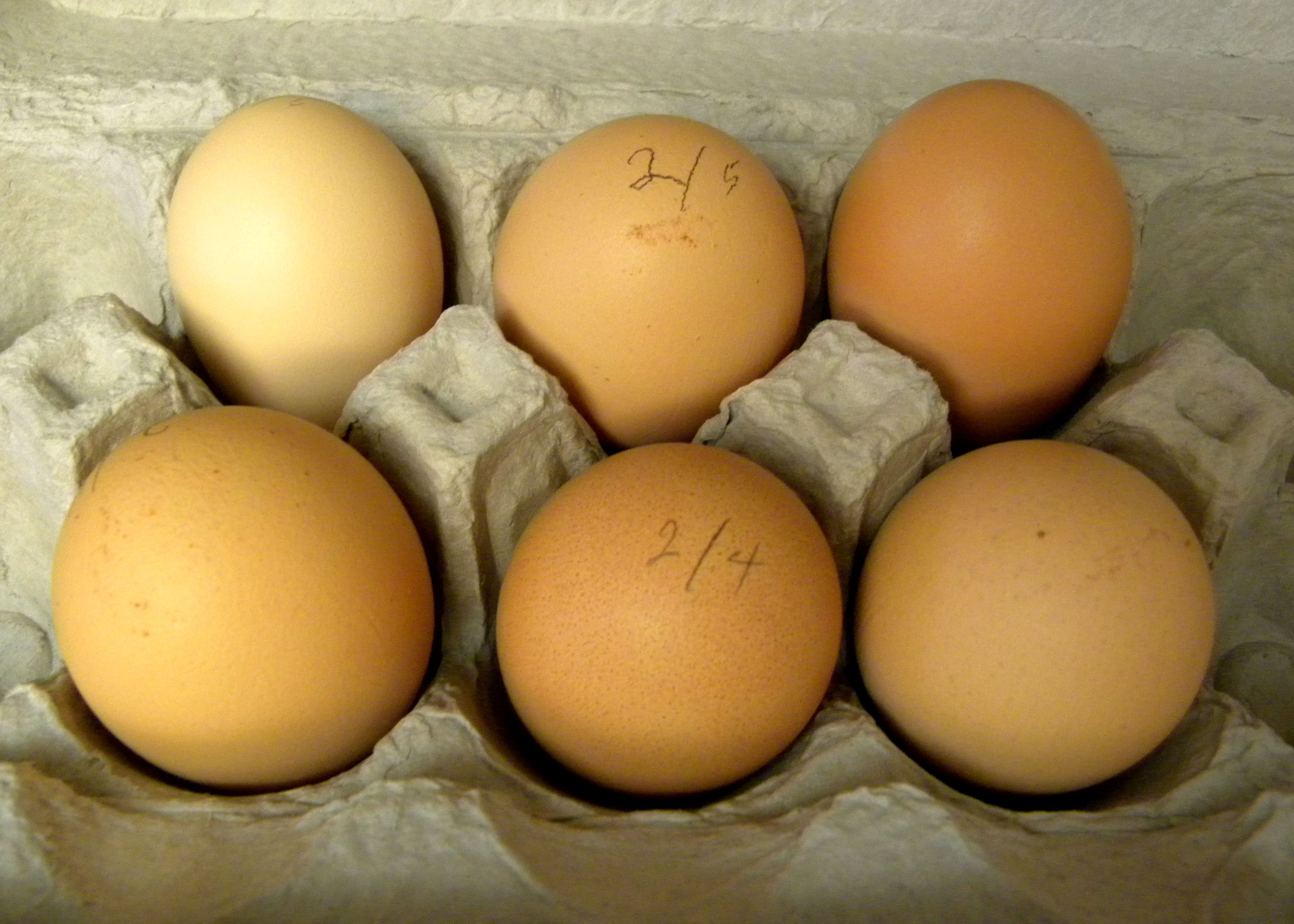
12 EGGS

2 leeks, 3 oz.

2 Meyer lemons, 8 oz.

4 navel oranges, 2 lbs, 6 oz.

1 yellow bell pepper, 3 oz.

2 green onions, 0.5 oz.

lettuce, 1 oz.

TOTAL 3 lbs, 7.5 oz. plus eggs

The big surprise here was a ripe bell pepper in February. The leeks were the first I’ve ever harvested, and the first I have ever grown from seed. I was quite pleased with them, even though it took them a year from planting the seed to harvest. I think I let them sit in their starting pots way too long and they languished over the summer. Live and learn.

I’m well into my spring planting as well. This week I planted:

rainbow chard

Chioggia and Lutz Greenleaf beets

baby bok choy

green onions

gingerroot (I’m going to grow my own ginger!)

12 Chandler strawberries (transplants)

5 Quinault strawberries (transplants)

Red Saladbowl and Blackseeded Simpson lettuce (transplants)

This gingerroot sat on our kitchen counter so long that it sprouted a new shoot. So I planted it in a pot, along with two other roots. They make a beautiful, ferny plant, and if I'm lucky, I'll be able to harvest my own gingerroot next fall.

I must say, I’m having more fun with my garden than I ever have in the past, and planting a much wider variety of produce. I’m growing things like gingerroot that I’ve tried only once in the past, and growing strawberries in a strawberry pot for the first time. And although we kept chickens for a couple of years, we haven’t had any for over 20 years. This 2010 season really is going to be my best garden EVER.

I planted the Chandler strawberries in the holes in the sides of the pot, and the Quinault berries in the top.

Blogging has enhanced my garden experience so much. I love being able to share my garden with people from all over the world.

Also, the start of my blog last October coincided with being nearly retired, with only a newspaper column a week and one work day every 2-3 months at the Orange County Conservation Corps. My reduced workload has allowed me more time in my garden and has given me time to blog.

While I thought that last year’s garden would be my best ever, it wasn’t. It was still too soon after the deaths of my mother and older son in 2005. Grieving can take a long time and goes at its own pace. I would start plants, then neglect them. Also, I was working on the infrastructure of my yard last year, putting the framework in place on which I would hang this year’s crops. Now the fruit trees are maturing, the raised beds are in place, the soil has been built up with homemade compost, and the chicken coop is completed and even has chickens in it. The yard is ready to produce.

Now I’m also ready, body and soul, to forge ahead with the 2010 gardening year. Already, I have more different types of fruits and vegetables growing than I’ve ever had at one time. And I’m not done planting yet!

(To read more of Lou Murray’s environmental writing, see her weekly column, Natural Perspectives, in the Huntington Beach Independent at www.hbindependent.com /blogs_and_columns)
Posted in Uncategorized | 13 Comments

Planting sunchokes and potatoes

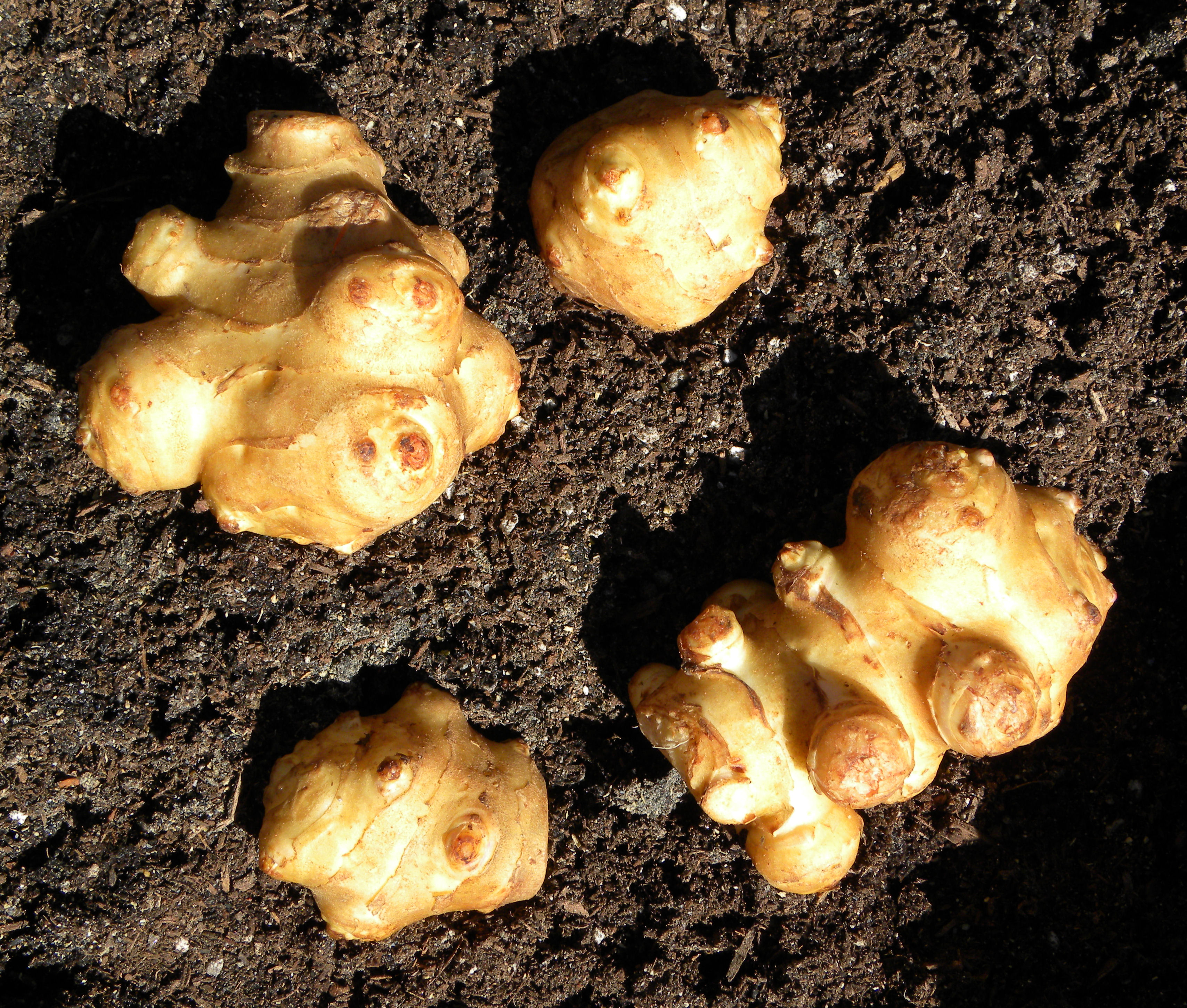
I’m trying many new things in my garden this year, and growing sunchokes (Helianthus  tuberosus) is one of them. Also known as Jerusalem artichokes, this North American native sunflower produces knobby but edible tubers that taste a little like artichoke hearts. I’ve never grown them before, so this is an experiment.

Apparently there is no trick to growing sunchokes because they grow like weeds. They look like weeds too, so ideally one doesn’t plant them in a prominent place in the garden. These rambling, branching, spindly sunflowers grow to heights of 6-10 feet, and are best situated in a back corner or other out-of-the-way spot.

Well, ideal and my yard don’t go together. We have very little space in our southern California urban yard and even less sun. The sunniest spot in the yard is the driveway. So that’s where I’m growing my sunchokes and potatoes this year.

How’s that possible, you ask. Isn’t your driveway covered in concrete? Yep. That’s where the Smart Pot comes in.

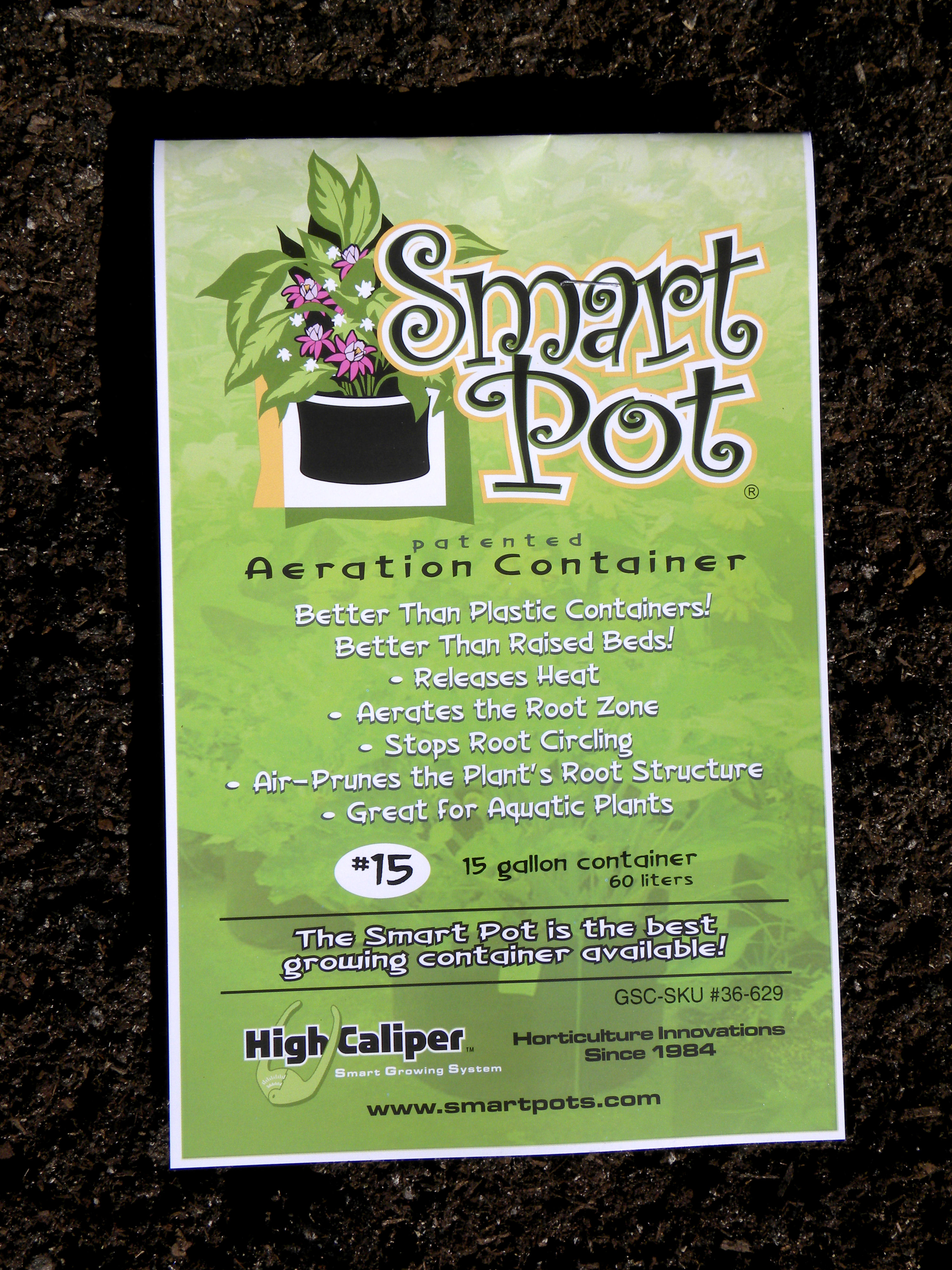
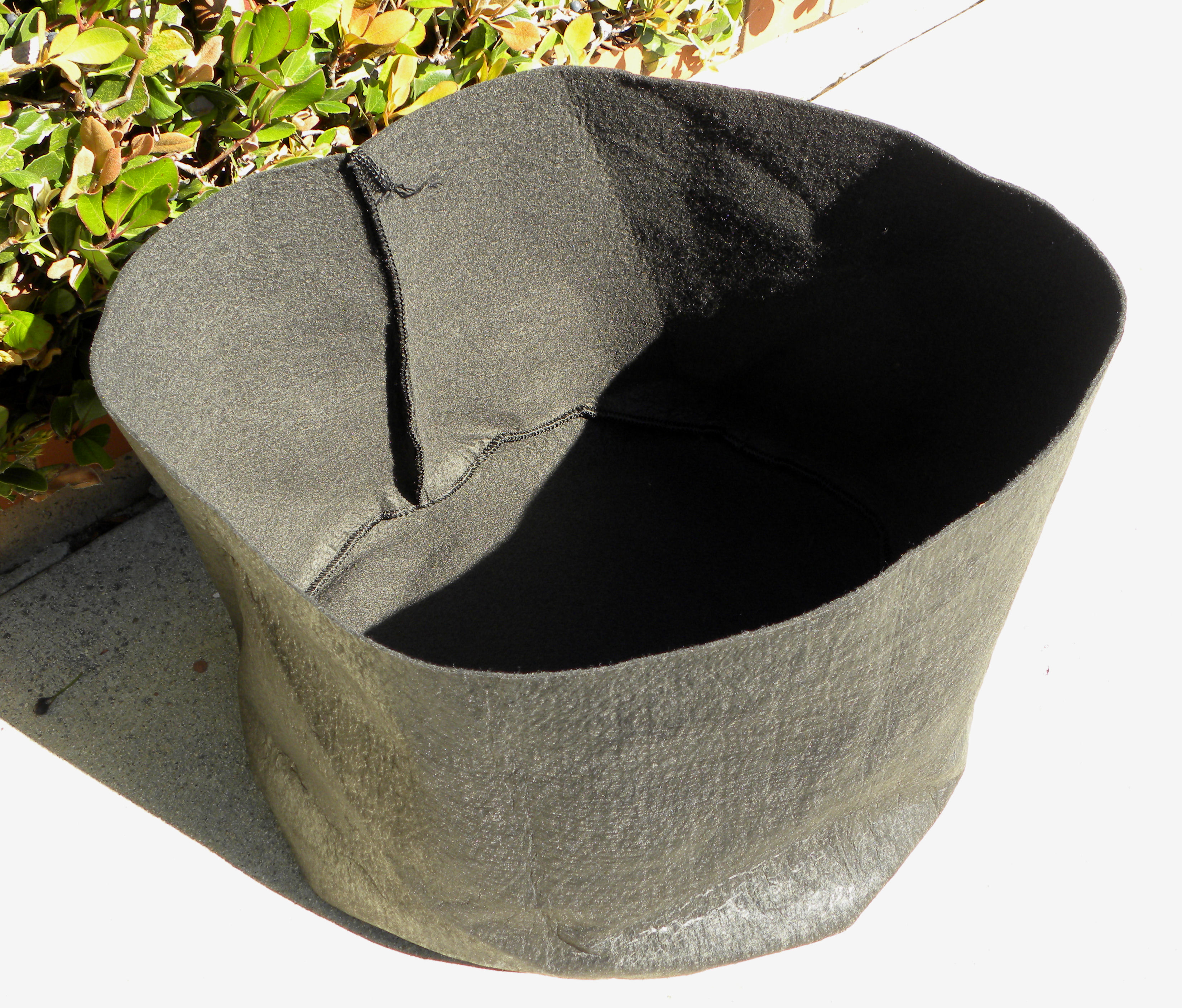
This 15-gallon Smart Pot container is made of a porous felt-like material. I got them from Garderner's Supply Company.

I filled three Smart Pots with potting soil to within about three inches of the top, then mixed in some E.B. Stone Sure Start organic fertilizer that is inoculated with mycorrhizae and other good microbes. I used one pot for sunchokes and two for some blue potatoes that had sprouted in my potato bin. Those pots are going to sit in the driveway where they’ll get sun all day long.

I got these yellow-skinned sunchokes from the grocery store, 1 lb for $1.99. They were much cheaper than if I had purchased them from a seed/bulb company, and there was no shipping and handling fee.

Sunchokes will grow in just about any type of soil and weather conditions. They like full sun, but tolerate shade, and grow from Alaska to Mexico. The problem comes in trying to harvest the tubers. A loose soil makes it easier to dig them up. But apparently you never get them all, and they tend to naturalize in the soil. That is why I decided to try growing them in a Smart Pot.

After the sunflowers die back at the end of summer, I’ll shift through the potting soil and see if I got any tubers. I planted 5 tubers, a bit over half a pound, in one pot. I have two leftover and may try growing them elsewhere in the yard in another container.

Sunchokes are planted in early spring as soon as the soil can be worked. They’re planted at the same time as potatoes, which in coastal southern California is January through early June. They’re supposed to be planted 3-4 inches deep. I wasn’t sure if that was to the top of the tuber or the bottom, but the way I did it, the bottom of the tuber was 4 inches deep and the top was 3 inches deep. I couldn’t tell what was top and what was bottom, so I just laid the tubers flat in a hole in the soil and covered them up.

In most areas, harvesting is in August or later, or about 4-5 months after planting. I expect to harvest them in July here. The tubers should be eaten as soon as they’re dug up because they dry out quickly, so most people dig them as they want to eat them. I’ve heard that there is no need to replant if you grow them in the ground because you never find them all.

Read more about sunchokes at http://www.hort.purdue.edu/newcrop/duke_energy/Helianthus_tuberosus.html

Blue potatoes that sprouted in the bag.

I also had some organic blue potatoes that sprouted while sitting in the potato bin. I decided I might as well plant them since they were too far gone to eat. Ideally, one would cut up the potatoes with a couple of eyes to each piece, but like I said, ideal and my gardening style aren’t related. I had six potatoes, so I put three in each Smart Pot. I planted them about 3 inches deep.

I only filled the Smart Pots to within 3-4 inches of the top, and will add more potting soil as the plants grow. I’ve heard that potato plants grow new potatoes between the seed potato and the surface and that if you keep raising the surface, or hilling them up, you get more potatoes.

I’ve tried hilling up potatoes with straw in previous years and it didn’t work. I’ll try adding more potting soil to the pots with this year’s experimental potato crop. I’ve never grown them in Smart Pots, or indeed in any kind of container, but I’ve heard good reports about the technique. We’ll see.

(To read more of Lou Murray’s environmental writing, see her weekly column, Natural Perspectives, in the Huntington Beach Independent at www.hbindependent.com /blogs_and_columns

Posted in Uncategorized | Tagged , , , , , , | Leave a comment

Valentine’s Day at the Fungus Festival

I cut our first rose of the year for a centerpiece for Valentine's Day

Yep, Vic and I are weird. He’s taken me to the Salton Sea birding festival on Valentine’s Day in the past, so this year I took him to a mushroom fair at the Los Angeles Arboretum. We had a great time and bought the makings of a fantastic appetizer for our homecooked Valentine’s Day dinner.

My main purpose in attending the fair was to buy a grow-it-yourself kit of portabello mushrooms. It comes as a box all ready to grow mushrooms. Just add water and wait. More on that some other day when we get started on growing our own mushrooms.

We also found a variety of commercially grown mushrooms for sale. Since all wild edible mushrooms have poisonous counterparts, Vic and I don’t mess with wild mushrooms. But we found a Japanese company that cultivates wild mushrooms here in the U.S., all organic. Now we can safely enjoy the taste of wild mushrooms.

Hokto Kinoko Company has 25 plants in Japan, and one in San
Marcos, CA, not far from us. They grow four different varieties of wild mushroom:

white beech mushroom (Bunapi)

brown beech mushroom (Bunashemeiji)

Hen of the Woods (Maitaki)

King Trumpet (King Oyster or Eryngii)

Top to bottom: Hen of the Woods, brown beech, white beech mushrooms

Vic bought one package each of the first three. We’ll try the King Trumpets another day. You can read more about these mushrooms at http://www.hokto-kinoko.com.

My plan was to make a mushroom soup to serve with our leg of lamb, but Vic picked up a simple recipe at the fair that we tried instead. Cut the bottom ends off the beech mushrooms, chop all three varieties of mushrooms, brown them in butter with a little garlic, and serve them on garlic toast.

I’d show you a photo, but they smelled and tasted so good that we wolfed them down before any pictures could be taken. The full, rich, earthy taste was like nothing I’d ever had before. Wonderful!

I highly recommend looking for these mushrooms at the store. Visit the company website to see where they might be sold near you.

This Border Leicestershire lamb is a bit older than the one we selected, but I like this photo because it shows the "dreadlocks" of this heritage breed sheep. George Washington and Thomas Jefferson both raised Border Leicestershires.

We’ve been saving a special leg of lamb from a Border Leicester (not Leicestershire as the figure legend says) lamb that we bought locally a couple of years ago. We finally roasted it for Valentine’s Day. Here is our Valentine’s Day dinner menu:

sauteed wild mushrooms on garlic toast

leg of lamb, studded with garlic and roasted with rosemary

twice-baked Yukon gold potatoes with sour cream and black caviar

steamed asparagus

homemade chocolate truffles

We attended a "learn to make chocolate truffles" party the night before Valentine's Day. This is the result. When I try this at home, I'll post a "how to do it" with photos.

We also had a 2008 Black Bear Syrah from MJB Cellars, a boutique Washington state winery owned and operated by Vic’s sister Marg Blackman and her husband Jeff. The rich, complex berry flavor of this slightly sweet Syrah was a perfect foil for the lamb and truffles.

(To read more of Lou Murray’s environmental writing, see her weekly column, Natural Perspectives, in the Huntington Beach Independent at www.hbindependent.com /blogs_and_columns

Posted in Uncategorized | Tagged , , , , , | 2 Comments

What to do with eggs

Now that we’re dependent on our three hens for all of our egg needs, I count eggs before planning meals. For example, tonight I’m planning to make breaded Dover sole (1 egg), steamed asparagus, hot Kashi (a mix of 7 whole grains), and a French lemon tart (Julia Child recipe, 5 eggs). Tonight’s meal will use six out of the seven eggs that I have on hand. We’ll get more eggs sometime tomorrow, but we won’t be having eggs for breakfast.

That got me to thinking about the various ways in which I plan to use our eggs. Ova, how do I love thee? Let me count the ways. 

Fried 

Scrambled 

Omelettes 

Frittatas 

Eggs Benedict  

Pancakes

German pancakes

Potato pancakes 

Boiled and put into a spinach salad, salad Nicoise, or shrimp salad 

 Egg salad and egg salad sandwiches 

Deviled eggs  

 Quiches (esp. leek quiche, see recipe below)  

Souffles (cheese, garlicky grits and cheese, chocolate, lemon) 

Baked in corned beef hash nests  

Poached and put into nests of chard, carrots and rice  

French lemon tart  

Pies (key lime, lemon meringue, chocolate meringue, banana meringue, pumpkin, pecan)

Cakes  (Esp. angel food and sponge cakes)

Cookies

Muffins

Brownies

Quick breads such as nut bread

Yeast rolls

Fritters 

Tamago yaki (Japanese sweet eggs with Mirin)

Oh, my, so many delicious ways to use eggs. And those are just off the top of my head. I suspect that now that we have our own hens, we’ll be eating more eggs for lunch and dinner (and even less meat).

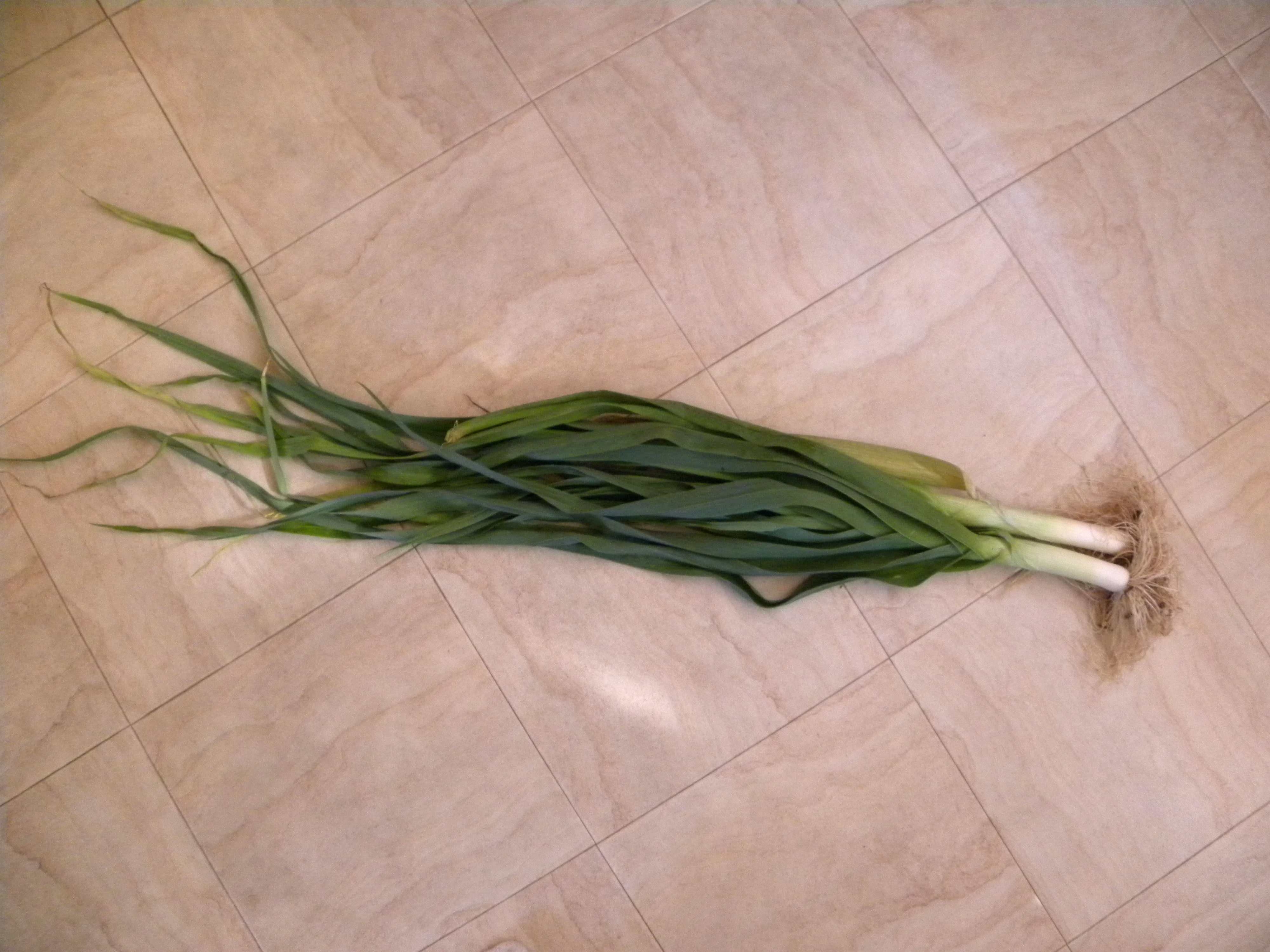
I grew these leeks from seed, planting them last January. These are the first I harvested. Each of those floor tiles is a foot square, so those are some pretty nice leeks.

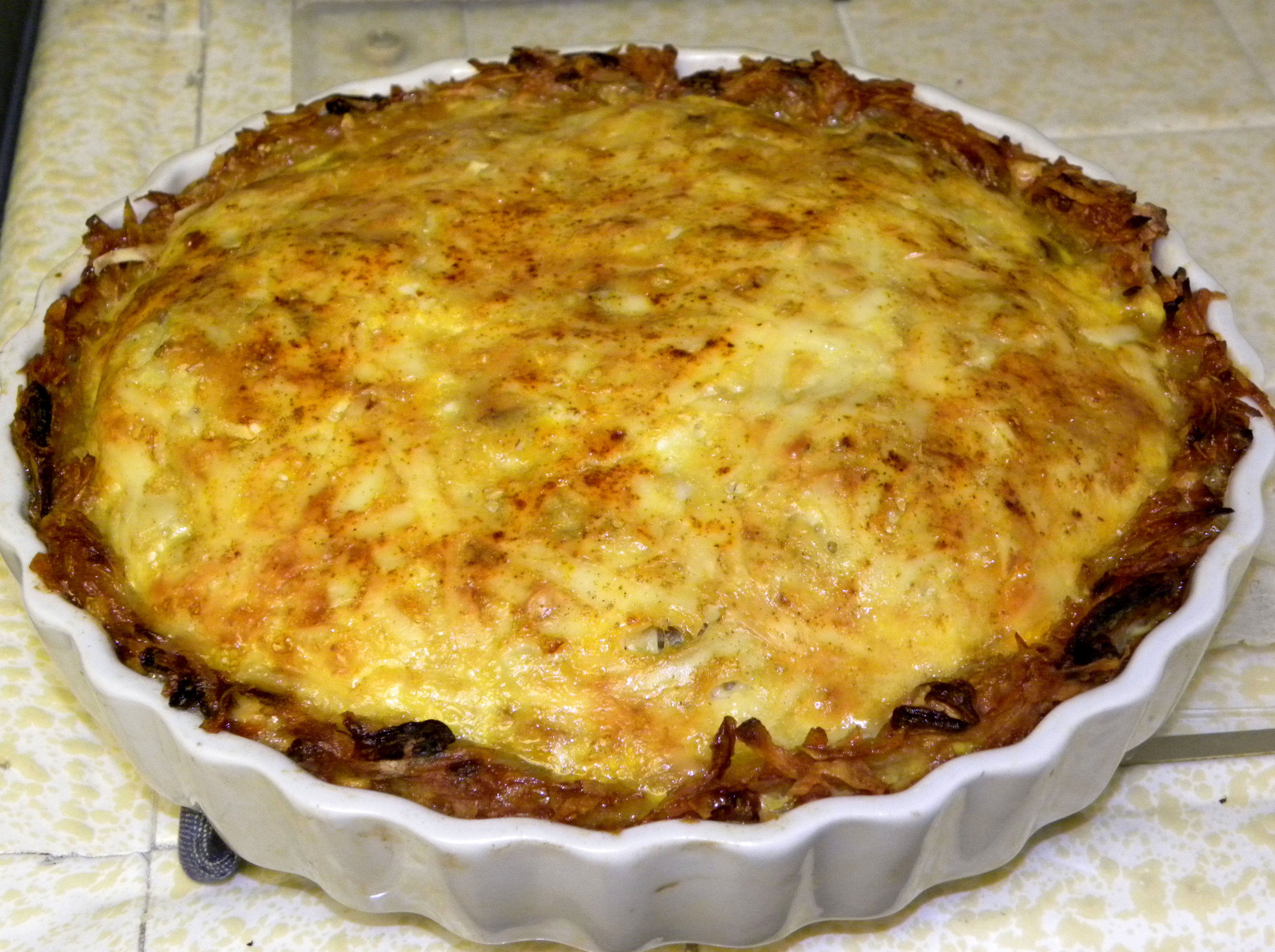
Here is a recipe for Leek and Mushroom Quiche with a Potato Crust. I will definitely be making this recipe again. I modified it from one I found at gourmetfood.about.com, which was in turn from King Arthur Flour. And yes, I used King Arthur flour. Love their “white whole wheat” flour. Whole wheat nutrition without the denseness of whole wheat flour.

CRUST

1/2 C finely chopped onion

1 tsp salt

1/2 tsp thyme

1/4 C King Arthur white whole wheat flour

1.5 lbs potatoes (about 5 small), peeled and grated

FILLING

1 T olive oil

1 T butter

2 medium leeks, sliced thinly

1.5 C sliced brown mushrooms

1 C grated cheese (recipe called for fontina or Swiss. I used sharp Vermont cheddar and Madrigal, a French Swiss-type cheese)

5 eggs

1/2 C milk

1/4 tsp Worchestershire sauce

smoked paprika

Preheat oven to 450 F. Grease a 9-10 ” deep pie pan or quiche pan.. Mix onion, flour, thyme and salt. Grate potatoes into a strainer and squeeze out any excess liquid. Combine with onion mixture, mixing to combine. Press the mixture into the pie pan and up the sides. Bake for 25 minutes to let steam escape. Brush with olive oil and bake for another 15 minutes. Remove from oven and turn oven down to 350 F.

Unbaked potato crust in quiche pan

Brown sliced leeks and mushrooms in a 50:50 mix of olive oil and butter

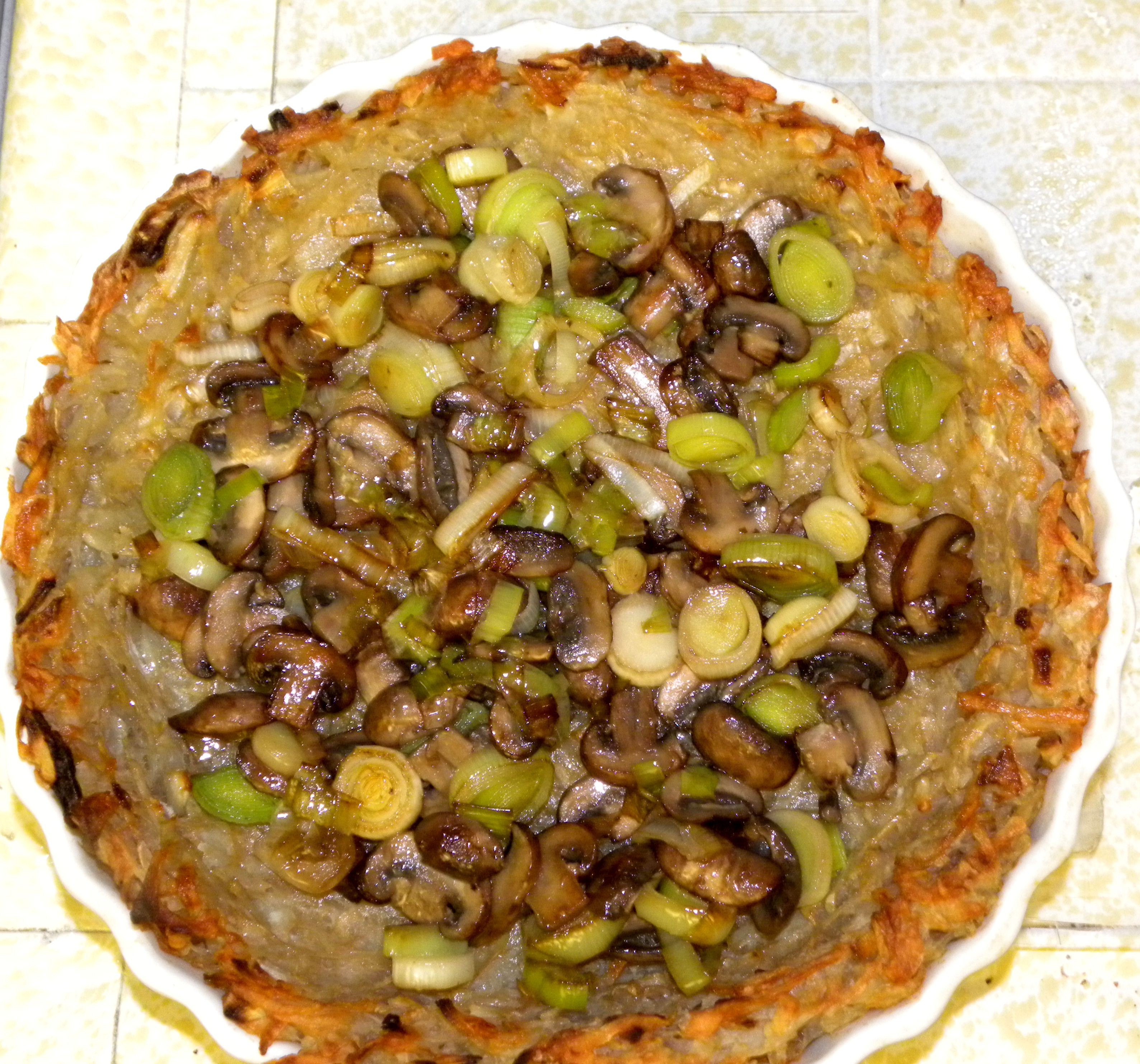
Heat olive oil and butter in a large skillet over medium high heat. Add leeks and mushrooms. Cook until liquid boils off and vegetables are brown. Season with salt and pepper if desired.

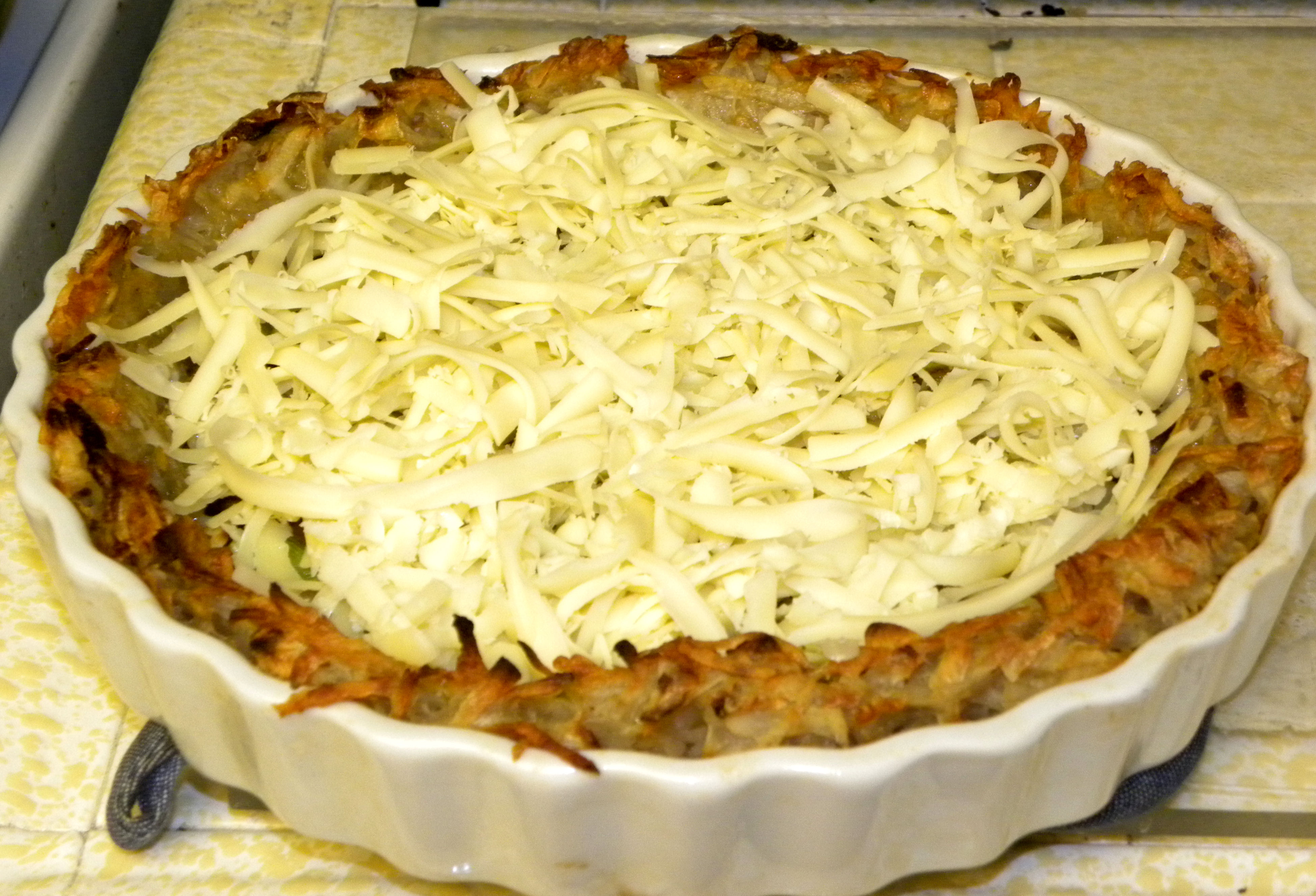
Put hot vegetables into the pie crust and sprinkle cheese on top.

Leeks and mushrooms in pre-baked potato crust

Whisk eggs, milk and Worchestershire sauce and pour slowly over vegetables. Sprinkle top with paprika. Bake at 350 F for 25-30 minutes, until center is high and set. Remove from oven, cool for ten minutes, serve warm.

Adding the cheese should bring the contents just barely to the top of the crust. No worries, the egg mixture fills in the spaces. Sprinkle paprika on top and bake.

Finished quiche should be puffy all the way to the center, with the center "set."

(To read more of Lou Murray’s environmental writing, see her weekly column, Natural Perspectives, in the Huntington Beach Independent at www.hbindependent.com /blogs_and_columns

Posted in Uncategorized | Tagged , , , , , , , | 4 Comments

A day in the life of this urban “farmer”

Wow, what a day I had yesterday (Thursday). I picked up an email Wednesday night informing me that I had work on Thursday with the Orange County Conservation Corps. Not much notice! Unfortunately, Thursday was also the day that I had planned to clean the chicken coop, my first attempt at this task. 

The "egg door" on our chicken coop drops down for easy cleaning of the coop interior.

I put the dirty bedding into the composter, covered with damp, chipped leaves, and watered it all. The composter is nearly full now, but with decomposition, the level will drop almost foot in a week or two. When I take compost out of the bottom, the level drops by about two feet.

I only work part-time with the corps. More later about what it is that I do with them.

This close-up of the coop interior shows the three nest boxes on the left (but they only use one of them, the one in the far left back corner), as well as the roosting poles, which are nearly out of sight in the upper right. Poop falls onto the straw on the right side, leaving the nest boxes clean. Tiles on the bottom of the coop floor make clean-up easier.

To get it all done, I was up just before dawn. I cleaned out the bedding in the coop, raked the run clean, filled the pellet feeder, cleaned and refilled the waterer, put clean straw in the coop, added some timothy/alfalfa hay to the run, sprinkled some “scratch” around on top of the hay, added a handful of limestone/oyster shell to help make thick eggshells, added the coop cleanings to the compost bin, covered it with chipped leaves to prevent odors, and added water from the rainbarrel to speed decomposition. Whew!  


Henny Penny, Henrietta, and Chicken Little in their clean coop.

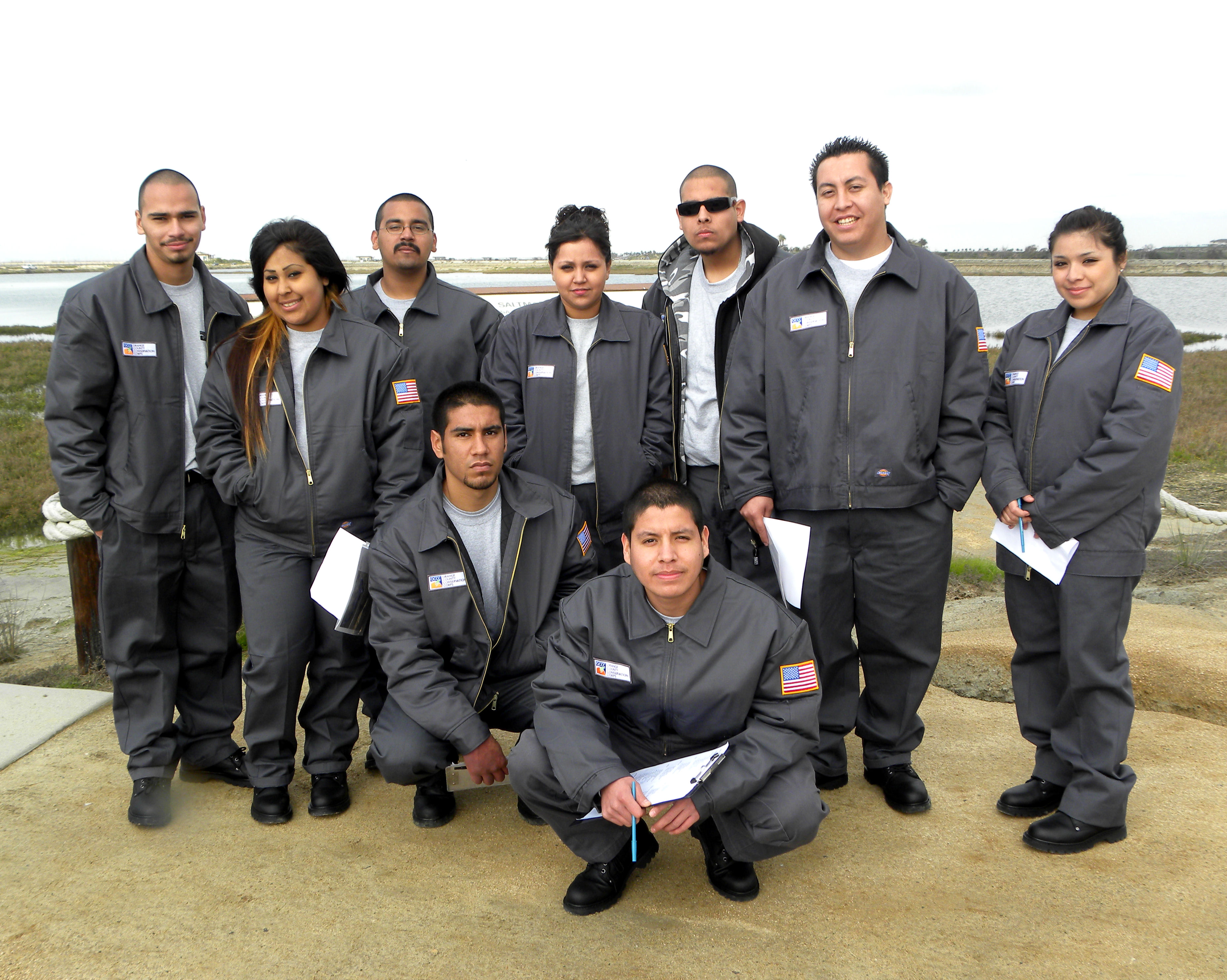
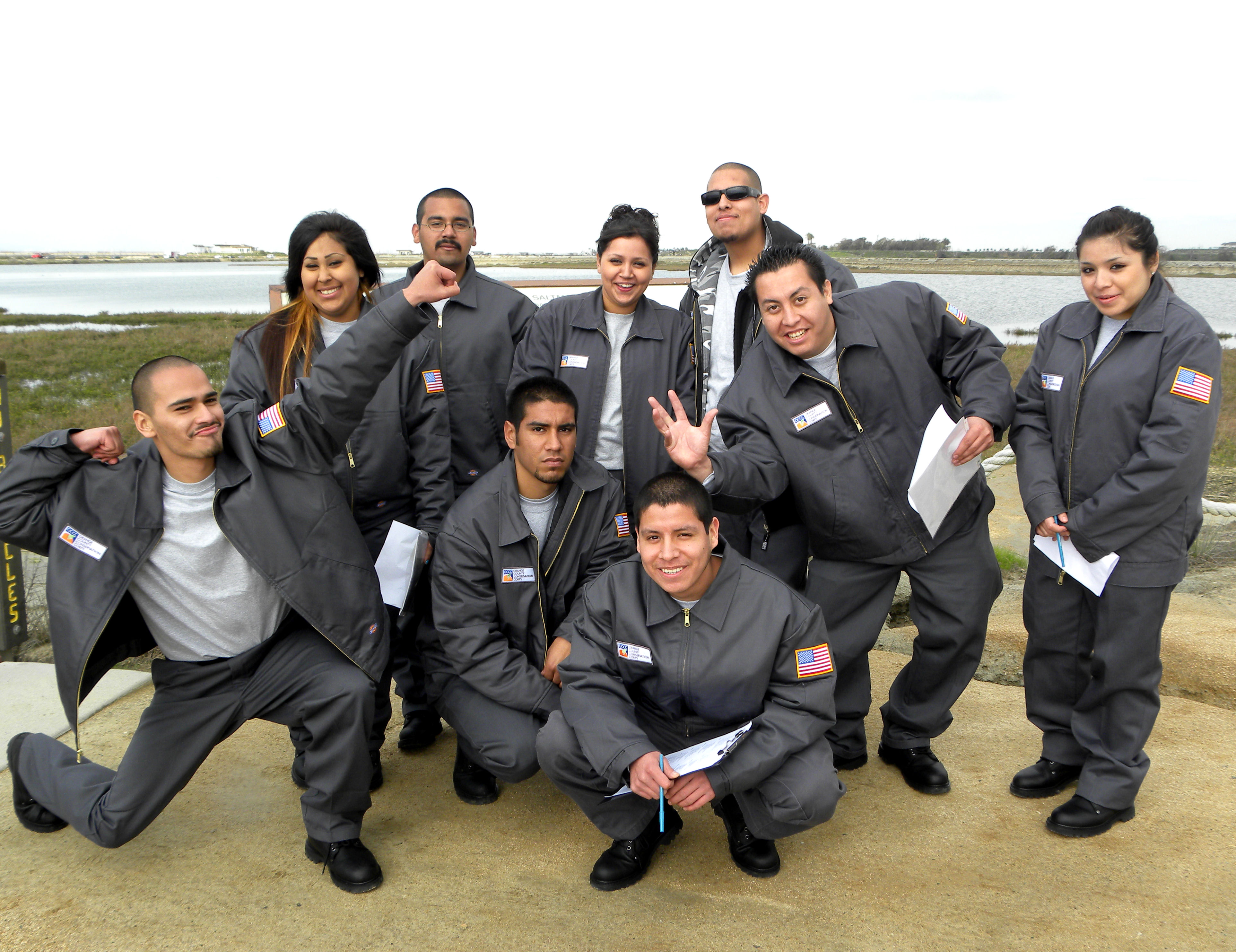
I grabbed a quick shower, got dressed, loaded my car with all the teaching materials that I use for my OCCC crews, and headed off to buy donuts for the crew. I met them at the Bolsa Chica Ecological Reserve. 

Long view of the coop run. Each hen has 10 sq. ft. in the run, the minimum amount of space. The coop itself adds another 7 sq. ft. and is built over the run to save space.

 My job at the corps is to teach conservation awareness to the newly hired crews. With budget cuts, they’re not hiring a new crew very often, which means I’m not working very much except for my weekly newspaper column. The upside to this is that I’ve had time to work on my garden, get my hens, and start this blog.

My “kids” at the corps are mainly male Hispanics in their late teens or early 20s. Most of them are dealing with issues that include gang membership, probation, drug/alcohol addictions, single parenthood, homelessness, or poverty. They come to the corps to complete their high school educations and get their diplomas while earning a living. They start work at 6:45 am, work until 3 pm, then attend classes until 5:15. Most of them finish within a year, and go on to good jobs.

We provide them with social services that include counseling, AA/NA meetings, a food bank, and leadership training, as well as resume preparation, career counseling, and much more. I dearly love these kids and respect them for all of the hard work that they do, not just to get their diplomas, but to change their lives. 

My classes are small, so each person gets individual attention. Orientation crews are generally between 8-12 young adults. In addition to conservation awareness, I teach them about professionalism and generally positive characteristics, and offer them some clues to happy living.

Their first day in the field is with me. After they finish my orientation class, they go onto their regular work crews. Most of the crew above will be working on the burned areas in Orange County, protecting homes, historic sites, and infrastruction from mudslides. 

Before the budget cuts, we used to work on conservation projects around Orange County in my orientation classes. In the past, I’ve showed my various crews how to plant California native plants, how to identify non-native plants, and how to perform the various techniques used for removal of those non-native plants.

Now the program is all education. Their day with me includes performing a wildlife survey of invertebrates, fish, reptiles, birds and mammals at the Bolsa Chica Ecological Reserve.

My corps kids are full of energy and a lot of fun for me to work with. We have a great day together. My goals are for them to learn that work is fun, and so is education.

At the Bolsa Chica Conservancy’s Interpretive Building, they handle live snakes and marine invertebrates, while learning about ocean and wetland conservation issues. Then they fill out a worksheet that teaches about conservation issues in Orange County’s various habitats.

After my work day, I went grocery shopping, filled the wild bird feeders at home, steamed some asparagus and collapsed on the couch, grateful that we had leftover quiche and leftover soup from the night before. I’m glad that all my days aren’t this full.

Hope you enjoyed this little introduction to my kids at the corps. They’re terrific people who are at a place in life where they’re making great change and heading in a more positive direction. To learn more, visit www.hireyouth.org. I love my homies!

Posted in Uncategorized | Tagged , , , , , , , , , | 4 Comments

Connecting rain barrels in series

I have to confess that I have no plumbing or irrigation skills. It took me forever to figure out how to connect three rain barrels in series. I knew I wanted flexible tubing to connect them, and that I didn’t want to mess with drilling new holes in the barrels or gluing PVC pipes and spigots.

My water barrels all had male outlets on their spigots. One connects female adapters, such as are found on the end of garden hoses, to the male outlets.

I did know one thing about plumbing. There are male ends and female ends. The male end fits into the female end. If I was going to connect tubing to the male spigot, I’d need some female ends on the tubing.

I bought some female hose connectors at Home Depot. I also bought a Y hose bib to split the flow from the collecting barrel to two auxilliary barrels.

A female hose connecter or adapter. The piece of plastic with the yellow label is just to hold the two parts together. Snip that at a thin spot and your two pieces are ready to use.

The Y-hose bib with three clear vinyl 3/4" ID tubes attached.

I know one other thing about plumbing. Tubing has an inner and outer diameter (ID and OD). Since my hose bibs were 3/4 inch, I got vinyl tubing with 3/4 inch inner diameter. The hose adapters worked for tubing that was 1/2″ to 3/4″.

I cut a length of vinyl tubing and connected female adapters to both ends. First I opened up the clamp and slipped it over the tubing. Next I jammed the adapter into the tubing until it was well seated. Final step was to tighten the clamp. I repeated this for other end of tube. I attached one end to the collecting rain barrel and the other end to the Y-hose bib.

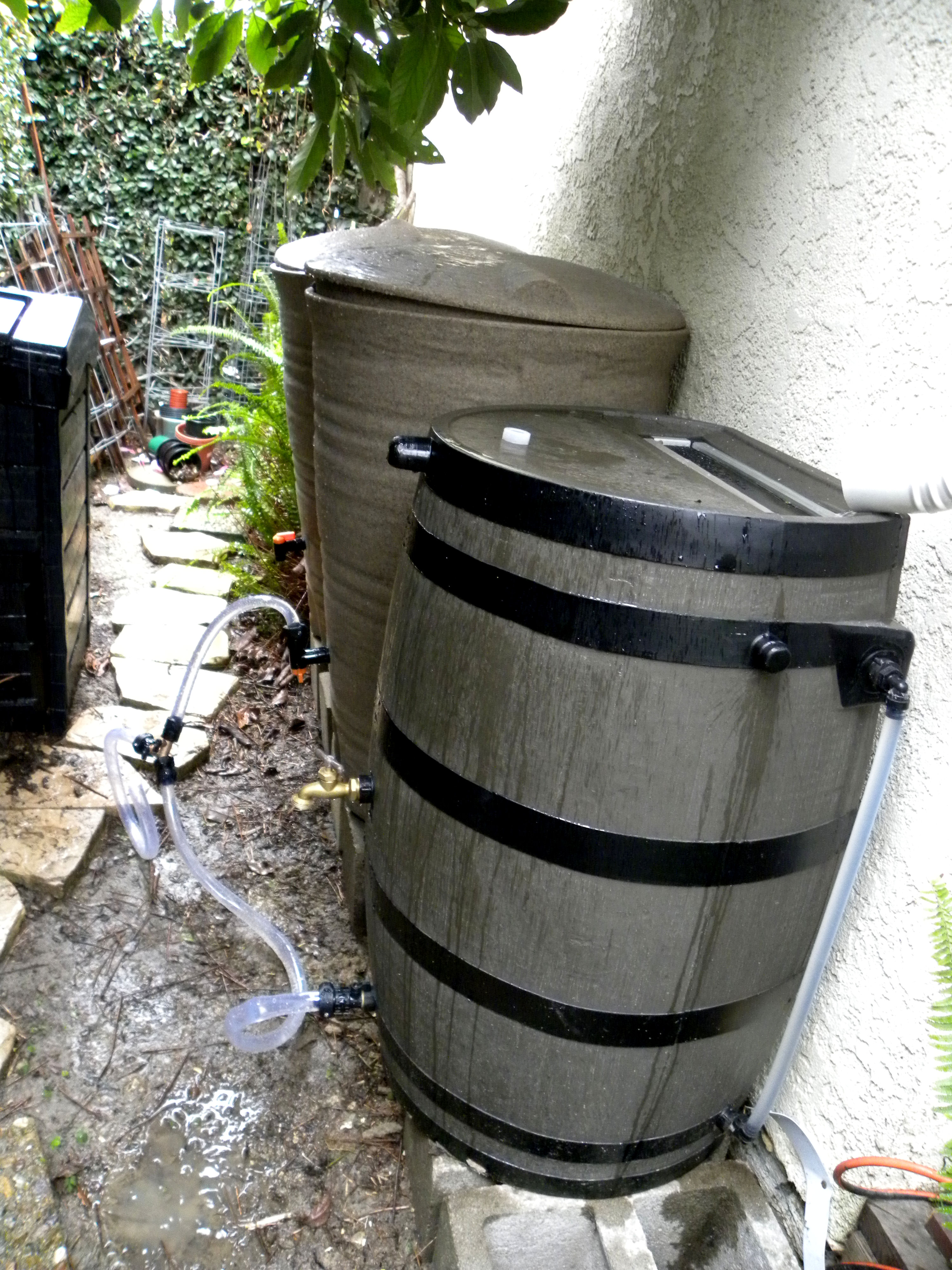
I cut two more hose lengths and attached female adapters to both ends. Then I connected each one to the Y-hose bib and an auxillary barrel. That gave me three barrels in series, which hold a total of 150 gallons of rain water. One good rainfall more than fills them, so I’m thinking of adding yet another barrel.

Here’s what I used:

1 rain barrel with male spigot and an overflow vent to collect water from a downspout (the “oak” barrel cost about $200 from Gardener’s Supply Co.)

2 auxillary barrels with male spigots (the Fiskars barrels cost $98 each from Home Depot)

6 cinder blocks on which to put the barrels ($0.83 each)

1 Y-hose bib connector (can’t remember price, maybe $15)

6 female adapters ($1.98 each)

length of 3/4 ” ID tubing (or an old hose that you can cut up)

Two rain barrels hooked up.

I got my first rain barrel, the one that looks like an old oak barrel with black staves, from Gardener’s Supply Company. It’s made of recycled plastic. Rain goes from the downspout onto the debris screen on top. That barrel has an overflow vent and a clear tube on the side that shows the water level.

The fiberglass barrel behind the fake oak barrel is made by Fiskars. I got two Fiskars barrels at Home Depot. They are designed to connect directly to rectangular downspouts, but our downspouts are round. That’s why the “oak” barrel is under the downspout, with the other barrels connected to it. Here is a link to one of my previous posts, showing how the first barrel was installed.

https://greenlifeinsocal.wordpress.com/2010/01/29/setting-up-and-using-rain-barrels/

If you go to Youtube, you can see videos of other rain barrel systems. Here is a 3-minute video (hope it isn’t copyrighted) that I found on Youtube that shows how to use a trash barrel to make a really inexpensive rain barrel. This one has no debris filter.

Here is a good video of how to hook up a Fiskars barrel to a rectangular downspout.

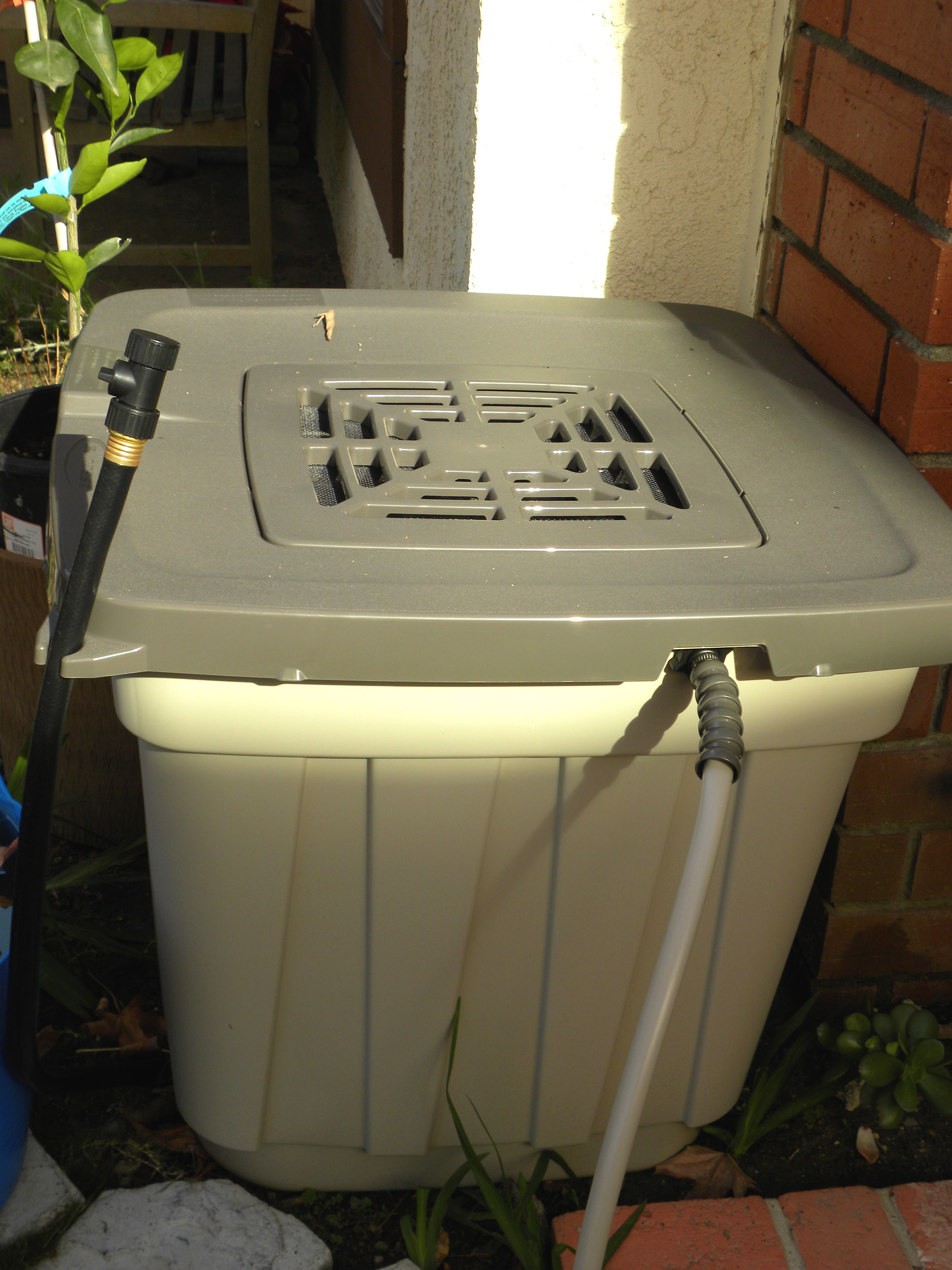
With the Suncast rain barrel that we put under the eaves, plus several trash barrels set up to collect water from the chicken coop roof, we now have a rain water storage capacity of 400 gallons. A cistern in the ground would give us the best storage, but our landscaping is mature and we don’t want to go that route.

Our Suncast rain barrel collects water dripping off the eaves, with no downspout connector.

I did this project by myself (except for sawing the downspout and setting up the first barrel.) I’m a 67-year-old granny. If I can hook three rain barrels in series, so can you!

Posted in Uncategorized | Tagged , , , , , , | 4 Comments

Harvest Monday, Feb. 8, 2010

The first six eggs from our three new hens.

Not a lot to report this past week for a harvest, except in the egg department.

lettuce, 1 oz.

2 green onions

14 EGGS!

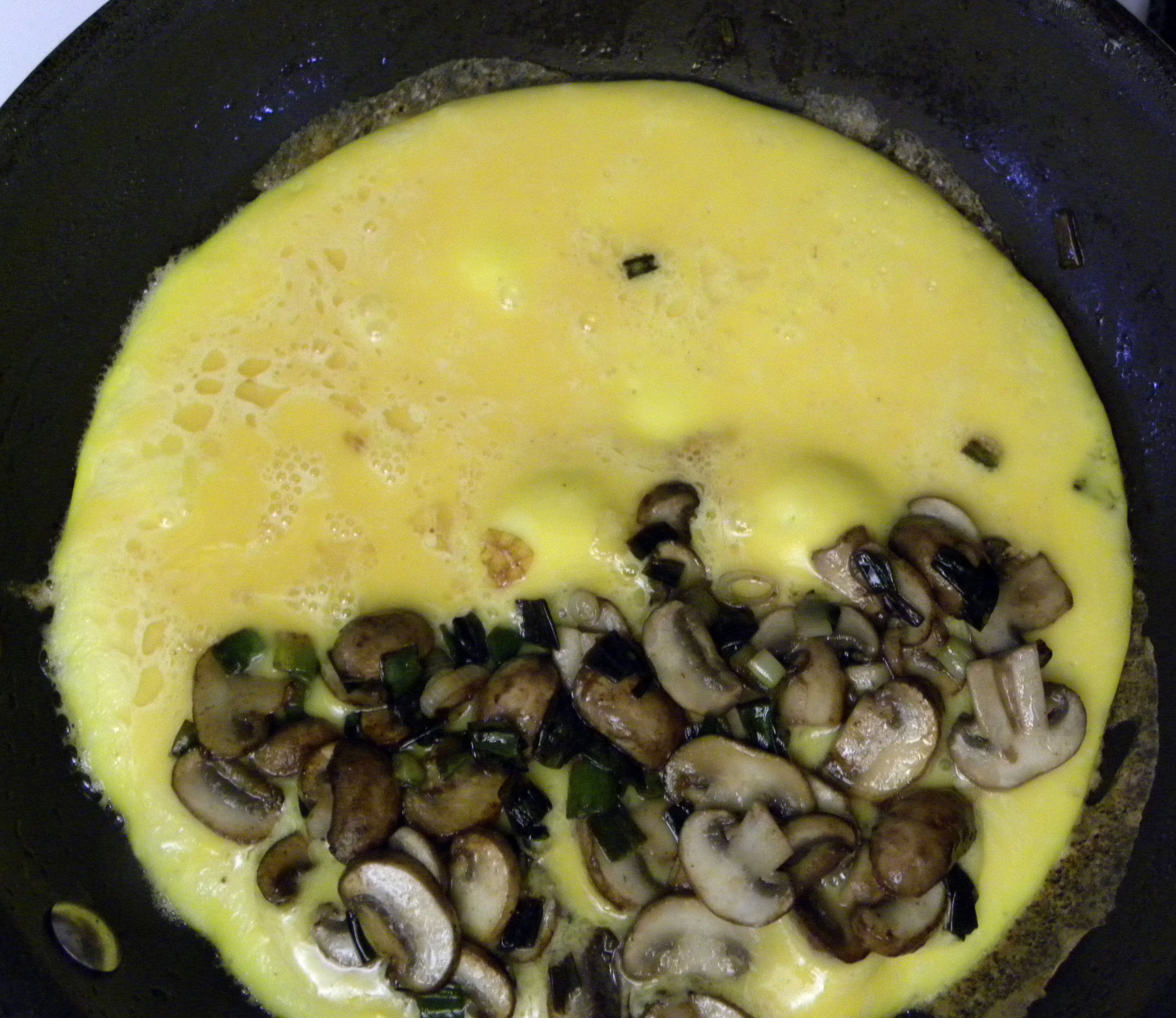
I sauteed the sliced green onions along with some crimini mushrooms for an omelette with four of the eggs.

Our three new hens did themselves proud. We’ve used all of our store-bought eggs, and are now counting on our hens to provide eggs.

After sauteing the vegetables, I set them aside. I added a T of milk to the four eggs, and beat them with a wire whisk. I poured the eggs into a hot skillet and put the lid on until the eggs were partially set. Then I added the vegetables, put the lid back on and finished cooking. At the end, I flipped the side with no vegetables over onto the other side, cut in half and served.

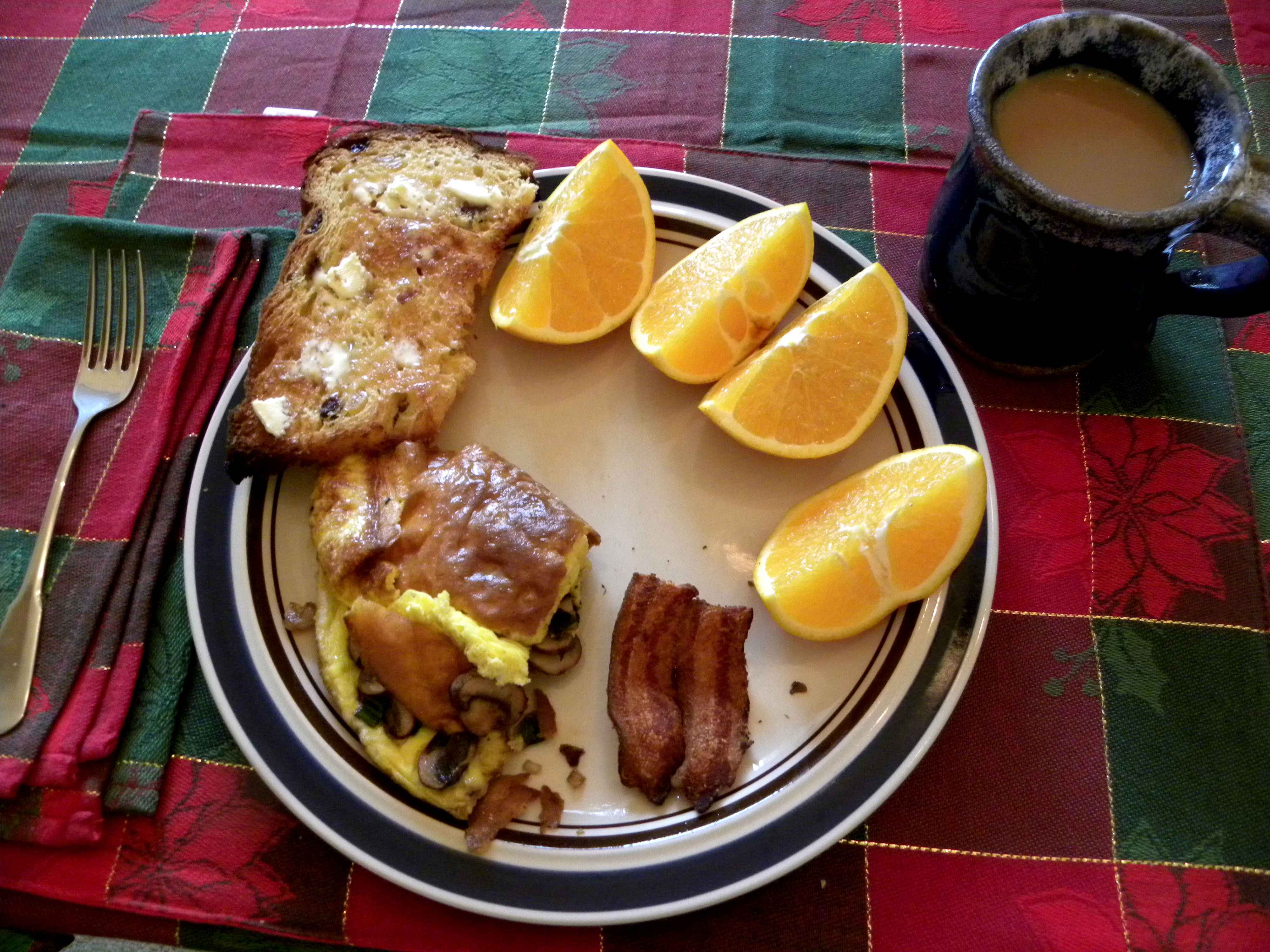
We had the omelette with toasted panetone bread, Niman Ranch bacon, and a navel orange apiece from our garden.

It’s also planting time here in coastal southern California. I dug up the Garden of Infinite Neglect, at least the part that isn’t already growing beets, cabbage, collards, and kale.

I transplanted allysum and Graffiti cauliflower (purple), and planted seeds of Bright Lights chard, Chioggia beets, Lutz green leaf beets, white stem baby bok choy, Seneca Butterbar yellow squash, and Monet yellow squash. The 2010 gardening season is well underway.

I hope to get some more things planted in the morning (arg, which is only about 7 hours from now) before the rain starts up again in the afternoon. This 2010 garden year really does look like it’s going to be my best ever at this house.

And that’s what I love about spring. The hope, the optimism, the belief that everything will grow and that the vegetables and flowers will look as pretty as they do in the catalogs. I feel like Linus in the Charlie Brown comic strip, hoping in vain for a visit by the Great Pumpkin. In my case, that symbolizes a great harvest. This year it could happen.

Posted in Uncategorized | Tagged , , , | 8 Comments

Our first two eggs

Here are the first two eggs laid by our new hens. The dark brown one is from one of the Black Sex-linked hens. The lighter brown one is from Chicken Little, the Black Australorp.

This is the beginning of Day 4 with our three new hens. They’ve settled in nicely and have laid four eggs in three days. I’m not overwhelmed with their productivity, but it’s a good start given that the days are still short. They should come into full productivity in another six weeks, or possibly eight weeks, which is Easter.

That may be one of the reasons why we have Easter eggs. In the old days, chickens pretty much stopped laying in winter and didn’t begin again until spring. Eggs were a sign of spring and renewal of the earth. Many modern breeds lay throughout the year, although production still slows down in winter. Commercial egg factories leave the lights on to fool the chickens into thinking that they’re living in perpetual summer.

I’ve heard that eggs were forbidden food during the Lenten fast for Catholics during the Middle Ages, along with meat. Any eggs that were laid during Lent were boiled to preserve them. They were eaten on Easter Day. During Passover, Jews dip a hard-boiled egg in salt water. So eggs, especially boiled ones, have a long association with spring.

I didn’t boil the first two eggs from our chickens. I fried them.

I like my fried eggs over medium. Look how high those yolks are. That’s one of the signs of a fresh egg. And look how compact the whites are. They didn’t spread out over the pan. That’s another sign of a fresh egg.

I had a totally homegrown breakfast of a fried egg and a navel orange.

The flavor of these fresh eggs from free-range chickens was fabulous. At the farm where they were raised, they had full run of a barn, corral, sheep pen, and surrounding pasture. They ate bugs and weeds in addition to their laying pellets (which consist mainly of corn and soybeans). Here, they have a dirt run for exercise, but are not allowed access to my yard and garden, both for their own safety and because they would eat my tiny garden down to dirt in short order. I pull weeds to feed them, and give them the bottom leaves of my lettuce, chard, kale, collards, and cabbage. They’ll also be getting peelings and appropriate table scraps. If they ate only laying pellets, I might as well get my eggs from the store, flavor-wise. Also, I belive that a hen diet that includes greens will increase the Omega-3 content of the eggs, which makes them healthier for my cardiovascular system. 

These eggs were fertile, since the hens and roosters mingled freely on the farm where I got my hens. I’m not sure when they’ll start laying infertile eggs, but that makes no difference to me. I don’t think that the fertilization process adds any nutritional or flavor benefit to the eggs.

And that brings up another topic. Almost everyone I talk to is amazed that we don’t need roosters to get eggs. Chicken hens lay eggs regularly whether a rooster is present or not. You only need a rooster if you want fertile eggs. Roosters are illegal in the city because of noise, and we don’t want one anyway.

I have five storebought eggs left. I plan to turn them into a lemon tart today, using Meyer lemons from my tree. That will be the last of our store-bought eggs.

OK, girls, we’re counting on you. Get to work!

(To read more of Lou Murray’s environmental writing, see her weekly column, Natural Perspectives, in the Huntington Beach Independent at www.hbindependent.com /blogs_and_columns)
Posted in Uncategorized | Tagged , , , , , , , , , | 6 Comments

This is Our Moment

One of the reasons why I grow my own organic fruits and vegetables, started keeping hens, and look for locally grown foods that I’m not growing myself is to reduce the amount of fossil fuel used in transport of food. Fighting global warming is the most important thing that each of us can do in our own lives.

But we can’t do it just by individual action here and there. We need action at the national level. That’s why I’m also an armchair activist. It’s really simple.

Please watch this short video with Leonardo DiCaprio, Forest Whitaker, Justin Long, and others on a clean energy bill. It was made for the Natural Resources Defense Council. Click on the link, watch the short video, then email your senators from the same page. NRDC makes it really easy. You don’t even have to know their names (although, of course, you should).

http://www.nrdcactionfund.org/thisisourmoment/

Together, we can do it. Thanks.

Posted in Uncategorized | Tagged , , , , | Leave a comment

The first egg, the first egg!!!

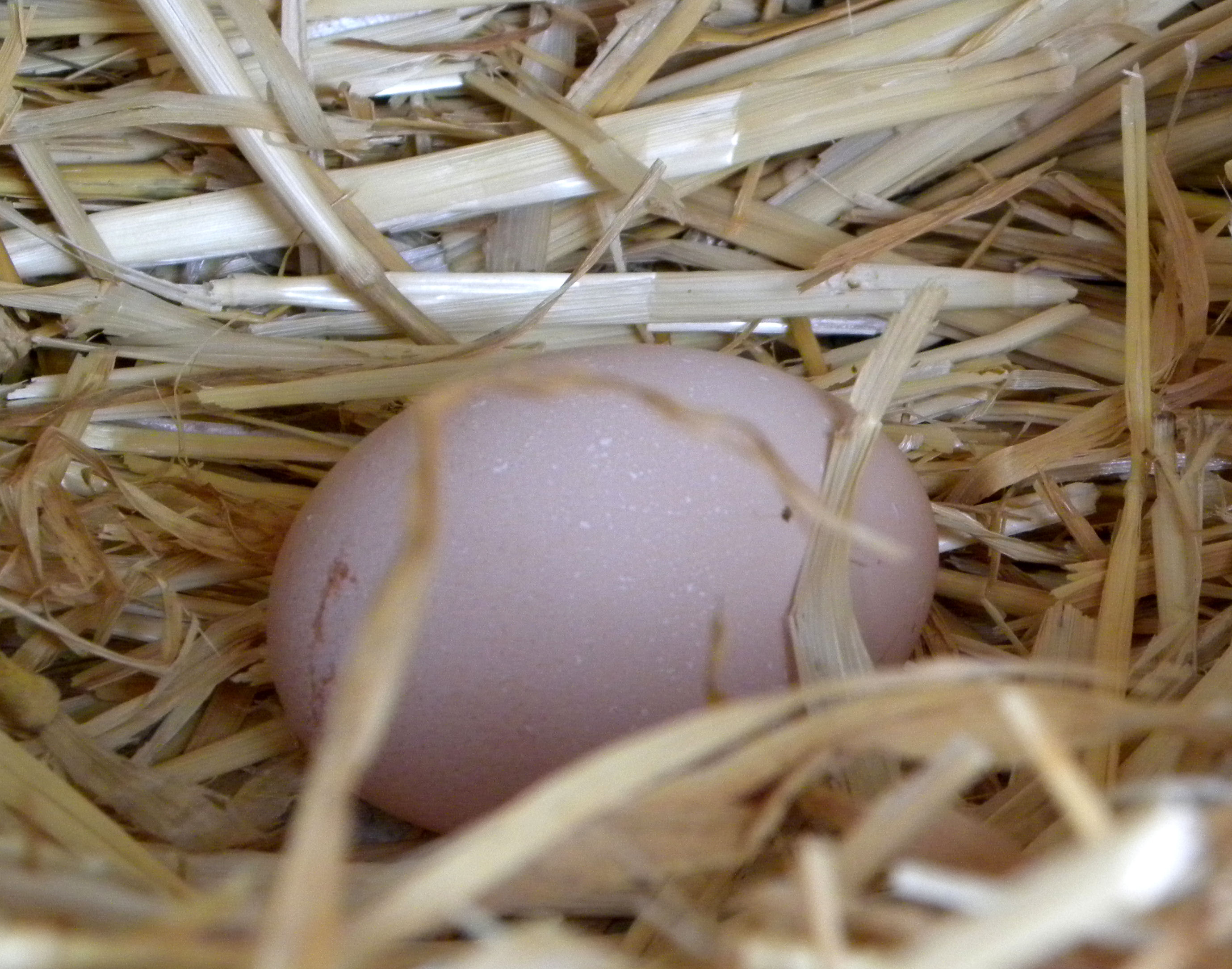
The first egg in our new chicken coop, laid by Chicken Little!

I’m as excited as a new grandmother. Chicken Little, our Black Australorp, laid the first egg a bit after noon today. She went into the coop around 11:30 and began “building.” I have no idea what she was doing, but it sounded like construction with a lot of bumping, thumping, and scratching.

When she came back out of the coop around noon, I peeked in. No egg. But the nest boxes were scratched down to bare wood, straw scattered everywhere. I thought she might want more straw, so I added some. She went back into the coop and continued bumping and thumping, then settled down. Silence.

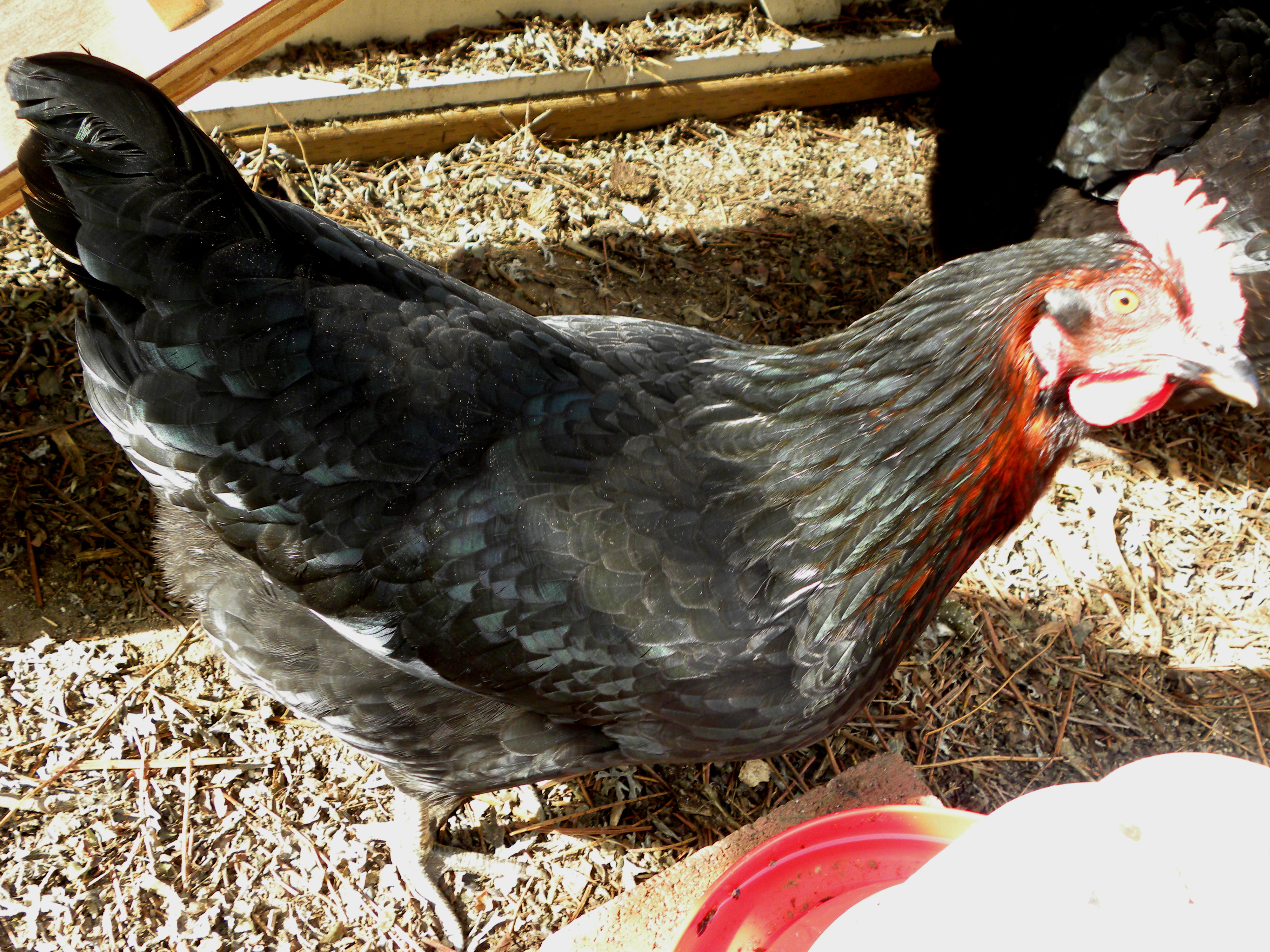
Chicken Little--she's supposed to be a Black Australorp, but look at all that red in her throat. She has a lot of green on her black feathers, but I think there's some Rhode Island Red in her ancestry somewhere.

Soon there was some soft clucking. I thought hens really cackled when they laid an egg, so I didn’t expect one. She came back out of the coop to join Henrietta and Henny Penny, so I peeped in again. And there it was! Our first egg! And it only cost us $1,000.

How’s that, you ask. Well, the coop cost us $800 (built by a friend out of mainly recycled materials). A permit from the city of Huntington Beach (permanent, not annual), cost us $189. The feed trough, watering trough, and a can to store the feed cost another $54. I installed a solar light on the coop to help deter nocturnal predators. There went another $80. That’s $1,123 of non-recurring costs. (The solar LED light from Gardener’s Supply Company will probably be a recurring cost, because I’m not sure how long those things last.)

The first bag of laying pellets (feed) cost $15. I’m not sure how long it will last. Next time, I will buy organic feed, now that I know that our local feed store carries it. That will cost $25 a bag. 

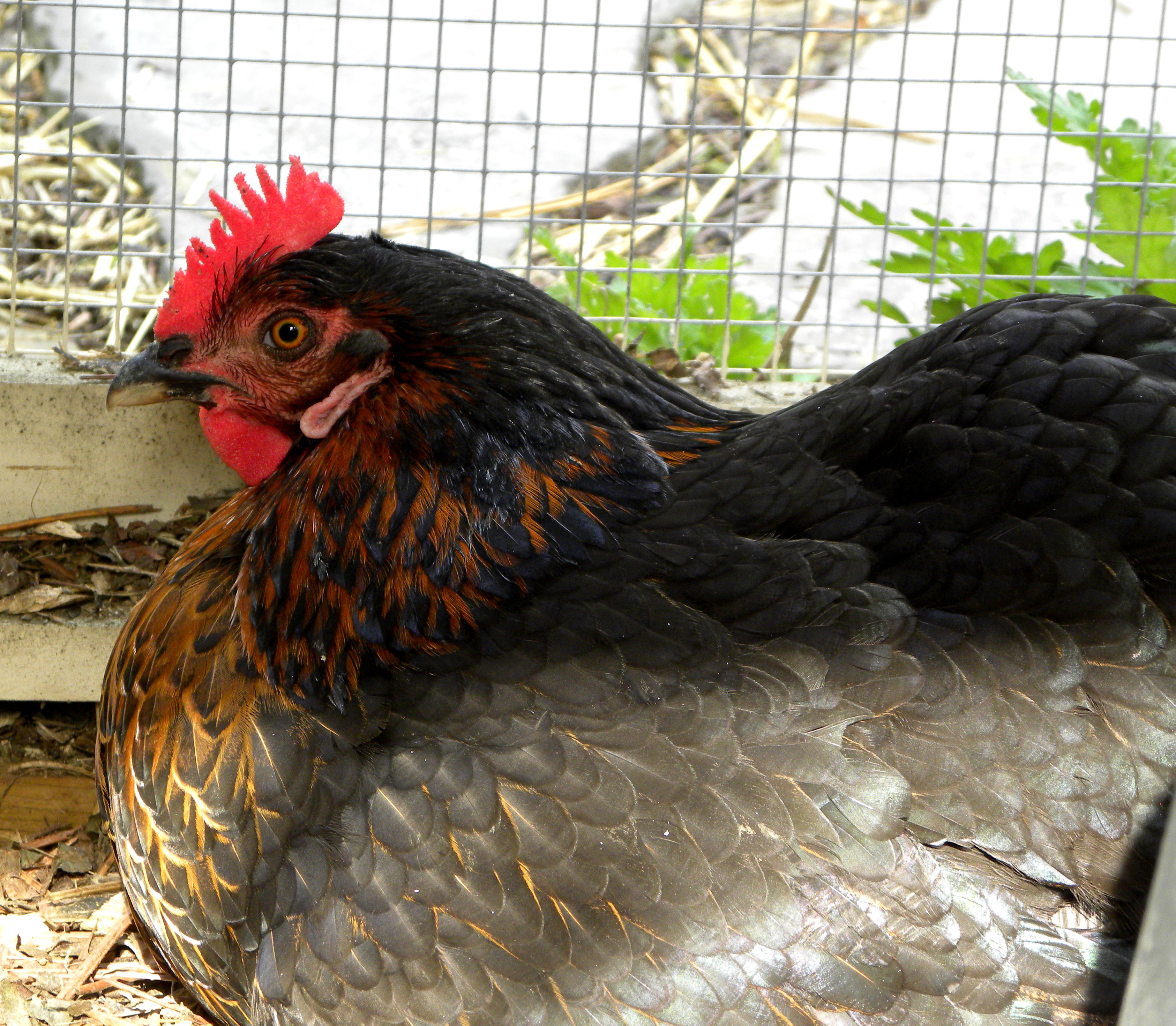
Henny Penny, a Black Sex-linked hen (cross between a Rhode Island Red and a Barred Plymouth Rock). Isn't she pretty?

And then there was the cost of the hens. I naively thought that they might be as much as $8, based on the price of a cleaned, packaged broiler in the grocery store. Ha. My laying hens cost me $25 apiece.

Henny Penny has the most red of our three black hens.

Chicks are a lot cheaper (about $16 for 5 one-day-old chicks mail ordered from www.randallburkey.com, plus shipping fees). But to raise chicks, you need a brooder (heat source) for the first few weeks. I didn’t want to invest in a brooder for my little backyard coop, and I didn’t want to wait the five months it takes to raise the chicks until they’re old enough to lay. So I went for broke, as they say, and bought laying hens.

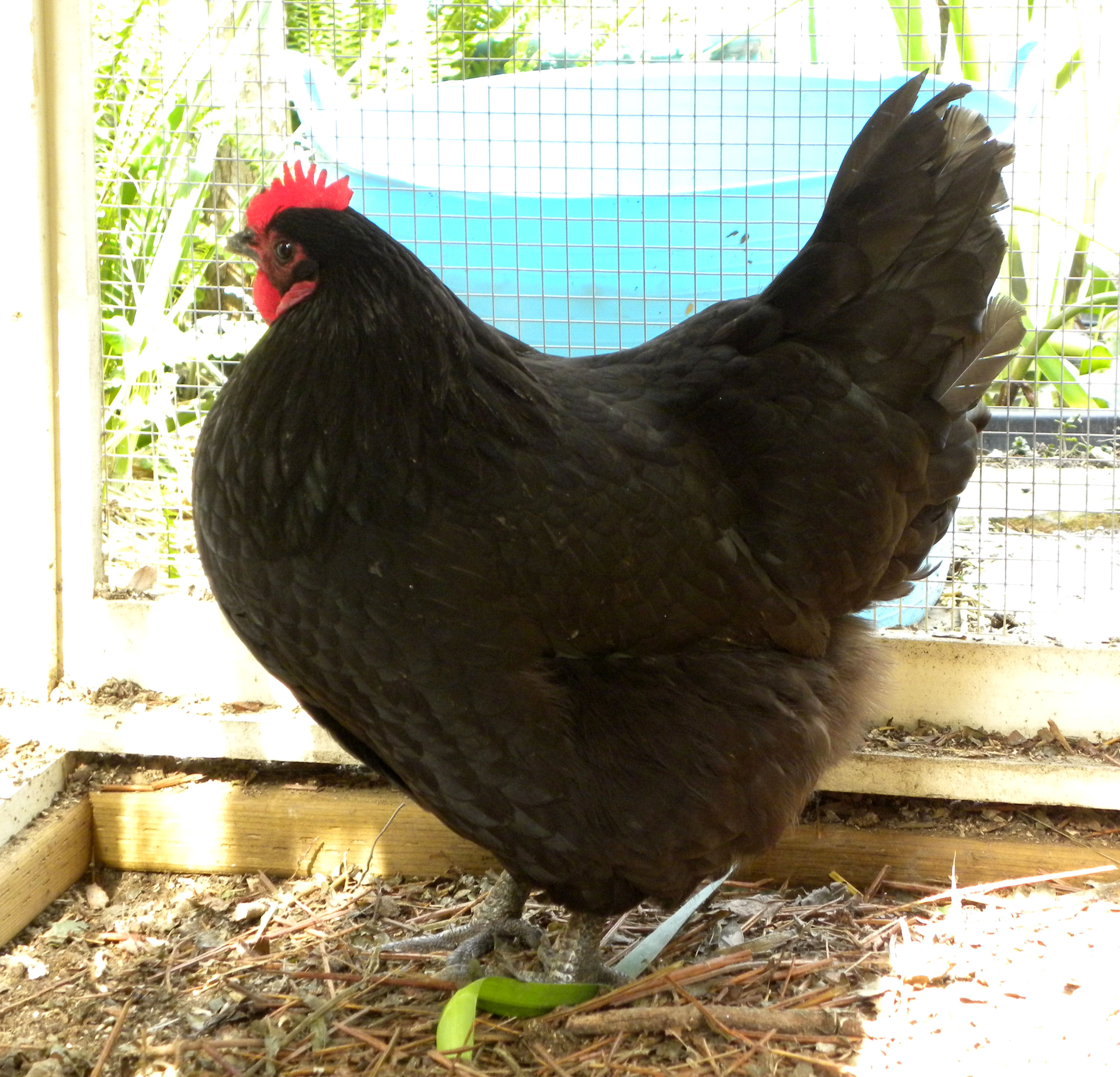
Henrietta, a Black Sex-linked hen. She has the least red of the three hens.

I calculated earlier that my recurring costs of straw and feed might be $100 a year. I also naively thought that I might get as many as 18 eggs a week. Not bloody likely. A good laying hen produces about 200-240 eggs a year. I’ll probably average a dozen eggs a week, at least for the first year. They don’t lay as many eggs after they’re two years old, and two of my three hens are already a year old.

Ignoring my one-time costs (which I can do since I’m a biologist, not an economist), that comes out to around $2 per dozen of organic, free-range eggs from happy California chickens.

But to have your own fresh eggs that came from well-cared for, free-range hens in your own backyard? Priceless.

(To read more of Lou Murray’s environmental writing, see her weekly column, Natural Perspectives, in the Huntington Beach Independent at www.hbindependent.com /blogs_and_columns

Posted in Uncategorized | Tagged , , , , , , , , , , | 10 Comments