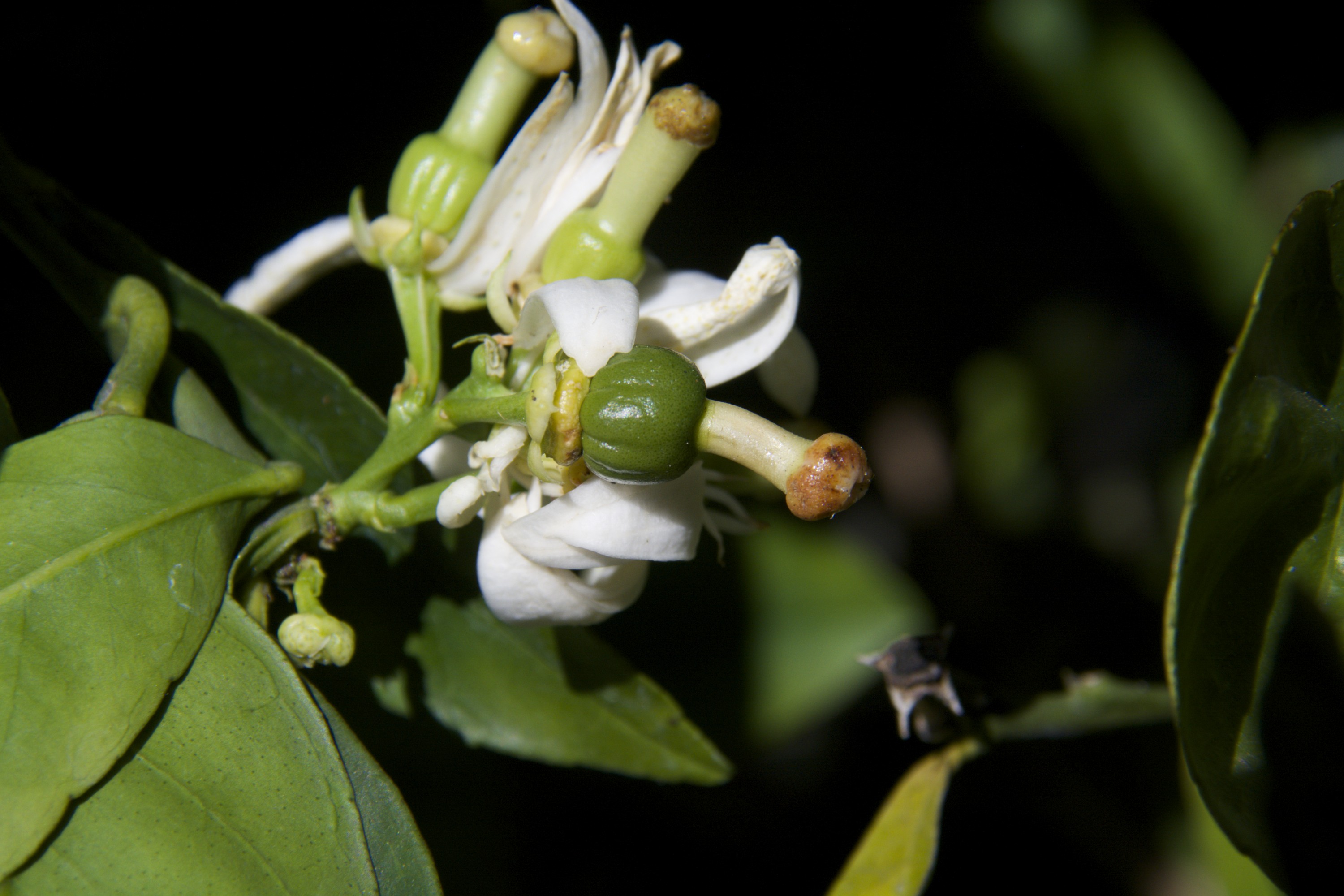
Growing a garden for the soul, 28 July 2015

I grow much more than food in my garden. I also garden for my soul. I love to sit on our back deck in the morning with a cup of coffee (several cups in succession, actually) and watch the action in my back garden.
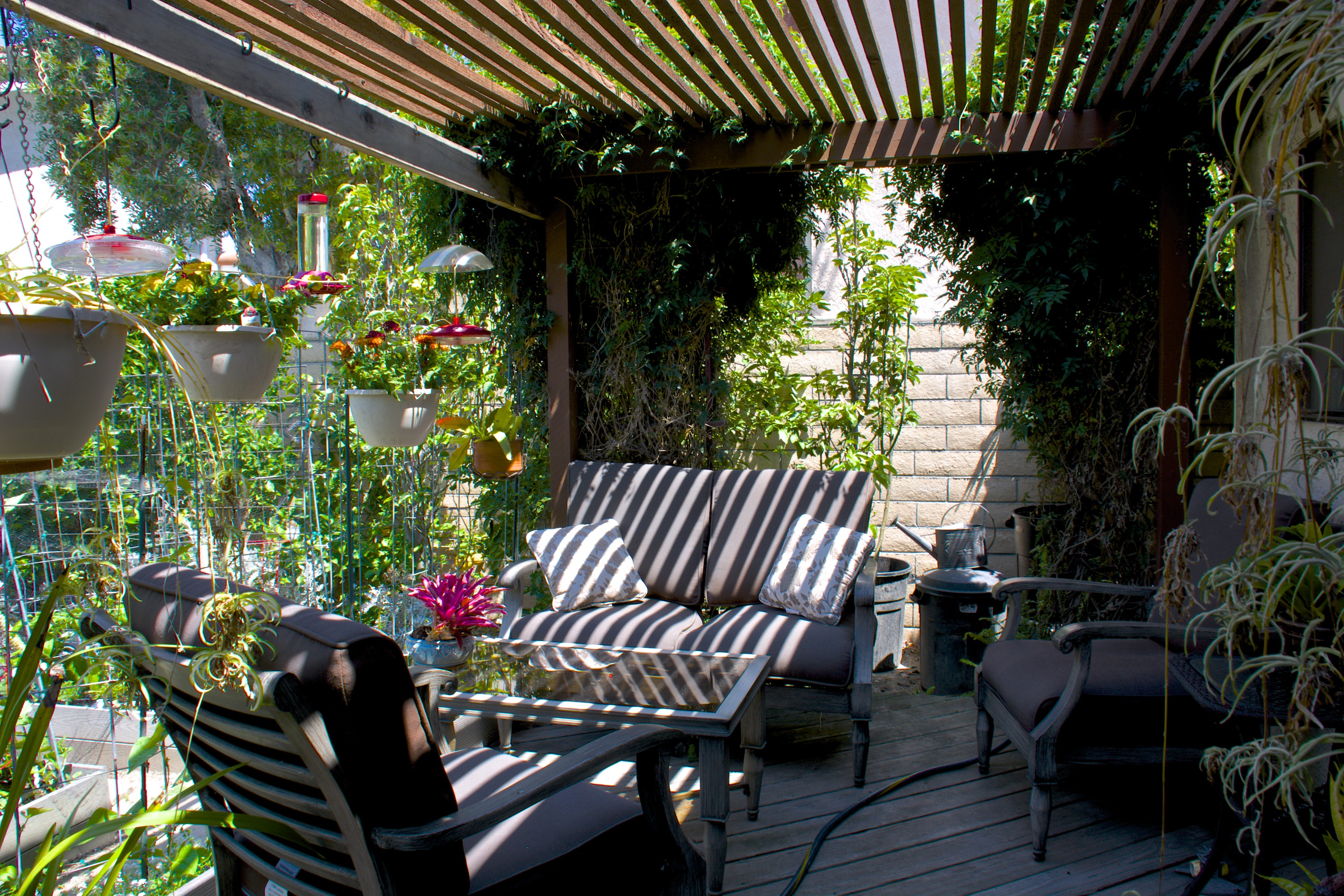
This is the sitting area on the deck. My favorite chair is the one on the right, still in shadow.

This is the sitting area on our deck. My favorite chair is the one on the right, still in shadow and hard to see. It stays cool there until about noon.

From my comfy chair, I can watch the parade of butterflies, bees, paper wasps, and birds go by. I can see the huge non-native Green Fig Beetles circling my tomatoes, looking for a spot to get in under the netting. And if they happen to get their legs tangled in the netting, I whap them with my shoe. That is called “mechanical control” in the parlance of an organic gardener. 🙂 I have dispatched three so far. I think there is only one left in the neighborhood, and I hope it gets tangled up soon enough.
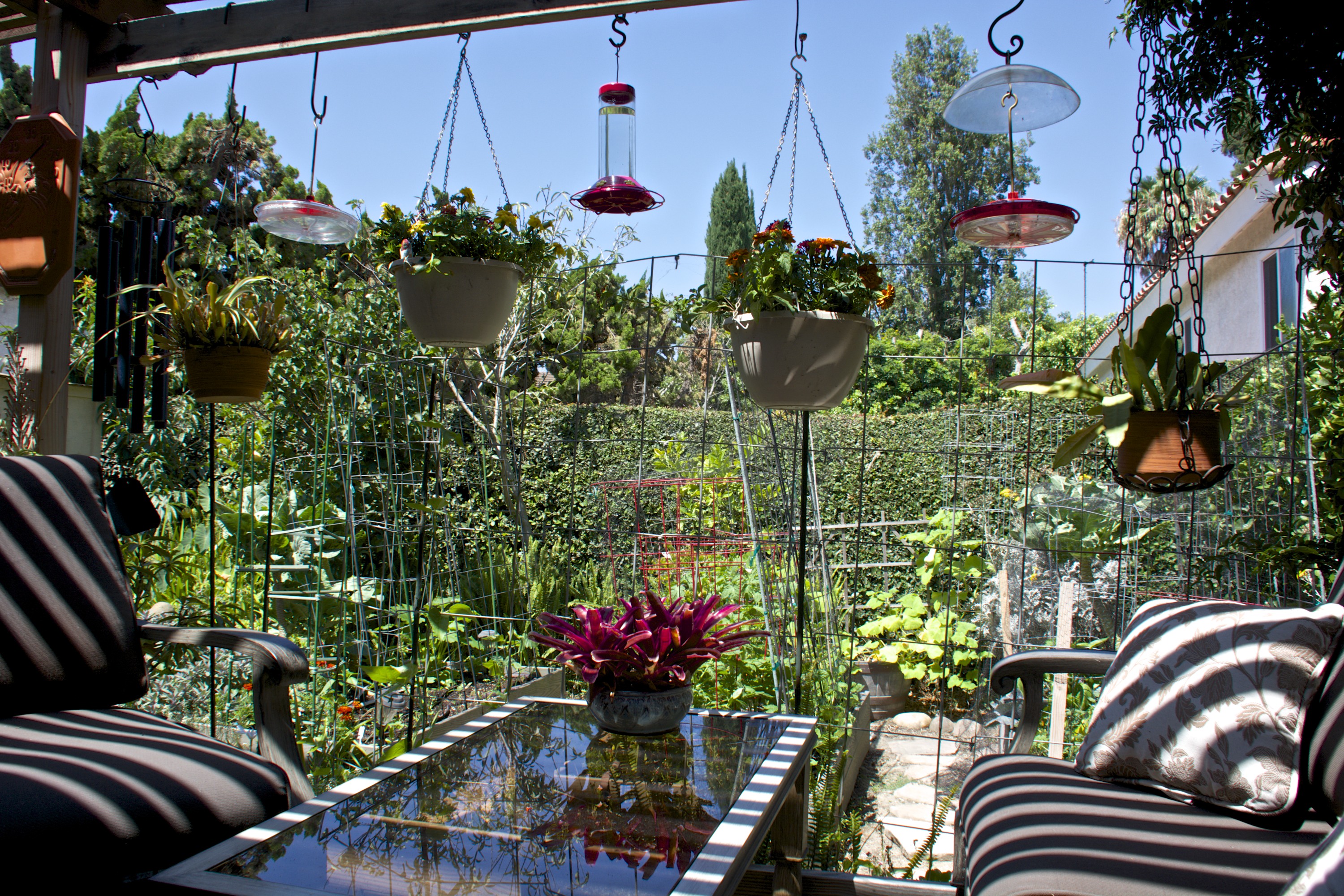
This is the view from my chair, looking to the west. This is a great place to enjoy the cool mornings before the sun heats things up.
This is the view from my chair, looking to the west. This is a great place to enjoy the cool mornings before the sun heats things up.

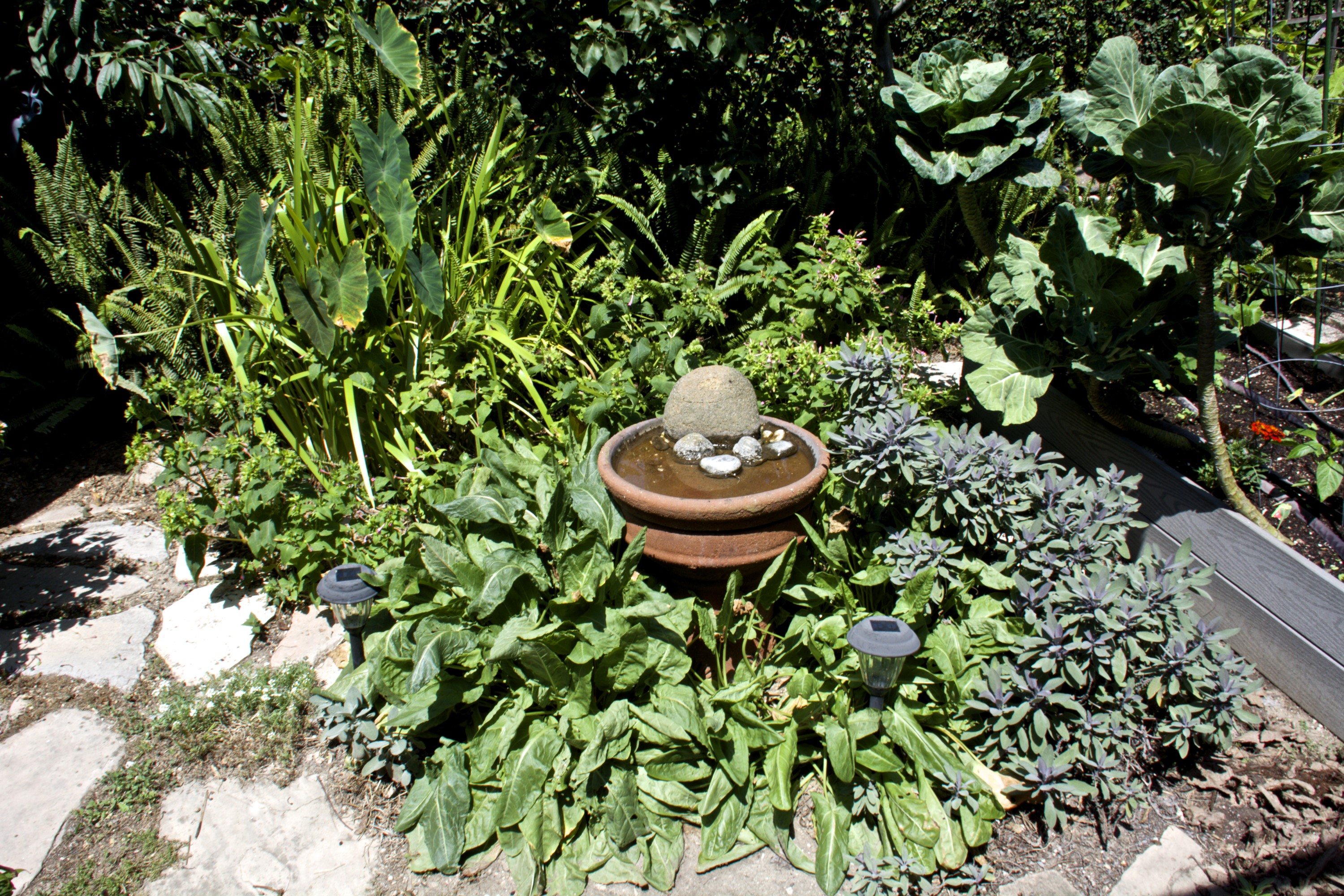
The herb garden with bird bath in the center has sage and sorrel in it at present. I feed the sorrel to the chickens.

The herb garden with bird bath in the center is to the left (south) of the veggie beds. It has only sage and sorrel in it at present. I feed the sorrel to the chickens.
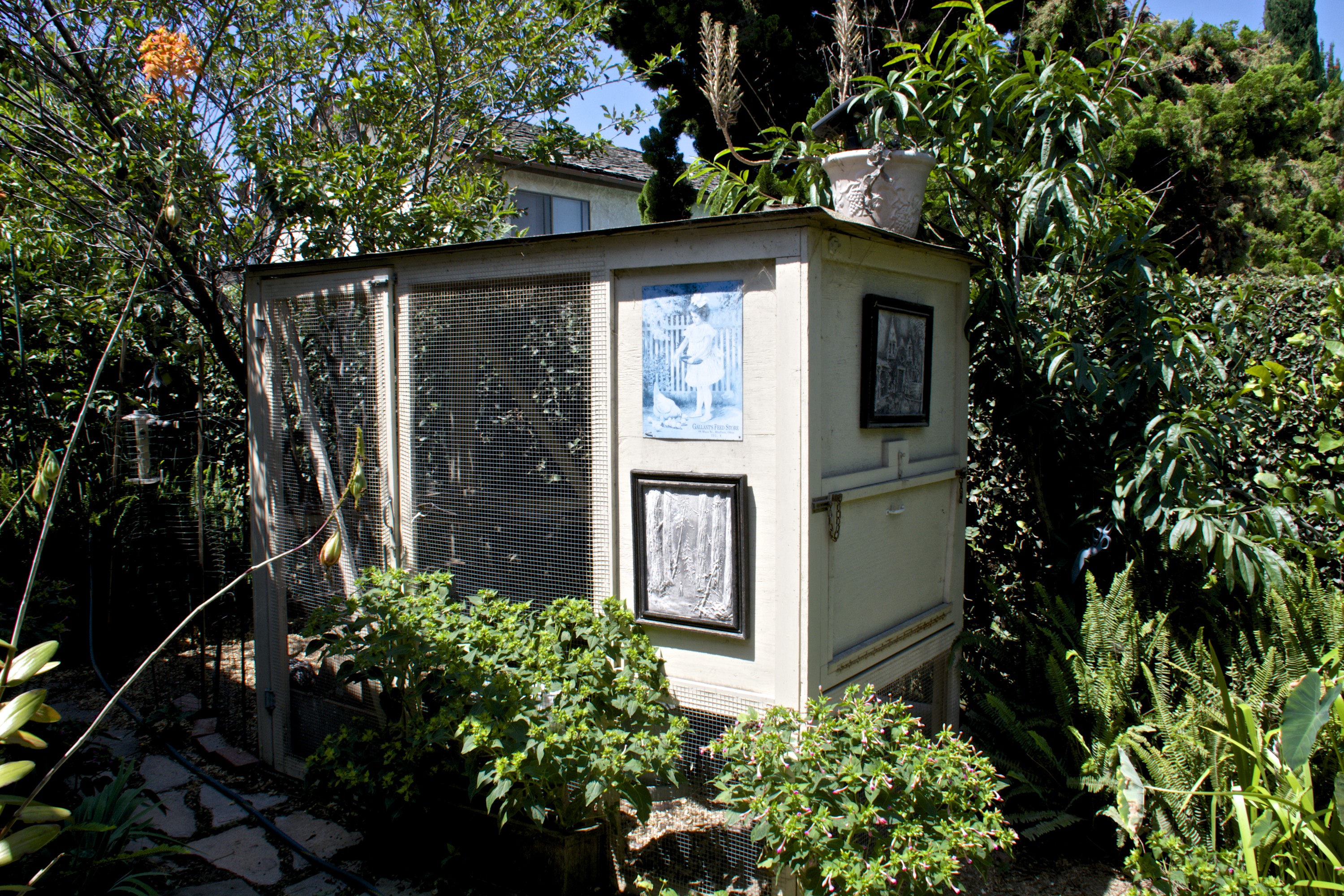
The chicken coop is to the left (south) of the herb garden. Fruit trees grow beyond.

The chicken coop is to the left (south) of the herb garden. Fruit trees grow beyond.

We are down to three hens, but two of them are laying, so we are good in the egg department.

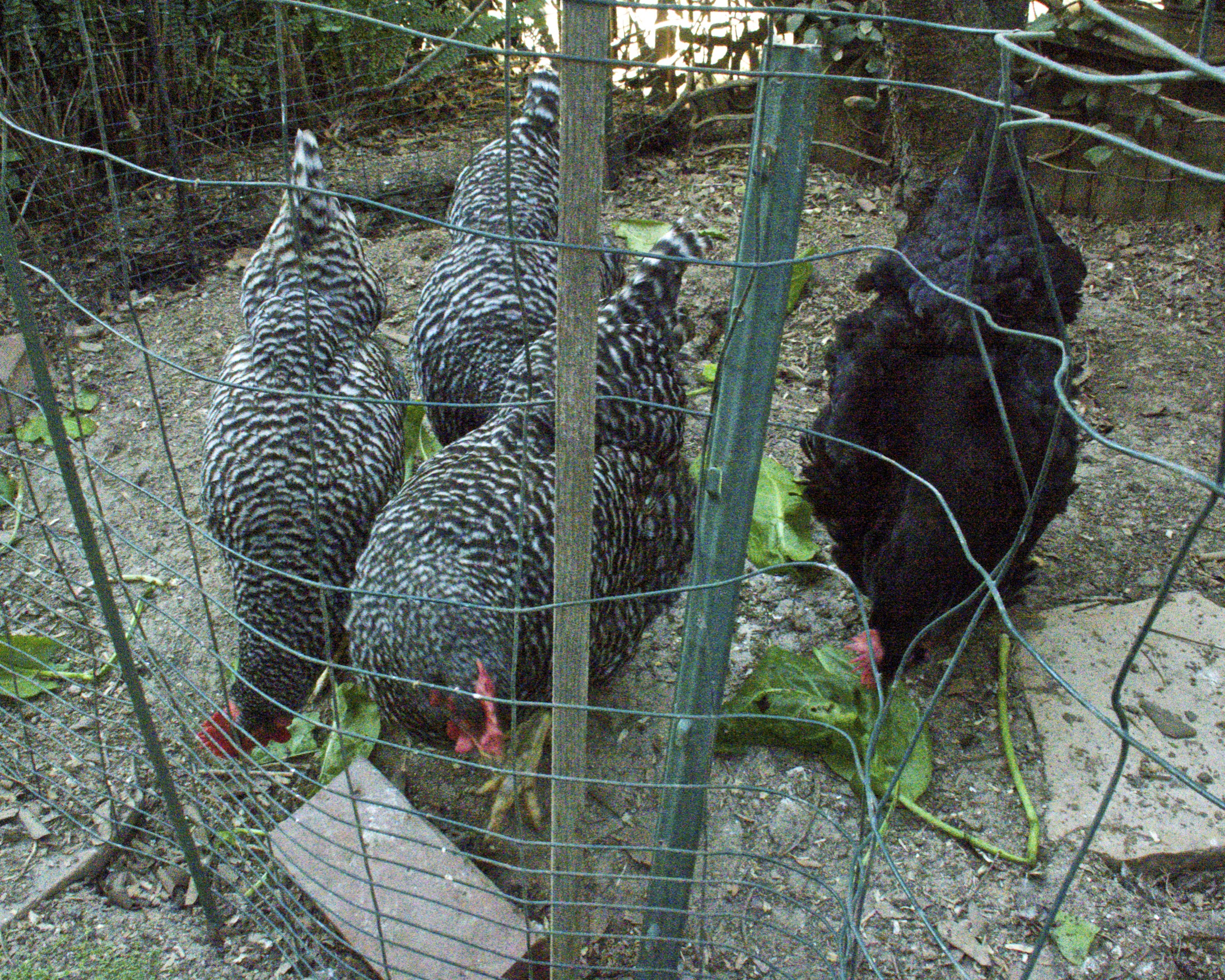
We are down to three hens, but two of them are laying, so we are good in the egg department. The girls are enjoying a new layer of pine shavings in their outdoor run. They love to dig in the dirt, looking for the scratch that I scatter for them as a treat.
I like watching my veggies grow. This bed is the most recently planted one. I have nets over all three beds to keep the birds out. They had been eating my lettuce, peas, green beans, and even the cucumber leaves.
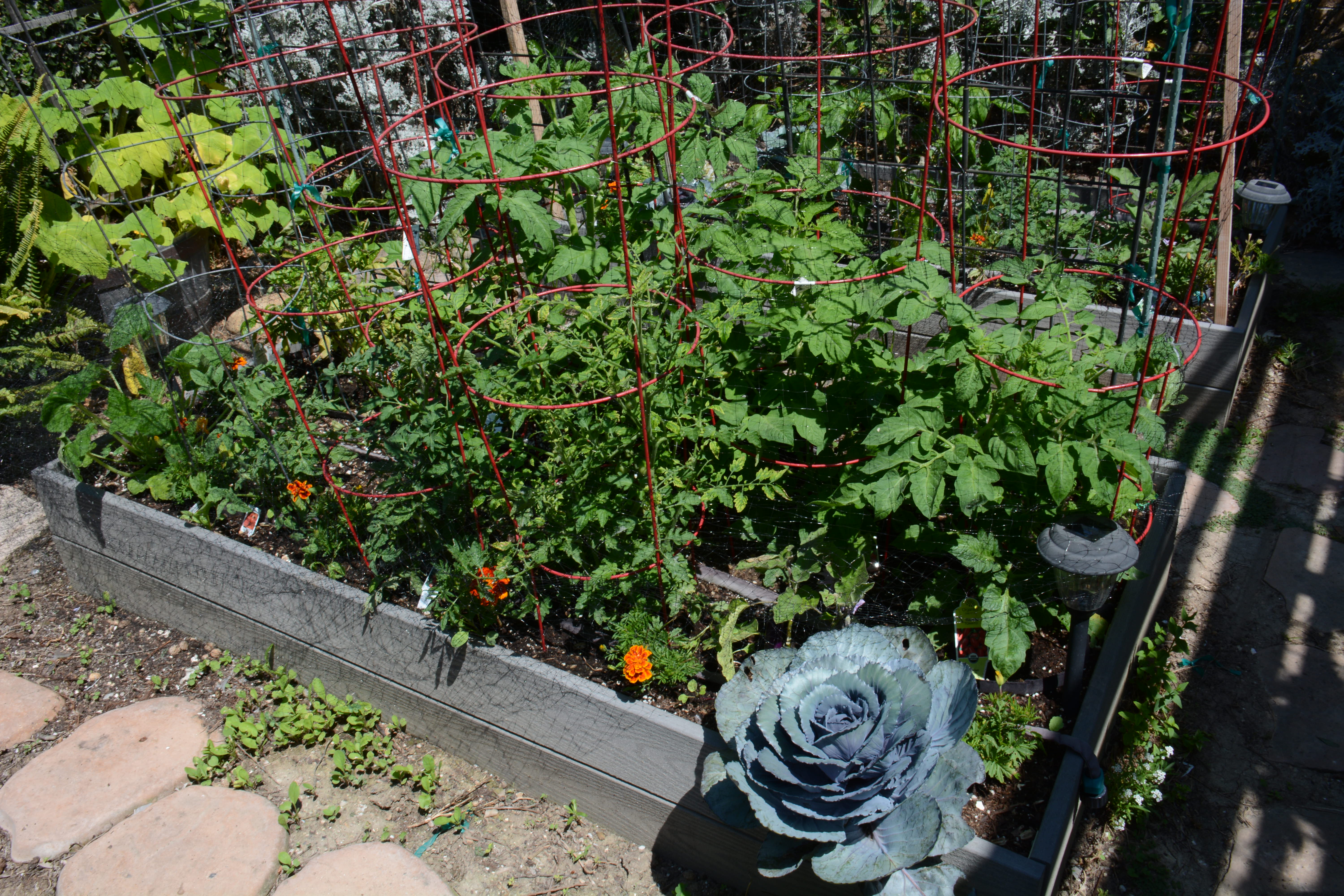
I like watching my veggies grow. This bed is the most recently planted one. I have nets over all three beds to keep the birds out. They had been eating my lettuce, peas, green beans, and even the cucumber leaves.

This is bed #2, the first one I planted this summer. It is looking lush, but not producing anything yet.

This is bed #2, the first one I planted this summer. It is looking lush, but is not producing anything ready to harvest yet. Later.
Bed #1 was planted after bed #2, and is coming along nicely. It had room for a row of beans, so I planted some pole beans.
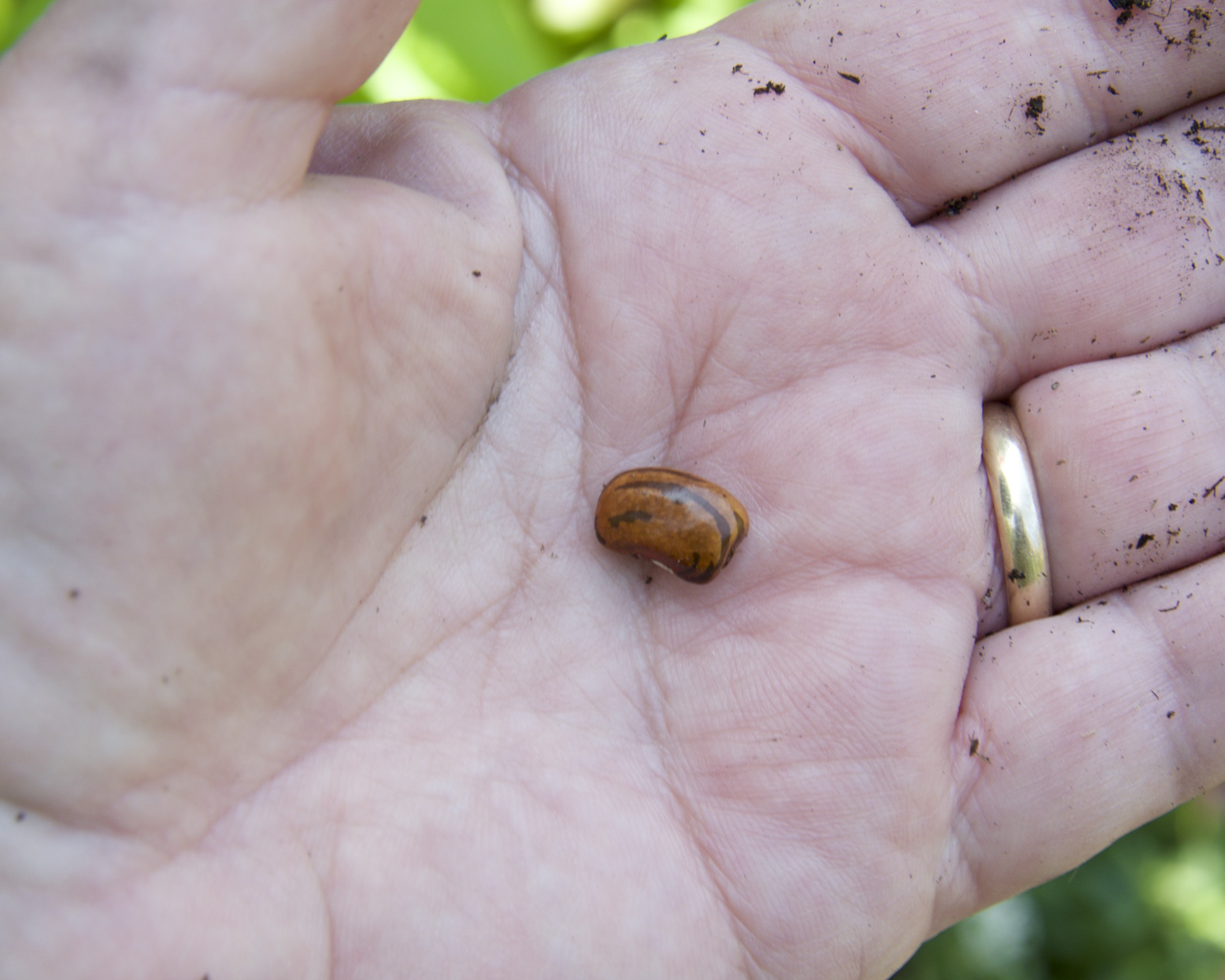
Bed #1 was planted after bed #2, and is coming along nicely. It had room for a row of beans, so I planted some pole beans.

This is a bean called Ojo de Capra, Eye of Goat. I got the seeds from Native Seed Search. I haven't grown them before. I planted them late in the season, so who knows if I will get a crop or not. It's an experiment, like much of my gardening.

This is a bean called Ojo de Capra, Eye of Goat. I got the seeds from Native Seed Search. I haven’t grown them before. I planted them late in the season, so who knows if I will get a crop or not. It’s an experiment, like much of my gardening.
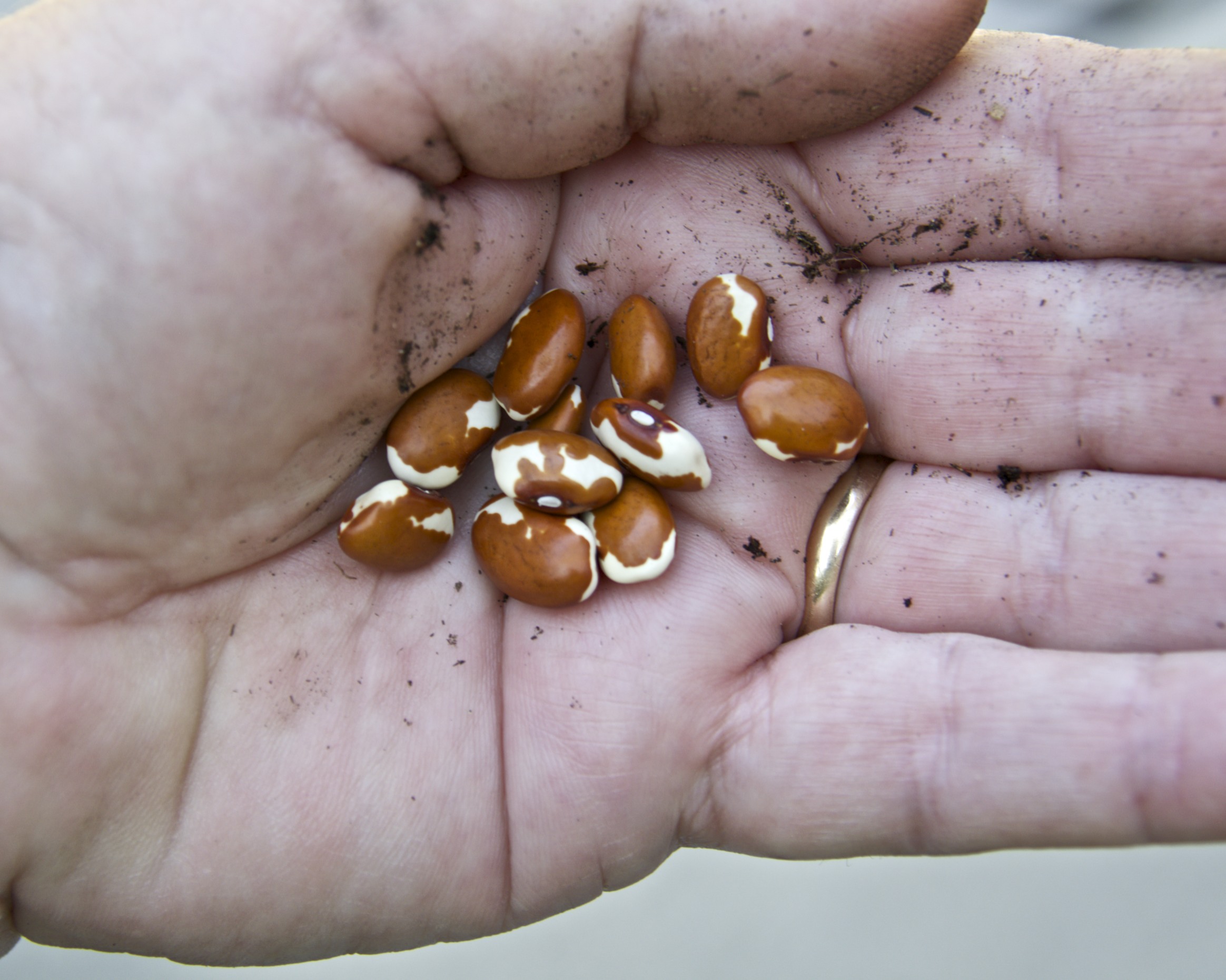
I planted a row of Frijol Chivita (Little Goat Beans) in bed #3. Again, it's late in the season, and the seeds were old, so who knows if they will even sprout.

I planted a row of Frijol Chivita (Little Goat Beans) in bed #3. Again, it’s late in the season, and the seeds were old, so who knows if they will even sprout.

See those dirty hands? Those are the hands of a happy gardener. The outside of a garden is good for the inside of a gardener.
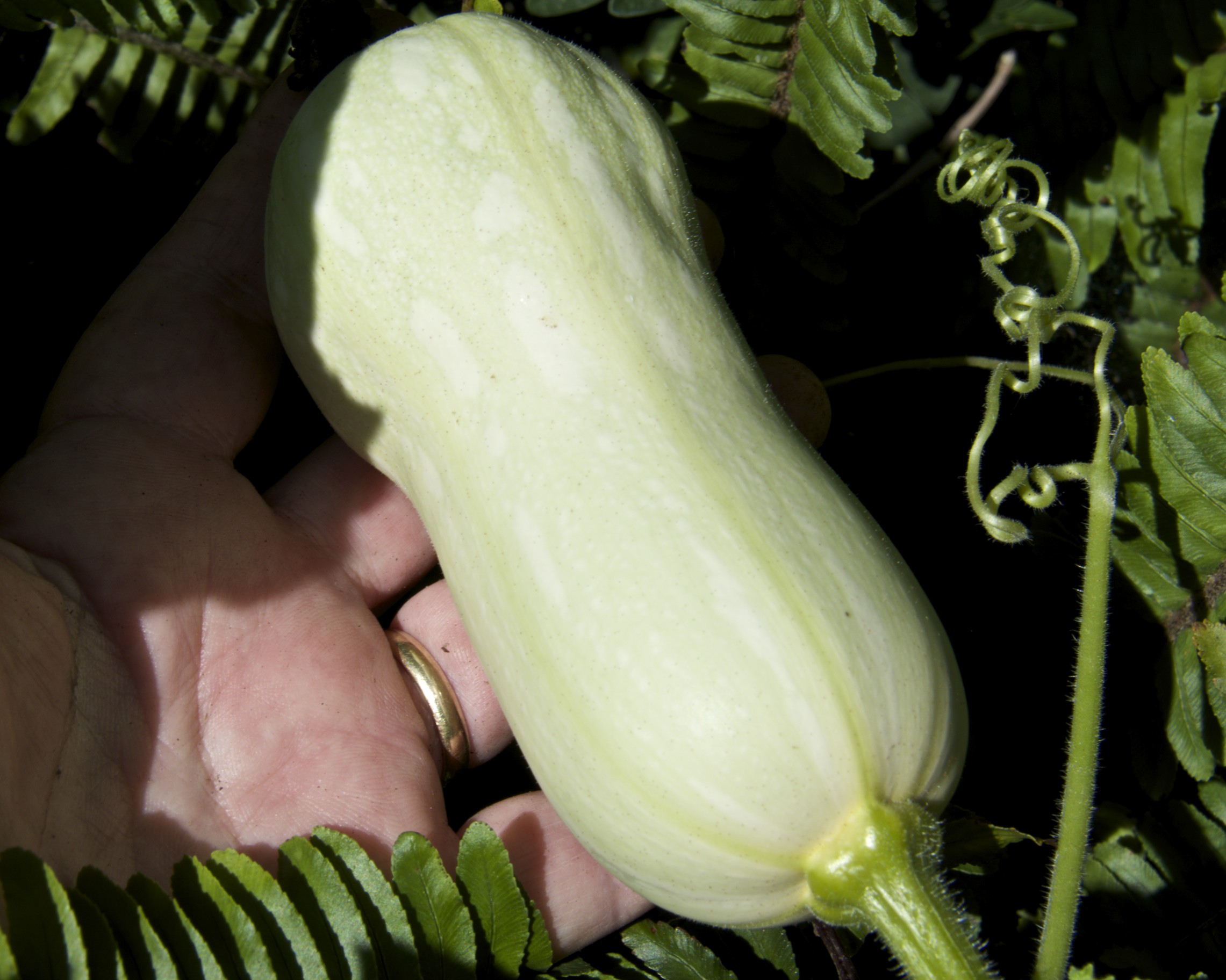
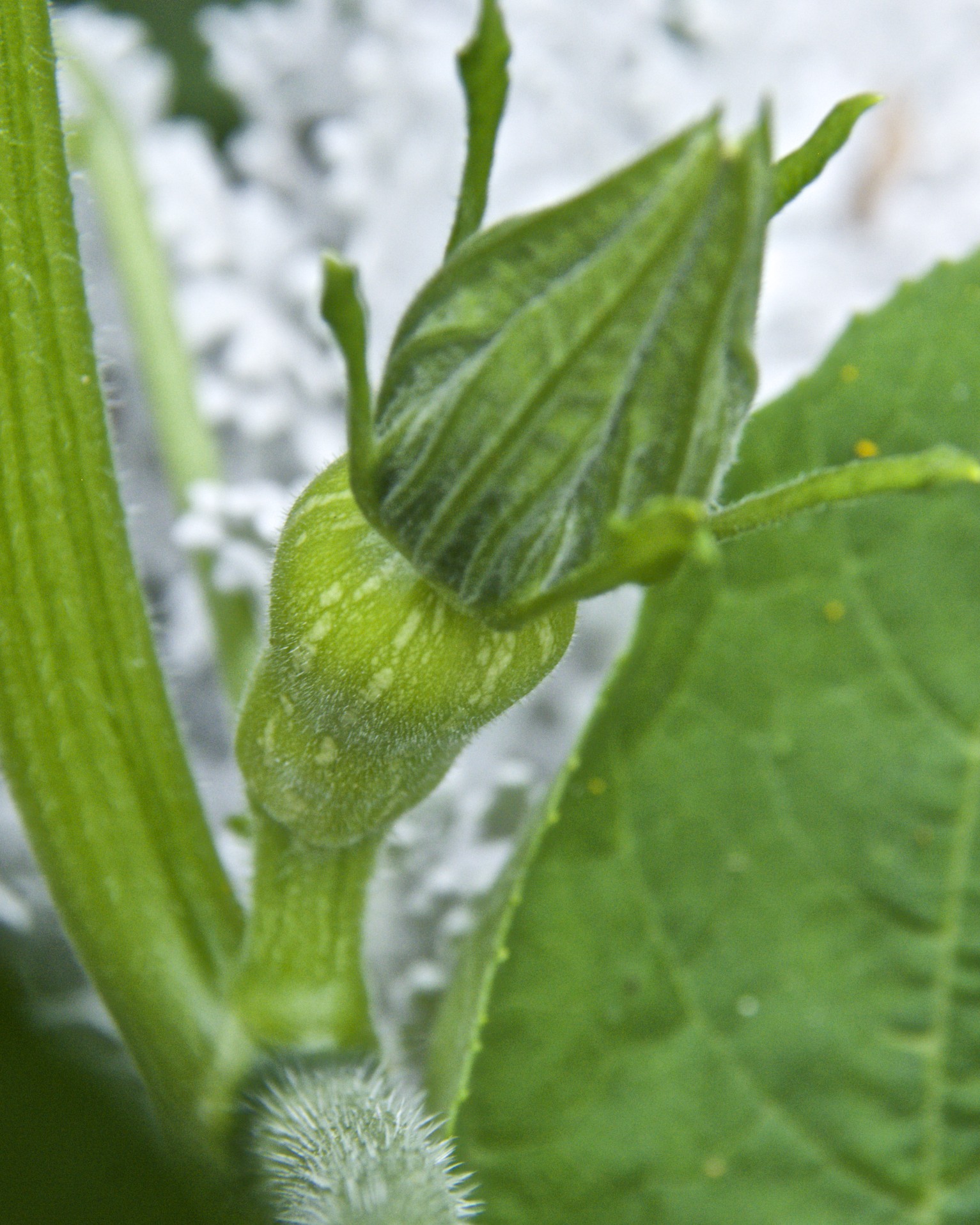
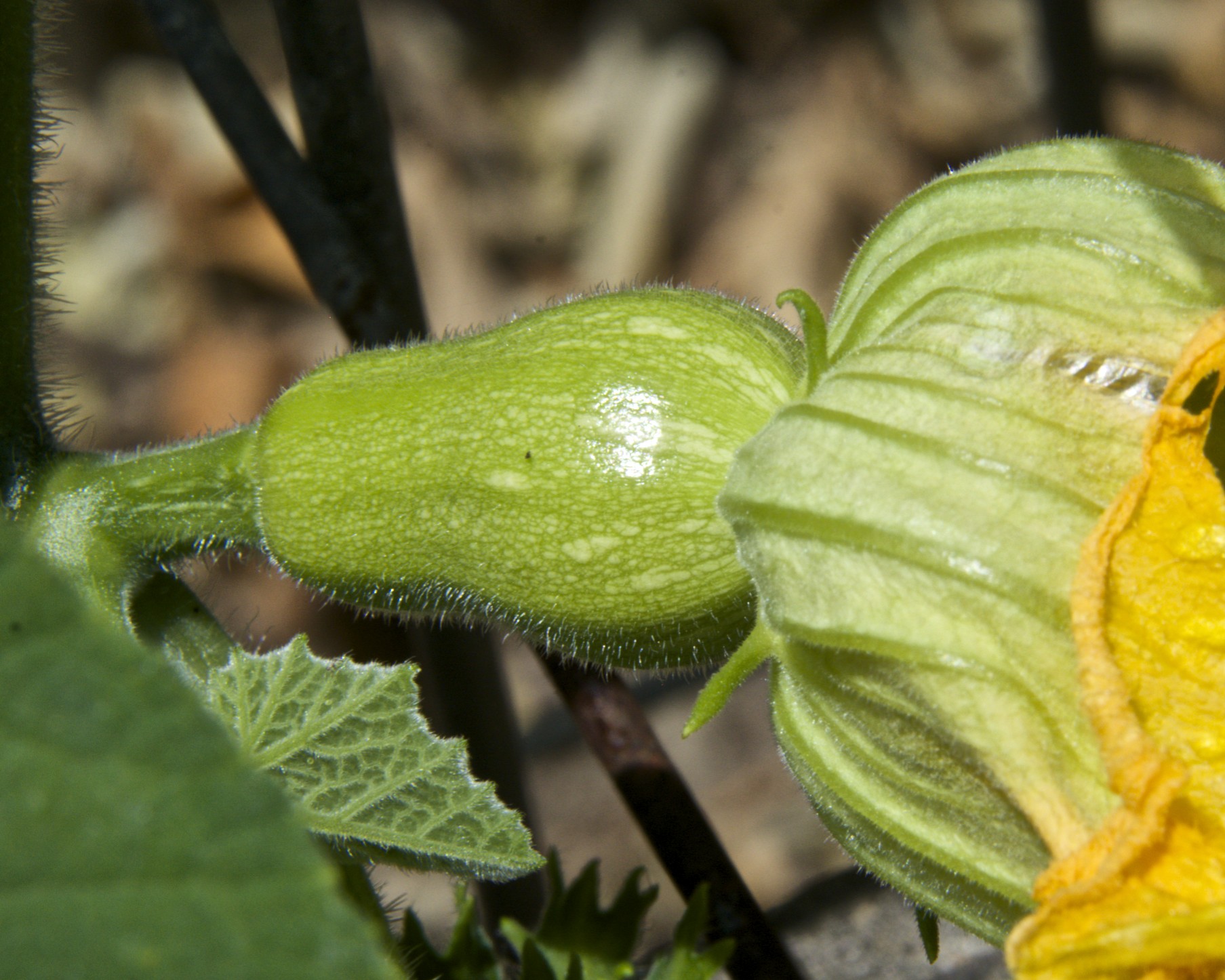
I have four Butternut squash that have set fruit. Three were hand-pollinated. There were male flowers open on the same day as the female flower for the fourth squash, so I let nature take its course. It appears to be pollinated, but I'm not positive yet. I don't see any more female flowers, so this may be my entire harvest, four Butternut squash.

I have four Butternut squash that have set fruit. Three were hand-pollinated. There were male flowers open on the same day as the female flower for the fourth squash, so I let nature take its course. It appears to be pollinated, but I’m not positive yet. I don’t see any more female flowers, so this may be my entire harvest, four Butternut squash.

The three zucchini plants have a lot of male flower buds, and I can see one female bud. I have my fingers crossed for getting some summer squash before summer is over.

The three zucchini plants have a lot of male flower buds, and I can see one female bud. I have my fingers crossed for getting some summer squash before summer is over.

This is just some of the damage that the birds did before I got netting over bed #3. I transplanted 8 cucumber vines, but the birds seem to have eaten the growth end off of about five of them. VBS.

This is just some of the damage that the birds did before I got netting over bed #3. I transplanted 8 cucumber vines, but the birds seem to have eaten the growth end off of about five of them. VBS.

I had some spider plants that weren't doing well in pots in this west-facing sunny spot, so I replaced them with pots of Penta, marigolds, and Lantana. That's right, a mini-garden for butterflies and bees.

I had some spider plants that weren’t doing well in pots in this west-facing sunny spot, so I replaced them with pots of Penta, marigolds, and Lantana. That’s right, a mini-garden for butterflies and bees.

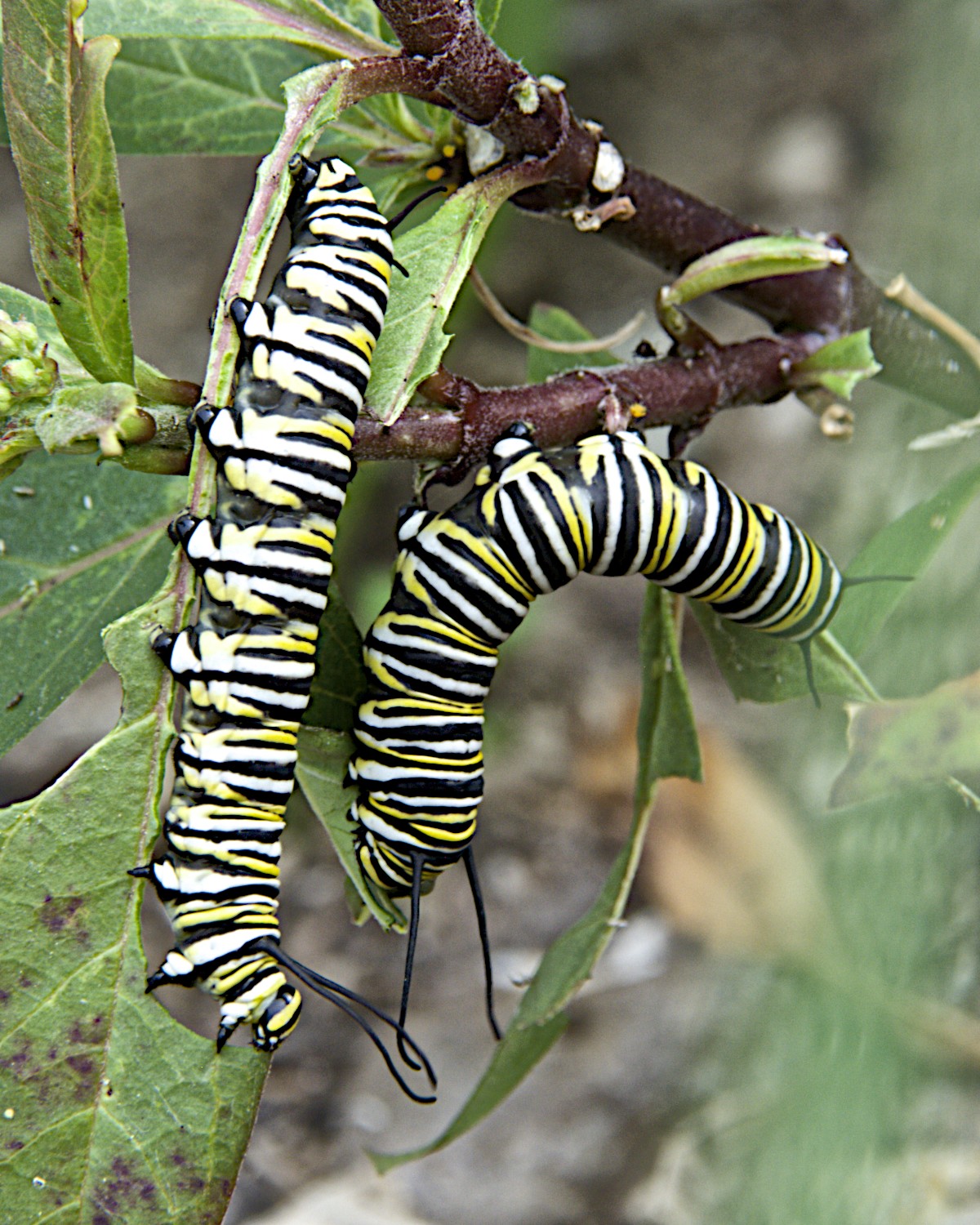
I also put some pots of coneflower and Rudbeckia on the deck, and planted more bloodflower milkweed, all for the butterflies. I now get a colorful parade of butterflies in back: Monarchs, Gulf Fritillaries, Cloudless Sulfurs, Mourning Cloaks, Fiery Skippers, White Cabbage Butterflies (a non-native pest, but still pretty), and an occasional Tiger Swallowtail.
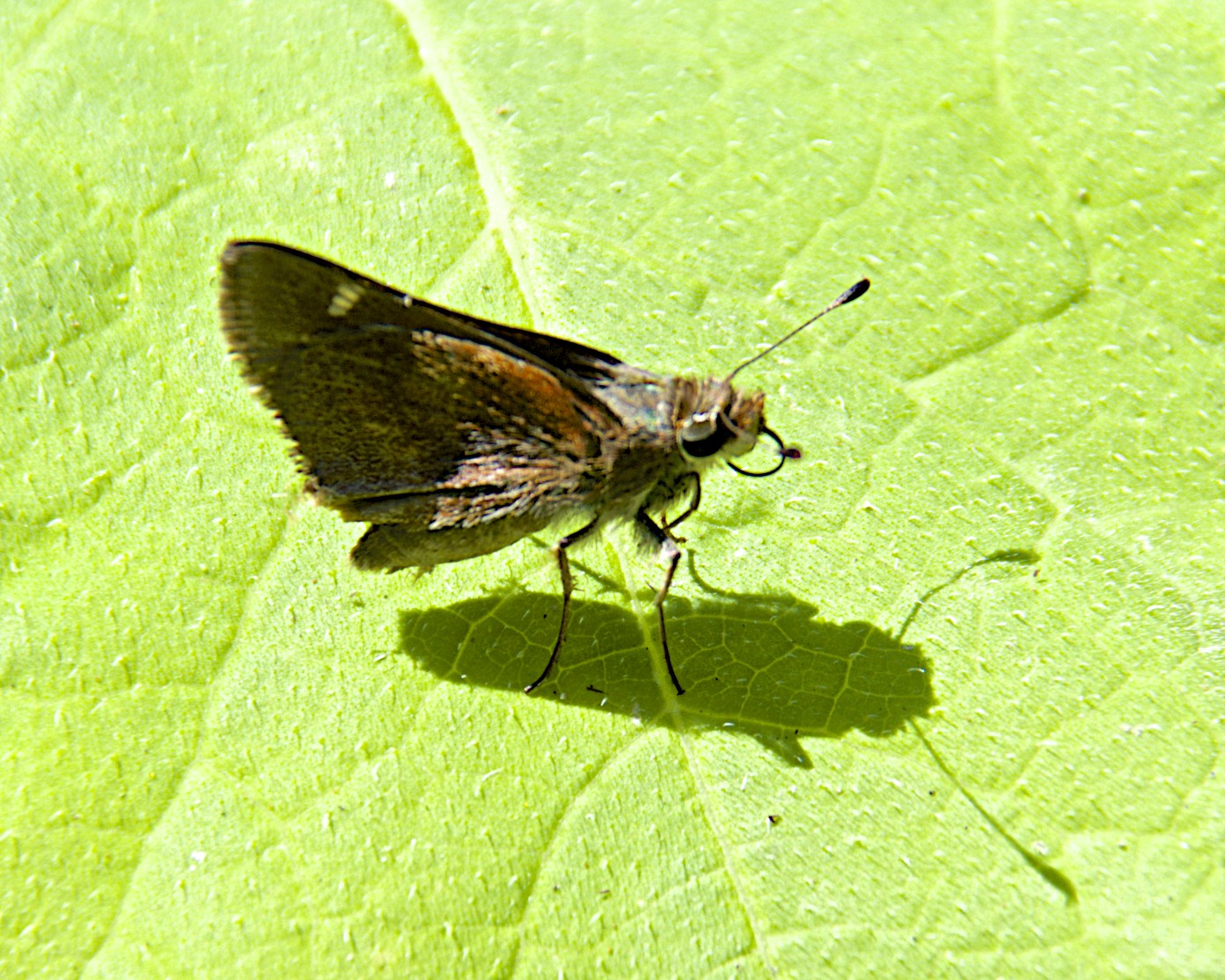
I think this is a Funeral Duskywing, but it might be a dark Fiery Skipper.
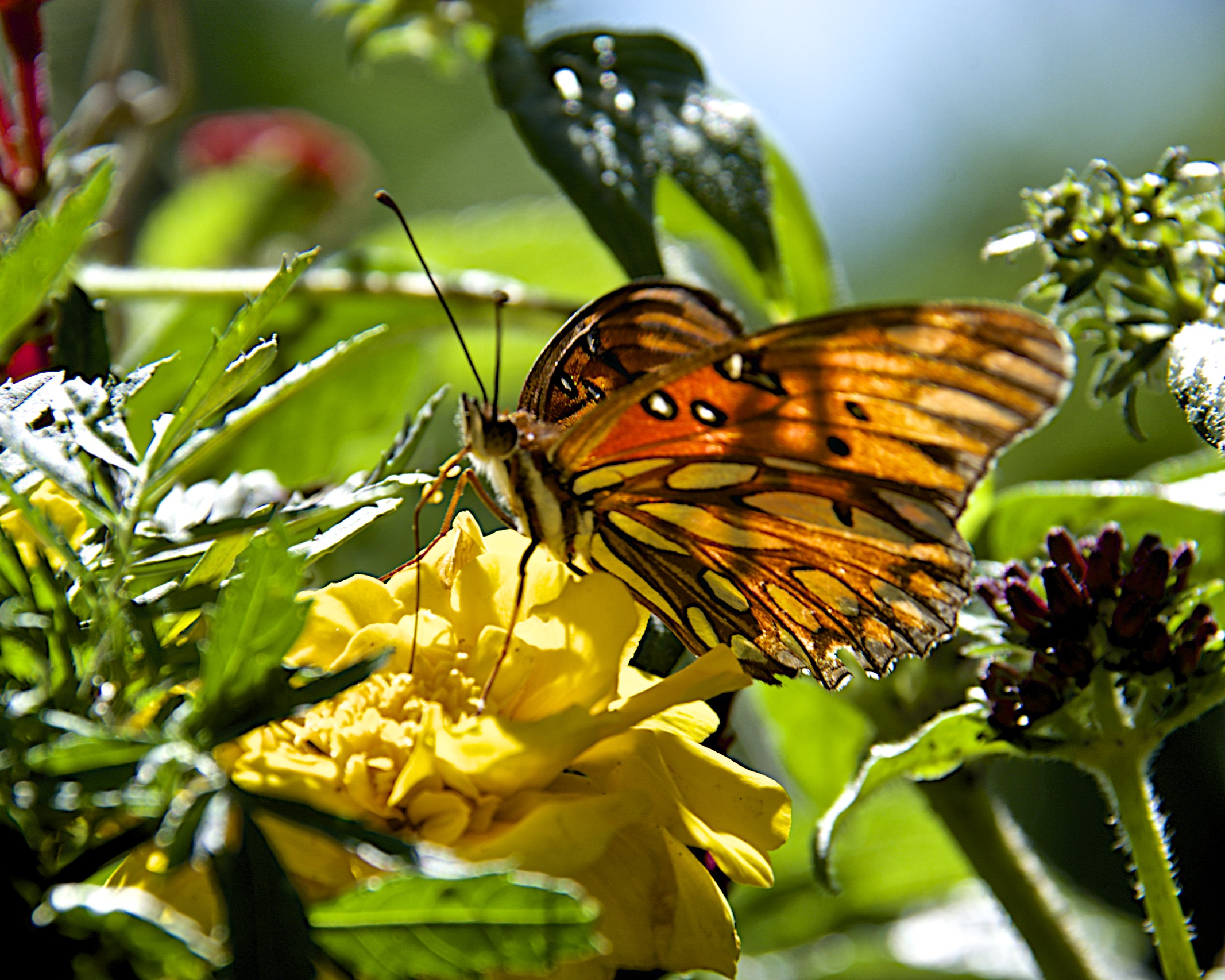
I think this is a Funeral Duskywing, but it might be a dark Fiery Skipper.

A Gulf Fritillary on a marigold in my new hanging basket pollinator garden.
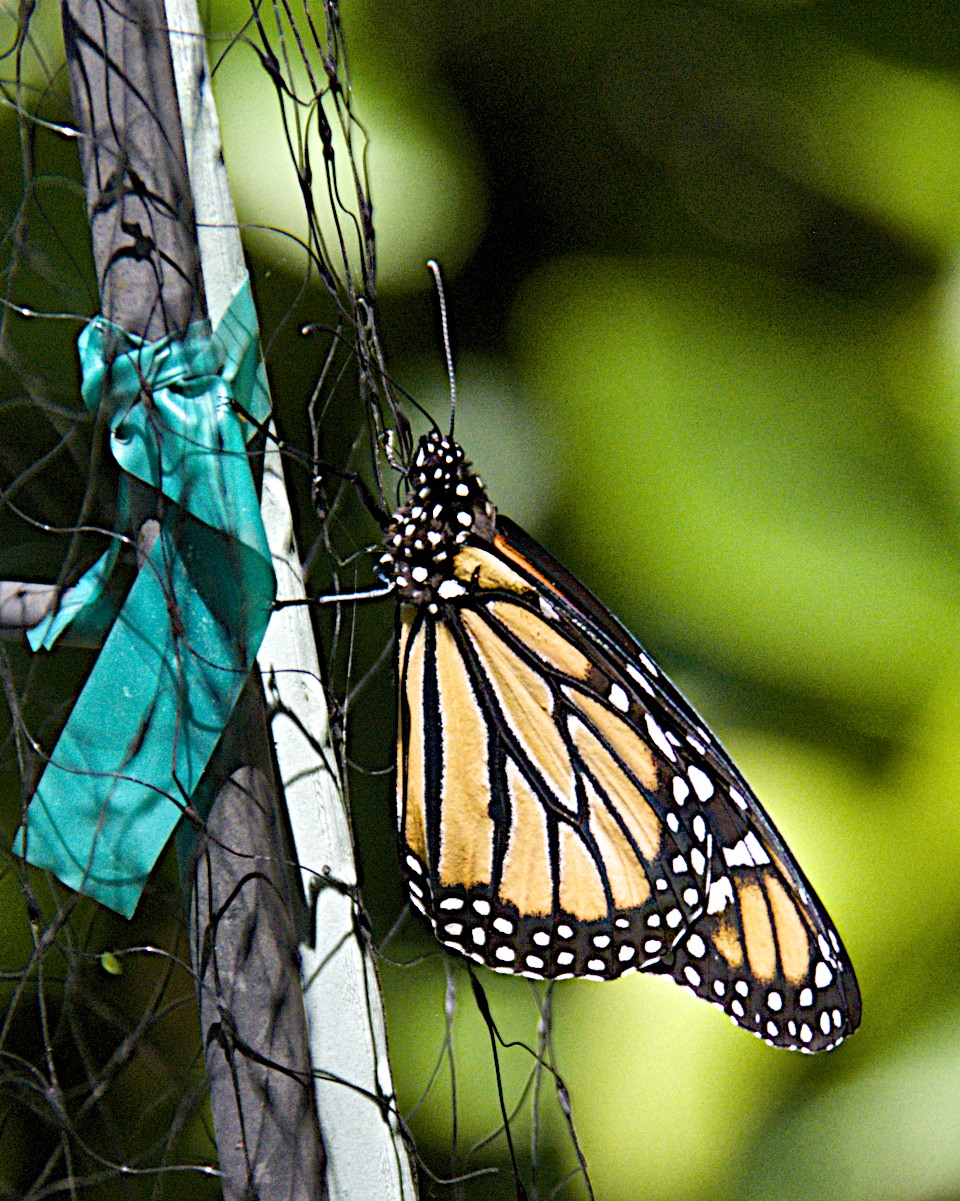
A Gulf Fritillary on a marigold in my new hanging basket pollinator garden.

One of the many Monarchs in our yard.
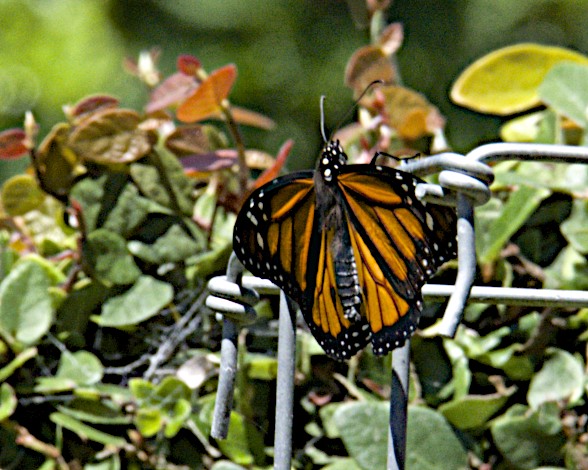
One of the many Monarchs in our yard.

And here is a Monarch with its wings a bit more spread.
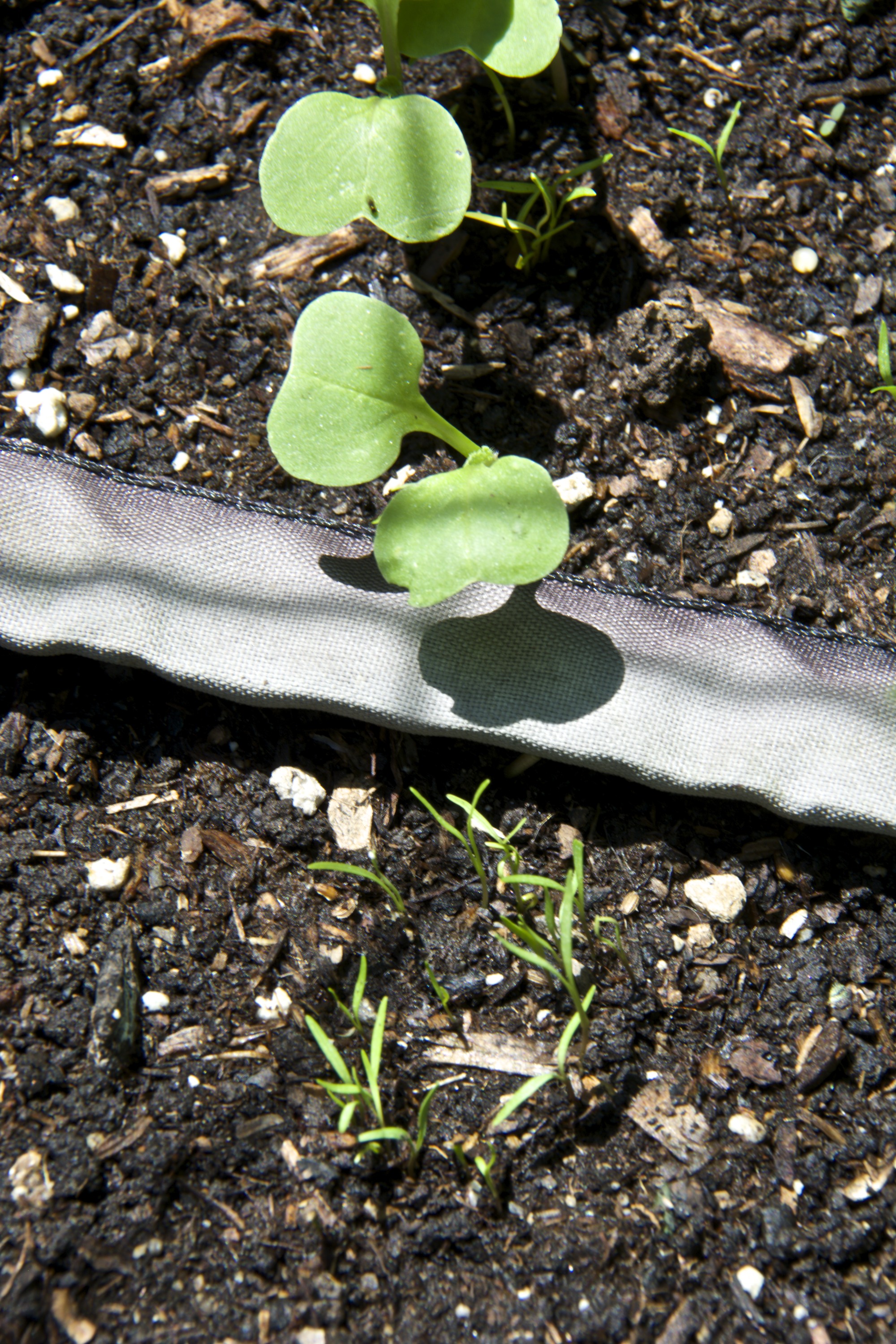
And here is a Monarch with its wings a bit more spread.

I like to do "yard patrol," looking at what has sprouted. This time it is radishes and carrots.
I like to do “yard patrol,” looking at what has sprouted. This time it is radishes and carrots.

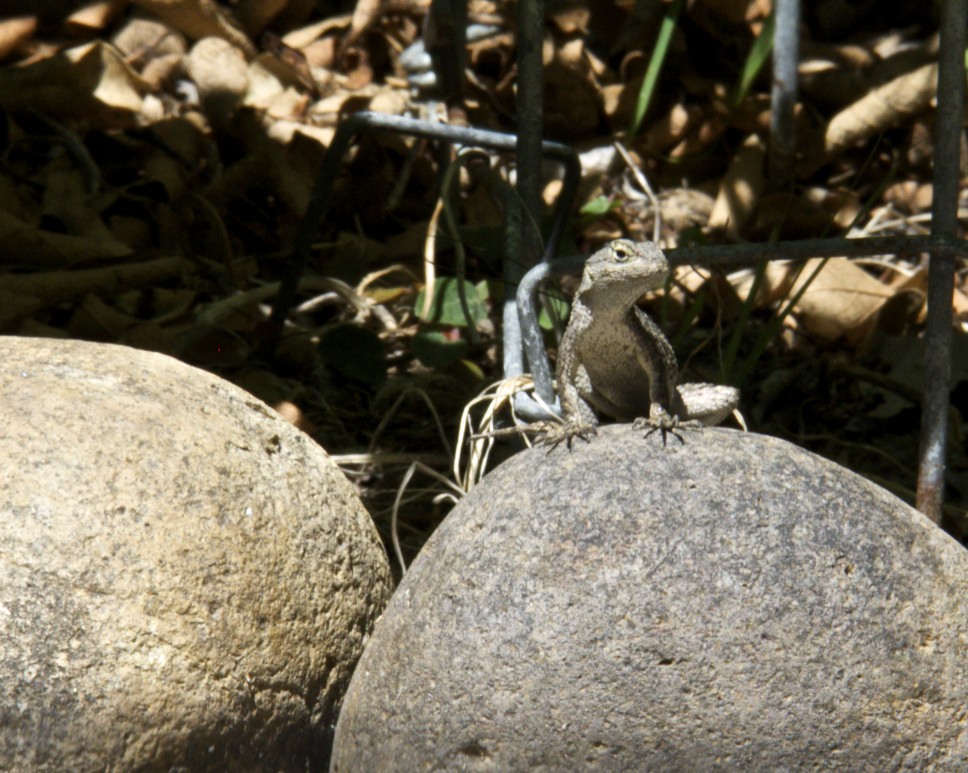
I don't know if this will show up or not, but it is supposed to be a picture of a female Western Fence lizard. We also have males in the yard, and I assume that they are reproducing. At this point, they outnumber the Southern Alligator Lizards in our yard, which is a National Wildlife Federation certified backyard habitat.
I don’t know if this will show up or not, but it is supposed to be a picture of a female Western Fence lizard on the rock to the right. We also have males in the yard, and I assume that they are reproducing. At this point, they outnumber the Southern Alligator Lizards in our yard, which is a National Wildlife Federation certified backyard habitat.

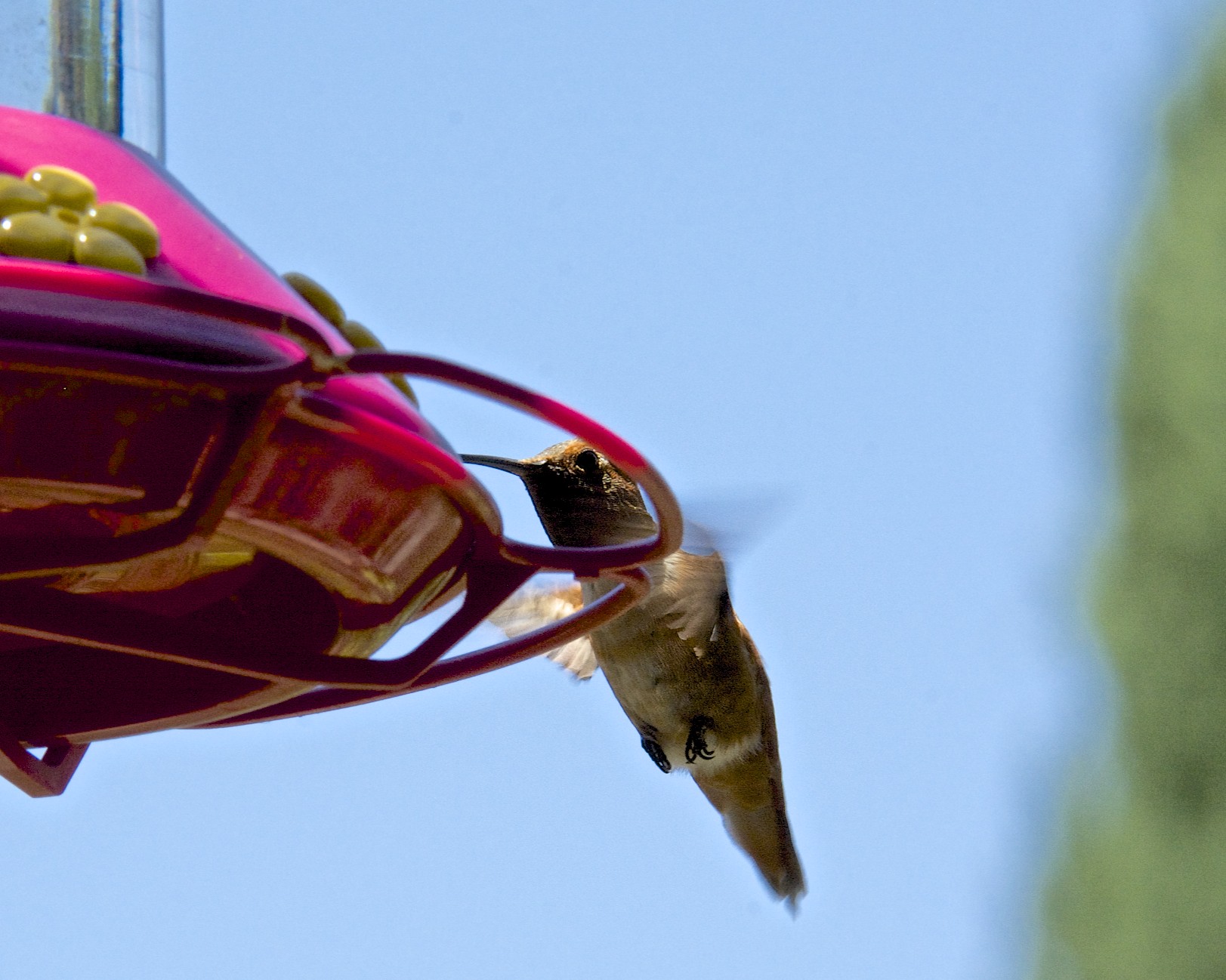
The hummingbirds are very happy that I have finally cleaned and refilled the feeders for them. The male Allen's hummingbirds fight over the feeders. "Mine"! "No, mine, get away!" Silly birds. There are three feeders, enough for everyone. They aren't into sharing.

The hummingbirds are very happy that I have finally cleaned and refilled the feeders for them. The male Allen’s hummingbirds fight over the feeders. “Mine!” “No, mine, get away!” Silly birds. There are three feeders, enough for everyone. Apparently they aren’t into sharing.

We get a daily visitation from House Sparrows and House Finches. A family of Mourning Doves nested nearby, as did a family of Hooded Orioles, and we see them frequently. We get visits from Common Bushtits, Common Yellowthroats, and Black Phoebes. Gulls fly overhead, soaring in lazy circles. Crows fly purposefully from one spot to another. We get occasional Great Egrets, Snowy Egrets, Great Blue Herons, Double-crested Cormorants, and Canada Geese traveling over our house.

There is always something to see and hear, always something to enjoy from our back deck, even if there is very little to harvest in the way of vegetables.

Posted in Uncategorized | Tagged , , , , , , , , , , | 7 Comments

Maybe we won’t starve after all–July 21, 2015

There is hope for my summer garden. I finally found the energy to plant veggie bed #3. And just in the nick of time for it to enjoy a surprise rainfall. I say surprise because coastal southern California normally gets 0.01 inches of rain for the month of July. Right, it NEVER rains in southern California. But as the song goes, but when it rains, man it pours.

Hurricane Delores shifted direction on its way up from Baja a few days ago, and dumped nearly an inch of rain on southern California. Some areas got more, as in flash flooding, with roads and bridges washed out. In fact, Interstate 10 between California and Arizona got a bridge washed out and is closed indefinitely. Mud and rockslides closed other roads. And yet just days before, wildfires had closed the I-15 at Cajon Pass, burning 20 cars as the flames swept over the freeway. We live in interesting times.

Newly planted veggie bed #3 on July 17, with transplanted tomatoes, bell peppers, and cucumbers, with mesclun, carrots and radishes from seed.

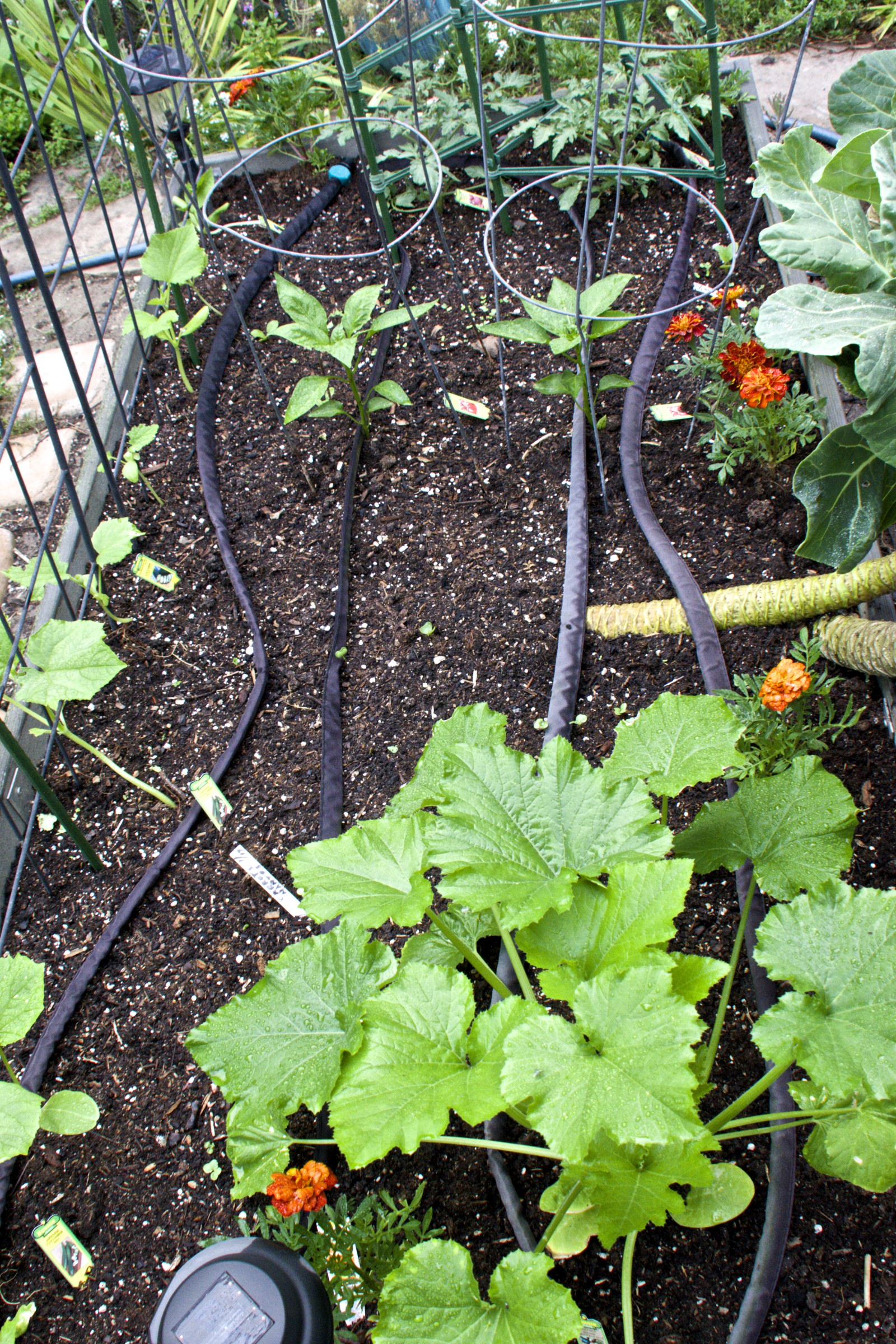
Newly planted veggie bed #3 on July 17, with transplanted tomatoes, bell peppers, zucchini, and cucumbers, with mesclun, carrots and radishes planted from seed. There are also three big collard green plants that are going into their third summer and still producing.

My garden experienced none of those disasters. It just got a nice gentle rain over the course of two days. The timing couldn’t have been better as I had just planted  veggie bed #3.

Here is veggie bed #3 in the foreground, with #2 and #1 in the background.

Here is veggie bed #3 in the foreground, with #2 and #1 in the background, on July 21.

Here is bed #3 from a different angle, with zucchini in the foreground.

Here is bed #3 from a different angle, with zucchini in the foreground.

I planted some French Breakfast radishes in the carrot rows to mark the rows. The mesclun has also sprouted, but not the carrots. Yet.

I planted some French Breakfast radishes in the carrot rows to mark the rows. The mesclun has also sprouted, but not the carrots. Yet.

In my last post, I was worried that we were going to starve because the male flowers were  blooming out of sync with the female flowers, and none of the female bud had gotten fertilized. Well, I took matters into my own hands. When this female flower opened, the male flowers had closed the day before. I stripped the petals off the male flower and used the old stamens to fertilize the pistols of this squash bud. It looks like it worked.

Hand-fertilized butternut squash on July 17.

Hand-fertilized butternut squash on July 17.

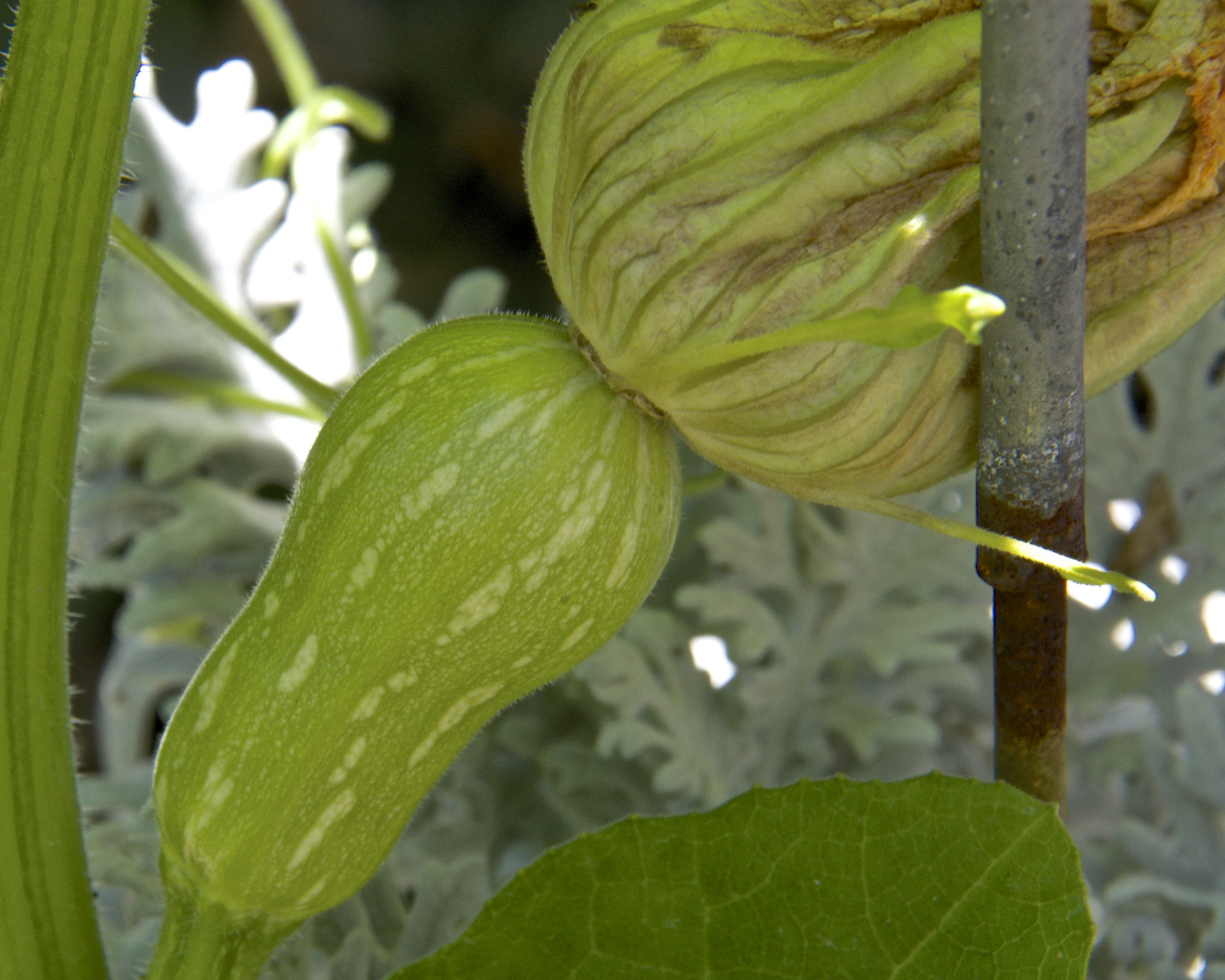
Here it is today, July 21. Yep, it got fertilized. It looks like it will have a nice long neck too. That is the best part.

Here it is today, July 21. Yep, it got fertilized. It looks like it will have a nice long neck too. That is the best part.

This is the third butternut that I have hand-fertilized. The male and female flowers are still blooming out of sync. With six plants, you'd think that they would have the common decency to open a male and a female flower on the same day. But not so far.

This is the third butternut that I have hand-fertilized. The male and female flowers are still blooming out of sync. With six plants, you’d think that they would have the common decency to open a male and a female flower on the same day. But not so far.

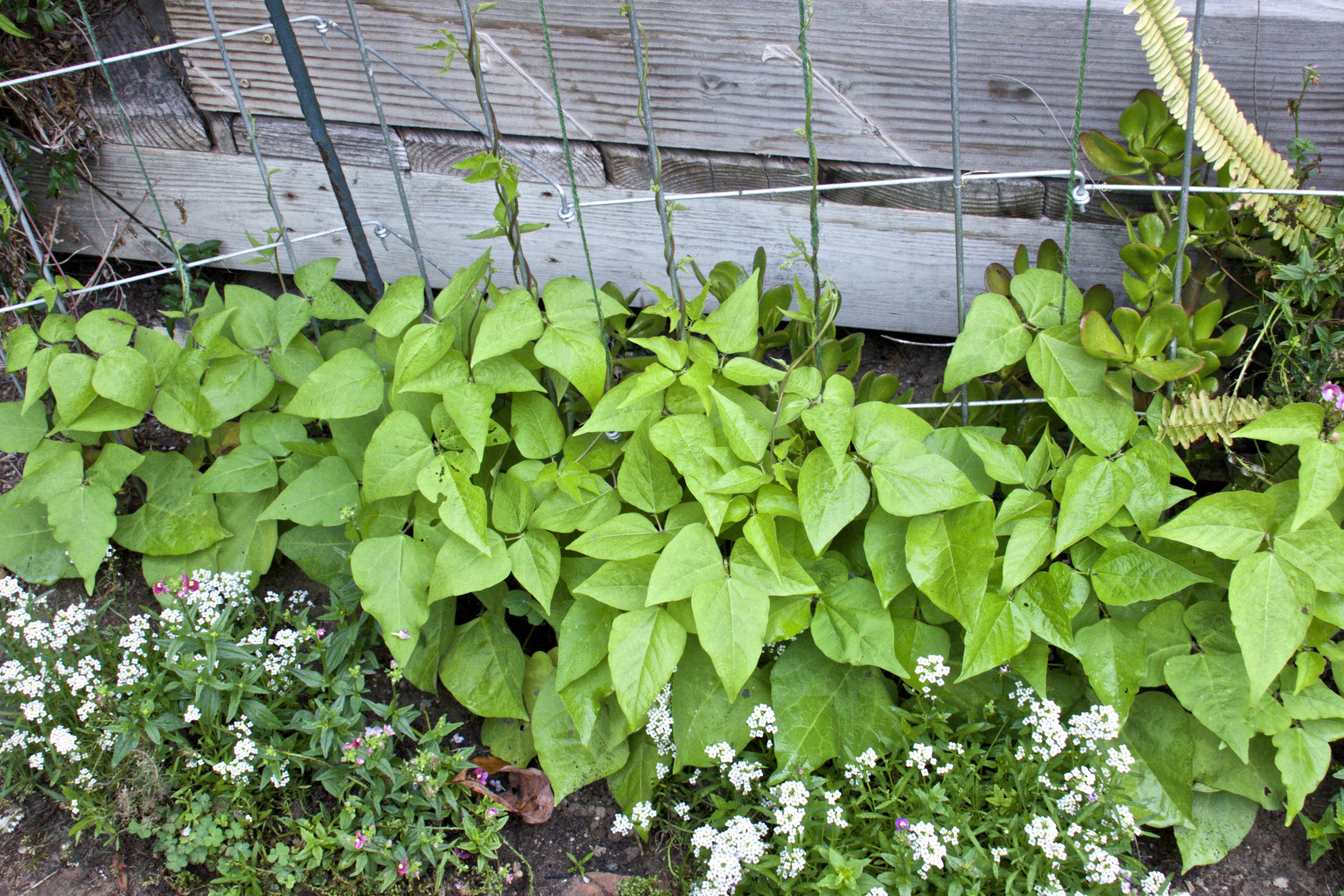
I have a nice row of scarlet runner beans coming along.

I have a nice row of scarlet runner beans coming along.

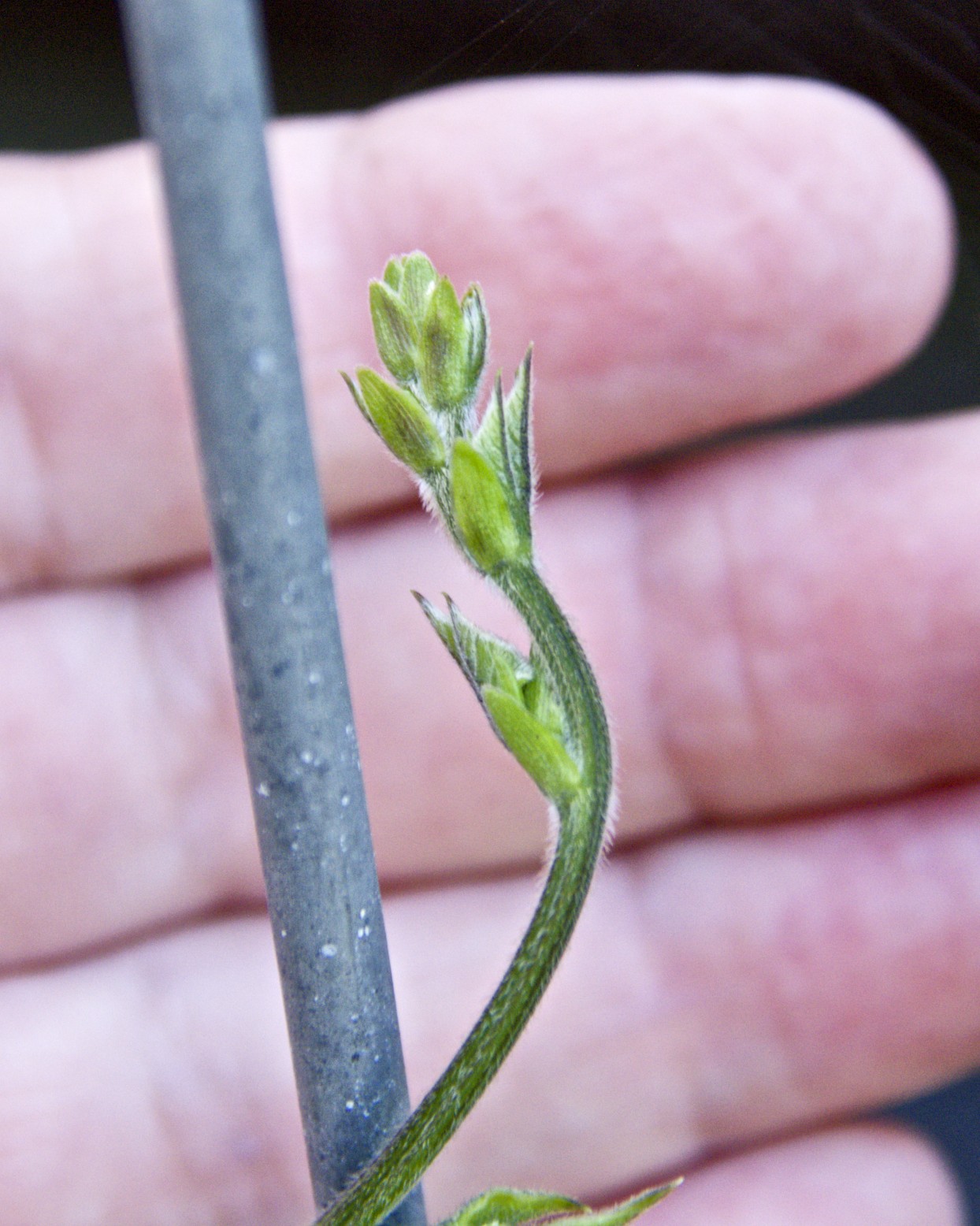
The first vine to grab hold of the trellis is now up to my eye level. They don't really take off until they can latch onto something to climb up. I am carefully training each vine up a metal post or a string. So far, I have no red blossoms from them, much less a bean.

The first vine to grab hold of the trellis is now up to my eye level. They don’t really take off until they can latch onto something to climb up. I am carefully training each vine up a metal post or a string. So far, I have no red blossoms from them, much less a bean.

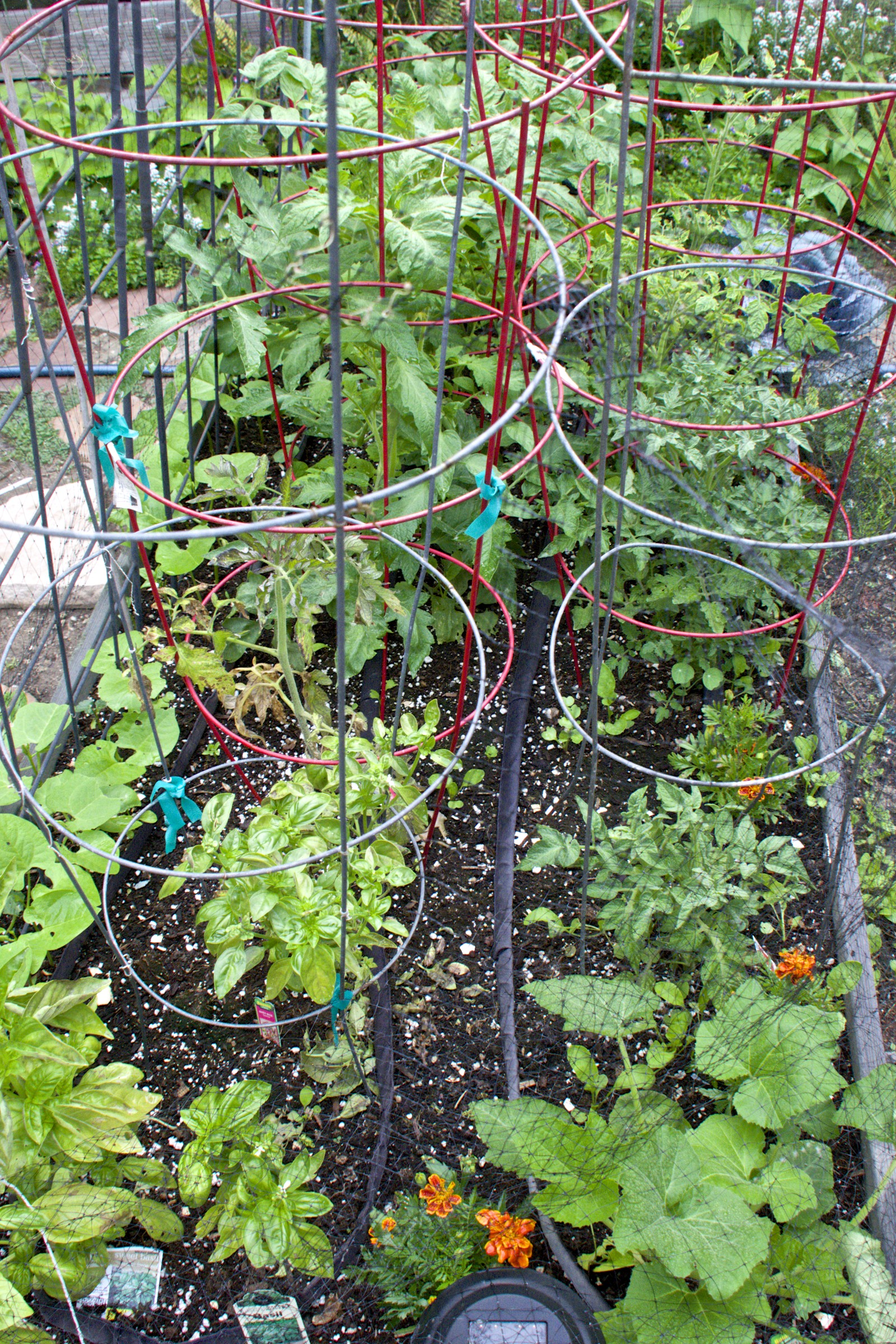
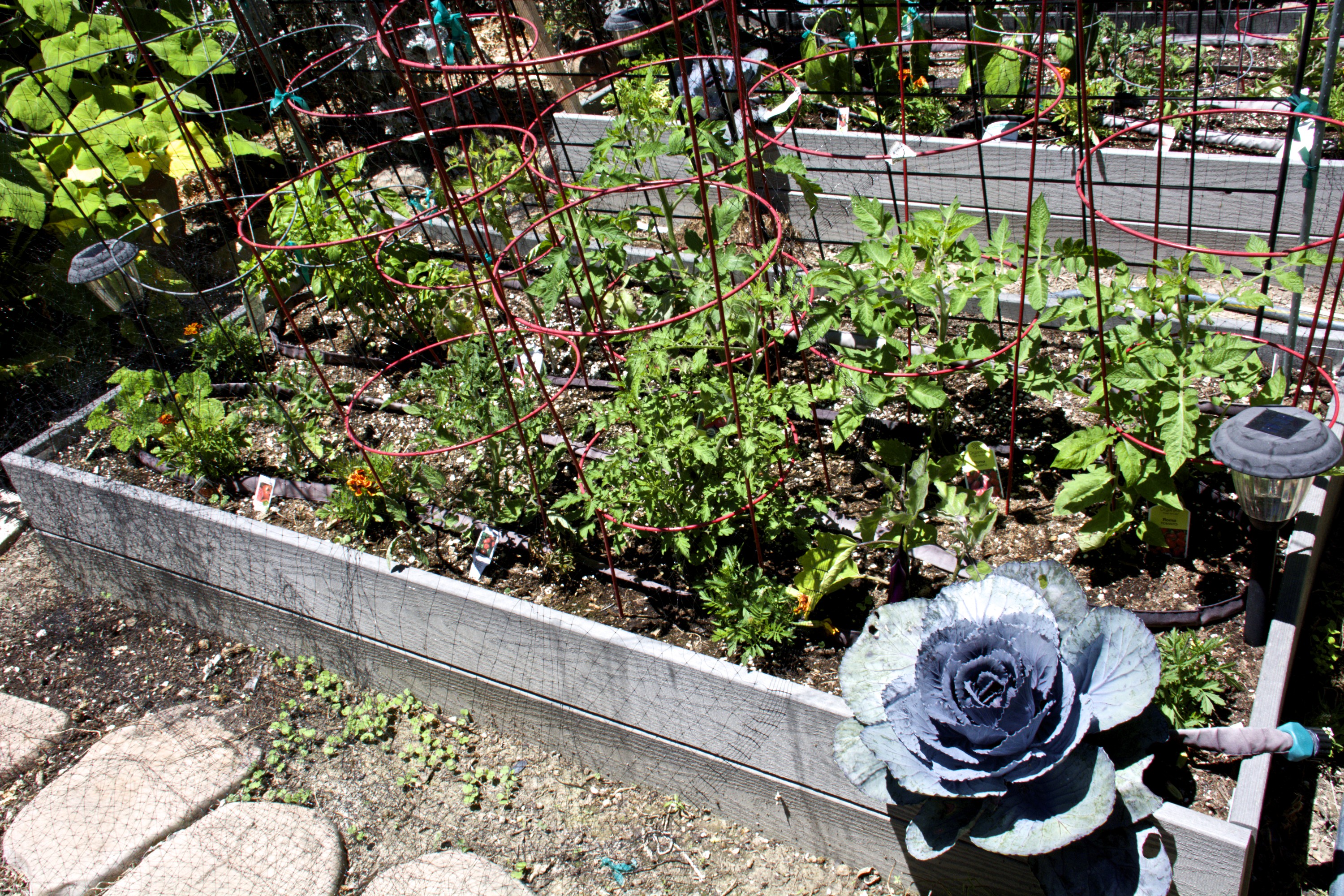
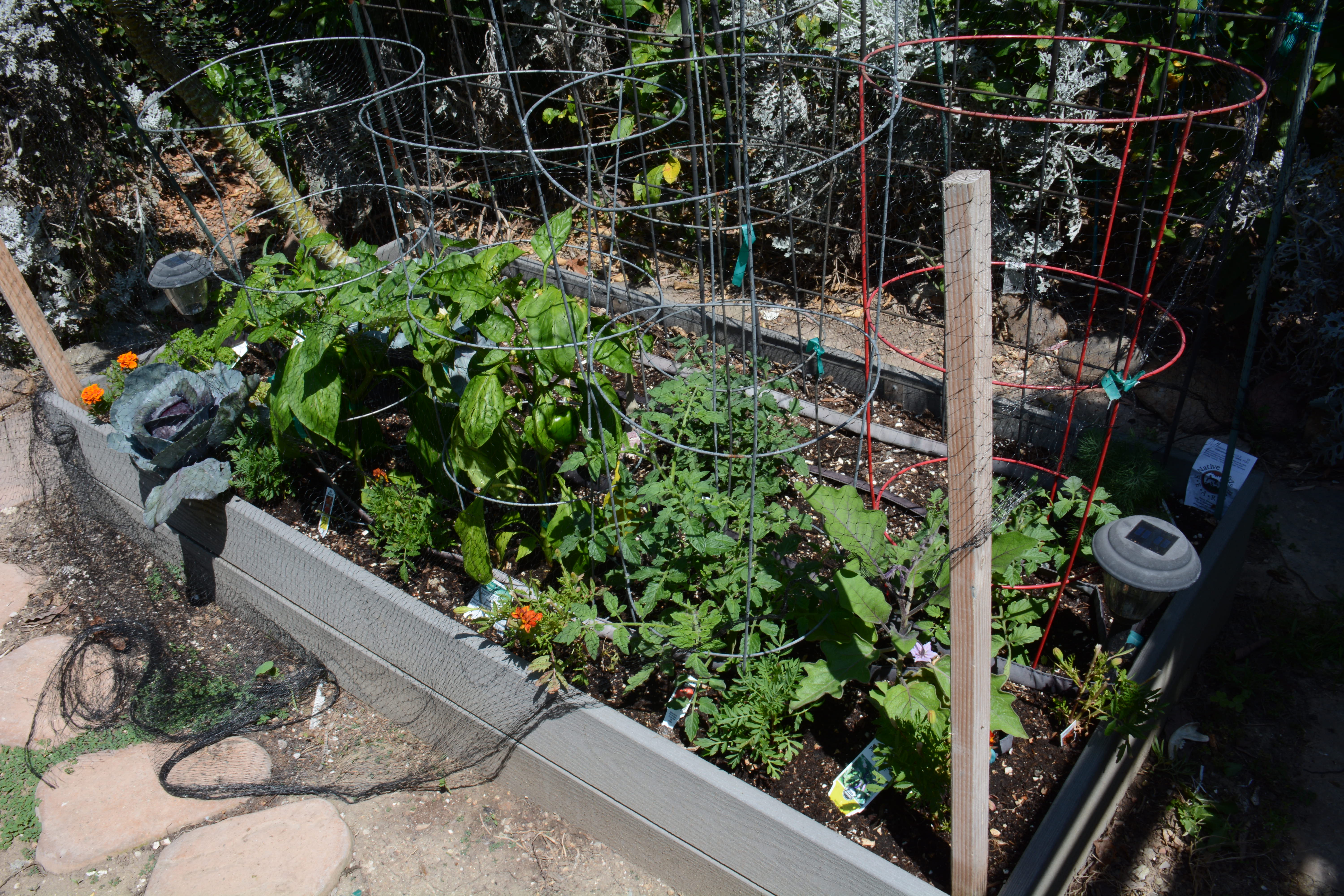
Veggie bed #2 has been in the ground for two weeks and is growing like crazy. I have tomatoes, bell peppers, basil, Blue Lake pole green beans and yellow squash in this bed.

Veggie bed #2 has been in the ground for two weeks and is growing like crazy. I have tomatoes, bell peppers, basil, Blue Lake pole green beans and yellow squash in this bed.

Two tiny Roma tomatoes have set fruit. I also have a couple of Yellow Pear and a couple of Better Boy tomatoes that have set fruit.

Two tiny Roma tomatoes have set fruit. I also have a couple of Yellow Pear and a couple of Better Boy tomatoes that have set fruit.

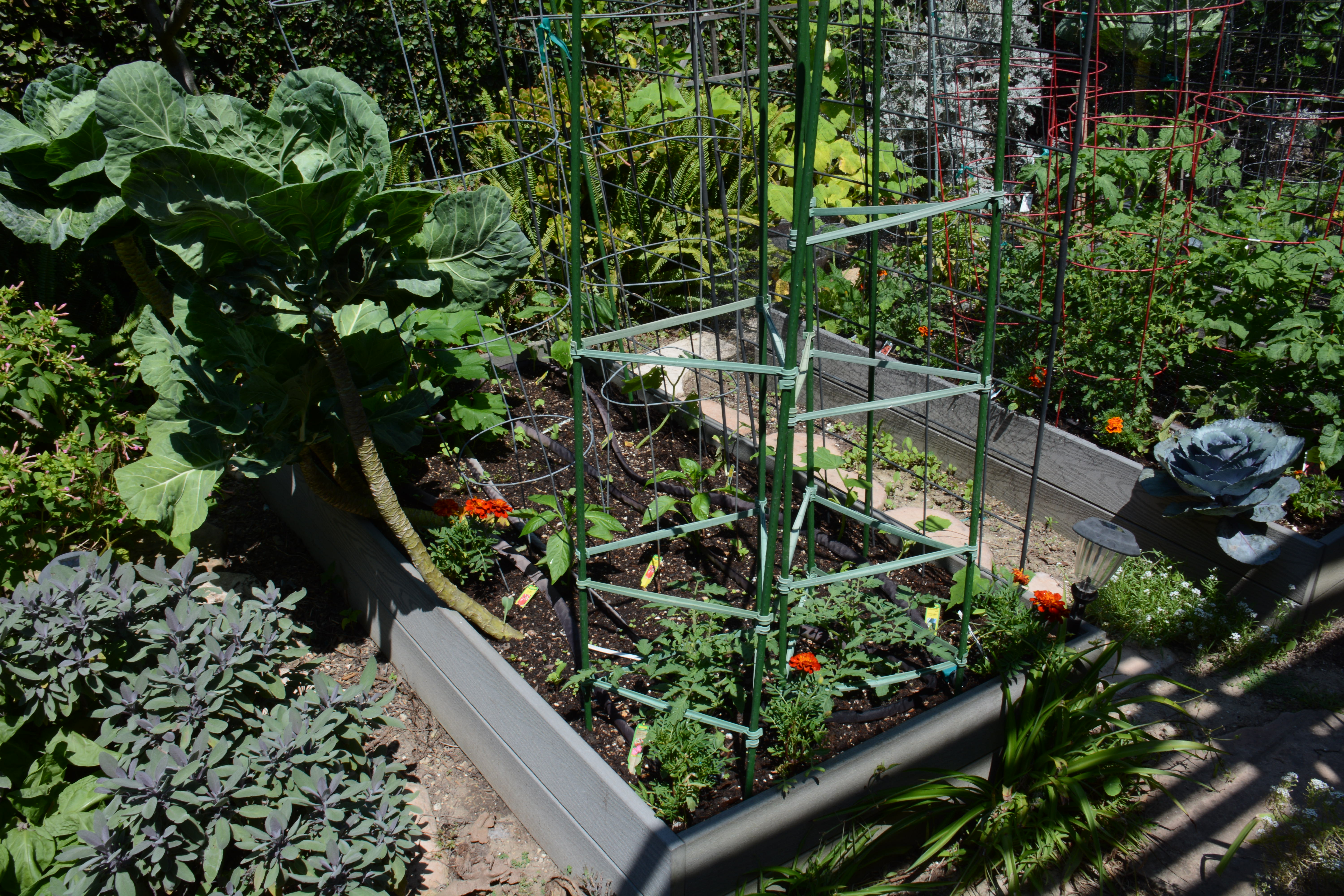
This is veggie bed #1, with an old collard green plant, a couple of red cabbage that I planted in january that STILL haven't made heads, some tomatoes and bell peppers, and a dill plant.

This is veggie bed #1, with an old collard green plant, a couple of red cabbage that I planted in january that STILL haven’t made heads, some tomatoes and bell peppers, and a dill plant.

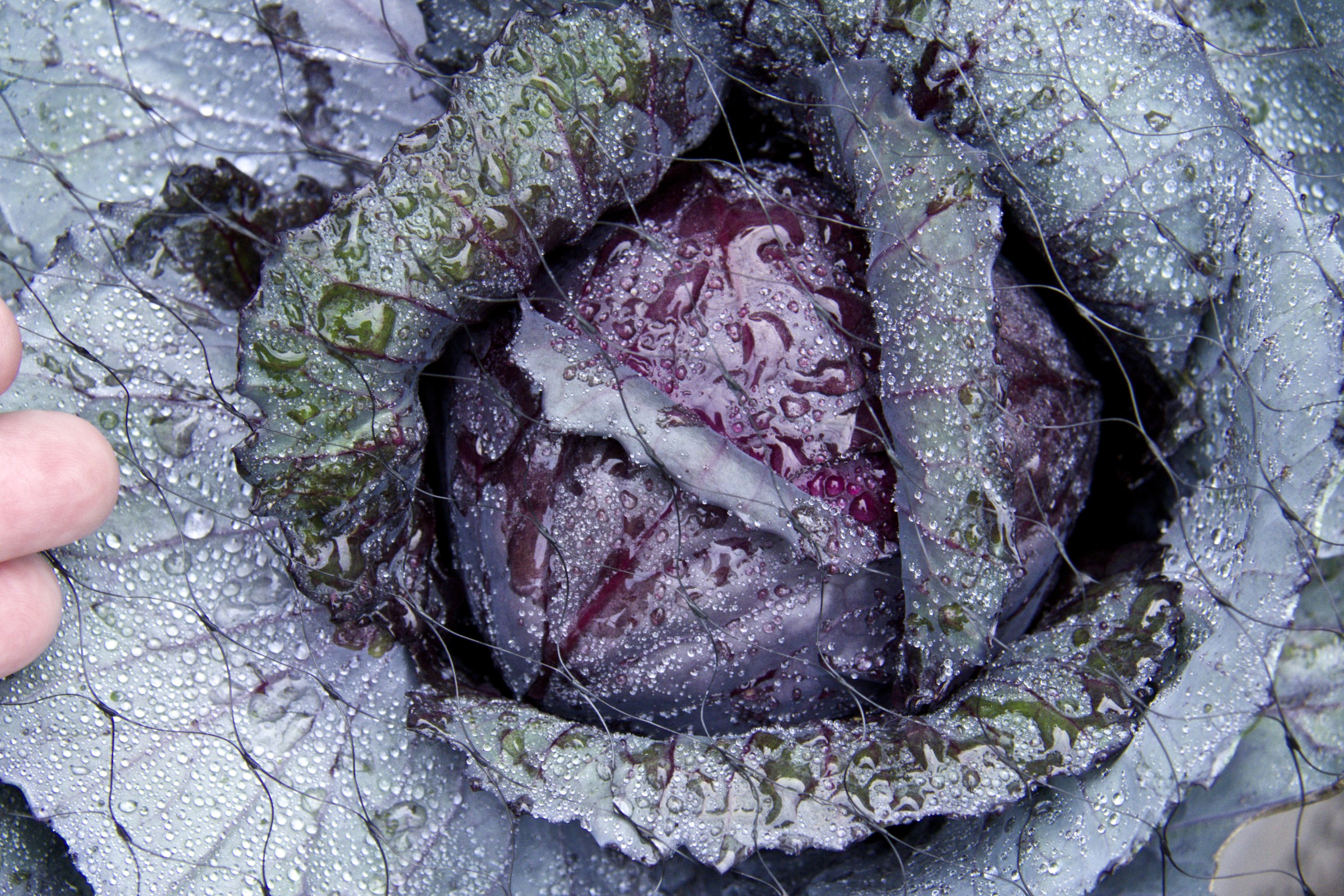
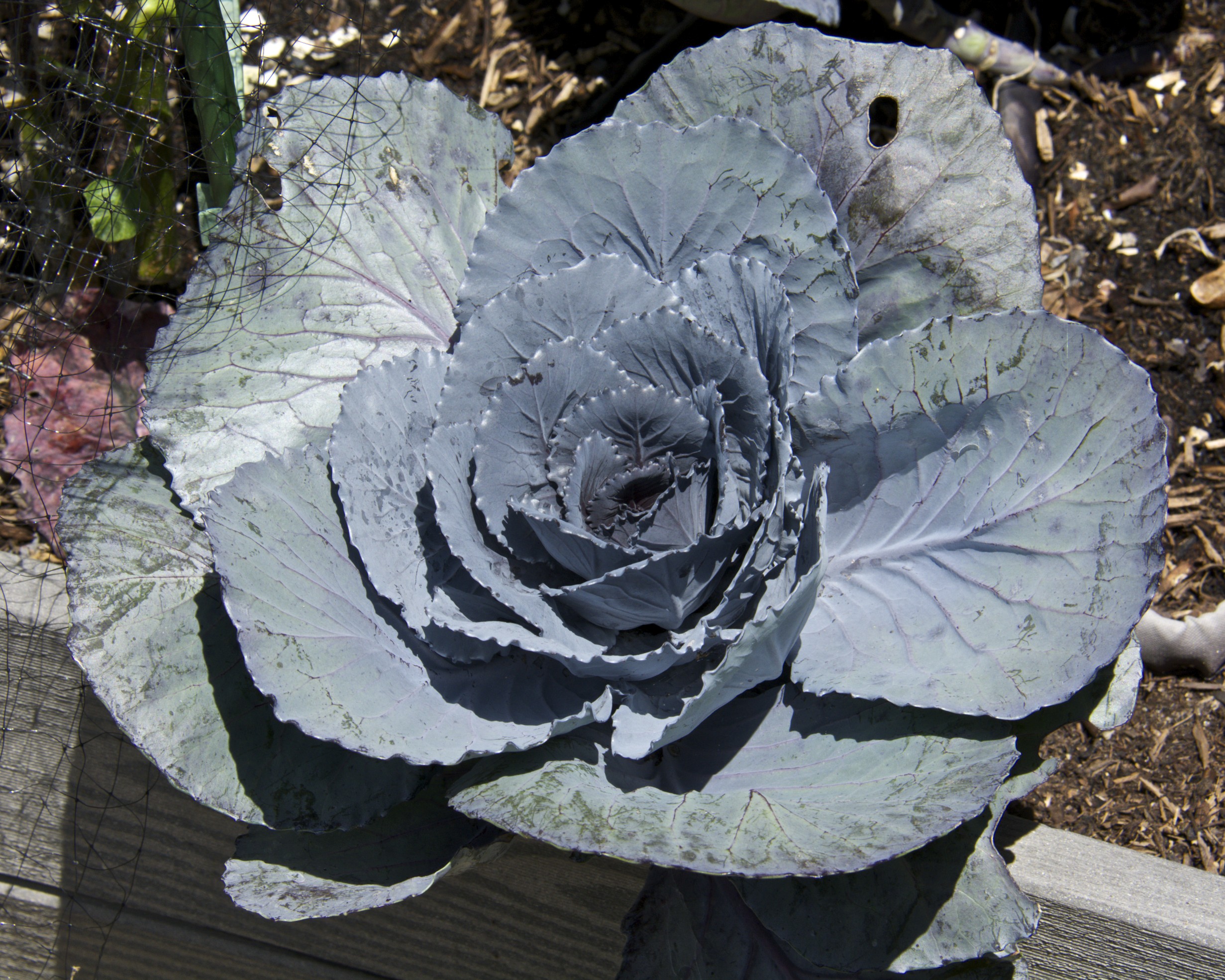
This is my best head of red cabbage so far. It is between the size of a baseball and a softball. Not very impressive. But it is almost as big as the red cabbage being shown at the Orange County Fair. Looks like no one here got good cabbage this year with our hot winter.

This is my best head of red cabbage so far. It is between the size of a baseball and a softball. Not very impressive. But it is almost as big as the red cabbage being shown at the Orange County Fair. Looks like no one here got good cabbage this year with our hot winter.

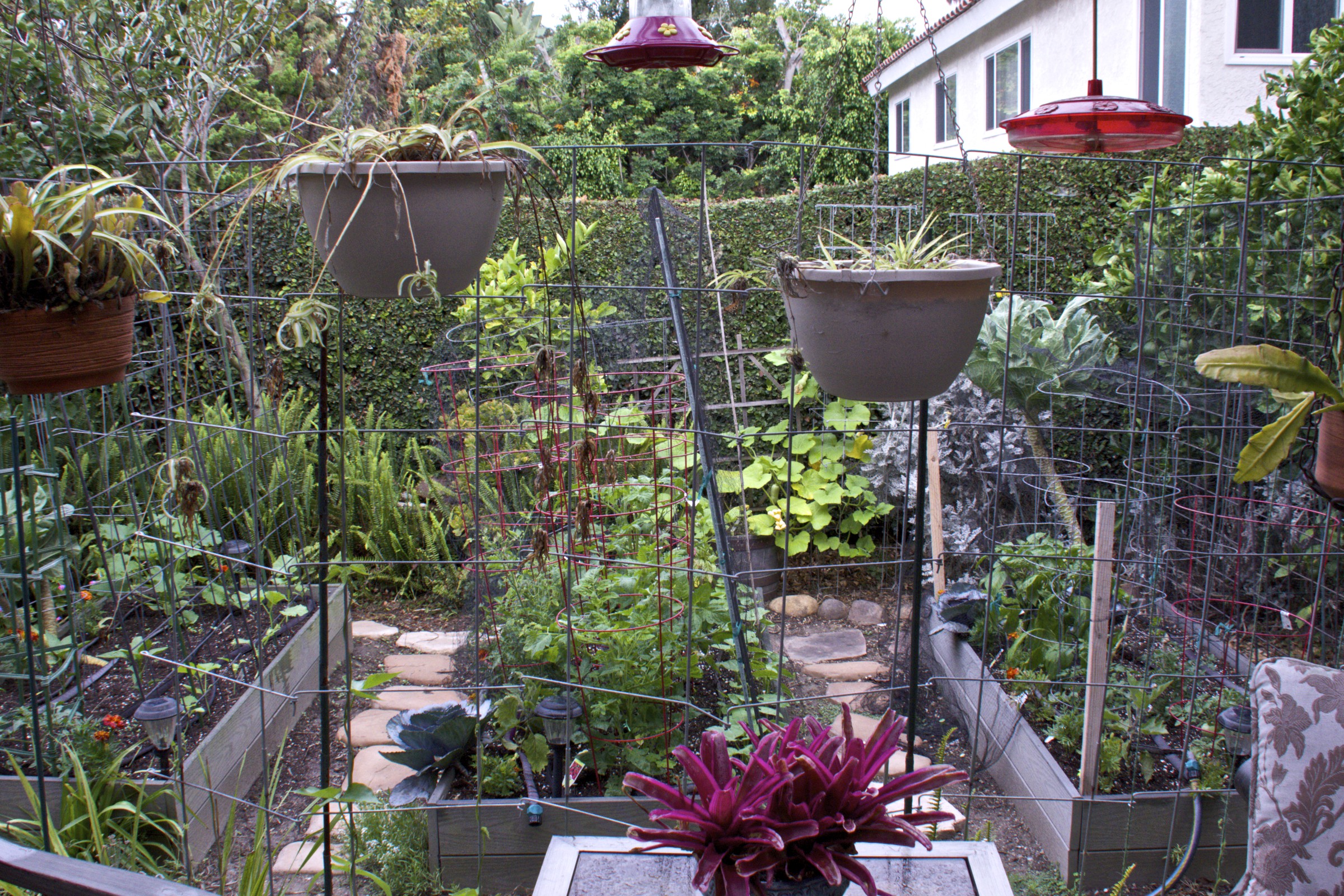
This is my view from my deck, looking west over my tiny garden. The green wall behind the beds is the back edge of our property. Not much space.

This is my view from my deck, looking west over my tiny garden. The green wall behind the beds is the back edge of our property. Not much space.

My herb garden is just to the south of the veggie beds, and the chicken coop is south of that.

My herb garden is just to the south of the veggie beds (which are out of sight to the right), and the chicken coop is south (left) of that. Yes, the chicken coop has art work hanging on it. It also has a solar light.

The good news is that Chicken Little decided that she would lay more eggs this summer. And Dino-Peep, my little Velociraptor that masquerades as a chicken, continues to lay an egg a day. So we are once again flush with eggs, even though lazy Miss Hillary has gone into molt and isn’t laying.

So the good news is that I have hopes of getting a harvest from my late-planted summer garden, especially since we got that miracle rain. I rushed around in the downpour and set up my rain barrels that I had already emptied.  I managed to collect and store about 300+ gallons. Whoopee! That’s what living a green life is all about.

Posted in Uncategorized | Tagged , , , , , , , , , , , | 10 Comments

My midsummer garden is no dream, July 15 2015

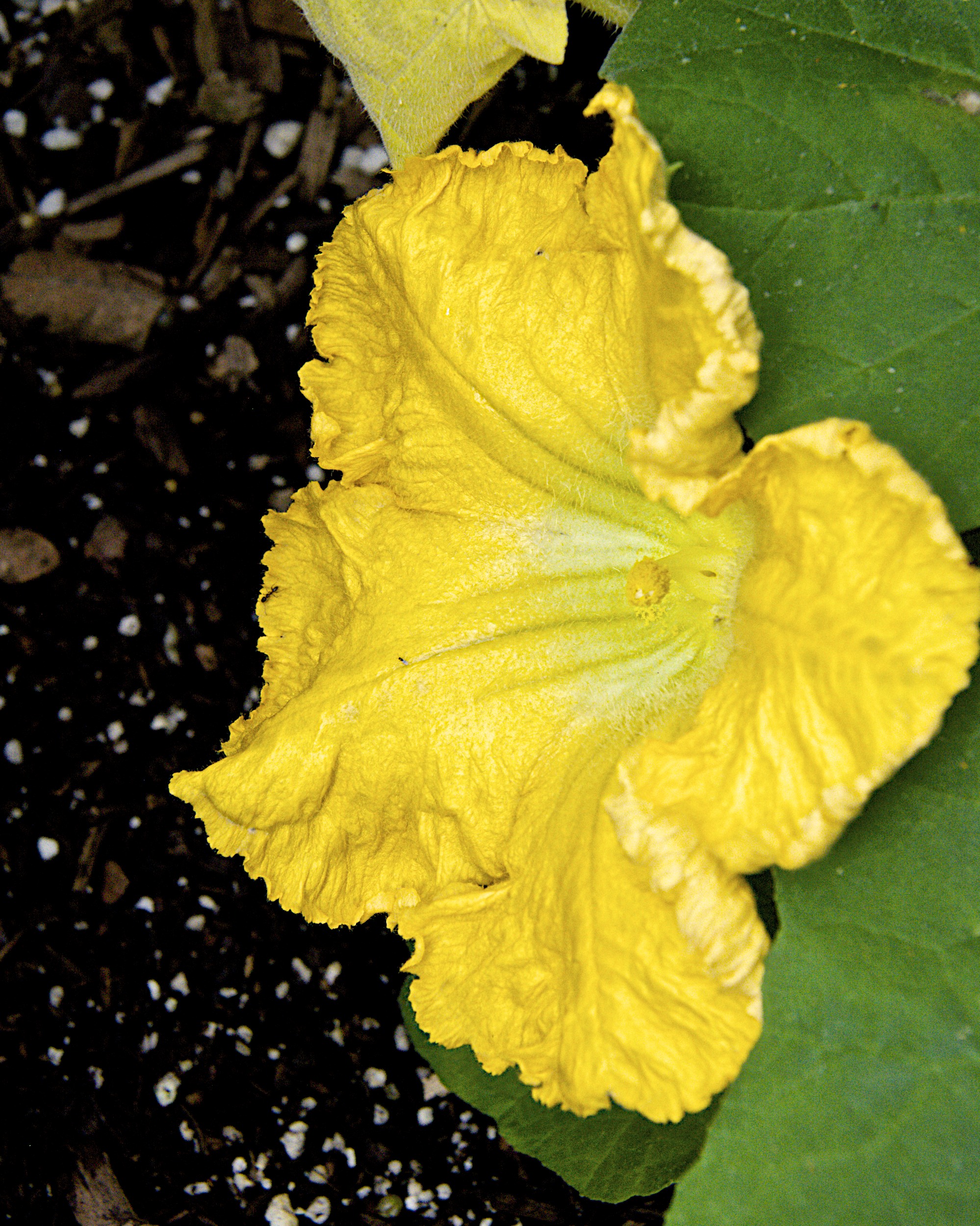
So far, my female butternut squash flowers have not been fertilized. They get a short window of time to be pollenated, and it takes an open male flower and and open female flower and a willing pollinator. So far that hasn’t happened and three female flowers have come and gone without being fertilized. My squash flowers are blooming out of sync.

This was a perfect female flowers, but alas and alack, it didn't get pollinated.

This was a perfect female flower, but alas and alack, it didn’t get pollinated.

Yesterday, I had four beautiful male butternut squash blossoms open. But no female flowers.

Male butternut blossoms were open yesterday.

Male butternut blossoms were open yesterday.

The female butternut flowers weren't open.

But the female butternut flowers weren’t open yet.

I was hoping that maybe a bee would pick up some pollen yesterday, but there wasn’t a honeybee in sight.

Today, two lovely female butternut blossoms opened. But the male flowers had closed already. We’re gonna starve this winter.

Our of desperation, I opened up two spent male blossoms and rubbed the anthers against the stamens of the open female squash blossoms. I figured old pollen might be better than no pollen. Time will tell.

Veggie bed # 2, the first one to get planted this year.

Veggie bed # 2, the first one to get planted this year. 

I have been dealing with a variety of health issues since June 1. An abscessed molar led to a gut infection. I was on three different antibiotics, and FINALLY had surgery to remove the offending tooth (after seeing three dentists–my primary dentist, the root canal guy who said it couldn’t be saved, and then the oral surgeon). Then I had to recover from surgery, which at my age (72) isn’t as easy as it used to be. I just don’t bounce back like a kid anymore. So I am just now getting around to planting my summer garden. I did the middle bed first, about 10 days ago.

The plants have recovered from being transplanted, and are growing nicely.

The plants have recovered from being transplanted, and are growing nicely. Bed #2 has tomatoes, a Japanese eggplant, basil, dill, a row of Blue Lake pole green beans, a couple of yellow squash plants, and a red cabbage left over from winter that still hasn’t headed up. I hope that there is enough summer left for these plants to produce food.I am hoping for an eggplant soon. One little eggplant. Is that too much to ask?

I am hoping for an eggplant soon. One little eggplant. Is that too much to ask?

Our of eight cabbage transplants, we have harvested zero heads. This puny head is about the size of a baseball. I keep hoping it will grow bigger.

Out of eight cabbage transplants, we have harvested zero heads. This puny head is about the size of a baseball. I keep hoping it will grow bigger.

The pole beans have sprouted, but it will be quite a while before we get any beans. That is assuming that the birds don't get to the plants first. I have netting over the garden beds this year and that is helping.

The pole beans have sprouted, but it will be quite a while before we get any beans. That is assuming that the birds don’t get to the plants first. I have netting over the garden beds this year and that is helping.

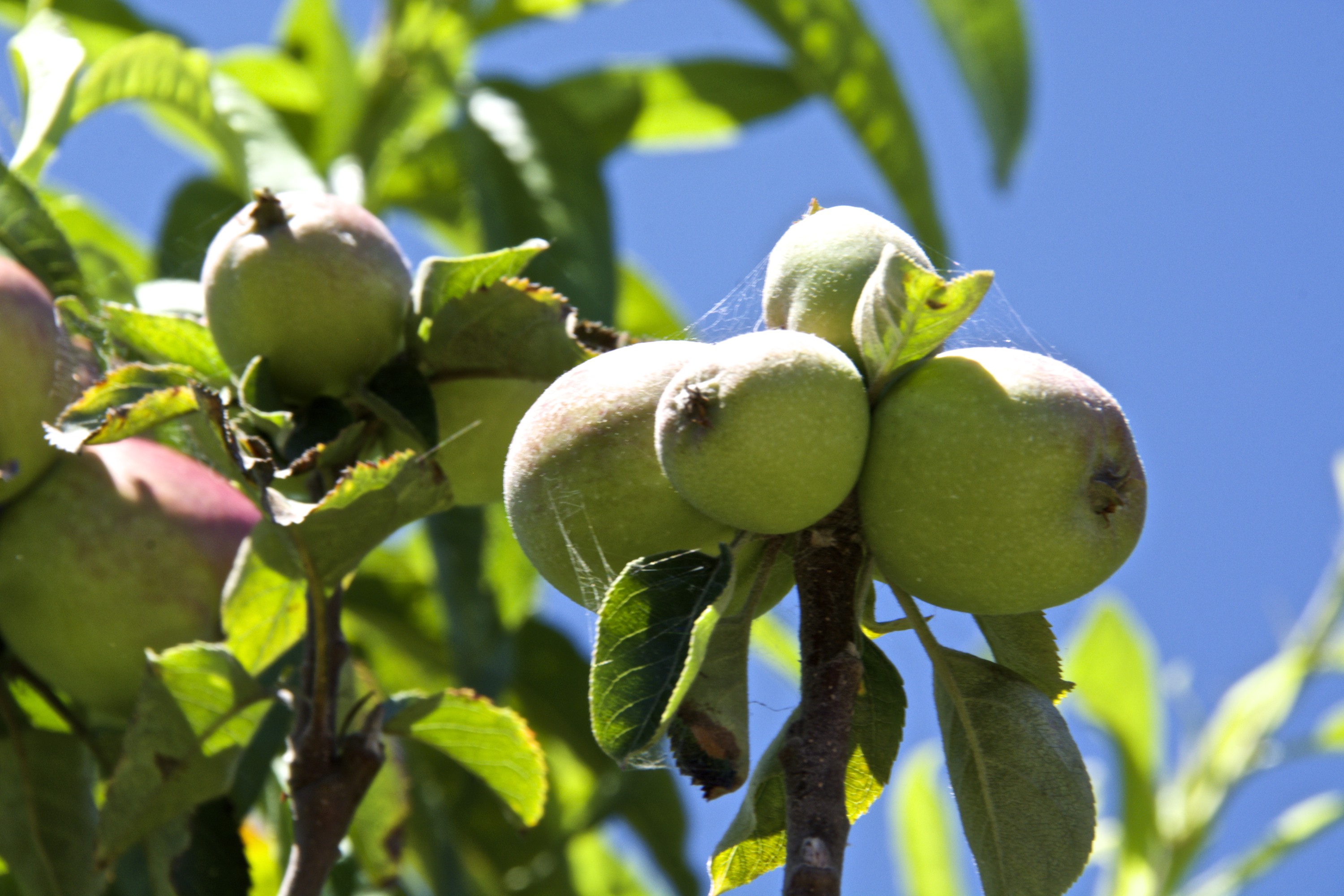
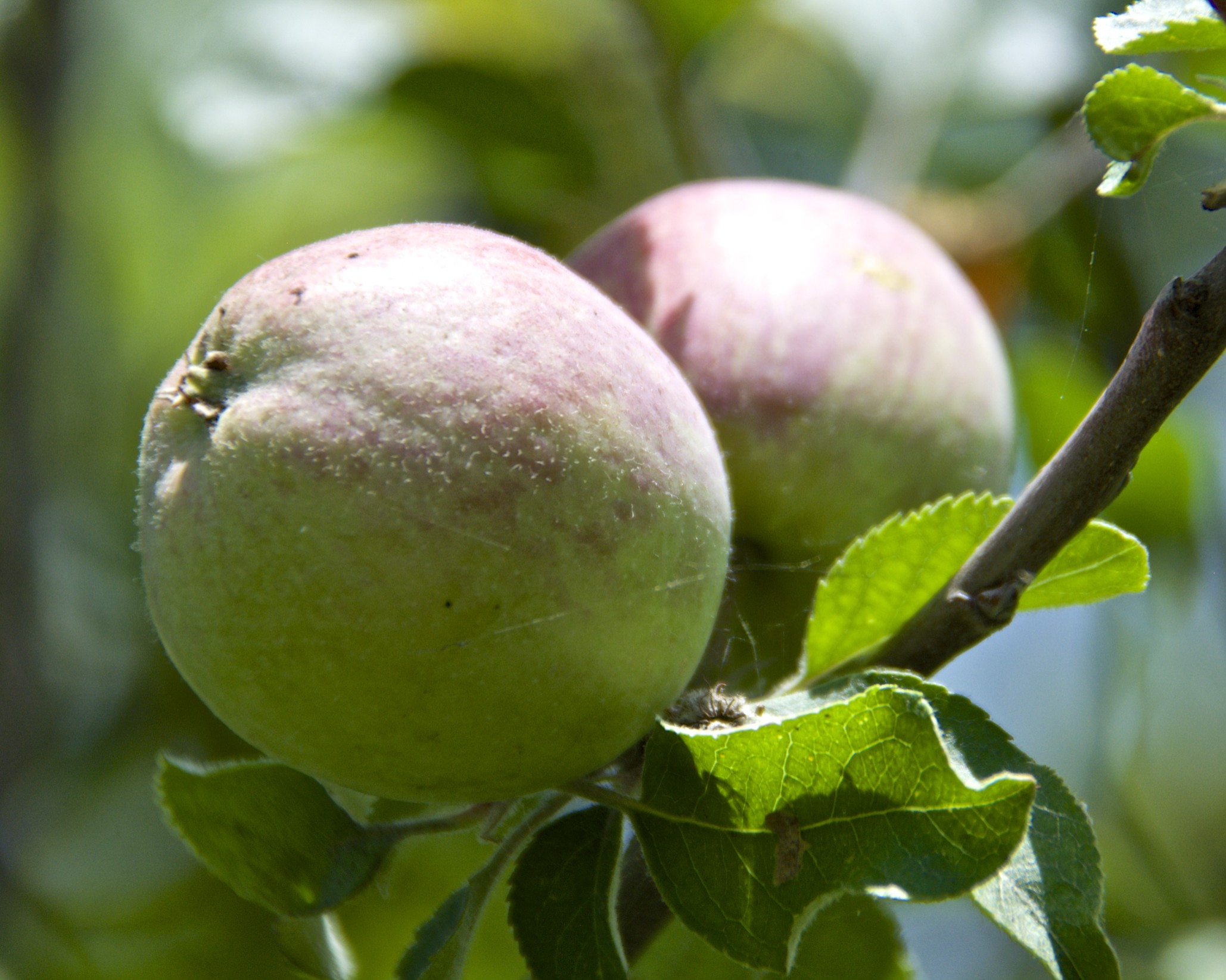
The trick of pulling leaves off the apple trees in the fall (because it was too warm here this winter for them to fall naturally) seems to have worked. We have about 30 Fuji apples.

The trick of pulling leaves off the apple trees in the fall (because it was too warm here this winter for them to fall naturally) seems to have worked. We have about 30 Fuji apples.

But in the crazy weather = crazy garden category, my Granny Smith apple tree is blooming again in mid July. Ditto one of my Asian pears.

But in the crazy weather = crazy garden category, my Granny Smith apple tree is blooming again in mid July. Ditto one of my Asian pear trees.

And in the "we're gonna starve" category, here is my grape crop. These are supposed to be Red Flame Seedless grapes, but they are tinier than currants. FAIL.

And in the “we’re gonna starve” category, here is my grape crop. These are supposed to be Red Flame Seedless grapes, but they are tinier than currants. FAIL.

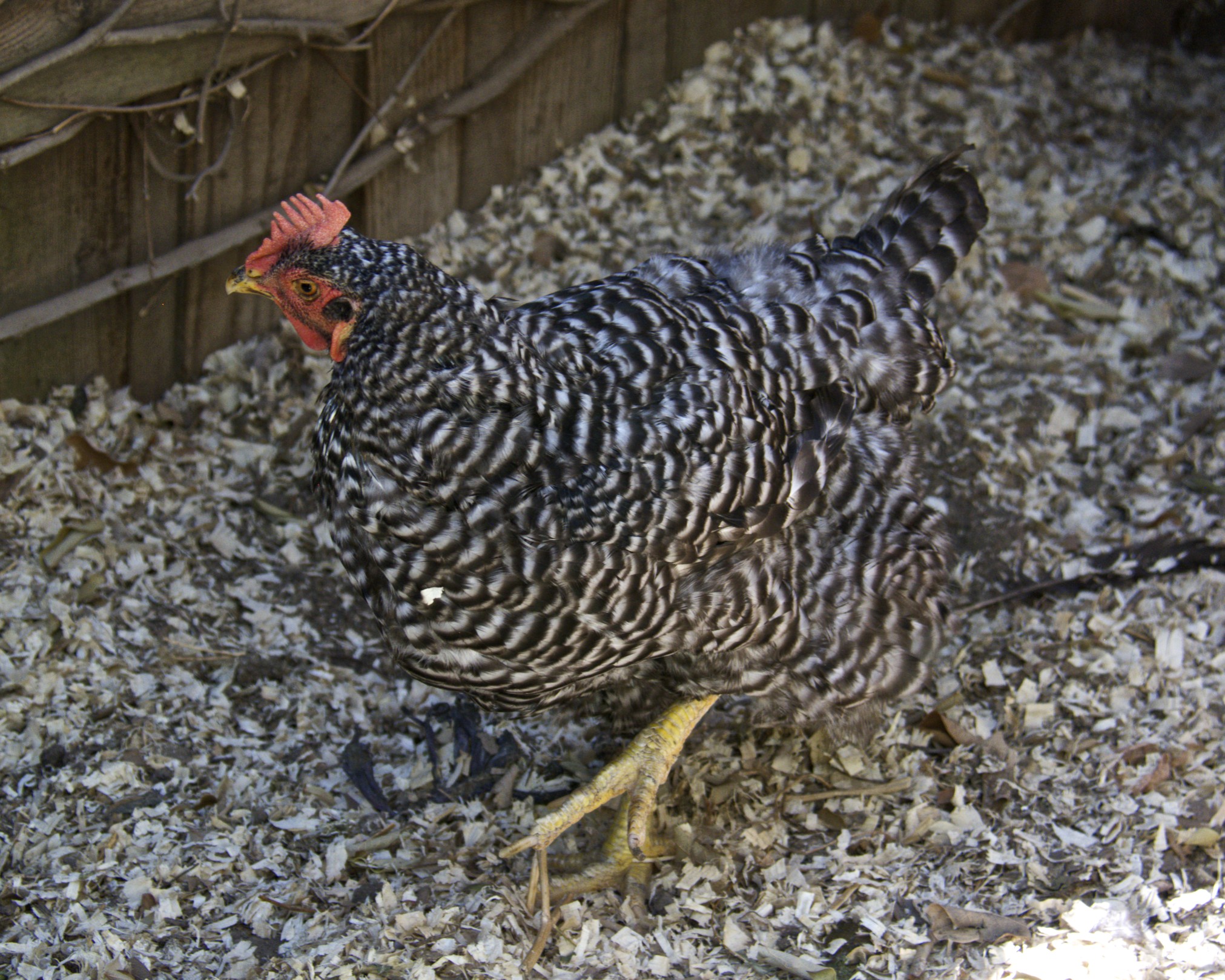
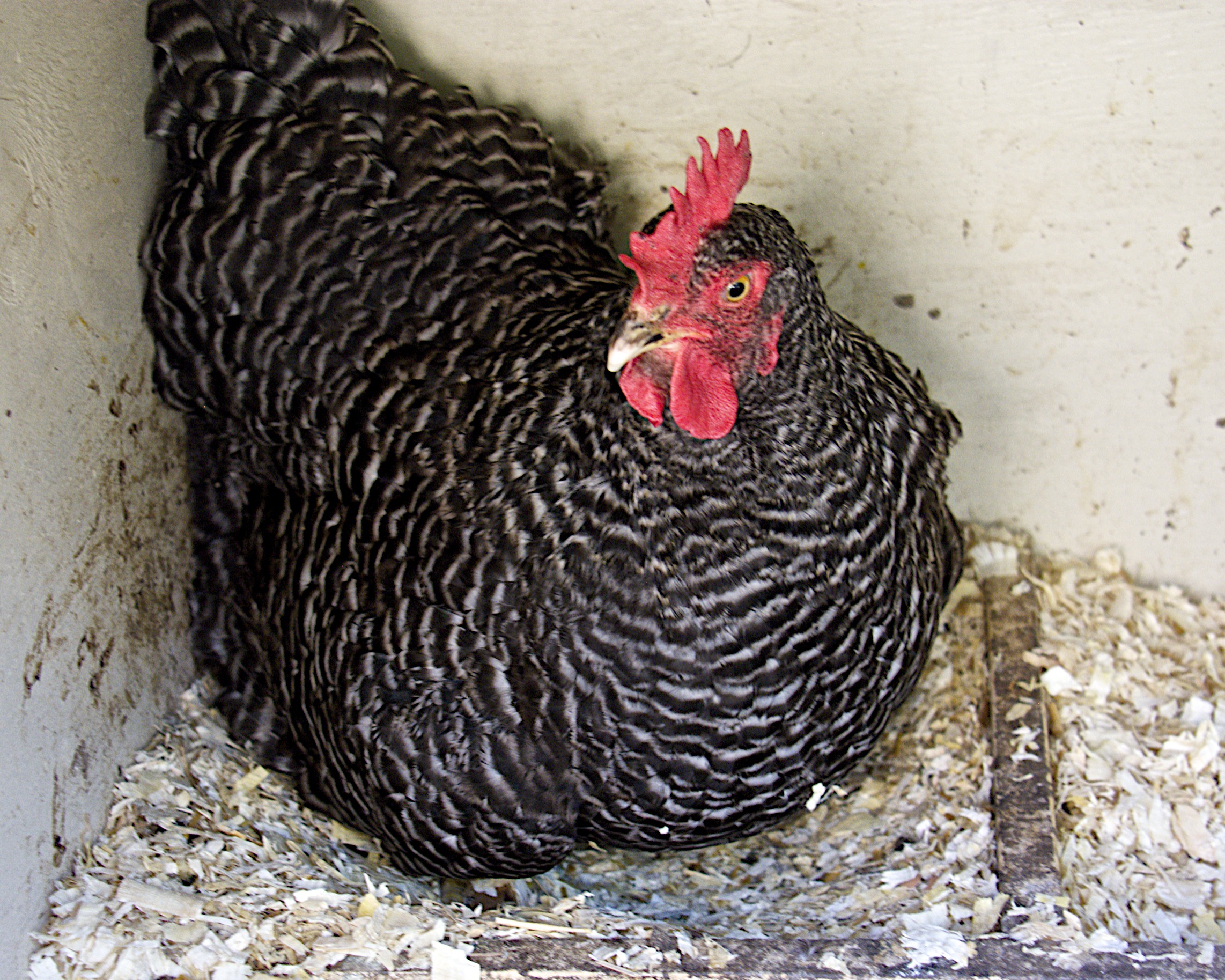
Two of my remaining three hens are molting and not laying. This is Miss Hillary, who has never been a good layer anyway. Her comb isn't even red, so she is probably done laying for the year.

Two of my remaining three hens are molting and not laying. This is Miss Hillary, who has never been a good layer anyway. Her comb isn’t even red, so she is probably done laying for the year. Yep, we’re gonna starve.

Chicken Little at nine years of age is too old to lay much. She may also be done for the year.

Chicken Little at nine years of age is too old to lay much. She may also be done for the year.

Dino-peep is the nasty  hen that attacks me every chance she gets. She is our only producer right now, so egg production is way down. Here she is, hard at work.

Dino-peep is the nasty hen that attacks me every chance she gets. She is our only producer right now, so egg production is way down. Here she is, hard at work.

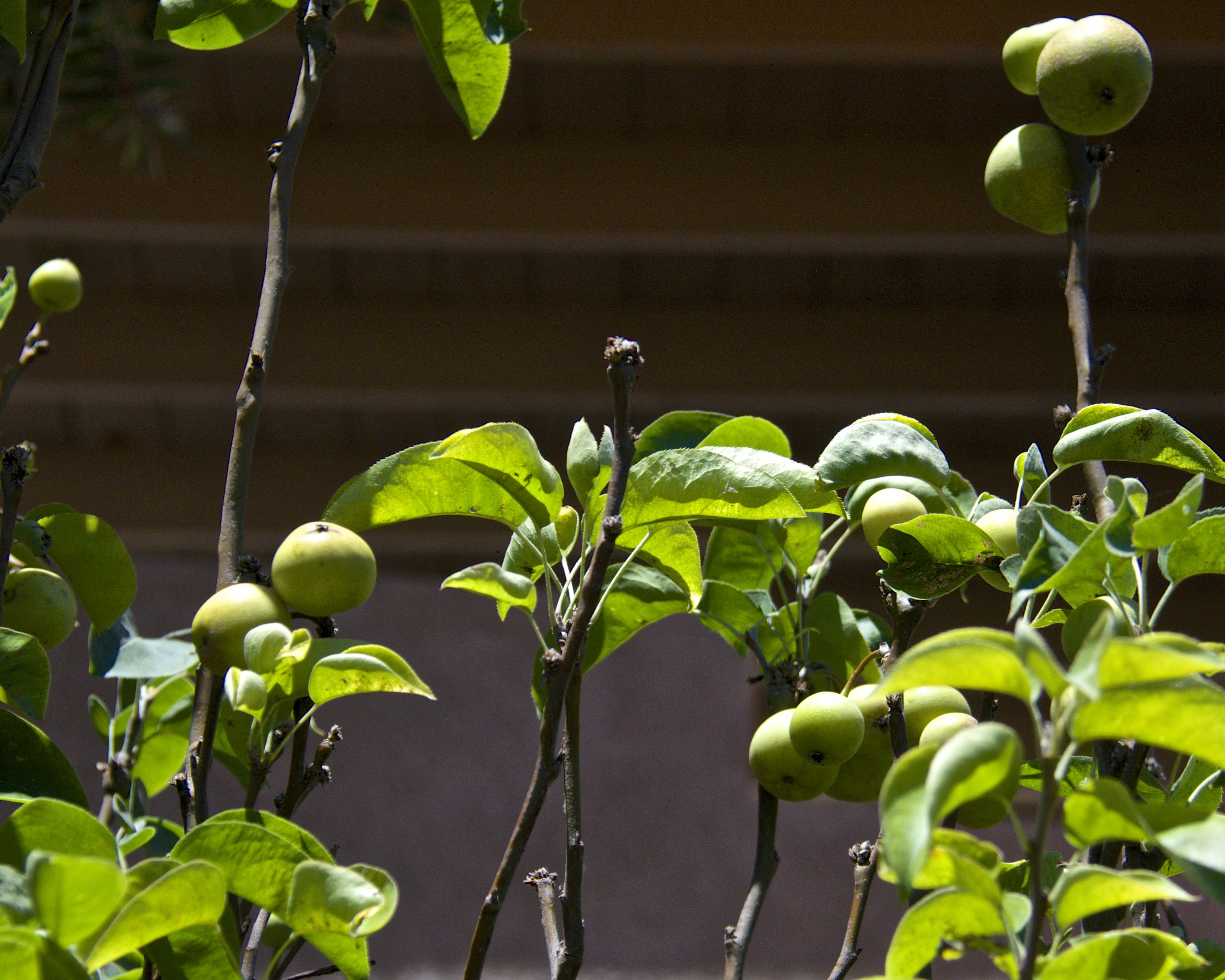
Our Asian pear trees are doing themselves proud this year, with a bumper crop of about 60-70 pears.

Our Asian pear trees are doing themselves proud this year, with a bumper crop of about 60-70 pears.

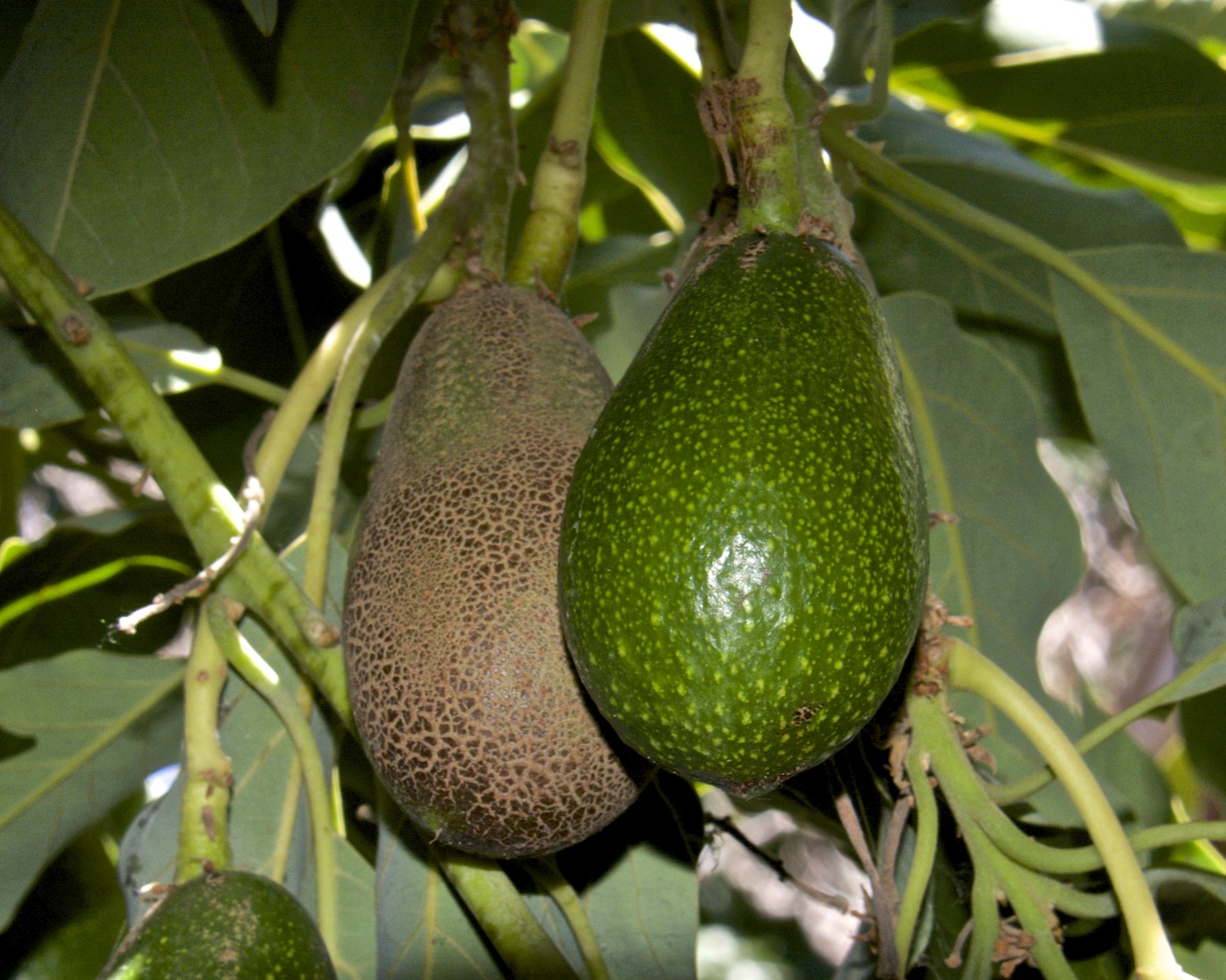
The avocado tree has set a record 60 avocados this year. Maybe we won't starve after all.

The avocado tree has set a record 60 avocados this year. Maybe we won’t starve after all.

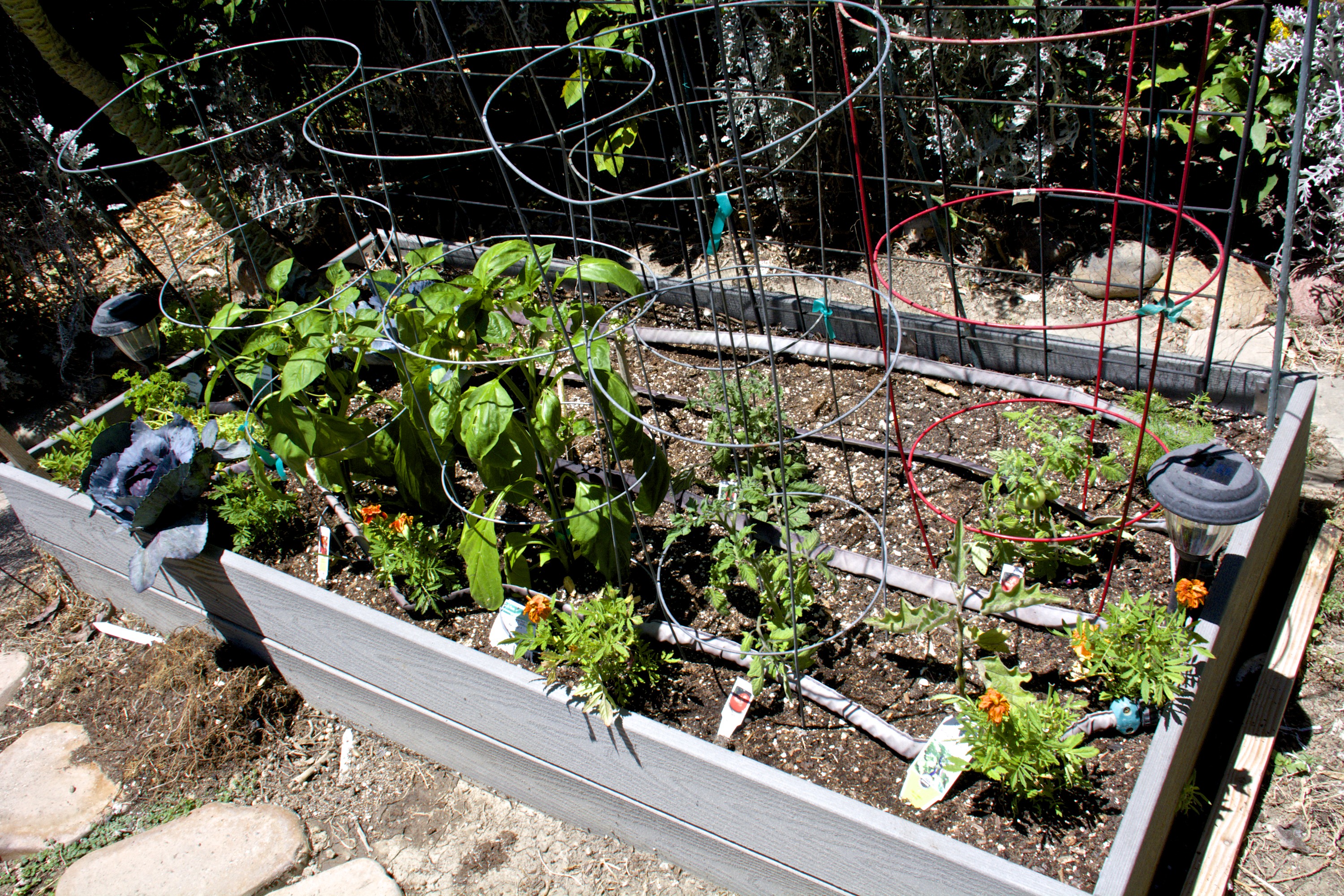
I planted veggie bed #1 a few days ago. It has tomatoes, bell peppers, an old collard plant, and some cheerful marigolds.

I planted veggie bed #1 a few days ago. It has tomatoes, bell peppers, a ping tung long eggplant, an old collard plant, and some cheerful marigolds.

I have purchased the plants to go into bed #1, but so far I have lacked the energy to dig up the bed. One of these days I will get around to doing that.

I need to add up my 2015 harvest poundage. I record the harvests in my garden diary, but haven’t entered the numbers into Excel yet. However, I don’t see this as being a banner year for either vegetables or eggs. Fruits have been doing OK, even though the possums, birds, and rats got the nectarines and peaches, and the plum tree didn’t produce. I have my hopes pinned on my Asian pear, avocado, apple, and citrus trees. Gee, isn’t growing our own food fun?

Posted in Uncategorized | 2 Comments

My woeful garden, June 2015

I just posted “Woes of an Urban Chicken Farmer” or something like that. Now it is time for “woes of a backyard gardener in a changing climate.”

Earlier, I posted about the low number of winter chill hours that we got in southern California during our unseasonably warm 2014-2015 winter. That, coupled with record-setting drought (four inches of rain last season), has most definitely affected our fruit harvest this summer. For example:

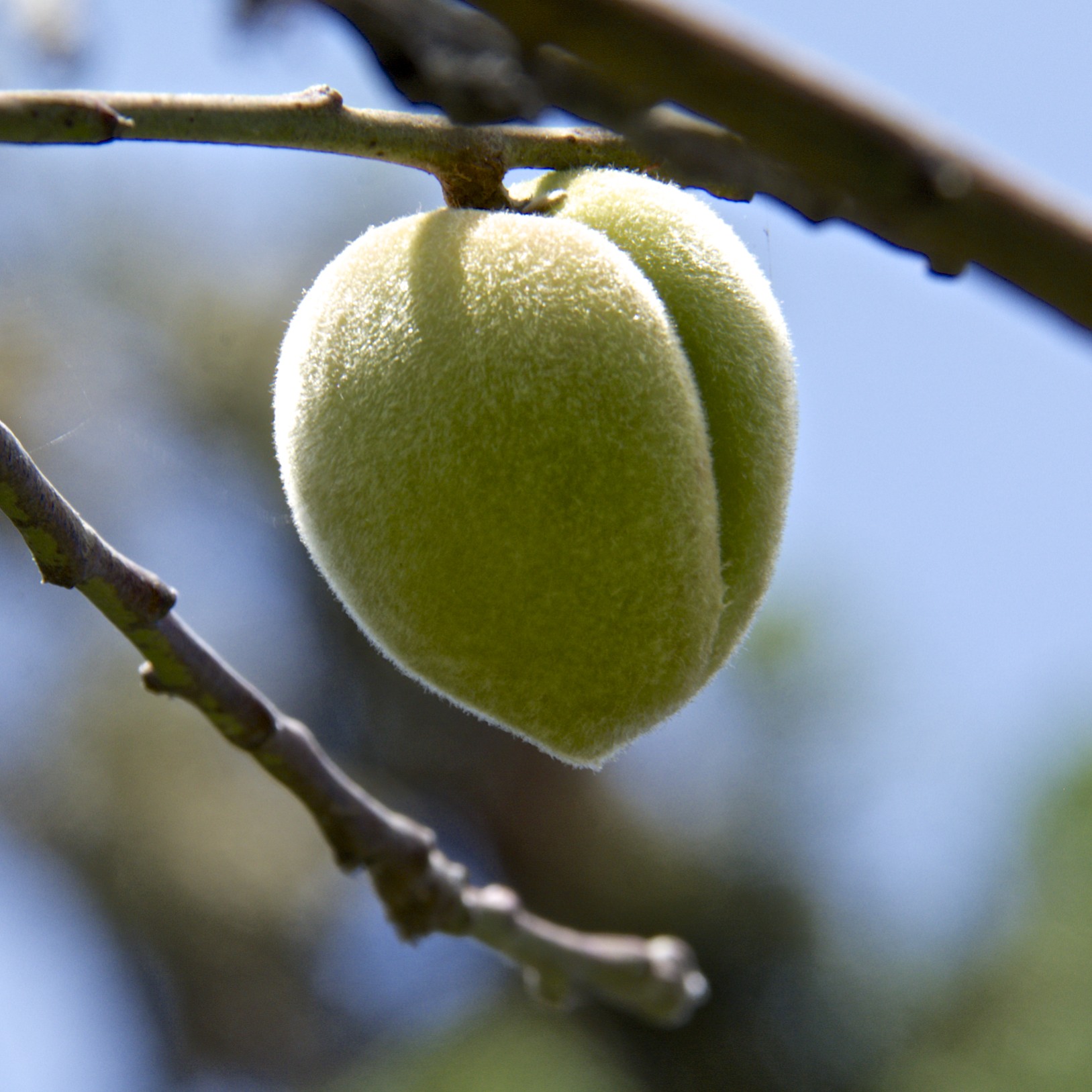
This will be the entire harvest from our Babcock peach tree, assuming it survives the night critters. They ate the one other peach that ripened ahead of this one.

This will be the entire harvest from our Babcock peach tree, assuming it survives the night critters.

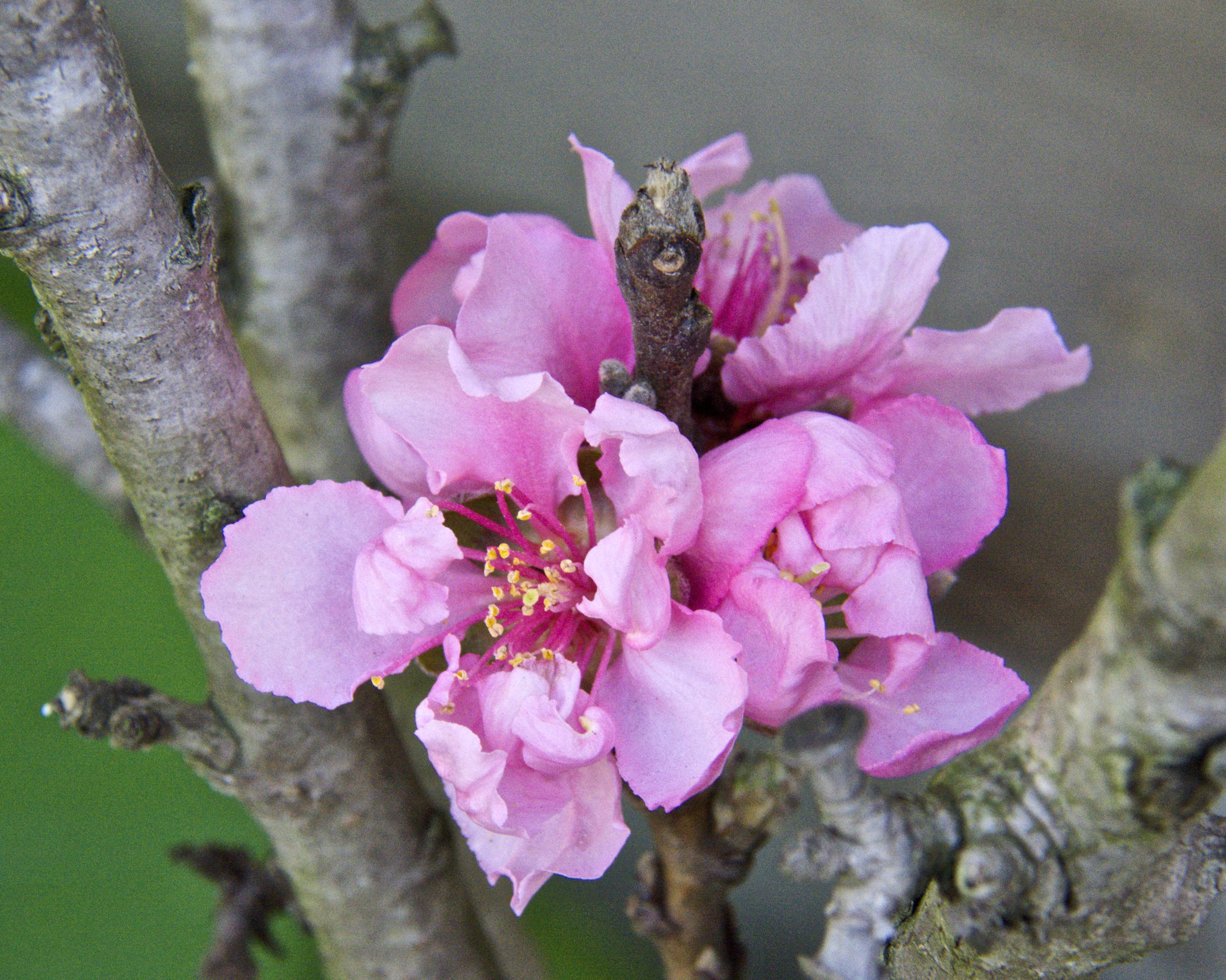
My fruit trees are blooming sporadically this year, multiple times. They are so confused, they don’t know when end is up. The Babcock peach went through two bloom periods. One peach set from the first bloom, but the night critters ate it. This second peach (above) is the only one that set from the second bloom cycle. It is of moderate size, but not ripe yet. It will be a race to see who gets it first: rats, possums, raccoons, or me.

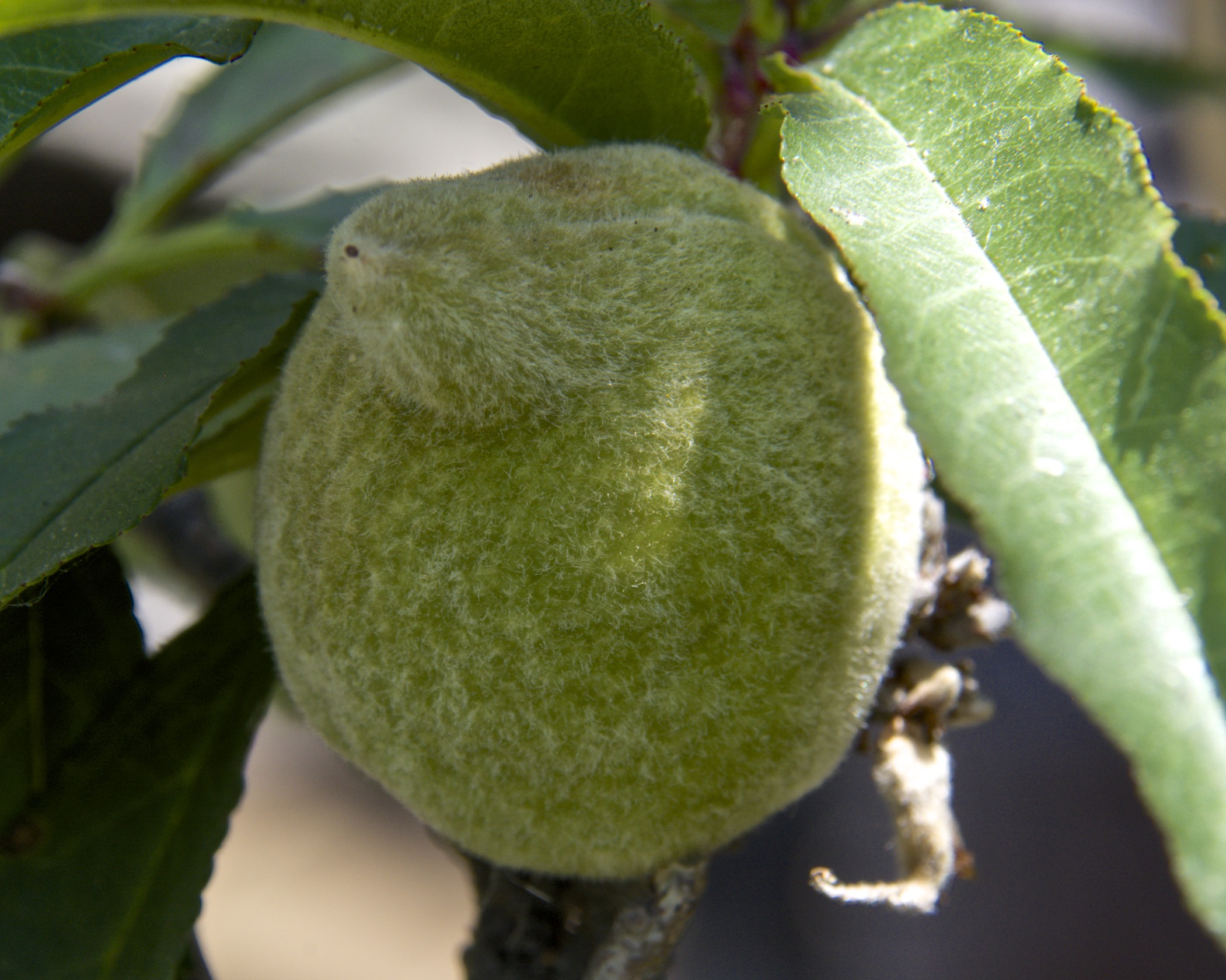
Here is the lone peach that set on the Garden Gold ultra-dwarf peach tree.

The fact that we are getting a nice looking peach growing on the Garden Gold tree is a real surprise. This tree requires 450 winter chill hours and we got around 80. Go figure.

The fact that we are getting a nice looking peach growing on the Garden Gold tree is a real surprise. This tree requires 450 winter chill hours and we got around 80. Go figure.

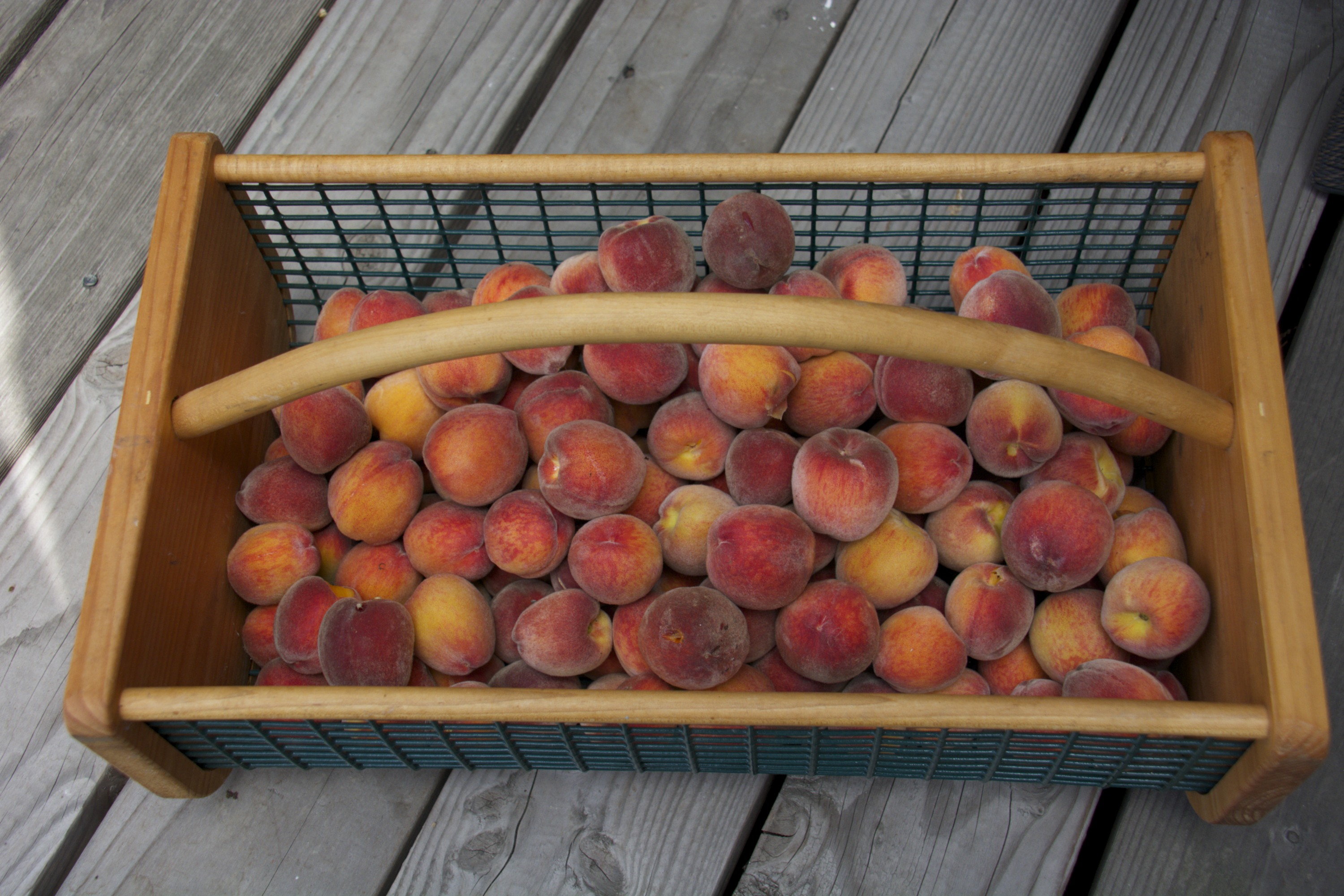
This was part of the harvest from our Florida Prince peach tree.

This was part of the harvest this spring from our Florida Prince peach tree.

Looks great, huh? Well those peaches were the size of golf balls, a complete nuisance to peel and pit, even after dipping them into boiling water. I managed to freeze four packs of sliced peaches, and we enjoyed a number of peach dishes such as peach upside down cake. But a lot of them went bad before I got around to processing them.

I managed to harvest a dozen really small and kind of dry Panamint nectarines. The night critters got the ones that I was letting get a little riper. Bummer. But these nectarines had the best flavor of any I had previously gotten from that tree.

The Snow Queen nectarine produced one nice looking, large nectarine. They are so delicious. But this year, the darn night critters got it before I did. Curses, foiled again!

The peaches aren’t the only trees to undergo a multiple round of blooming. Our apples trees are doing the same thing. In fact, the Granny Smith apple tree has bloomed three or four times so far this year, with different branches blooming at different times.

Three apple ovaries appear to have been fertilized in this cluster of five flowers.

Three apple ovaries appear to have been fertilized in this cluster of five flowers. My Granny Smith apple tree normally blooms in May, but this year it has been blooming sporadically since March. It is still blooming and apparently setting fruit here in late June. Global weirding.

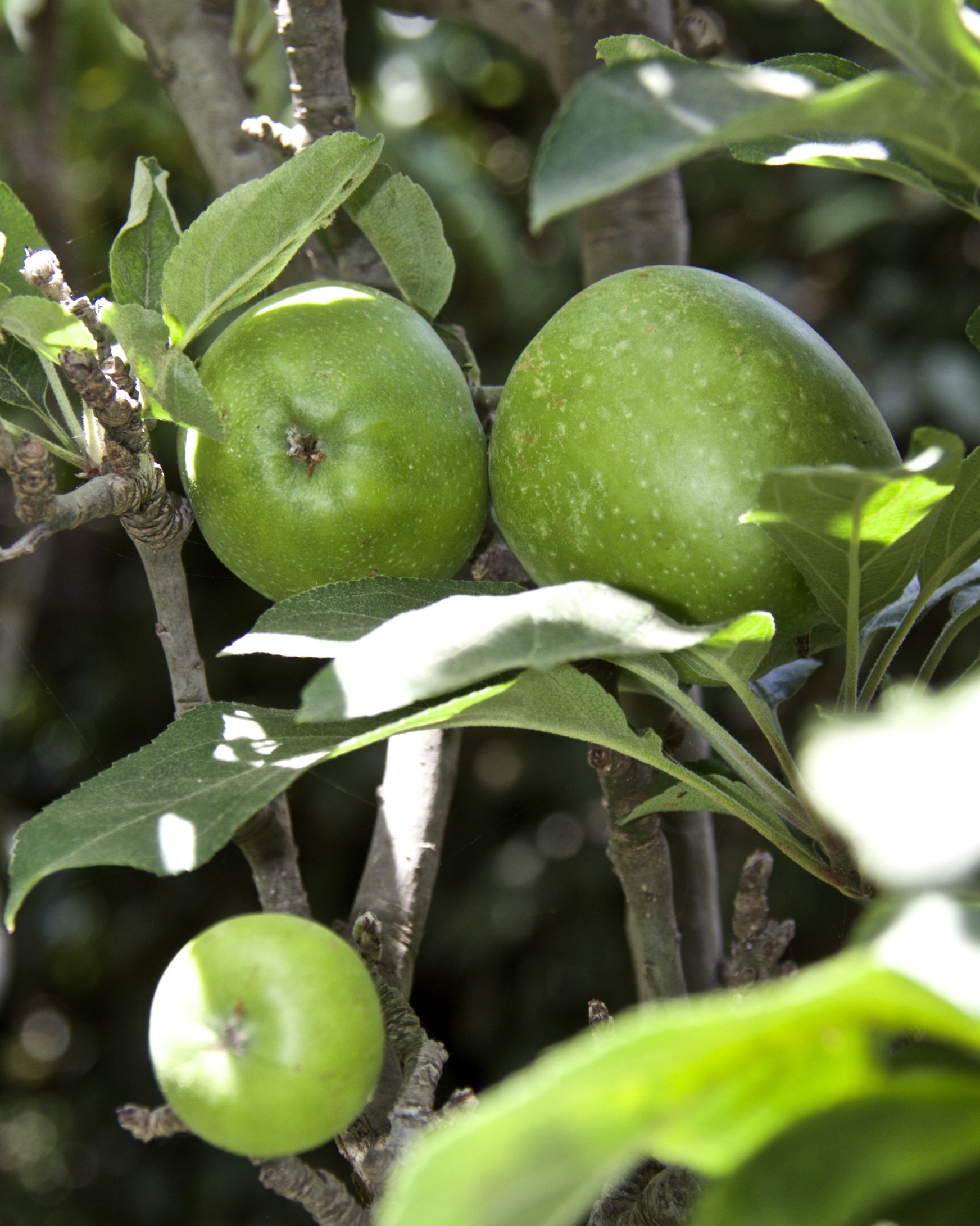
The two apples on top are Granny Smith, while the little one on the bottom is a Gala.

The two apples on top are Granny Smith, while the little one on the bottom is a Gala. Two different trees, side by side.

I had been hoping for a dozen Granny Smith apples, but one of the heavier night critters got into the tree and broke a branch with three nice apples on it. I should still have enough for a pie later in the season, God willing and the creek don’t rise.

The semi-dwarf Fuji apple tree has done itself proud this year, setting about 25 apples.

The semi-dwarf Fuji apple tree has done itself proud this year, setting about 25 apples.

We did NOT get enough winter chill hours for apples to be setting fruit this year, but here they are. I got a tip that removing the leaves in the fall would help apple trees in warm climates set fruit. I removed the leaves from the Fuji and Granny Smith trees in late November (it was too warm for the leaves to die and fall naturally). This forced the trees into dormancy. It looks like that neat little trick is going to work.

The Santa Rosa plum tree has only half leafed out. Ditto our nectarine and peach trees, except for the Florida Prince, which requires very few winter chill hours.

The Santa Rosa plum tree has only half leafed out. Ditto our nectarine and peach trees, except for the Florida Prince peach, which requires very few winter chill hours.

That's it for the plum harvest. Two small plums. But they were really, really good.

That’s it for the plum harvest. Two really small plums. But they were really, really good.

My grape arbor has two grapevines that are five years old and should be producing grapes by now.

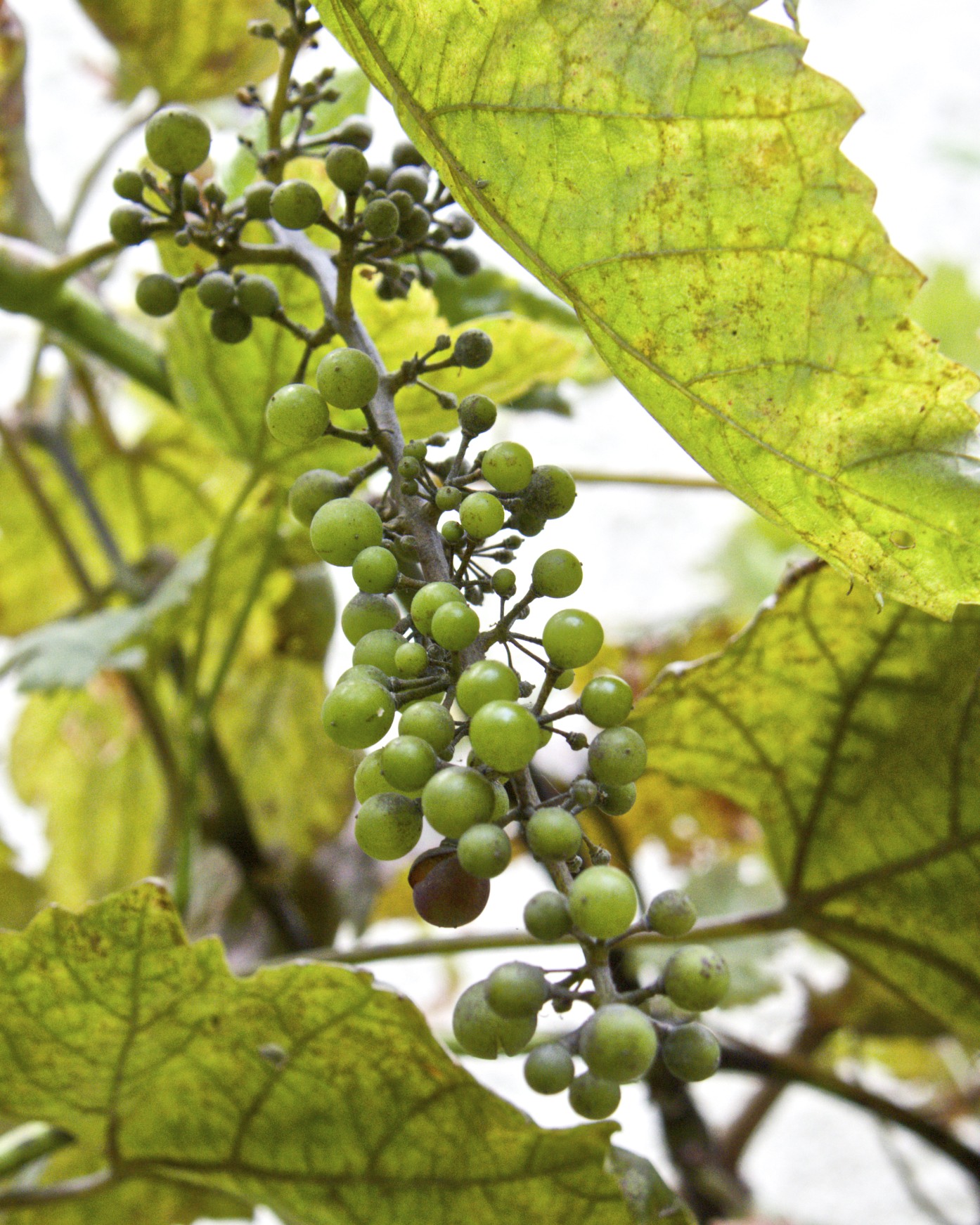
Red Flame seedless grapes

Red Flame seedless grapes

But so far, I have yet to taste a single grape. This is the best I have done so far, a bunch of half-grown grapes. There are actually two bunches, with this being the most complete. Looks like a lot of the flowers didn’t get fertilized. Last year, the grapes dried into raisins before getting large and ripe. It remains to be seen if the birds will eat these before I do, assuming they even ripen.

But enough of my woe in the orchard. On to my woes in the vegetable garden!

I am giving up on my red cabbage crop. One plant made a tennis ball sized head, but the other seven plants look like this--no head. I guess I will just feed them to the chickens.

I am giving up on my red cabbage crop. One plant made a tennis ball sized head, but the other seven plants look like this–no head. I guess I will just feed them to the chickens. Thank you, unseasonably warm winter.

My cauliflower is so pathetic that I couldn’t bring myself to post a photo–too embarrassing. The heads were really small, and they bolted before I got them harvested. But bolted cauliflower still works in a stir-fry.

My butternut squash are making female flowers before any male flowers are open.

My butternut squash are making female flowers before any male flowers are open.

Normally, squash will produce a number of male blossoms first, then the female flowers will open. Not this year. Not in my garden. The silly things are producing female  flowers before the male flowers have opened. Global weirding strikes again?

Two female butternut flowers opened today, but if there were no male flowers in someone else's garden within bee-flying distance, they won't have been fertilized. I should know in a couple of days.

Two female butternut flowers opened today, but if there were no male flowers in someone else’s garden within bee-flying distance, they won’t have been fertilized. I should know in a couple of days.

So far, I have NO summer squash. How pathetic is that, not even able to grow a zucchini? I think I will give up on trying to grow them in the front veggie bed. There just isn’t enough sunlight on that bed.

I planted some scarlet runner beans about a week ago, carefully spacing them about 2-3 inches apart. The seeds appear to have migrated underground, clustering in one place. Go figure. Only about a third of the seeds have sprouted.

I planted some scarlet runner beans about a week ago, carefully spacing them about 2-3 inches apart. The seeds appear to have migrated underground, clustering all in one place. Go figure. Only about a third of the seeds have sprouted. VBS. I will wait a few more days and then replant the bare areas.

I really haven’t planted my summer garden yet since my winter-spring garden is lagging so badly. I am giving up on the cabbage and cauliflower and planting the summer garden soon. Real soon. If only the weather would cool off. We are having August weather in June and it has been too hot for me to work outside. I did manage to harvest the rest of my onion crop, however.

I have been harvesting and eating onions for some time now, but the tops of the remaining ones have died. Time to pull them and make room for something else.

I have been harvesting and eating onions for some time now, but the tops of the remaining ones have died. Time to pull them and make room for something else. Here they are. They are so small that I often use several in one dish. I think I got about a third of the onions that I got last year, even though I planted the same number of seedlings both years.

Normally, I wouldn’t be harvesting the bulk of the onion crop until August. Again, we are having August in June. And the onions are small this year, too small to bother entering any into the Orange County Fair, which starts a week from Friday.

“Our” Angus calf Bucket will be at the fair. We own a 1/8th interest in the meat. So far, he has placed second and third in the two contests where he has been exhibited.

I will close with a photo of my butterfly garden.

It's SUPPOSED to get eaten by caterpillars. We have hatched out a LOT of monarchs in the time we have been growing our butterfly garden.

It’s SUPPOSED to get eaten by caterpillars. We have hatched out a LOT of monarchs in the time we have been growing our butterfly garden.

I don’t think my 2015 garden is going to be my best ever. It certainly isn’t so far.

Posted in Uncategorized | Tagged , , , , , , , , , , , , | 12 Comments

Chicken woes on my urban “farmlet”

We are down one more hen on my little urban farm. Cheep, one of the two Barred Rock hens that  I raised from day-old chicks, took sick in early June. The other hens were happy, healthy, and laying eggs. Not Cheep. She declined slowly.

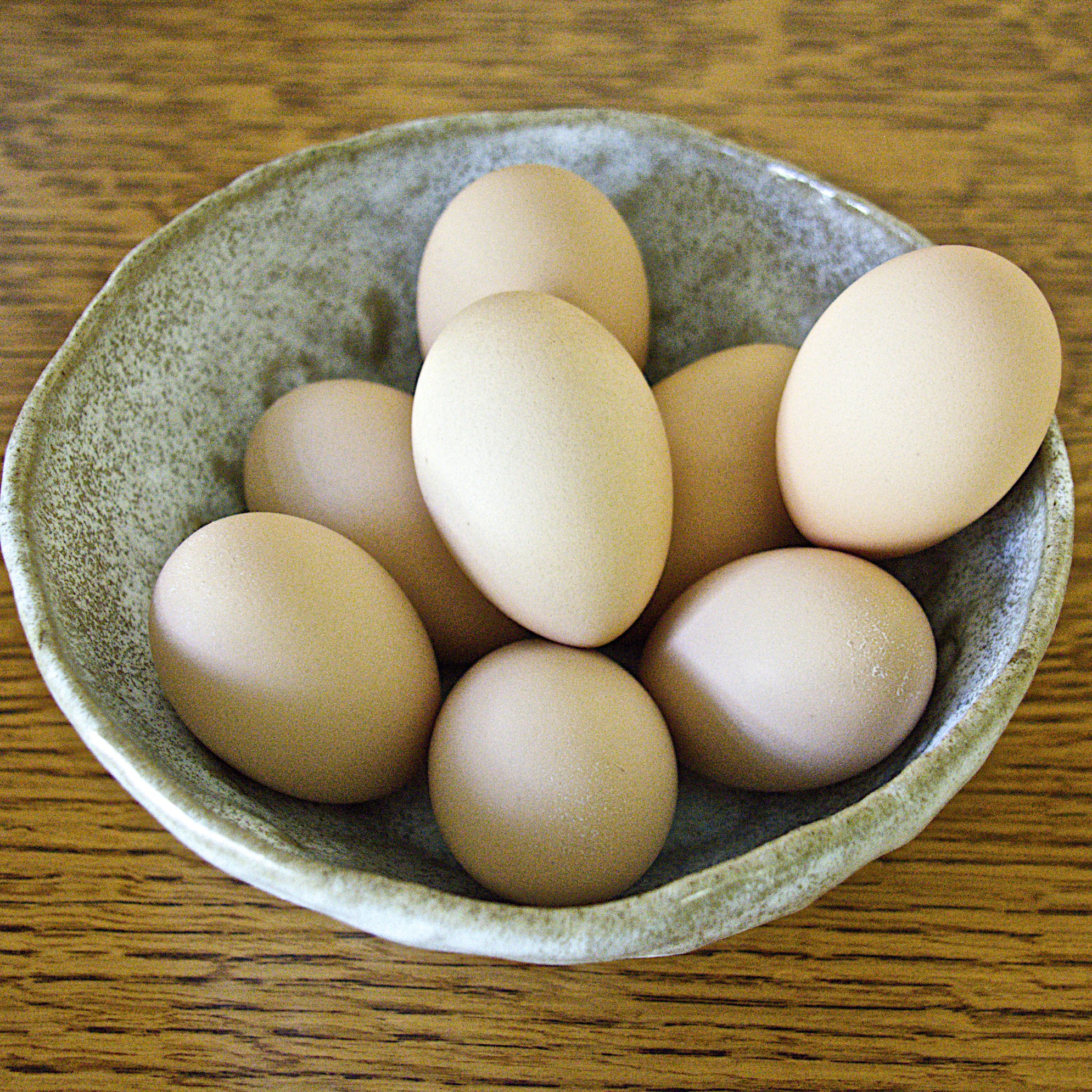
Eggs from my hens.

Eggs from my hens.

She had no appetite and became quite listless. I tried coaxing her with cooked hamburger and yogurt, which she ate. The hamburger adds protein to their diet, and is something I had read of other urban chickens farmers doing.  The yogurt is supposed to restore healthy gut flora and it works for hens as well. But it didn’t work for Cheep. She was wasting away. I wondered if she might have coccidiosis, or something dreadful like Marek’s, Newcastle Disease, or avian influenza. This was beyond my ability to diagnose, so I did something I had never planned on doing. I took Cheep to a vet. Finding a vet who treats chickens in urban Huntington Beach CA was no easy task. Parrots, maybe, but a chicken? Who in their right mind takes a chicken to the vet? OK, so I’m not in my right mind. Not sure, in fact, that I have ever been.

I packed poor ailing Cheep into a travel kennel (that would probably have held a Greyhound–the dog, not the bus) and off we went. The vet took a brief look at Cheep and suggested euthanasia and a necropsy. She took an extensive history of the bird’s illness, the health of the other chickens, and even my husband’s and my health. She even asked who plays with the chickens (my grandchildren), when they were last in contact, and the health of my grandchildren. Zoonotic diseases (infectious diseases spread from animal to humans) are serious business. But the good news is that an epidemic of something serious is not likely to start in my little flock of hens, who have plenty of room to roam in a low-stress environment, and who get a healthy diet of laying pellets, organic greens, and scratch.

She euthanized little Cheep and instructed me to take her body to the coroner (OK, not exactly, the vet pathologist in south county). To make a long story short, after about 10 days and over $300 in various vet bills, the vet pathologist declared that Cheep had essentially ovulated into her abdominal cavity. The yolk had burst and that had caused peritonitis. Nothing infectious. And there was nothing that I did to cause it; nothing I could have done to prevent it. Peace of mind came at a high cost.

I am slowly learning by trial and error about all of the things that can go wrong with chickens. I had one baby chick eaten by a possum (who knew that a possum could reach its paws into the large portable kennel that I was raising my chicks in?). I lost one hen to being egg-bound. My favorite hen, Henrietta the Black Australorp, died of old age, possibly heart trouble. Hens are prone to going broody and sitting on the eggs of others all summer long while not laying themselves. They quit laying when they go into molt, which they are prone to do at any time, but especially when it gets hot. They quit laying when the days get short in November, and don’t start laying again until the days began to lengthen after with winter solstice in mid-January.

My flock of hens is down to three birds. Chicken Little, the Black Sex-linked hen, is 9 years old, and doesn’t lay much any more. Miss Hillary, a Barred Rock, is about 5 years old. She is currently molting, not laying, and has never been a particularly good producer. That leaves the burden of supplying us eggs on Peep, another Barred Rock. I have renamed her Dino-peep since she has the temperament of a velicoraptor. She is a nasty-tempered thing, downright vicious, and attacks me whenever she gets a chance. I think I need a new flock. Urban chicken-keeping ain’t no bed of roses.

Posted in Uncategorized | Tagged , , , | 4 Comments

Sesame Kale Chips

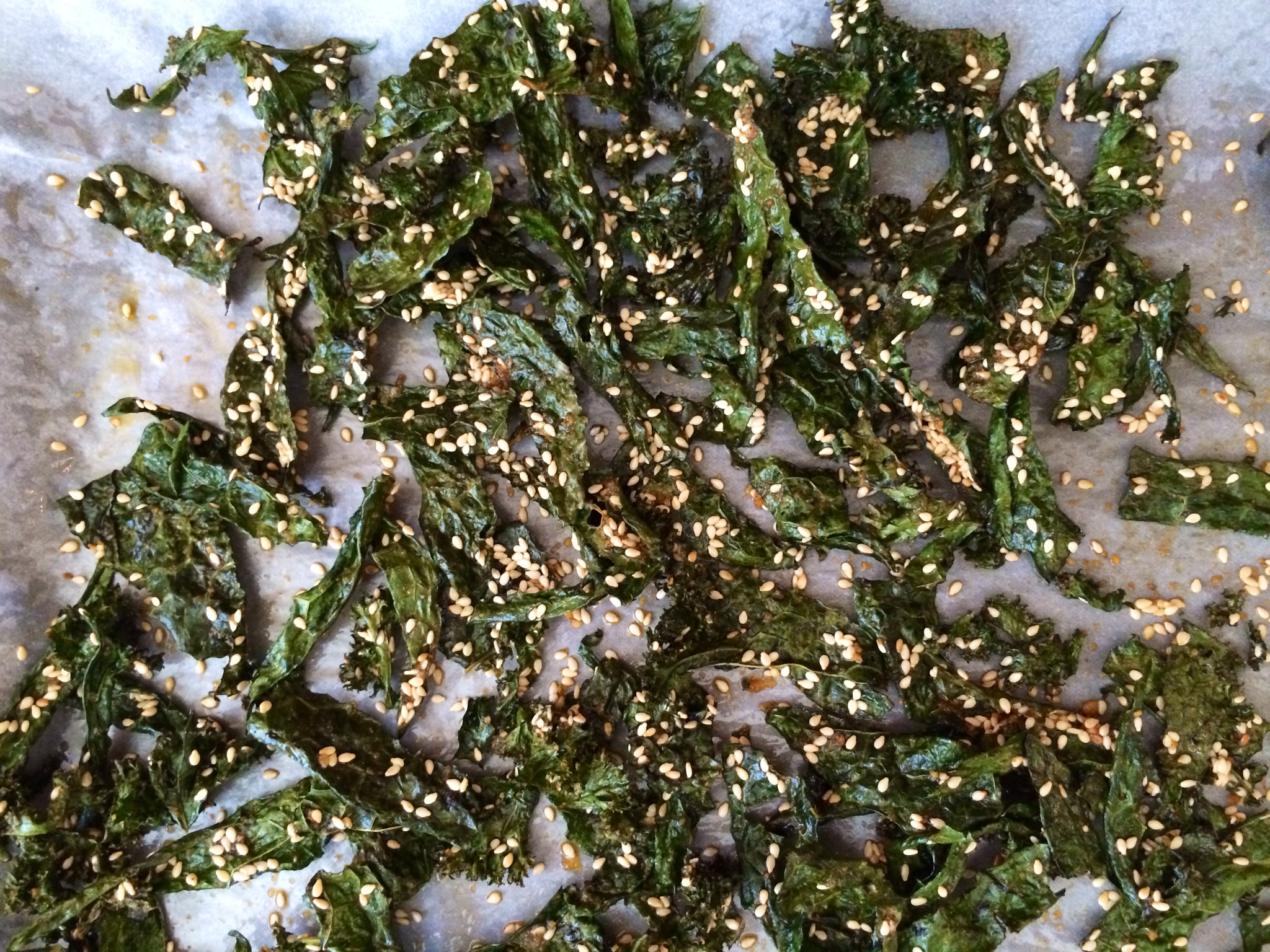
Kale is one of those super foods that are loaded with nutrients. But how to cook it? Here is one way–make Sesame Kale Chips. They are easy to make and taste great. They have to be better for you than potato chips, right?

Sesame-Kale chips

Sesame-Kale chips

Here is my recipe.

Sesame-kale Chips

9 oz kale, washed, dried, center ribs snipped out
2 T lemon olive oil
1 tsp sesame oil
1/2 tsp garlic powder
1 tsp onion powder
1/8 tsp smoked paprika
1/2 tsp celery salt
2 T sesame seeds

In a bowl, mix seasonings with 1 T sesame seeds and oils. Toss kale with seasoned olive oil using two forks. Sprinkle on remaining sesame seeds. Spread kale on parchment paper on a baking sheet. Bake in a convection oven set at 300 degrees F for 10 minutes. Toss leaves again on sheet to distribute. Bake an additional 15 minutes. Eat the same day.

Posted in Uncategorized | Tagged , , , , | 6 Comments

More local seafood–Black Gill Rockfish

Vic and I finally made it down to the Dory Fleet fish market at Newport Pier last weekend. We got there fairly late in the morning (9:30 am), and there was only one vendor still open. The others had sold out and closed shop. They open at 5:30 am, and there is a line already even that early. I am not a morning person, so I went late and took my chances. It paid off.

Lots of fish still leftThere were still plenty of fish left. When the guys sell almost out, they give their remaining fish to the last vendor to sell. Leslie had plenty of Black Cod (aka Sea Trout) not pictured. I don’t like them and neither does Vic. Their texture is slimy and the flavor not to my liking either. I don’t remember what the gray fish in the foreground were, or the three orange-red fish above them, but the mass of red fish at the top left are Black Gill Rockfish. That was what we went for. The dory fleet website posts what fishermen are catching what species, and I was able to look them up. These fish are like red snapper, if you ask me. The flesh was firm and delicious.

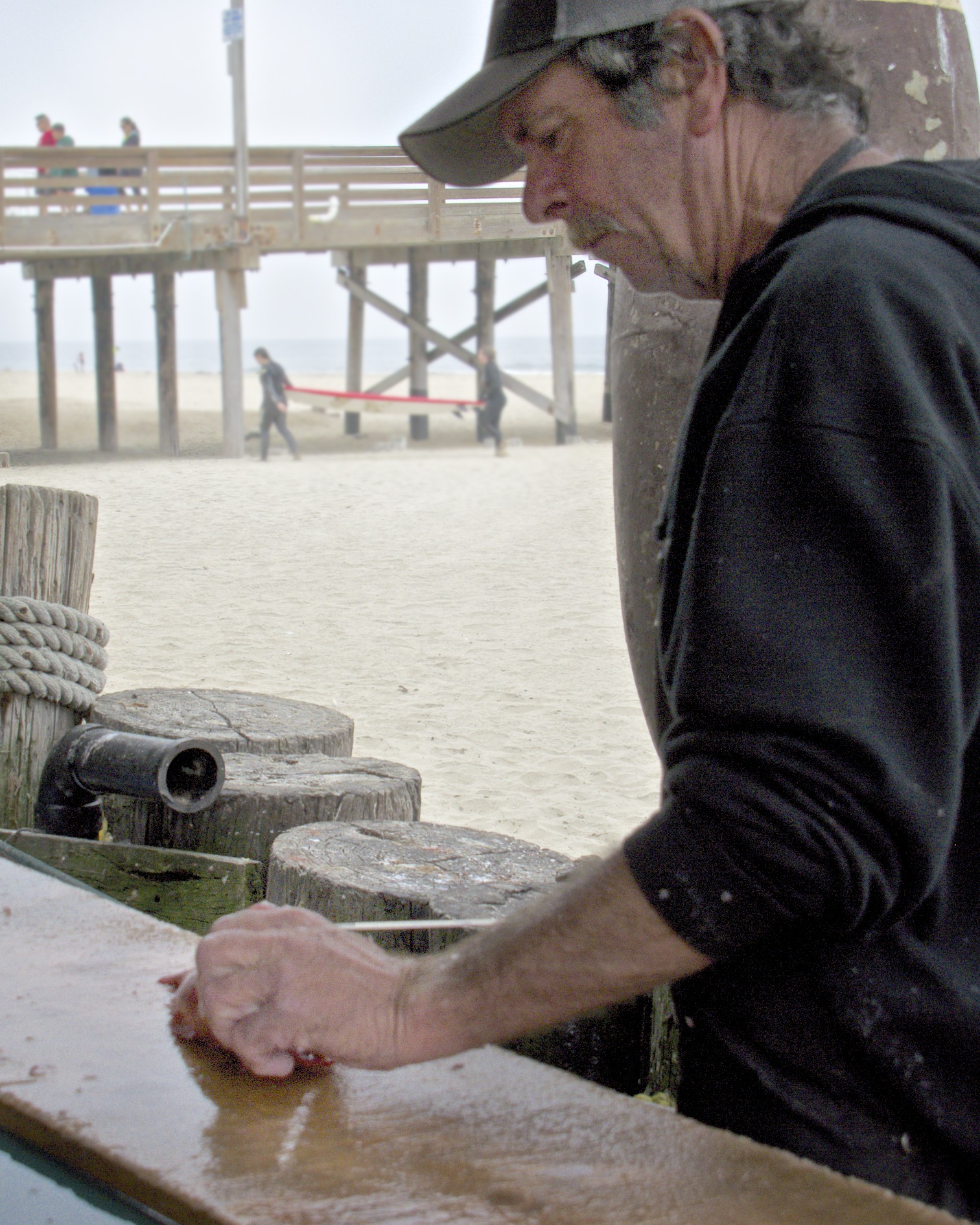
They clean the fish for you.

They clean the fish for you.

We asked the guy cleaning and filleting them to save the head and spine for us so we could make fish chowder.

Off went the fins, and into a plastic bag went the filets.

Off went the fins, and into a plastic bag went the filets. We opted to have the skin left on.

One medium sized rockfish made two nice filets.

One medium sized rockfish made two nice filets.

I coated the filets with olive oil and salt, and laid them on a bed of fresh thyme and Meyer lemon slices. The lemon and thyme were from our garden.

I coated the filets with olive oil and salt, and laid them on a bed of fresh thyme and Meyer lemon slices. The lemon and thyme were from our garden.

I laid the fish on aluminum foil on top of a smoker tray and grilled them on our gas grill inside our Williams-Sonoma smoker basket over hickory wood chips.

These are the filets ready for grilling. I couldn't have fit more than two into our little smoker basket.

These are the filets ready for grilling. I couldn’t have fit more than two into our little smoker basket.

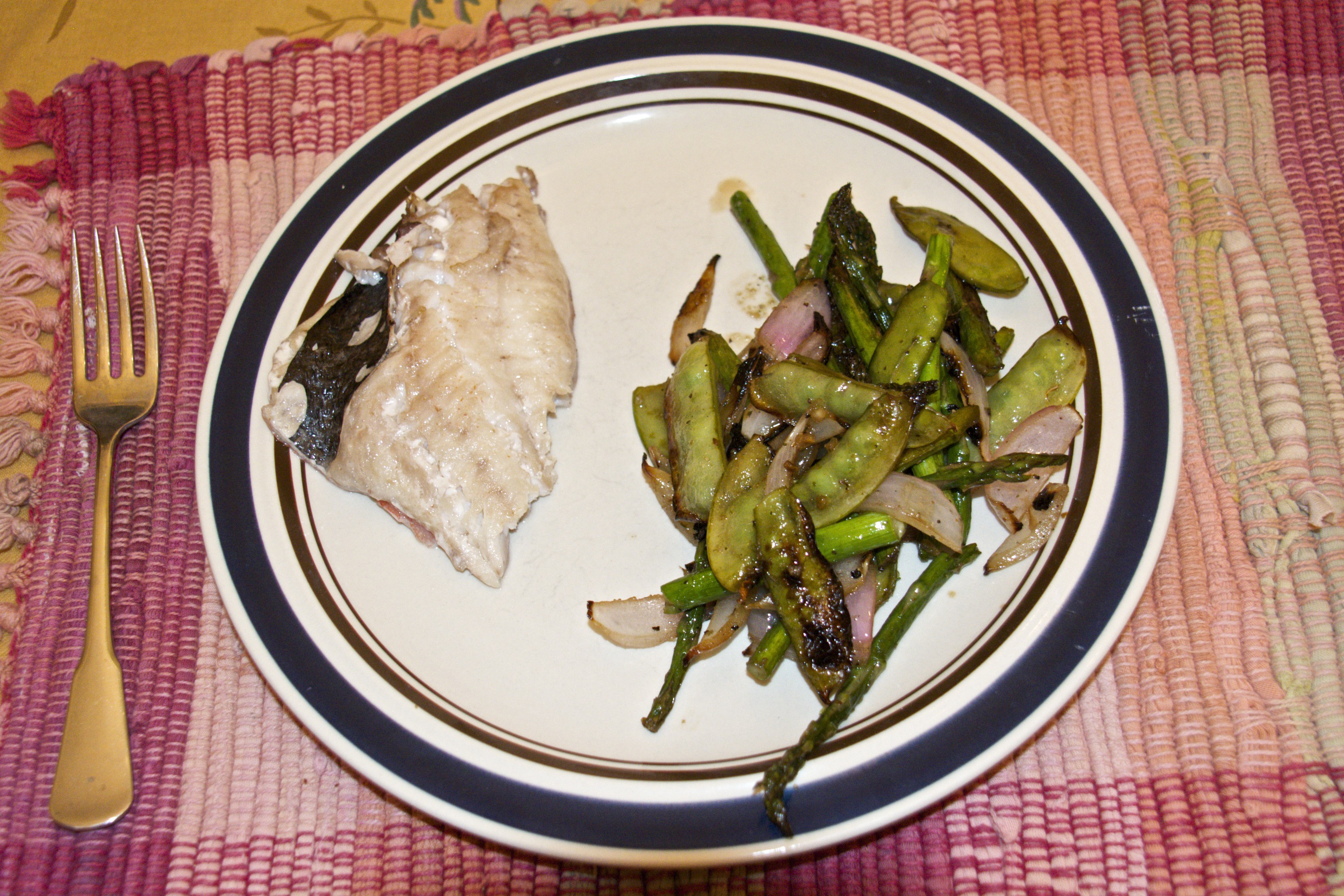
I grilled a mix of asparagus, snow peas and onion in a grill basket, and that was our dinner.

I grilled a mix of asparagus, snow peas and onion in a grill basket, and that was our dinner.

The snow peas and onion were from our garden. This was yet another adventure in locally sourced seafood, with homegrown vegetables. Doesn’t get much healthier or more local than this.

We also bought a 4-lb bag of sand dabs, a locally caught small flounder-type fish. I cooked four of them for a different meal, and froze the rest for later use.

The Dory Fleet market also had several bags of octopus, but I have no clue how to cook octopus. I do like eating them, so I may give it a try. My old landlord from Connecticut days, Joe Passanesi, made the best octopus salad. He boiled the octopus, sliced the tentacles, and dressed the slices with olive oil, garlic, parsley, and vinegar. I assume that one tosses out the head. Has anyone cooked octopus? How did you prepare it?

Stay tuned for further adventures of the piscine kind. (Is that the right word?)

Posted in Uncategorized | Tagged , , , , , , , | 2 Comments

Peaches and Spot Prawns–but not together!

We are having an interesting adventure with local eating. First of all, our Florida Prince peach tree is bearing ripe fruit.

Our first picking of ripe peaches this year.

Our first picking of ripe peaches this year.

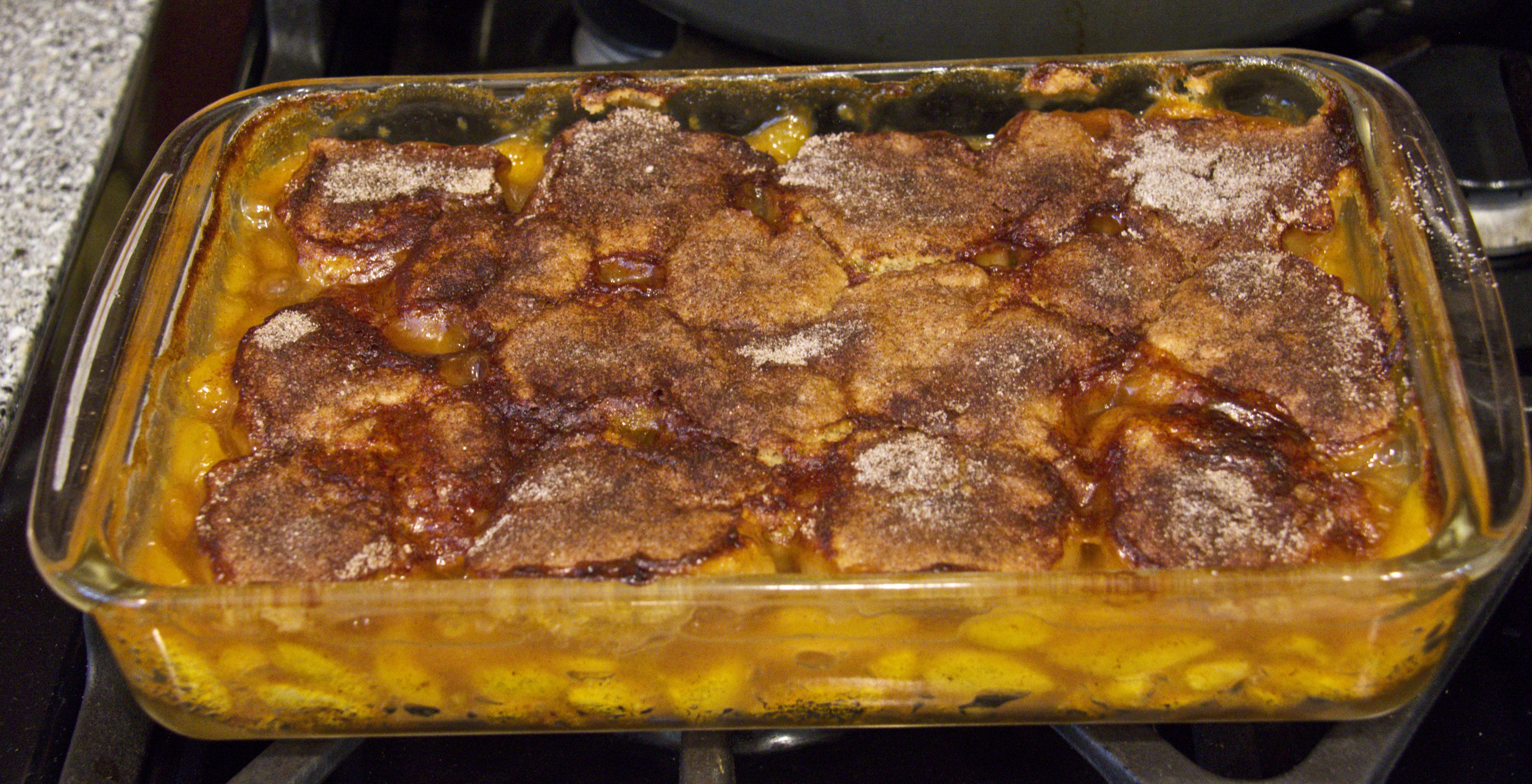
Oh, good, peaches! I’ll make a cobbler.

I used a recipe from All Recipes online, and didn't change a thing. It was fabulous.

I used a recipe from All Recipes online, and didn’t change a thing. It was fabulous.

I went from “Oh good,” to “Oh God” in three days.

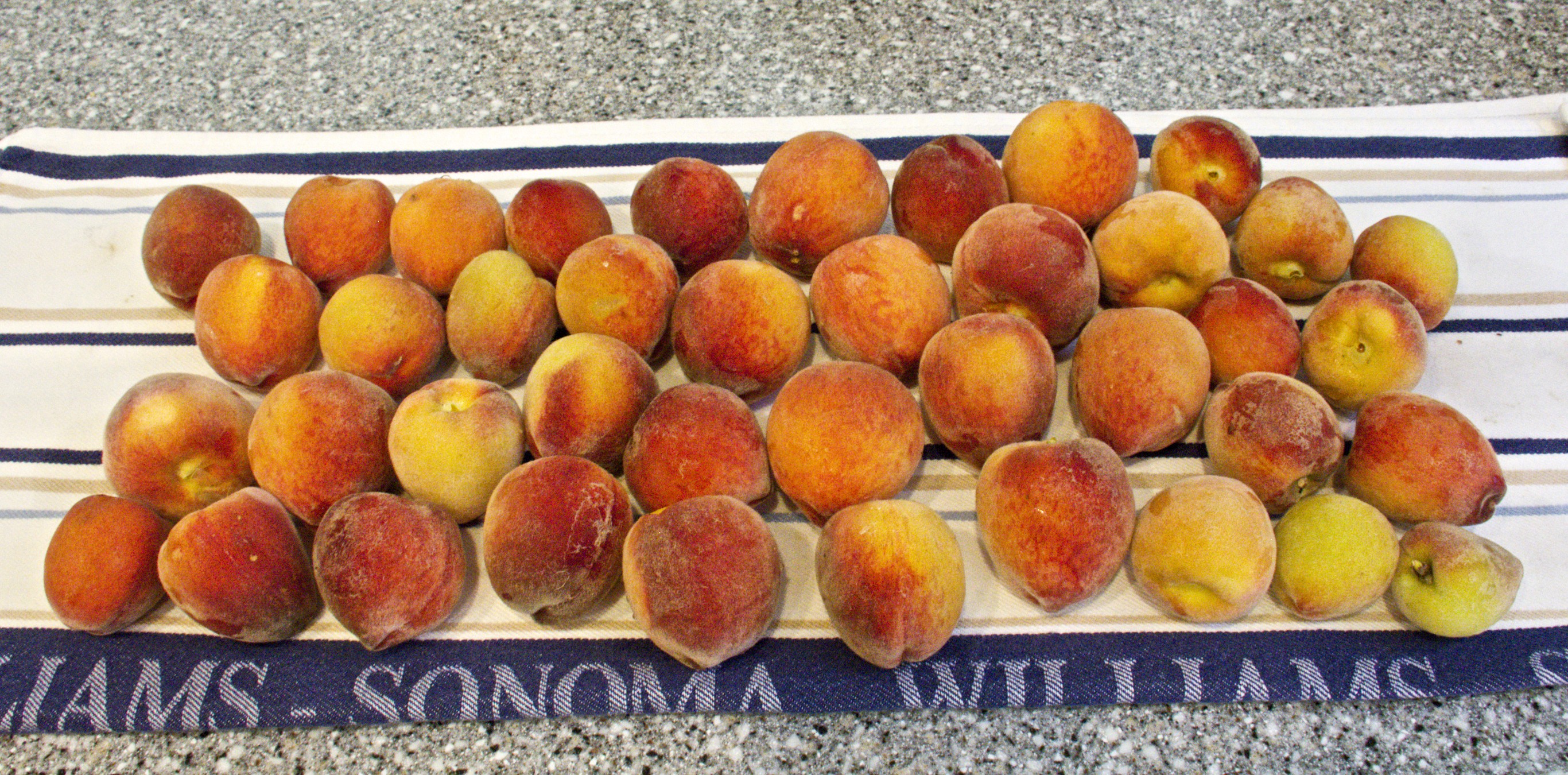
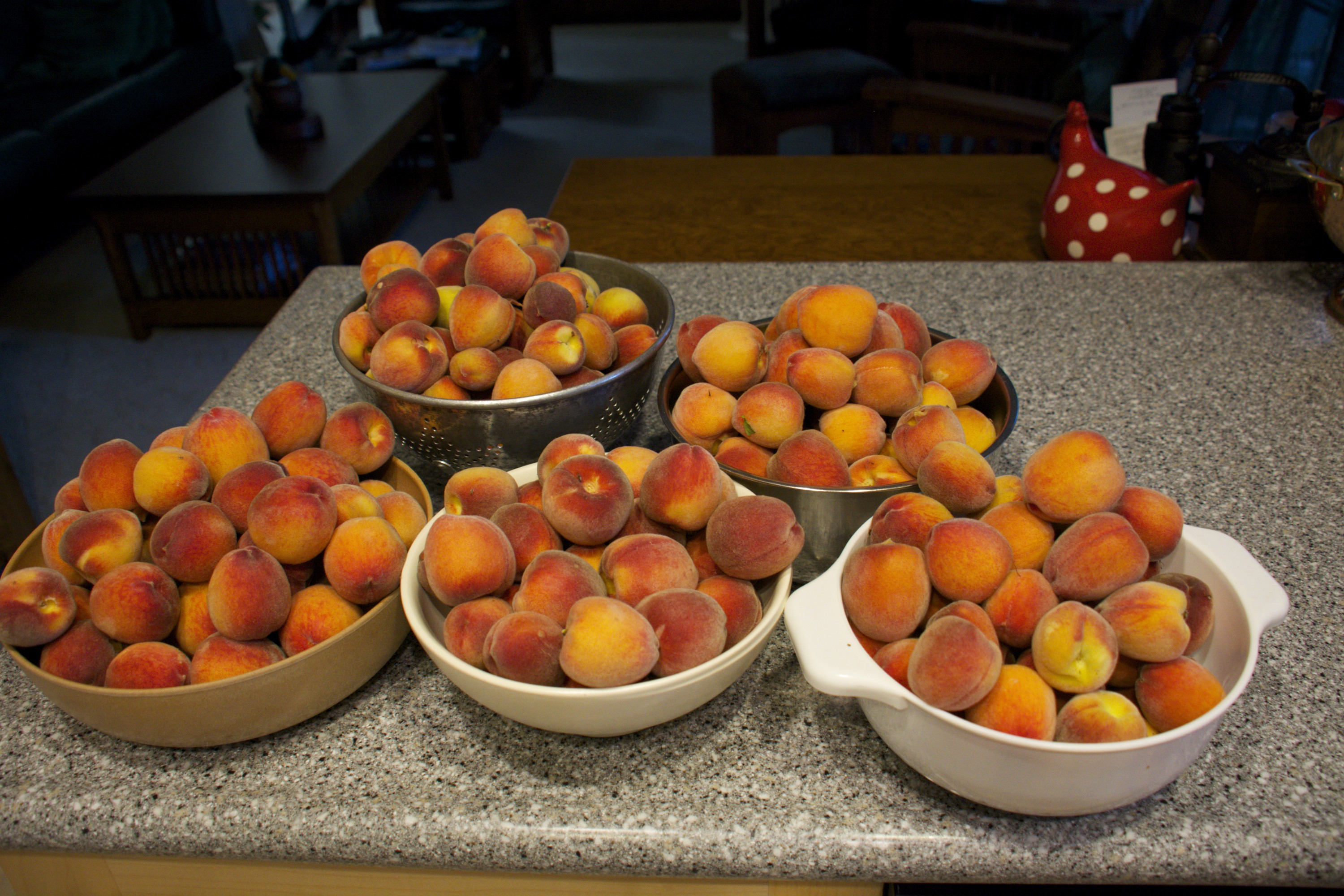
This was the second picking, over 18 lbs of peaches. I ran out of bowls to put them in.

This was the second picking, over 18 lbs of peaches. I ran out of bowls to put them in.

I made a second cobbler and put rest of the peaches into a cooler with ice until I can process them. I plan to make peach preserves today, and freeze the rest. But this is only part of the crop! There are still more peaches on the tree. They are tiny and take forever to peel, pit, and slice. I see my future stretching endlessly ahead of me….

But on to other culinary adventures. We are trying to observe Meatless Mondays and Meatless Fridays as a way of reducing our carbon footprint. And we are always looking for locally sourced foods as another way to keep from pouring more carbon dioxide into the atmosphere. It was in that mode that I remembered the Dory Fleet in nearby Newport Beach. It may be the last place in America where the public can buy fish directly from the fishermen. But one must get to the pier by 5 am to get the best choice, and I am not a morning person. I checked online to see what they are catching, and found Spot Prawns mentioned. I had never heard of Spot Prawns

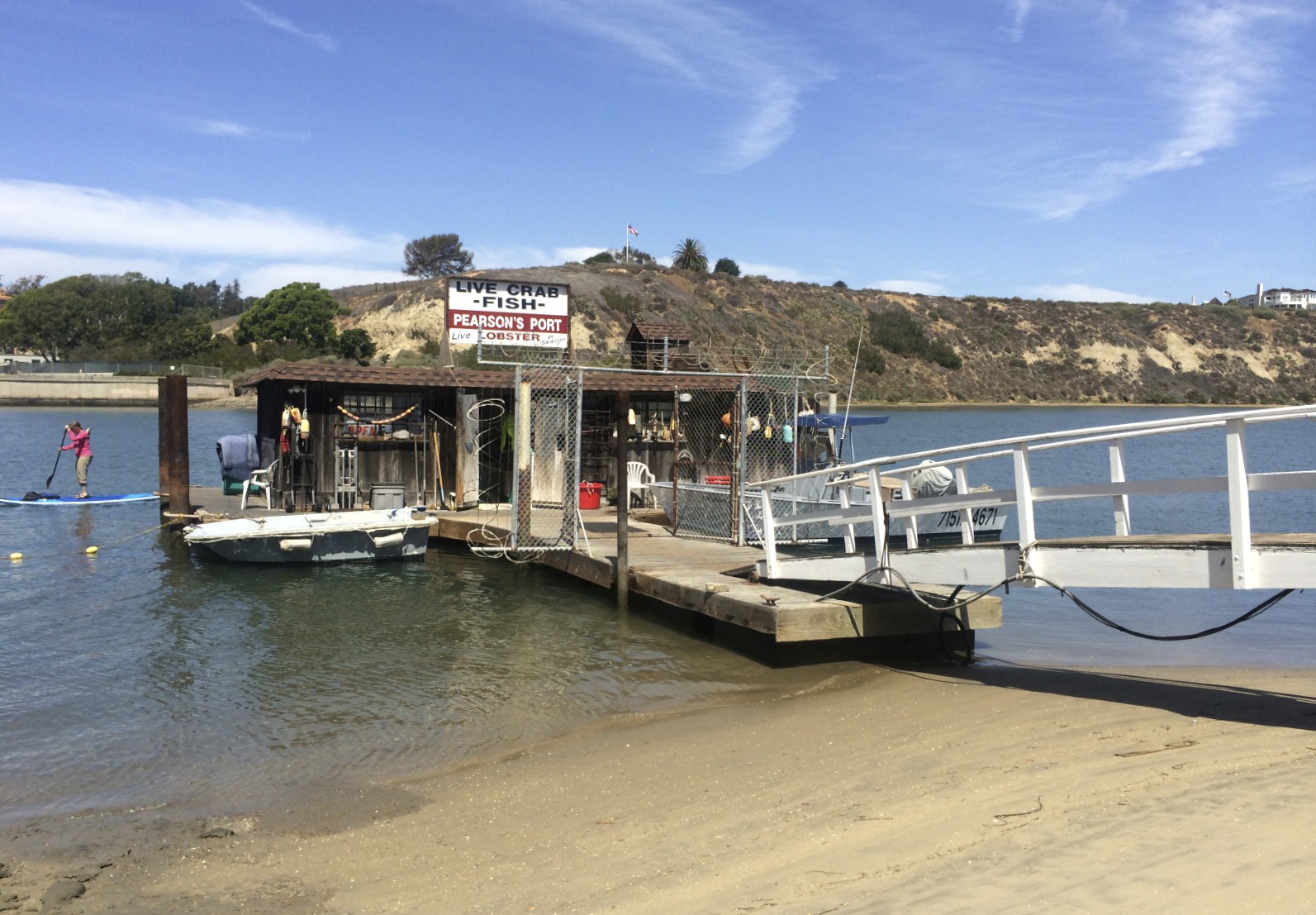
Pearson's Port fish shop

Pearson’s Port fish shop

Some research showed that Pearson’s Port on Newport Bay is a fish shop that carries live Spot Prawns. Apparently, the prawns are best cooked as soon as possible (i.e., cooked while live), because the heads produce an enzyme that will spoil the meat within a couple of hours after the prawns die. This is not something that you want to buy dead on ice.

I figured it would be best to buy the prawns around noon at Pearson’s Port rather than 6 am at the dory fleet, and have them for lunch. So we resolved to have Spot Prawns as part of our meatless Friday, as well as a local food.

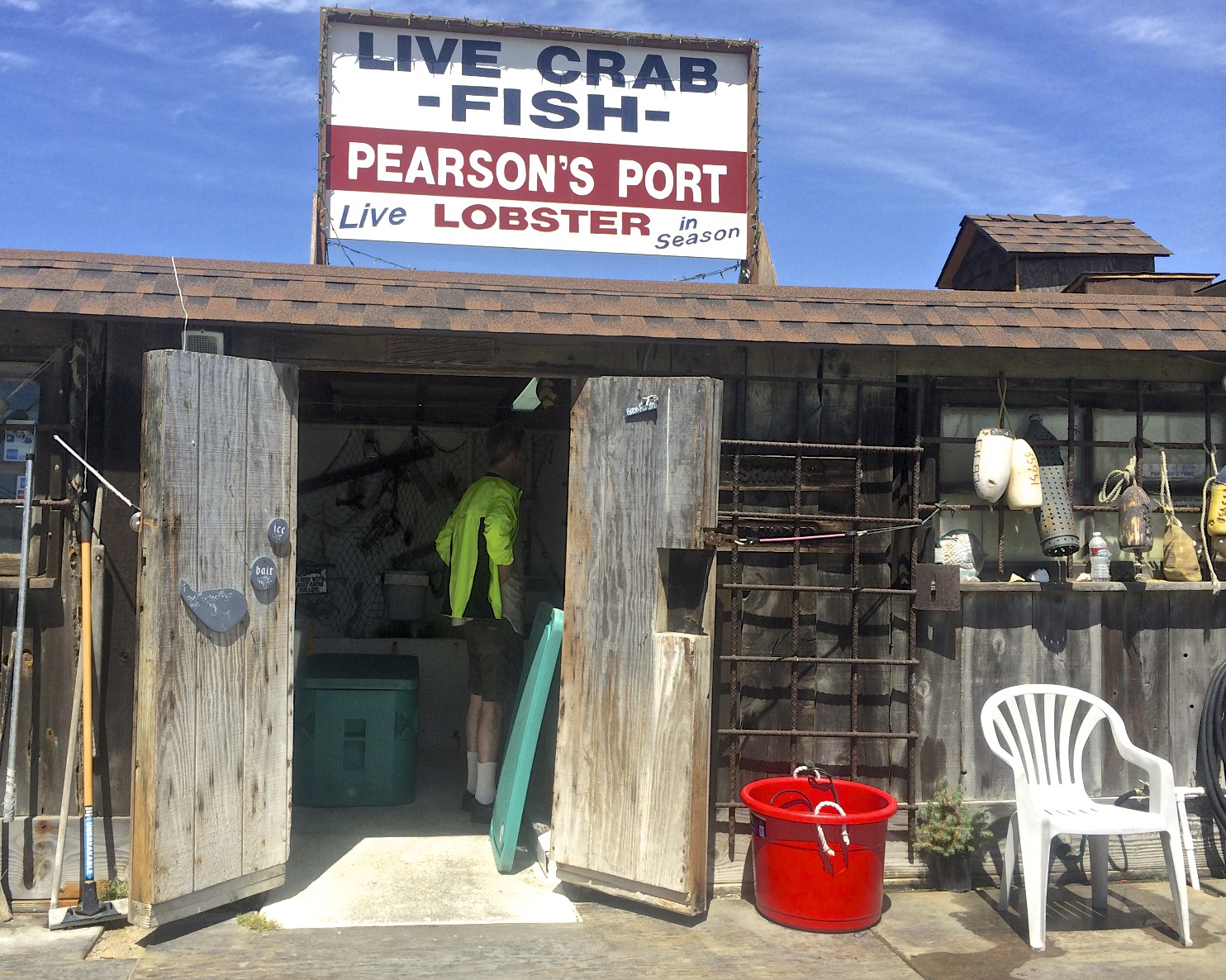
Tiny place, quite rustic.

Tiny place, quite rustic.

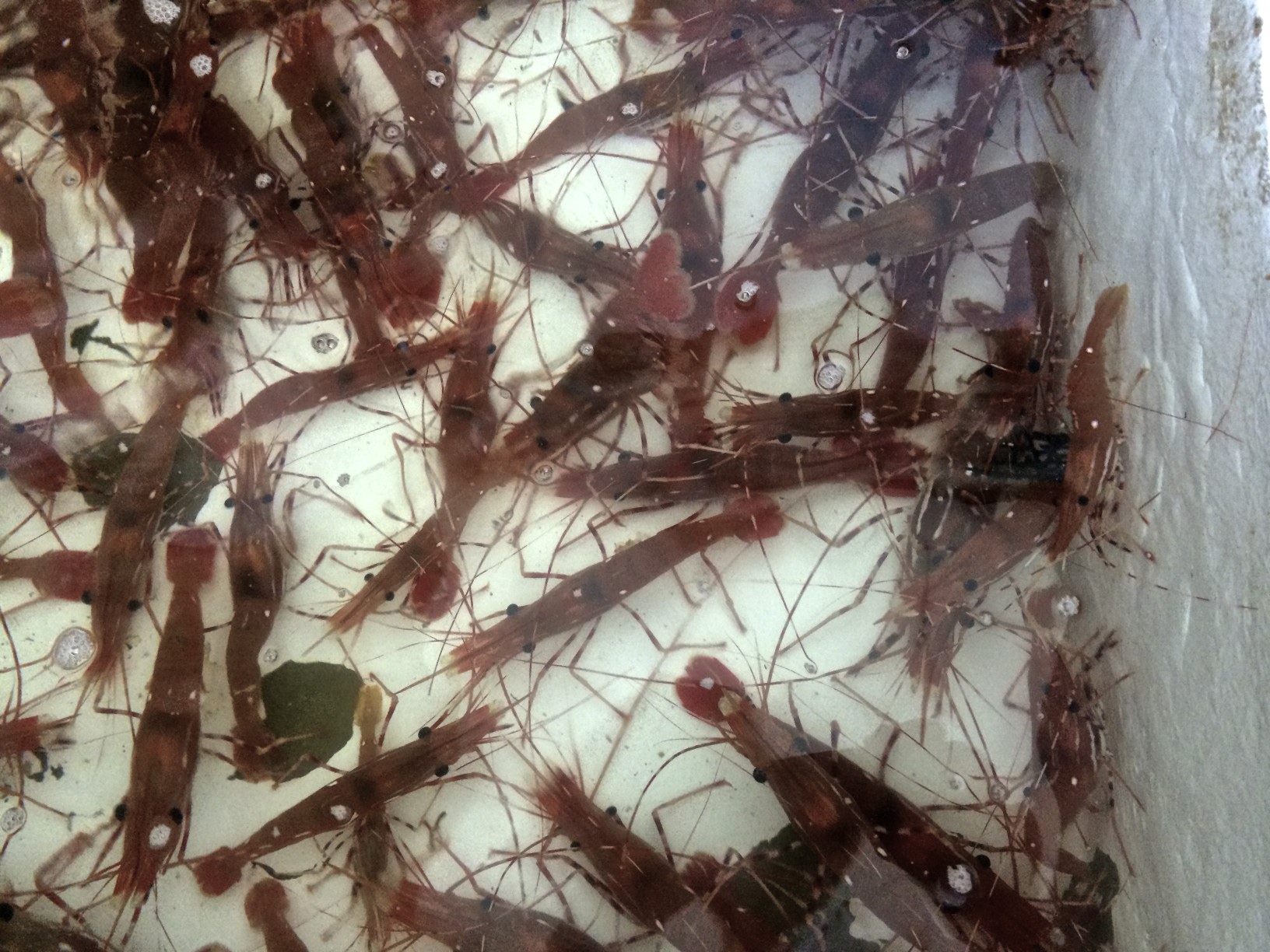
Live Spot Prawns in a tank.

Live Spot Prawns in a tank.

Live Yellow Rock Crabs in a tank. I plan to try some of these next week.

Live Yellow Rock Crabs in a tank. I plan to try some of these in the next week or so.

We learned that Spot Prawns are sustainably fished, which is important to us. They are all born male, but by two years, they all turn into females. So the large prawns that we bought were all female, having been males last year. Weird.

The man at the fish shop offered to take their heads off for us, but he recommended cooking the heads as well. And that is what I did.

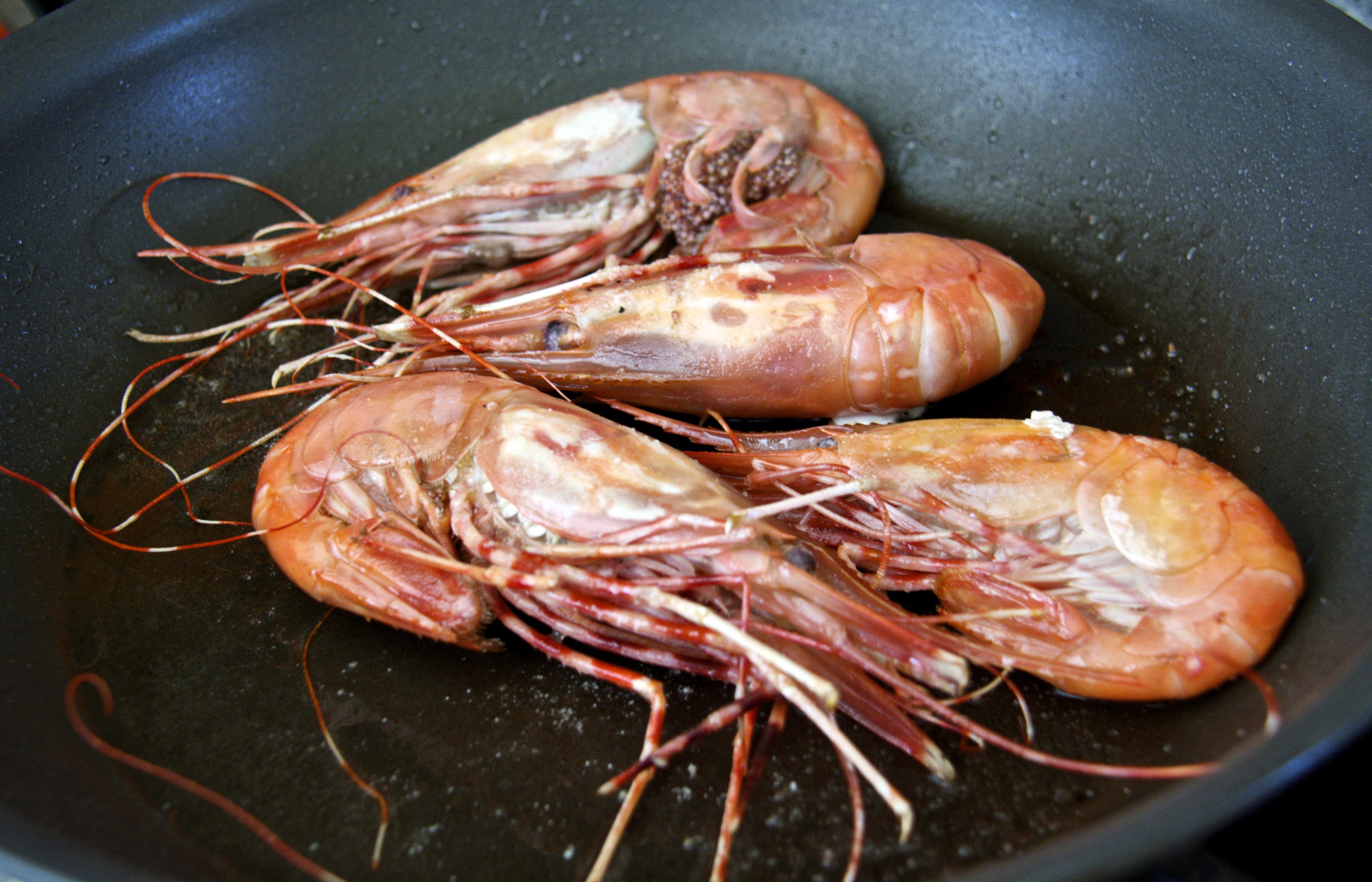
Spot Prawns cooking in a skillet with olive oil and rock salt.

Spot Prawns cooking in a skillet with olive oil and rock salt.

The prawns were pretty big. I sautéed the prawns for two minutes per side in olive oil and coarsely grated Himalayan pink salt. The idea is that you get the oil and salt on your fingers as you peel and eat the shrimp. I melted butter with lemon juice for one dip, and made a second dip of sesame oil, lime juice, cilantro, and a hint of mirin (sweet Japanese rice wine). Both were great. The tails were sweet and succulent, more like lobster than shrimp. The taste was divine, and I am definitely going to make them again. But not too often because the four prawns cost $15. Two were OK for lunch, but I could have easily eaten three. Or four. Or…. They were SOOOO good.

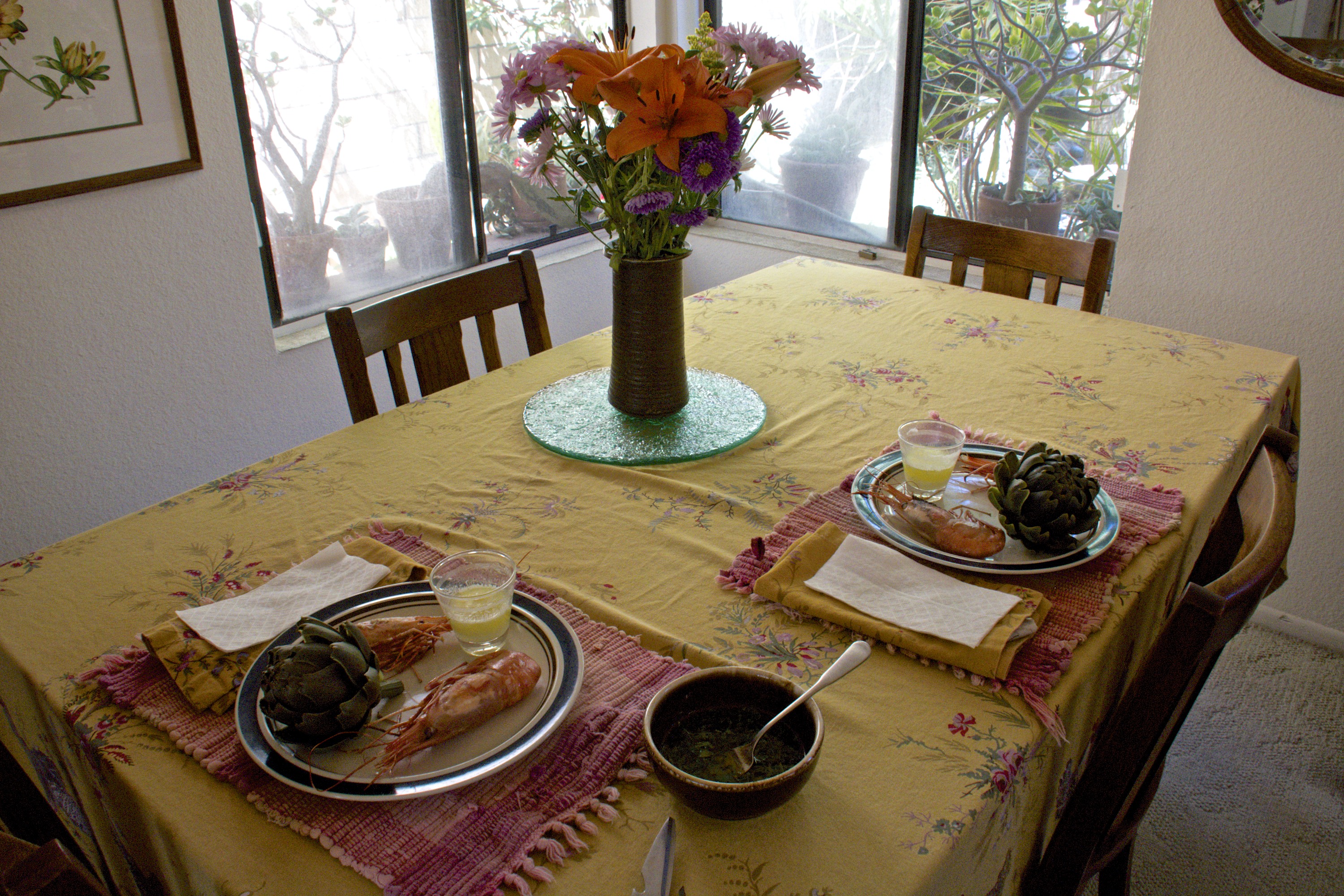
The table set for two.

The table set for two.

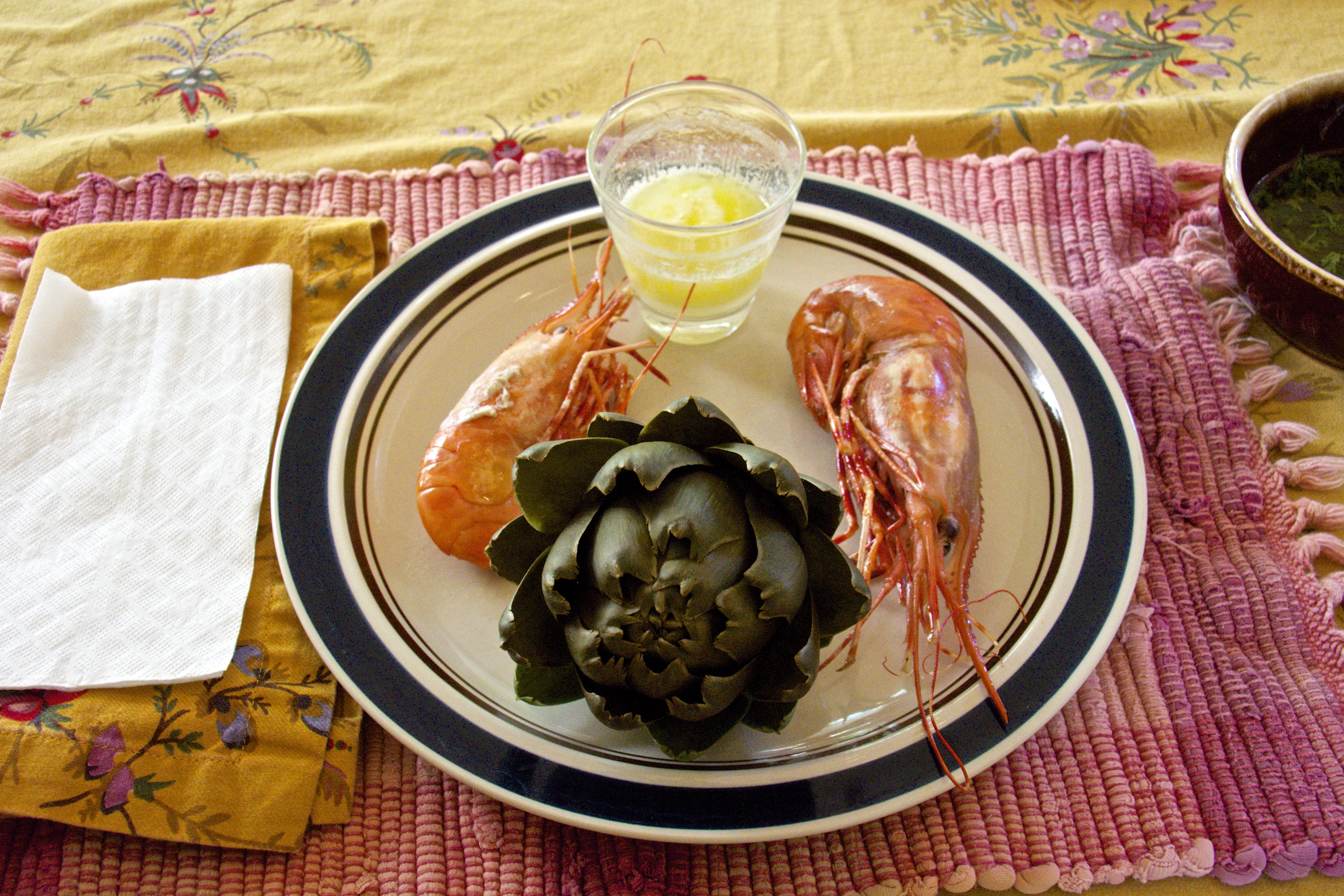
Spot Prawns and home-grown artichokes for lunch.

Spot Prawns and home-grown artichokes for lunch. That is about as local as one can get.

The heads with thoraxes had a few drops of tasty liquid in them, but not much else except eggs. As an experiment, I decided to simmer the heads and the discarded shells from the tail in a quart of water to make a stock for Spot Prawn Bisque. I added a half onion, a carrot, a couple of stalks of celery, and half a cup of white wine. I also dumped in the rest of the lemon – butter that we had dipped our artichokes into.

After the broth had simmered for nearly an hour, I turned off the stove and strained out the chunks from the broth. (Our chickens got the carrot and celery and I used the spot prawn heads to bait a live trap for a possum that wanted to eat my peaches. Caught one too, and released him elsewhere.)
I thickened the stock with 1/4 C flour, and added a pint of half and half, and a goodly dollop of sherry. That was our spot prawn bisque that we had for dinner. But it was too much for one meal. The next night, I diced two gold potatoes, a half onion, and 3 ounces of bacon and fried that up until done. I added the leftover bisque to that and made a hearty chowder for the next night’s dinner. And there was enough of THAT left for lunch today. So we got four meals out of those four prawns. Not too shabby.
Posted in Uncategorized | Tagged , , , , , , , , | 6 Comments

How my garden does grow–27 April 2015

It is past time to bring you up to date on spring in Southern California. A warm and DRY spring. We are in the fourth year of what is being called a mega-drought. No more rain until November. I still have some water in my rain barrels, but mostly I am watering with tap water these days. Still, with all of the conservation measures we employ, we use only 60% of what the average coastal southern Californian uses. Not too shabby.

Spring is when my orchard blooms and, with luck, sets fruit. We got only 78 winter chill hours, which wasn’t enough for many of my trees to produce a good fruit set. But the trees that don’t require much chill have done great. I am just now entering peach season.

Our Florida Prince peach is LOADED with fruit, but most of it isn't quite ripe yet. Any day now, we will be inundated with sweet, delicious peaches.

Our ultra early blooming Florida Prince peach is LOADED with fruit already, but most of it isn’t quite ripe yet. Any day now, we will be inundated with small, sweet, delicious peaches.

Our Babcock peach is still blooming, but a few of the early flowers set fruit. Very few. It requires more chill than the Florida Prince peach. If I get two dozen peaches from it this year, I will count myself lucky.

Our Babcock peach is still blooming, but a few of the early flowers on it set fruit. Very few. It requires more chill than the Florida Prince peach. If I get two dozen peaches from it this year, I will count myself lucky.

These tiny Asian pears are on my dwarf grafted tree, the Shinseiki branch.

These tiny Asian pears are on my dwarf grafted tree, the Shinseiki branch.

The 21st Century branch is just now blooming, but that variety requires more winter chill than it got. I'm not expecting as good a fruit set as on the Shinseiki branch. Hope I'm spelling that right.

The 21st Century branch is just now blooming, but that variety requires more winter chill than it got. I’m not expecting as good a fruit set as on the Shinseiki branch. Hope I’m spelling that right.

The older Shinseiki Asian pear in the back yard blooms later than the grafted dwarf one in front. It looks like it has set at least two dozen pears, maybe more. Kind of soon to tell since they don't all actually grow into pears.

The older Shinseiki Asian pear in the back yard blooms later than the grafted dwarf one in front. It looks like it has set at least two dozen pears, maybe more. Kind of soon to tell since they don’t all actually grow into pears. So far, I don’t see any fruit set on the 21st Century Asian Pear in back. Or is it 20th Century?

I tried removing leaves in the winter from my apple trees to see if that would make them set fruit despite the lack of chill. My dwarf Granny Smith bloomed like crazy, but so far I don't see any apples. These nascent apples are on the dwarf Fuji. Too soon to tell if they will develop into actual apples.

I tried removing leaves in the winter from my apple trees to see if that would make them set fruit despite the lack of chill. My dwarf Granny Smith bloomed like crazy, but so far I don’t see any apples. These nascent apples are on the dwarf Fuji. Too soon to tell if they will develop into actual apples.

My poor Santa Rosa plum wants a lot of chill hours, and didn't get them. So far, I see only two plums on that big tree. :-(

My poor Santa Rosa plum wants a lot of chill hours, and didn’t get them. So far, I see only two plums on that big tree. 😦

This is only the second time my low chill requirement Red Flame grapes have bothered to bloom. I have two bunches of buds, this cluster and a smaller one. Let's hope I actually get grapes this year. I didn't the other time it bloomed.

This is only the second time my low chill requirement Red Flame grapes have bothered to bloom. I have two bunches of buds, this nice big cluster and a smaller one. Let’s hope I actually get grapes this year. I didn’t the other time it bloomed.

The Panamint nectarine didn't get enough chilling. I will be lucky to get two dozen nectarines from this tree. So far, I have seen no fruit on the Snow Queen nectarine, and not a lot of blossoms either.

The Panamint nectarine didn’t get enough chilling. I will be lucky to get two dozen nectarines from this tree. So far, I have seen no fruit on the Snow Queen nectarine, and not a lot of blossoms either.

Well, before you decide that I am the worst fruit grower in California, I’d better show off my citrus.

The dwarf Valencia orange is loaded with brand new oranges, probably more than the tree can support. If it doesn't drop fruit, I will have to thin it. Right now, there are three dozen oranges, but the tree is too tiny to support that many. The more mature and much larger dwarf Navel orange is loaded with fruit, and is big enough to mature them all.

The dwarf Valencia orange is loaded with brand new oranges, probably more than the tree can support. If it doesn’t drop fruit, I will have to thin it. Right now, there are three dozen oranges, but the tree is too tiny to support that many. The more mature and much larger dwarf Navel orange is loaded with fruit, and is big enough to mature them all.

I have a few Eureka lemons on a very dwarf tree in a pot.

I have a few Eureka lemons on a very dwarf tree in a pot.

The Bearrs lime is loaded with tiny new limes.

The Bearrs lime is loaded with tiny new limes.

The Meyer lemon has several lemons left from last year, and is busy setting new fruit.

The Meyer lemon has several lemons left from last year, and is busy setting new fruit.

The avocado set lots of tiny fruit, most of which fall off. It is too soon to tell how many will mature, but I am hopeful.

The avocado set lots of tiny fruit, most of which fall off. It is too soon to tell how many will mature, but I am hopeful.

Among our newest trees are this tiny Pomegranate. Too soon for it to bloom. The tops of my two Fuyu persimmon trees died off and then sprouted from below the graft line, i.e., they are now American persimmons. I will dig them out and try again, this time with a potted persimmon instead of a bare root persimmon. I keep hoping.

Among our newest trees are this tiny Pomegranate. Too soon for it to bloom. The tops of my two Fuyu persimmon trees (not shown) died off and then sprouted from below the graft line, i.e., they are now American persimmons. I will dig them out and try again, this time with a potted persimmon instead of a bare root persimmon. I keep hoping.

This is the drought-tolerant portion of our front yard. The Korea grass requires very little water, and neither do the flowers. They are lucky if I water them once a month.

This is the drought-tolerant portion of our front yard. The Korea grass requires very little water, and neither do the flowers. They are lucky if I water them once a month.

We have had a good artichoke harvest, but it is nearly over.

We have had a good artichoke harvest, but it is nearly over.

This is my front yard vegetable bed by the sidewalk. You are looking at the garlic end, with sage at the lower right.

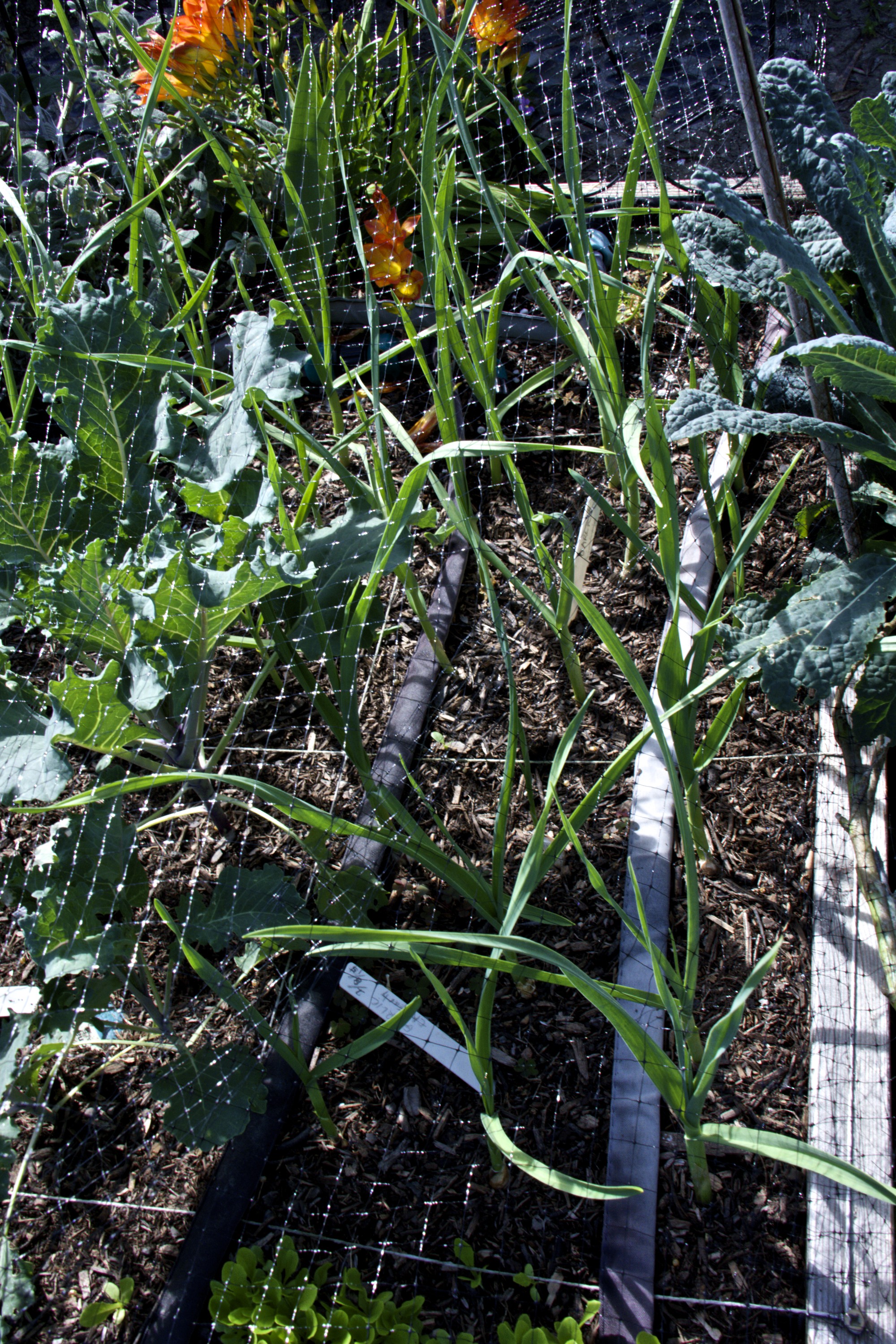
This is my front yard vegetable bed by the sidewalk. You are looking at the garlic end, with one elephant garlic and 27 “regular” garlics grown from bulbs/cloves from the grocery store. Sage is at the lower right.

This is the onion end, with about 80 onions. There is a lot of kale in there too, and carrots.

This is the onion end, with about 80 onions. There is a lot of kale in there too, and carrots.

I am growing Sweet White Texas and Texas Red onions. They are bulbing up nicely.

I am growing Sweet White Texas and Texas Red onions. They are bulbing up nicely.

Incredibly enough, I have trouble growing summer squash in my garden. Maybe they don't get enough sun, not sure. I planted these Lebanese squash from seed and they are struggling along.

Incredibly enough, I have trouble growing summer squash in my garden. Maybe they don’t get enough sun, not sure. I planted these Lebanese squash from seed and they are struggling along. BTW, I have netting over everything to keep the birds out.

I have harvested only one turnip so far. Here is another one struggling along.

I have harvested only one turnip so far. Here is another one struggling along.

I have about 20 carrots scattered about the front bed. I can see them poking their orange roots up out of the ground, so they may be ready to harvest soon.

I have about 20 carrots scattered about the front bed. I can see them poking their orange roots up out of the ground, so they may be ready to harvest soon.

The Deer-tongue lettuce is about ready for a first picking. I grew these heirlooms from seeds that I saved a couple of years ago.

The Deer-tongue lettuce is about ready for a first picking. I grew these heirlooms from seeds that I saved a couple of years ago.

Kale, kale, and more kale. This one is Lacinato or dinosaur kale. I also have Scotch Blue Curled and something that sprouted from Lacinato seeds that I saved that obviously isn't Lacinato. That darn kale is so promiscuous. You never know what you will get from home-grown kale seeds.

Kale, kale, and more kale. This one is Lacinato or dinosaur kale. I also have Scotch Blue Curled and something that sprouted from Lacinato seeds that I saved that obviously isn’t Lacinato. That darn kale is so promiscuous. You never know what you will get from home-grown kale seeds.

The back veggie beds are a mess. Better to show a close-up of sugar snap peas.

The back veggie beds are a mess. Better to show a close-up of sugar snap peas.

Here is a cauliflower head that is growing nicely. We won't speak of the other seven cauliflower plants which don't appear to be doing anything at all that is going to be useful. Kind of like my red cabbage--nothing looks like it is going to be harvestable there either.

Here is a cauliflower head that is growing nicely. We won’t speak of the other seven cauliflower plants which don’t appear to be doing anything at all that is going to be useful. Kind of like my red cabbage–nothing looks like it is going to be harvestable there either.

I haven't been good about photographing my harvests, but here is one day's harvest of mustard greens, kale, gold potatoes, a turnip, and chard. All of this went into a wonderful beef stew, along with the last jar of my home-canned tomato soup that was lousy as soup but great as a stew base.

I haven’t been good about photographing my harvests, but here is one day’s harvest of mustard greens, kale, gold potatoes, a turnip, and chard. All of this went into a wonderful beef stew, along with the last jar of my home-canned tomato soup that was lousy as soup but great as a stew base.

The first of the peaches went into a fruit mix with store bought strawberries and blueberries, along with maple syrup and Grand Marnier. It went on top of a German pancake.

The first of the peaches went into a fruit mix with store bought strawberries and blueberries, along with maple syrup and Grand Marnier. It went on top of a German pancake.

This is my German pancake fresh from the oven, cooked in my husband's great-grandmother's cast iron skillet.

This is my German pancake fresh from the oven, cooked in my husband’s great-grandmother’s cast iron skillet.

GERMAN PANCAKE

6 eggs

1 C milk

1 tsp vanilla

1 T Grand Marnier

1/2 tsp salt

1 C flour

1 stick butter (1/4 lb)

Melt butter in a cast iron skillet in a 375 degree F oven until it is hot and bubbling but not burnt. Whisk egg, whisk in other liquids, then whisk in the salt and flour. Pour carefully into the HOT skillet and bake for about 25-30 minutes. It will puff up beautifully. Cut into four servings and top with sliced fruit of your choice, mixed with maple syrup and an additional 1 T Grand Marnier.

Vegetarians may want to look away at this point. Before I get to my harvest, I want to show off Bucket, the 4-H steer that we are sponsoring along with seven other sponsors. And I want to point out that not only is he local, he is being raised humanely, with love and kindness. His life is a far better one than a feedlot steer. He and his buddy Beau (show to his right) even have toys to play with back at the farm! They like to head butt soccer balls back and forth.

Here he is in the paddock at his first livestock show. I know, not a very photogenic photo, but this is the steak end, my favorite part. :-)

Here he is in the paddock at his first livestock show. I know, not a very photogenic photo, but this is the steak end, my favorite part. 🙂

He is growing nicely, and was in his first show last weekend. He took second place in the Market Steer category. Woohoo, Bucket!!! However, he spooked at the flash photography, and slammed his handler Jenna into the fence, injuring her hand. She wasn’t able to show him in the Showmanship class. Bucket weighs a bit over 1,000 lbs now, and I am amazed that she can handle him at all. He is like a HUGE puppy, very playful and headstrong. He will be in another practice show next weekend, then will be going to the Orange County Fair in late June.

Bucket doesn't miss a lot of meals. Or any opportunity to get more food. He should top out at about 1200 lbs by county fair time in June.

Bucket doesn’t miss a lot of meals. Or any opportunity to get more food. He should top out at about 1200 lbs by county fair time in June. Then he will fulfill his destiny as a meat animal.

On to this week’s harvest.

FRUIT

13 oz Peaches, Florida Prince

VEGETABLES

1 lb 4 oz Artickokes

7 oz Bok Choy

3 oz Chard

3 oz Kale

2 oz Mustard Greens

6 oz Peas, Sugar Snap

8 oz Potatoes, Gold (the entire crop)

4 oz Turnip, Purple Top

TOTAL PRODUCE 4 lbs 2 oz plus 16 eggs from our hens

Not bad for a tiny urban garden. If you had a harvest, or want to see what others are harvesting, visit Daphne’s Dandelions (see link at right).

Posted in Uncategorized | Tagged , , , , , , , | 10 Comments

We survived the heat wave–Happy St. Patrick’s Day

March 17 is typically when I started my garden when we lived in Connecticut. Not here in coastal southern California. We garden year-round. But this year, we are facing record-breaking heat. This was the hottest winter I can remember. We just had four days of record-breaking heat that fried a number of my plants in containers, including my beautiful new flower baskets.

These were my beautiful flower baskets. Our four-day spell of 90 degree weather fried them.

These were my beautiful flower baskets. Our four-day spell of 90 degree weather fried them.

Even the famed California poppies in the Antelope Valley were fried, and those are desert-adapted native plants. We live in interesting times, an era when all of the world except the right-wing folks in the USA know that the climate is changing, and that man is causing it. Well, I do what I can to reduce my CO2 emissions, and keep on gardening.

Our Katy Apricot tree was covered with blossoms. Or at least half the tree was.

Our Katy Apricot tree was covered with blossoms. Or at least half the tree was.

Because this winter had so few winter chill hours, my fruit trees are blooming rather sporadically. Some branches of the apricot tree were loaded with flowers. Other branches produced only leaves. Overall, I got about half the blossoms I would have expected.

Some of the apricot blossoms are producing fruit. So far, I can count about a dozen apricots. Since there were nearly a hundred blossoms on the tree, I am hoping for more than the half dozen apricots on this branch.

Some of the apricot blossoms are producing fruit. So far, I can count about a dozen apricots. Since there were nearly a hundred blossoms on the tree, I am hoping for more than the half dozen apricots on this branch.

The Florida Prince peach tree has a very low chill requirement, and it has set fruit magnificently.

The Florida Prince peach tree has a very low chill requirement, and it has set fruit magnificently. The other trees, not so much.

The Panamint nectarine is blooming now, but most branches have no blossoms on them. The poor Babcock Peach tree has only three blooms on it. Maybe more will open later. Hope so.

The Panamint nectarine is blooming now, but most branches have no blossoms on them. The poor Babcock Peach tree has only three blooms on it. Maybe more will open later. Hope so. So far, there are no flowers on the Snow Queen nectarine.

The ultra dwarf GoldMine peach has two clusters of blossoms, quite surprising since it requires 450 hours of chill and we got fewer than 80 winter chill hours.

The ultra dwarf GoldMine peach has two clusters of blossoms, quite surprising since it requires 450 hours of chill and we got fewer than 80 winter chill hours.

One of the Asian pears had 28 blossoms on it. The other two Asian pears have fewer than 10 flowers each. I am hoping that more flowers might open on them next week or the week after. We love those Asian pears.

One of the Asian pear trees had 28 blossoms on it. The other two Asian pears have fewer than 10 flowers each. I am hoping that more flowers might open on them next week or the week after. We love those Asian pears.

We are getting an average of two eggs a day from our four hens. They are no longer spring chickens, and production is down. I am still debating whether to get more hens this year or wait until next year.

We are getting an average of two eggs a day from our four hens. They are no longer spring chickens, and production is down. I am still debating whether to get more hens this year or wait until next year.

The artichokes are producing flower buds. It is always a challenge to know how long to wait before harvesting the bud. I will want to catch it well before it starts to open for the most tender flesh.

The artichokes are producing flower buds. It is always a challenge to know how long to wait before harvesting the bud. I will want to catch it well before it starts to open for the most tender flesh.

This is the onion end of the front veggie bed. I planted about 120 tiny onion seedlings. Only 80 survived.

This is the onion end of the front veggie bed. I planted about 120 tiny onion seedlings. Only 80 survived.

I planted one clove of elephant garlic and 29 cloves of regular garlic. Only one of the regular garlics failed to sprout. I may end up with far more garlic than I need. What was I thinking? Apparently that I like garlic. No werewolves near my garden.

I planted one clove of elephant garlic and 29 cloves of regular garlic. Only one of the regular garlics failed to sprout. I may end up with far more garlic than I need. What was I thinking? Apparently that I like garlic. No werewolves near my garden.

I have a small bed in front that is filled with arugula, chard, red frilly mustard, and bok choy, all doing well. The path is blocked by an abundance of dinosaur. kale.

I have a small bed in front that is filled with arugula, chard, red frilly mustard, and bok choy, all doing well. The path is blocked by an abundance of dinosaur kale.

This is a dead-on straight shot of the front beds from the street. Kale, kale, kale.

This is a dead-on straight shot of the front beds from the street. Kale, kale, kale.

But if you look closely, you will see carrots! Scarlet Nantes.

But if you look closely, you will see carrots! Scarlet Nantes.

And Purple-top turnips.

And Purple-top turnips.

And Deer-tongue Lettuce. I can hardly wait until this stuff is ripe. Not pictured--Komatsuna, an Asian mustard green.

And Deer-tongue Lettuce. I can hardly wait until this stuff is ripe. Not pictured–Komatsuna, an Asian mustard green.

This is the non-vegetable garden part of the front yard. It is in full bloom in February-March, such a pretty time here.

This is the non-vegetable garden part of the front yard. It is in full bloom in February-March, such a pretty time here.

This is a nice meditation garden for hummingbirds.

This is a nice meditation garden for hummingbirds.

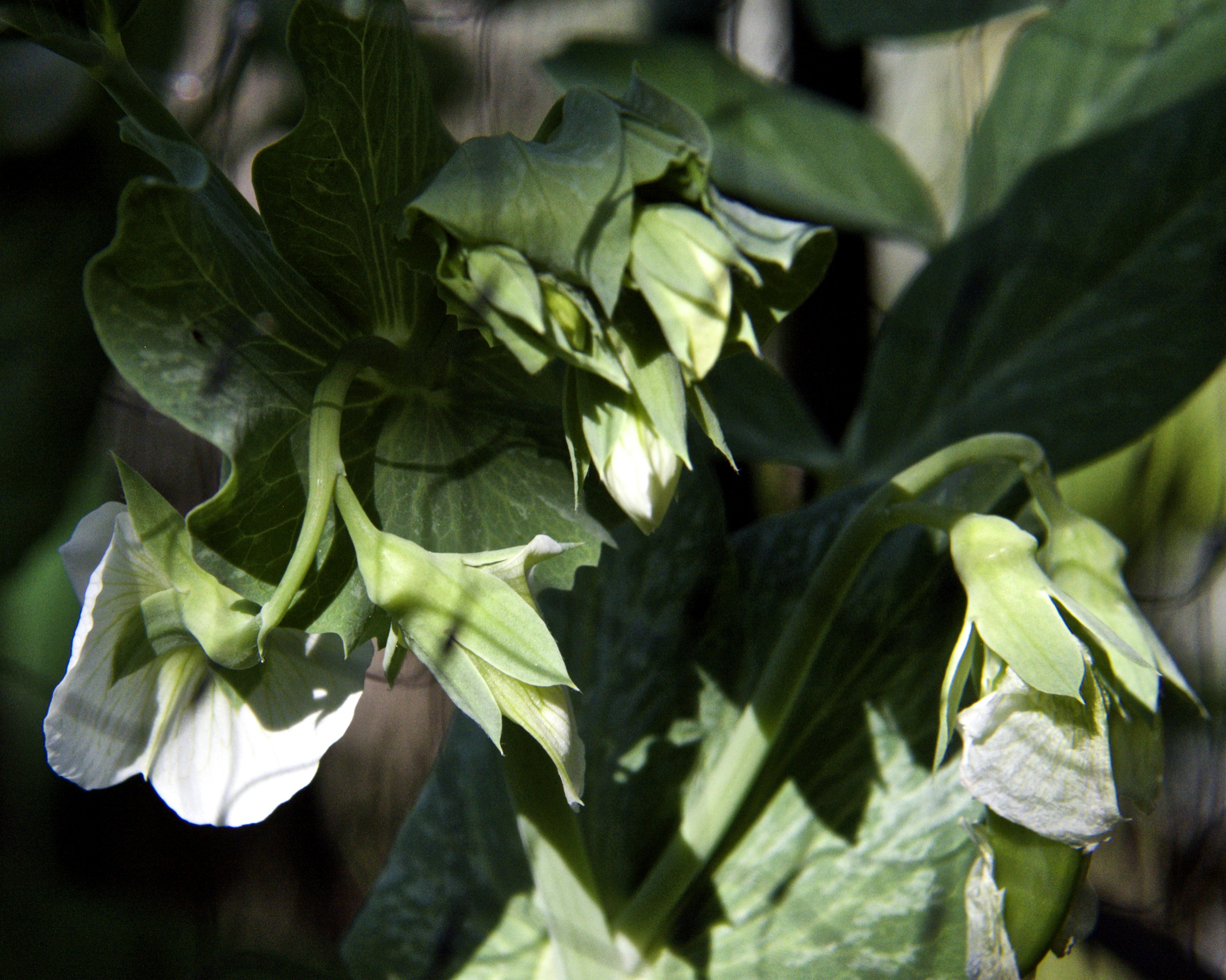
Yippee, my first snow peas are in bloom in back. These are Oregon Sugar Pod. I planted the sugar snap peas later, so they aren't blooming yet. And the Mammoth Snow Peas are just now sprouting. The netting is doing its job of keeping the birds off the shoots and flowers. Maybe I will get a pea harvest this year.

Yippee, my first snow peas are in bloom in back. These are Oregon Sugar Pod. I planted the sugar snap peas later, so they aren’t blooming yet. And the Mammoth Snow Peas are just now sprouting. The netting is doing its job of keeping the birds off the shoots and flowers. Maybe I will get a pea harvest this year.

The citrus trees are all blooming magnificently. We have Navel and Valencia Orange trees, Eureka and Meyer Lemon, and Bearss Lime. Should be a great harvest next winter, God willing and the creek don't rise.

The citrus trees are all blooming magnificently, as well as our avocado tree. We have Navel and Valencia Orange trees, Eureka and Meyer Lemon, and Bearss Lime. Should be a great harvest next winter, God willing and the creek don’t rise.

The back veggie beds are doing well, but I have planted only two out of three so far.

The back veggie beds are doing well, but I have planted only two out of three beds so far.

Because my garden seems to be off to such a good start, I have nudged my harvest goal for the year upward to 200 lbs. That may be a challenge if the fruit trees don’t set or if we keep having these wilting heat waves. As of February 28, I have harvested 26 lbs of fruit and 3 lbs of vegetables, plus 42 eggs. The fruits were 1 Granny Smith apple that came from an autumn blossom rather than the usual May blossoms. I’m telling you, the weather has gotten WEIRD. Also two Eureka lemons, a passel of limes, and both Navel and Valencia oranges.

The vegetables harvests included arugula, bell peppers (in January and February–this was a warm winter, folks), collard greens, herbs, kale, lettuce, green onions, and radishes. Most of the collard greens go to the chickens, along with sorrel, arugula, and nasturtiums. I don’t weigh the harvests that the chickens eat.

The red cabbage is curling up, and assuming that it isn’t from disease, we may get some cabbage soon, as well as cauliflower. I have high hopes for my 2015 garden.


Posted in Uncategorized | Tagged , , , , , , , , , , , | 10 Comments