Harvest Monday and Kitchen Cupboard Thursday, April 23, 2012

Hoo boy, I got busy and never posted for last Thursday’s Kitchen Cupboard, hosted by Robin. That’s where gardeners blog about what they used from their stored produce or made with their fresh produce. Here’s what I used last week.
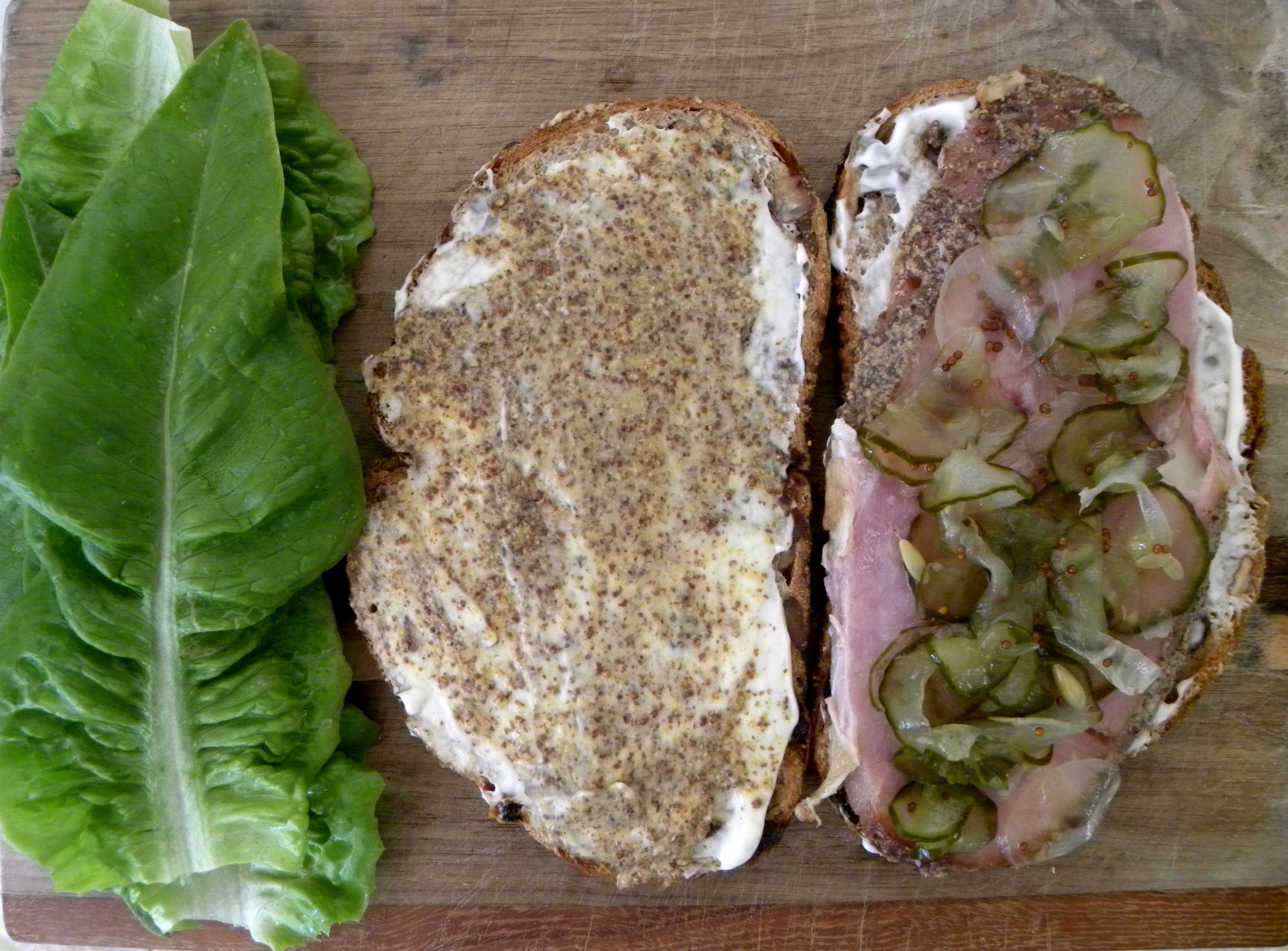
Yum, yum, a ham sandwich made with my homemade bread and butter pickles from last summer, and freshly picked Deer Tongue lettuce from my garden.

This is a ham sandwich on Russian Raisin Pecan bread from Schat’s Bakkery in Bishop, CA. The mustard is homemade (thanks, Robin, for the recipe), as are the bread and butter pickles from last summer’s cucumbers. Still have two jars left. The lettuce is freshly picked Deer Tongue lettuce from my garden. Deer Tongue, Black-seeded Simpson and Lollo Rosa are my three favorite letttuces. Oh, better add Red Oakleaf to that list just for the pretty shape and color.

We also had eggs from our hens for breakfast, and some eggs went into a homemade banana nut bread.

I didn’t photograph the rest of my harvest from last week, which was just two avocados. So I’m going to put in pics of the actual garden, which I prefer anyway. I like to see gardens growing. My harvests are generally so pathetically small, that I’d rather photograph the living plants anyway.
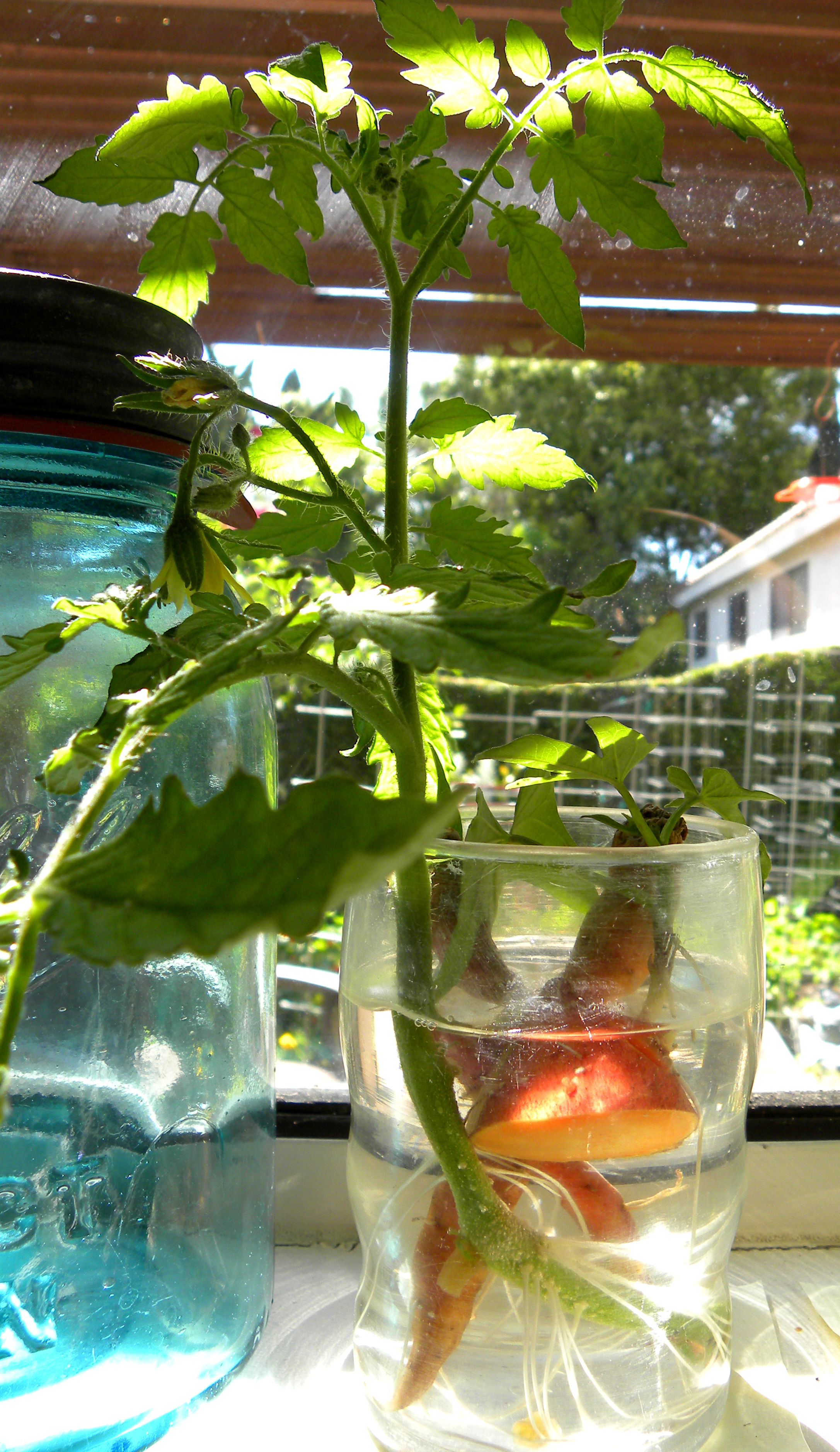
Some of the tomato seedlings that I bought developed damping off, a fungus. I cut the tops off above the infection and rooted the tomato tops in glasses of water on the windowsill. They're now ready to plant. I'm also rooting some yams. Note the blue Mason canning jar. That jar is from my Grandma Wilson, and about 80 years old by now.
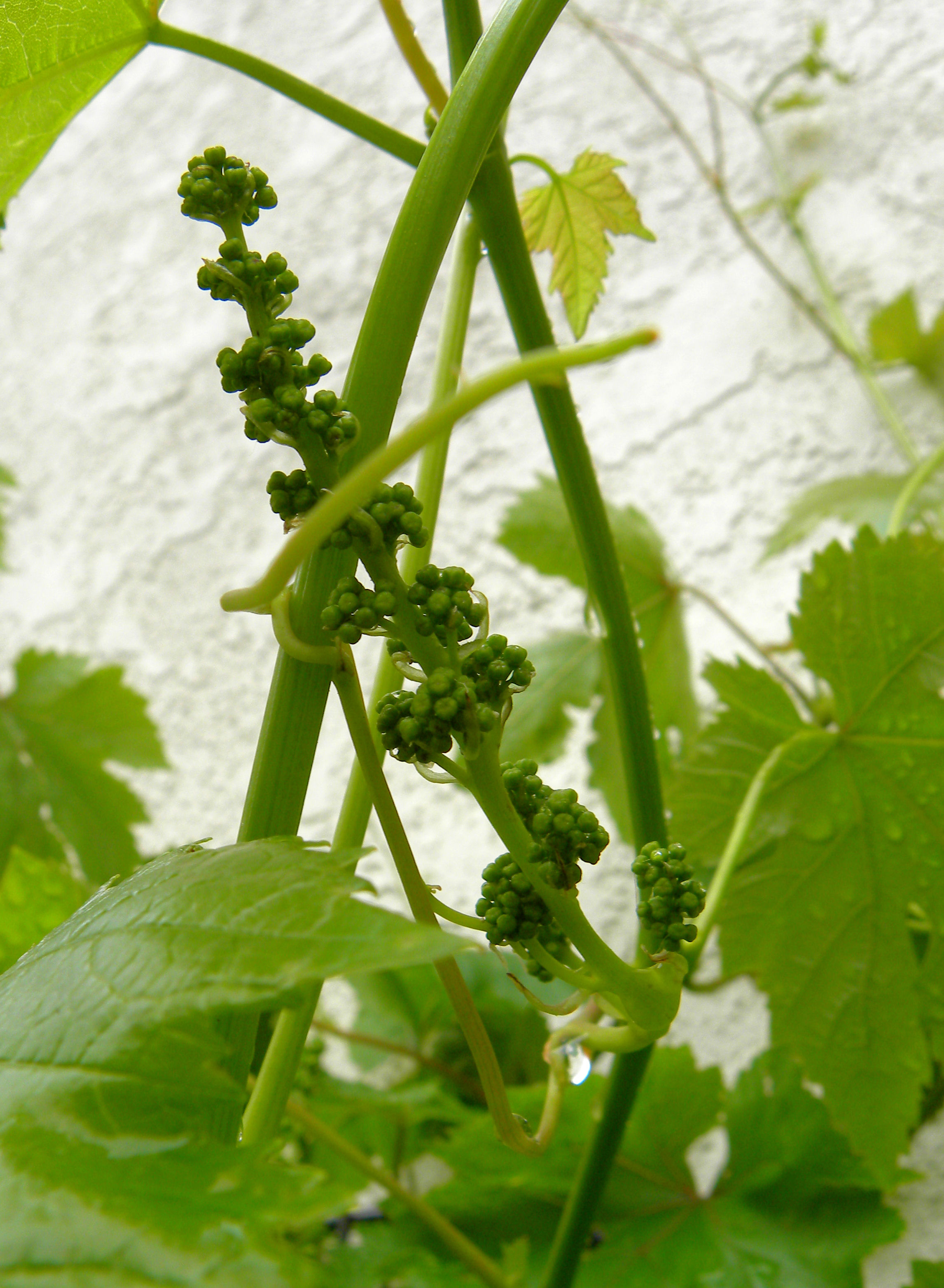
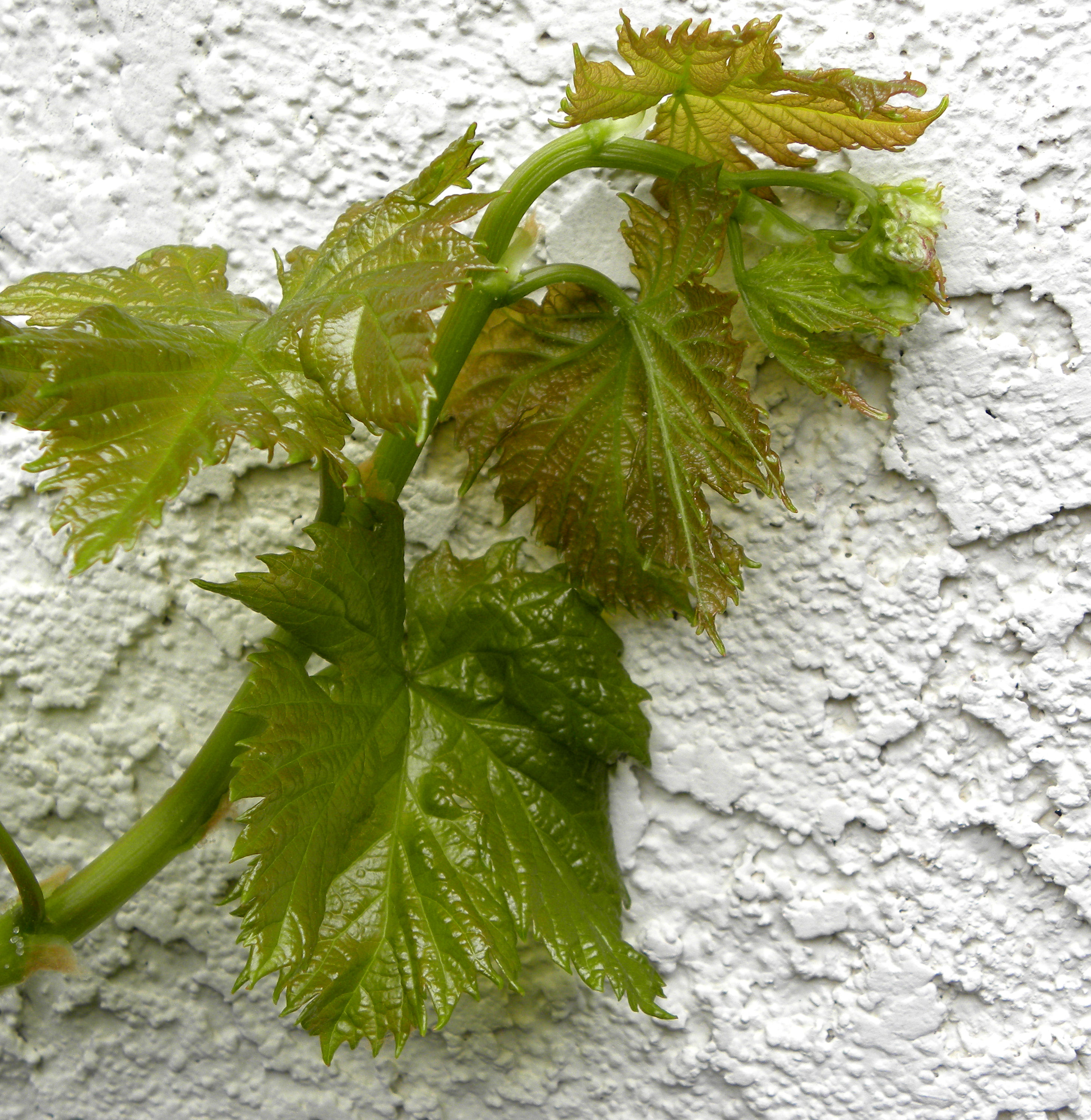
I'm still excited about my Red Flame grapes making their first flowers this year. I have no idea if these are flower buds or grapes. I'm just watching them grow in fascination, looking forward to my first home-grown grapes.
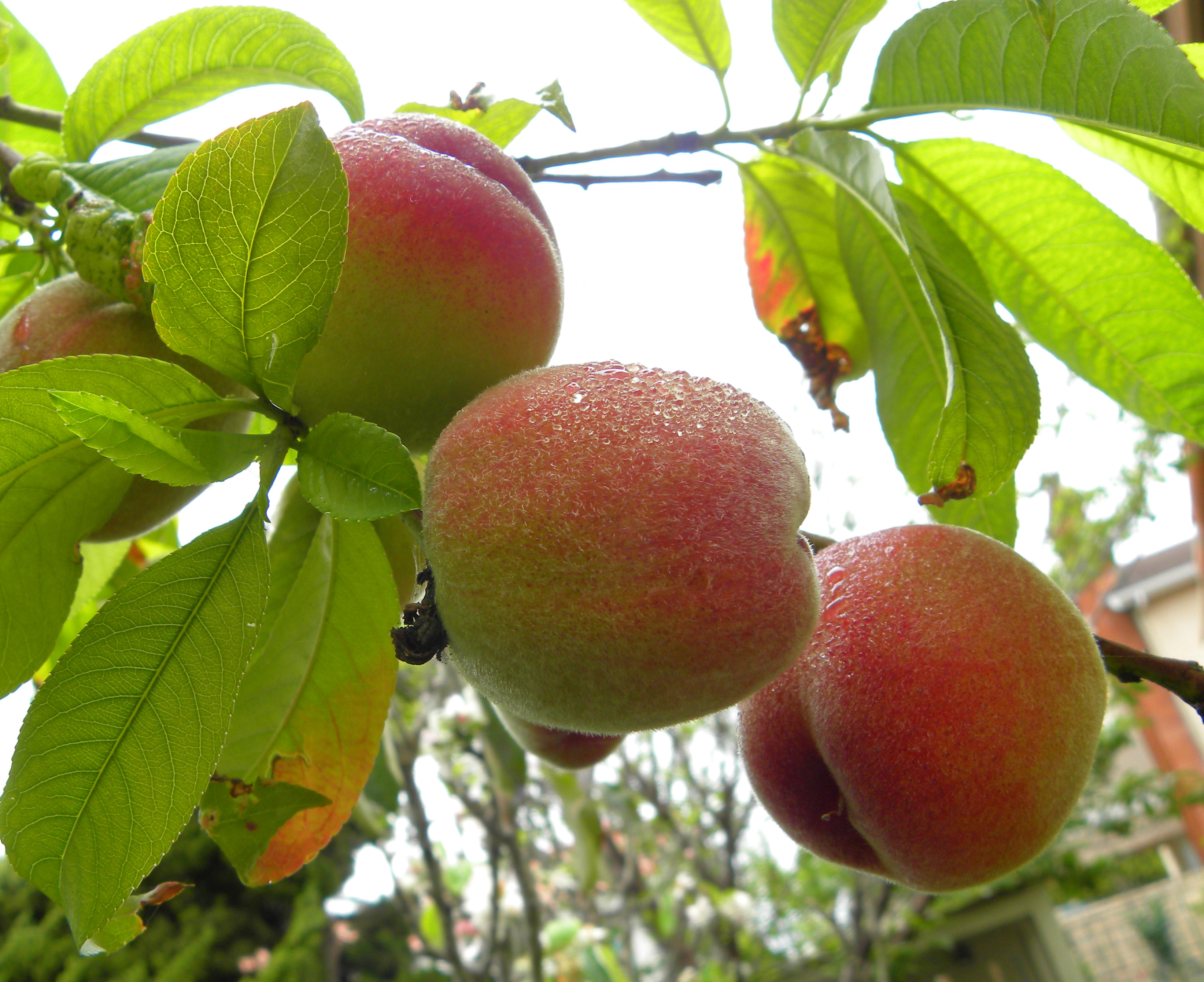
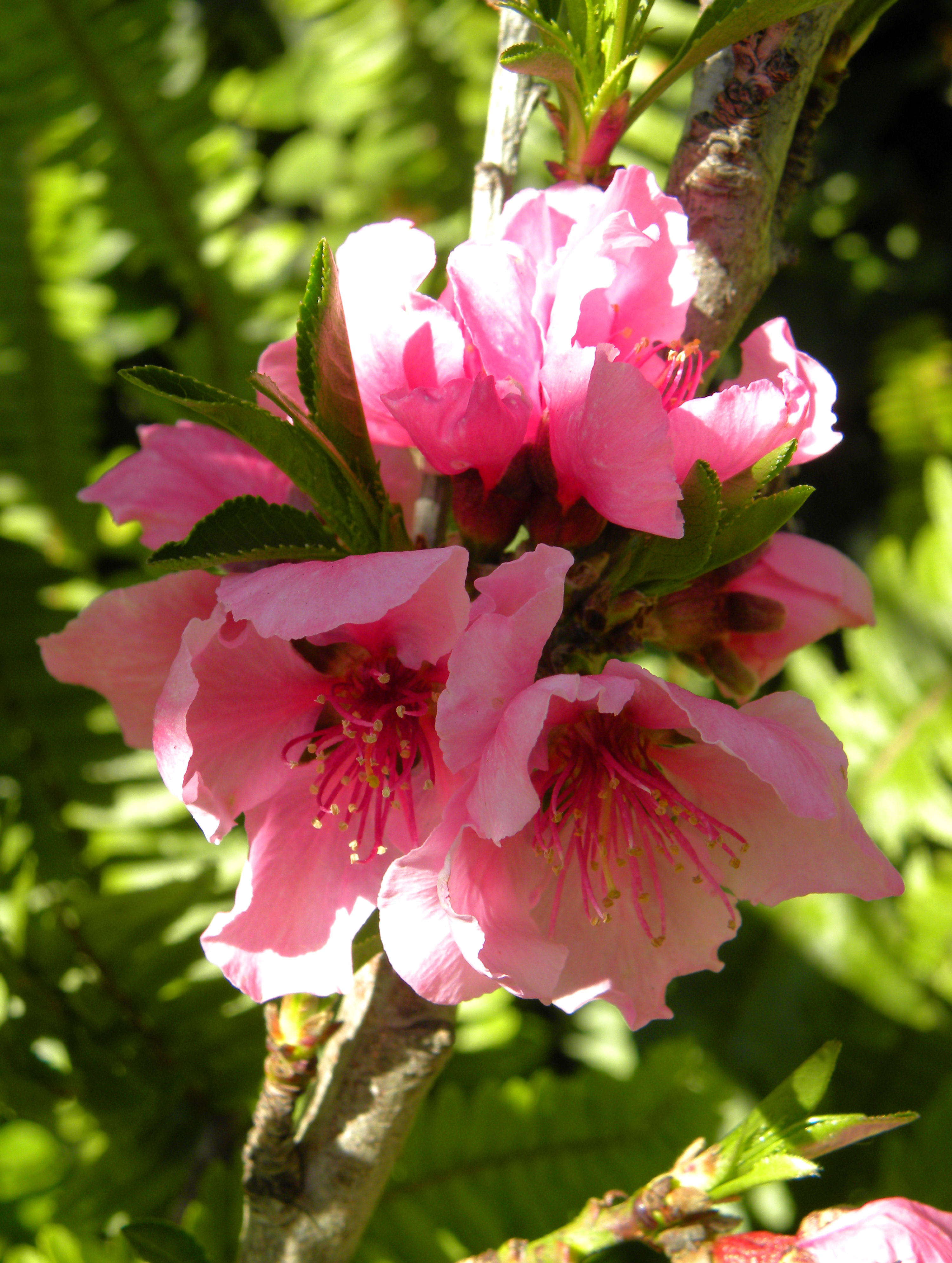
The Florida Prince peaches are nearing harvest. But I didn't thin them enough and the fruits are pathetically small again this year. This picture makes them look big, but they're not. I'm thinking that they're going to be mainly skin and seed. Time will tell. They should be ready to pick in another few weeks.
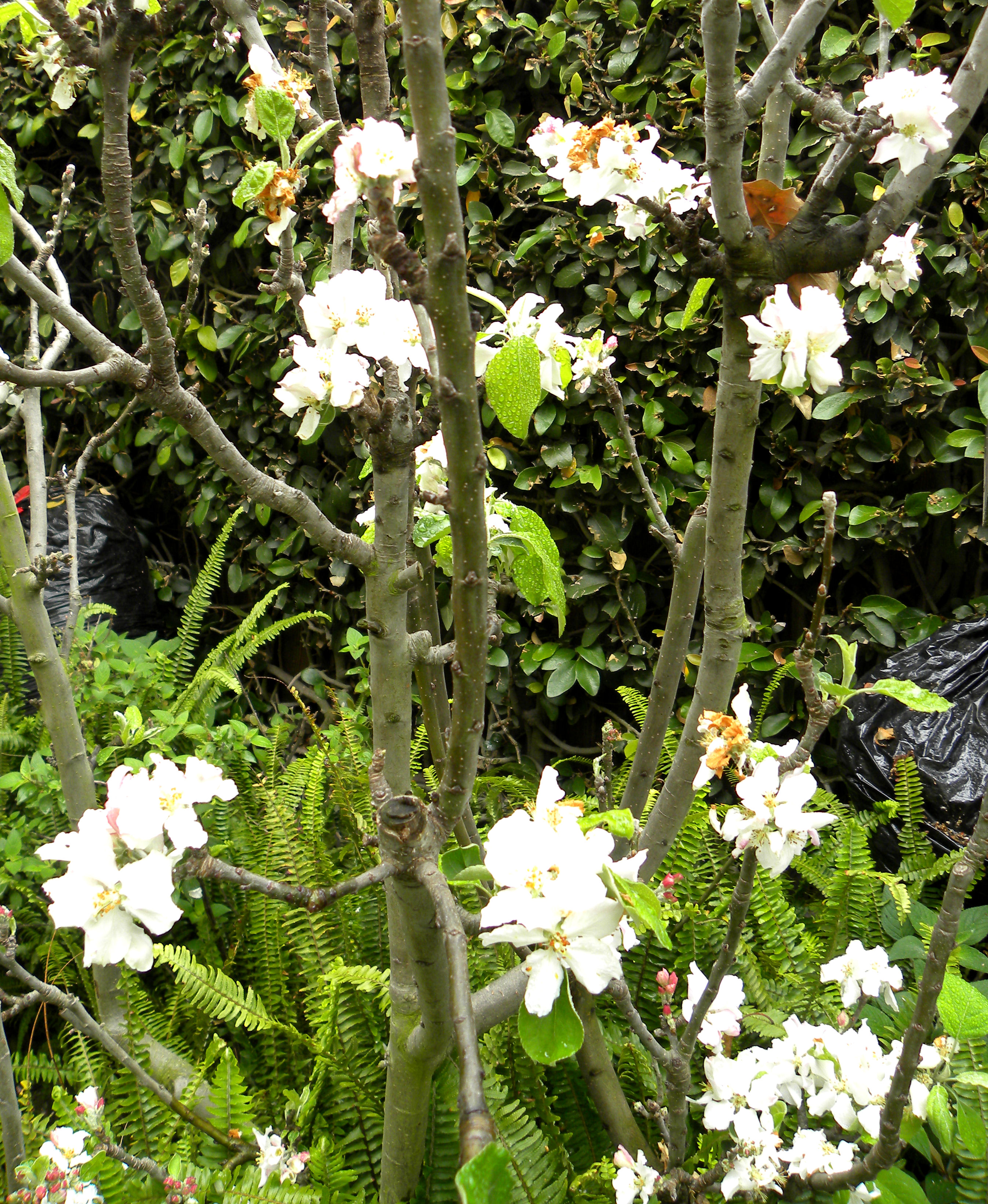
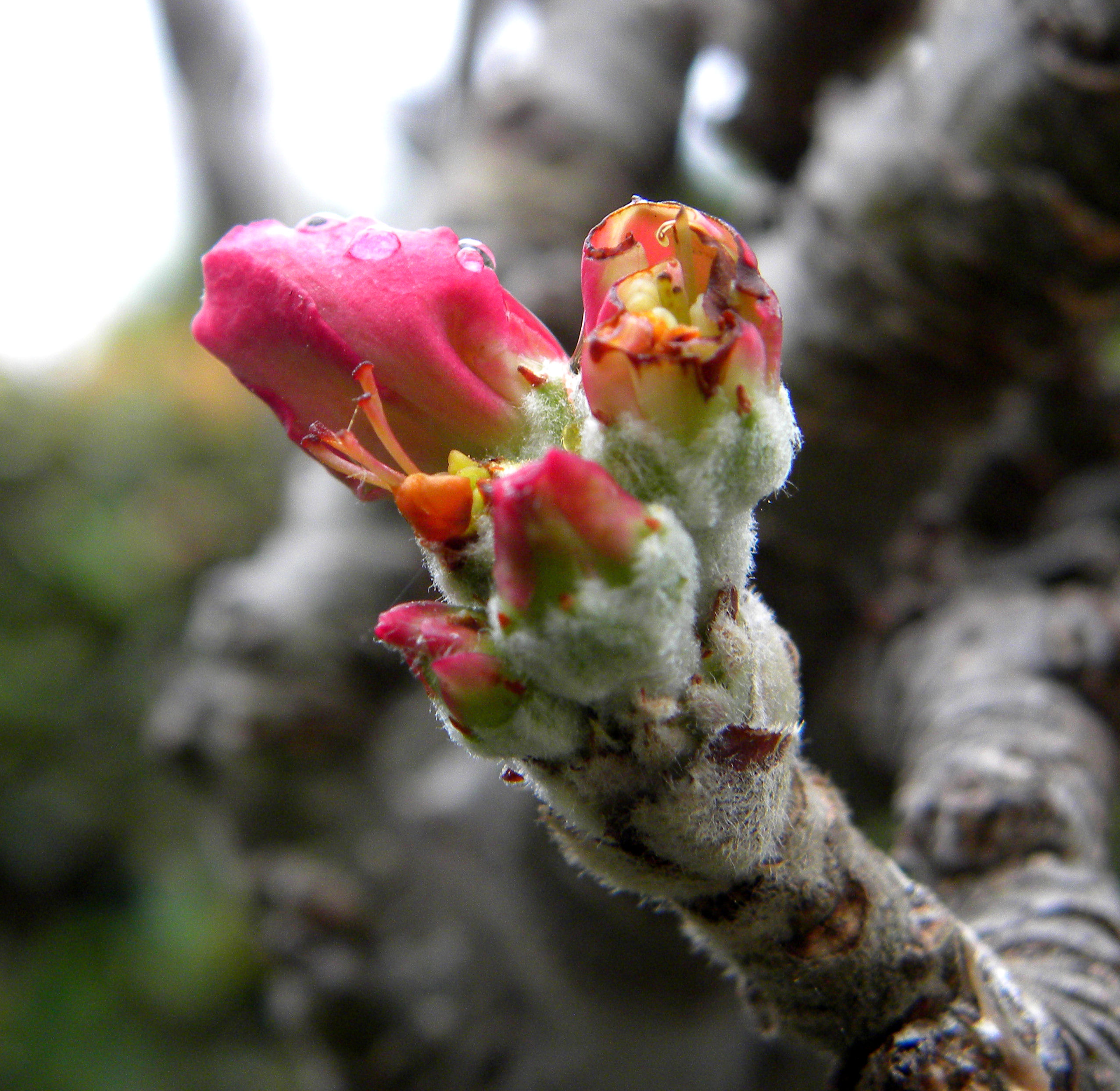
Our dwarf Granny Smith apple tree has more blooms on it this year than ever. Our normal crop is 30 full-sized apples. We'll see what the 2012 fruit set is in another month or so.

Couldn't resist posting this pic of a rose. We had a really heavy fog this morning and everything was covered with dense dew. It was gorgeous out there.
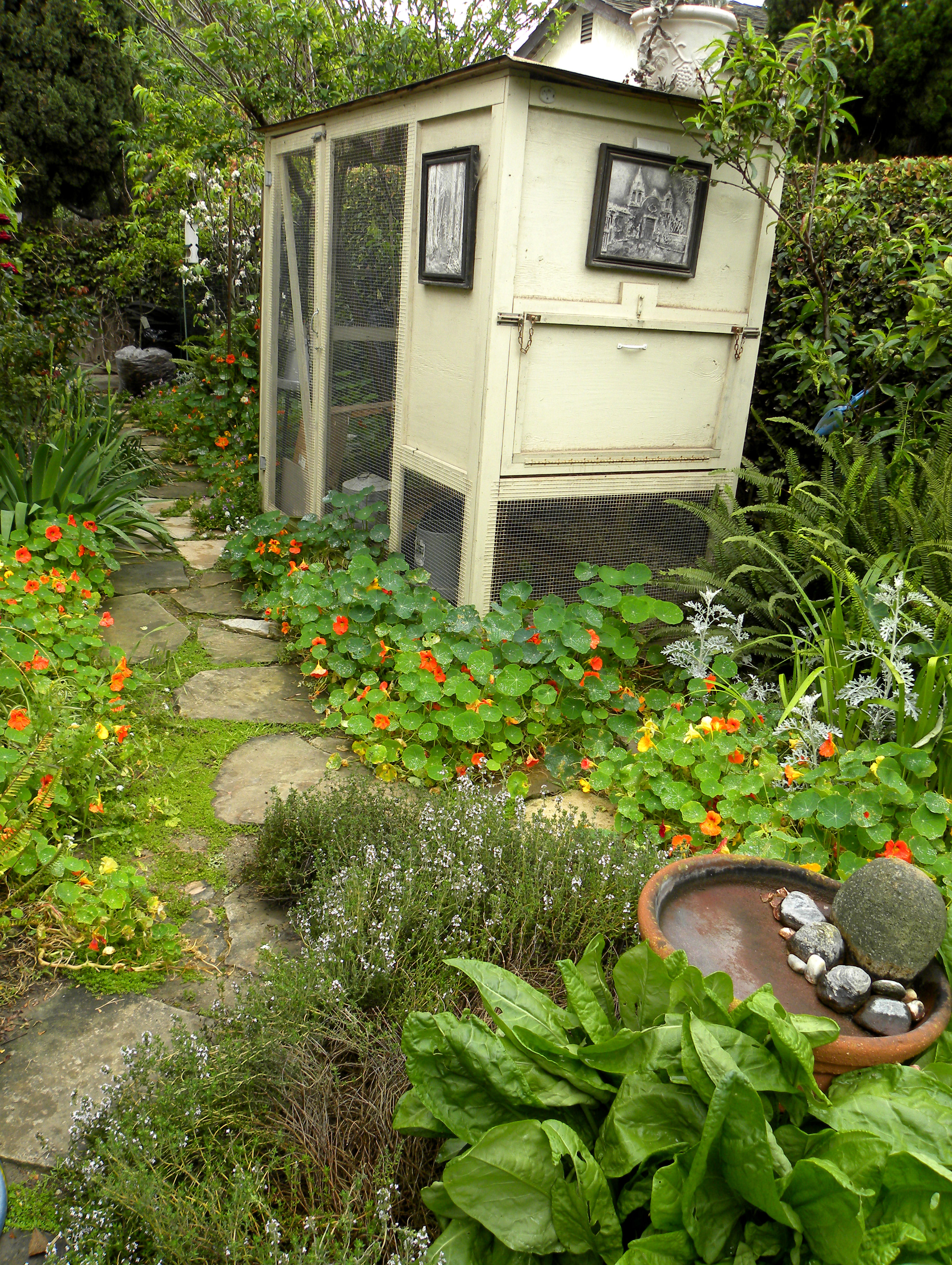
This is the view of our backyard looking south. Herb garden is in the foreground, then the chicken coop and the roses, irises, grapes, apple trees, the plum tree, and the Florida Prince peach.

The rest of our backyard is occupied by more fruit trees and three raised beds for vegetables. This is bed #1. It has a few tomatoes, some Brussels sprouts that aren't making sprouts, some Lacinato kale that is at the end of its useful life in my garden, and a giant beet that I'm growing for the "Largest Beet" competition at the 2012 Orange County Fair. I grow mint and thyme outside this bed.
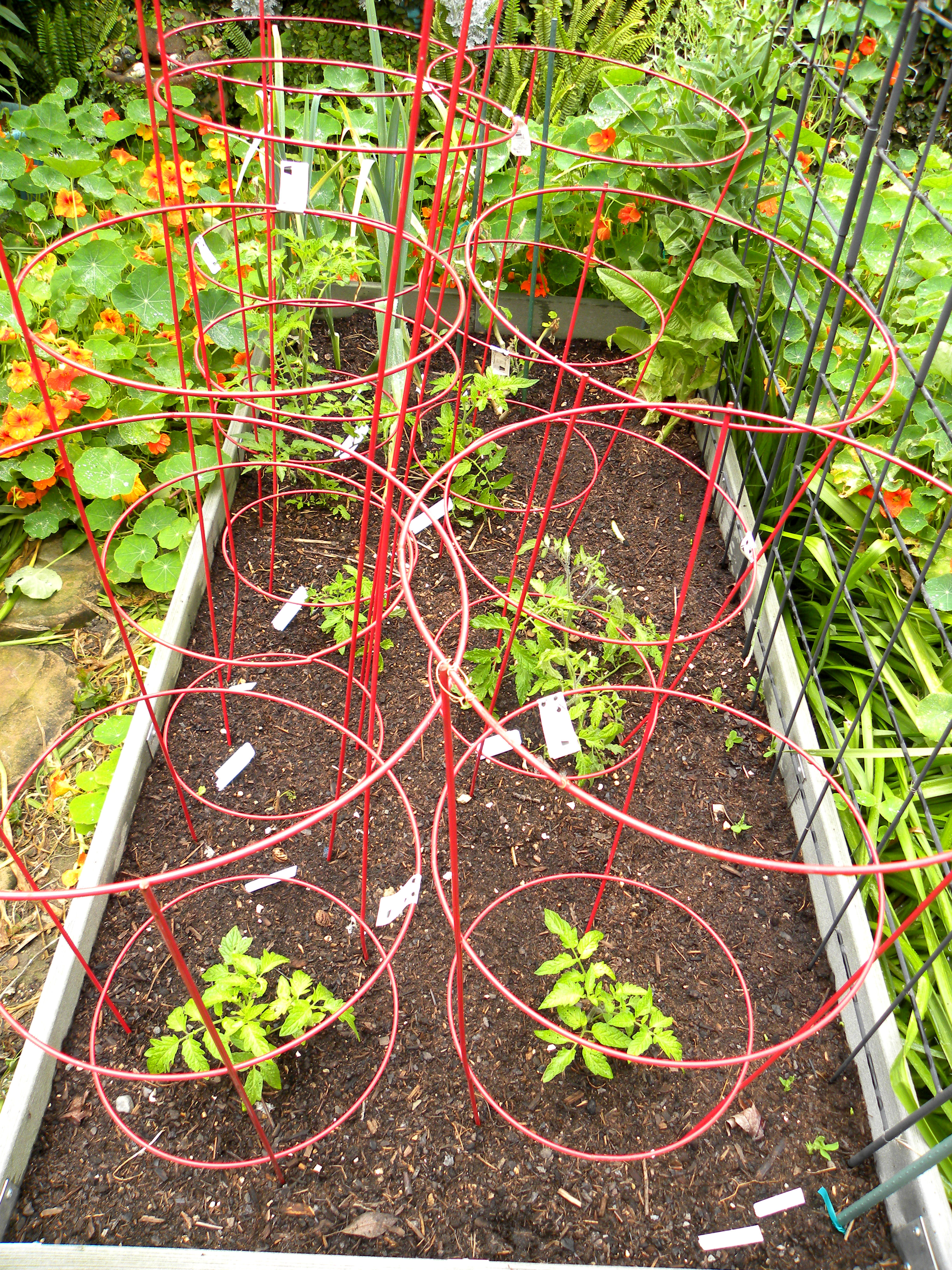
Bed 2 has tomatoes, leeks, Deer Tongue lettuce that is going to seed (it's an heirloom variety and I'll save the seeds), a Black Beauty eggplant that I planted back in 2010 that is still growing, and a row of Super Sugar Snap peas that has just sprouted along the right side of the bed. They'll grow up the metal trellis from Gardener's Supply Company, source of my beautiful raised bed frames.

Nasturtiums and narcissus are growing around the perimeter of the beds. I can hardly get through the tangle of foliage to walk around the beds, but I love the look. We have no lawn at all. Saves water.
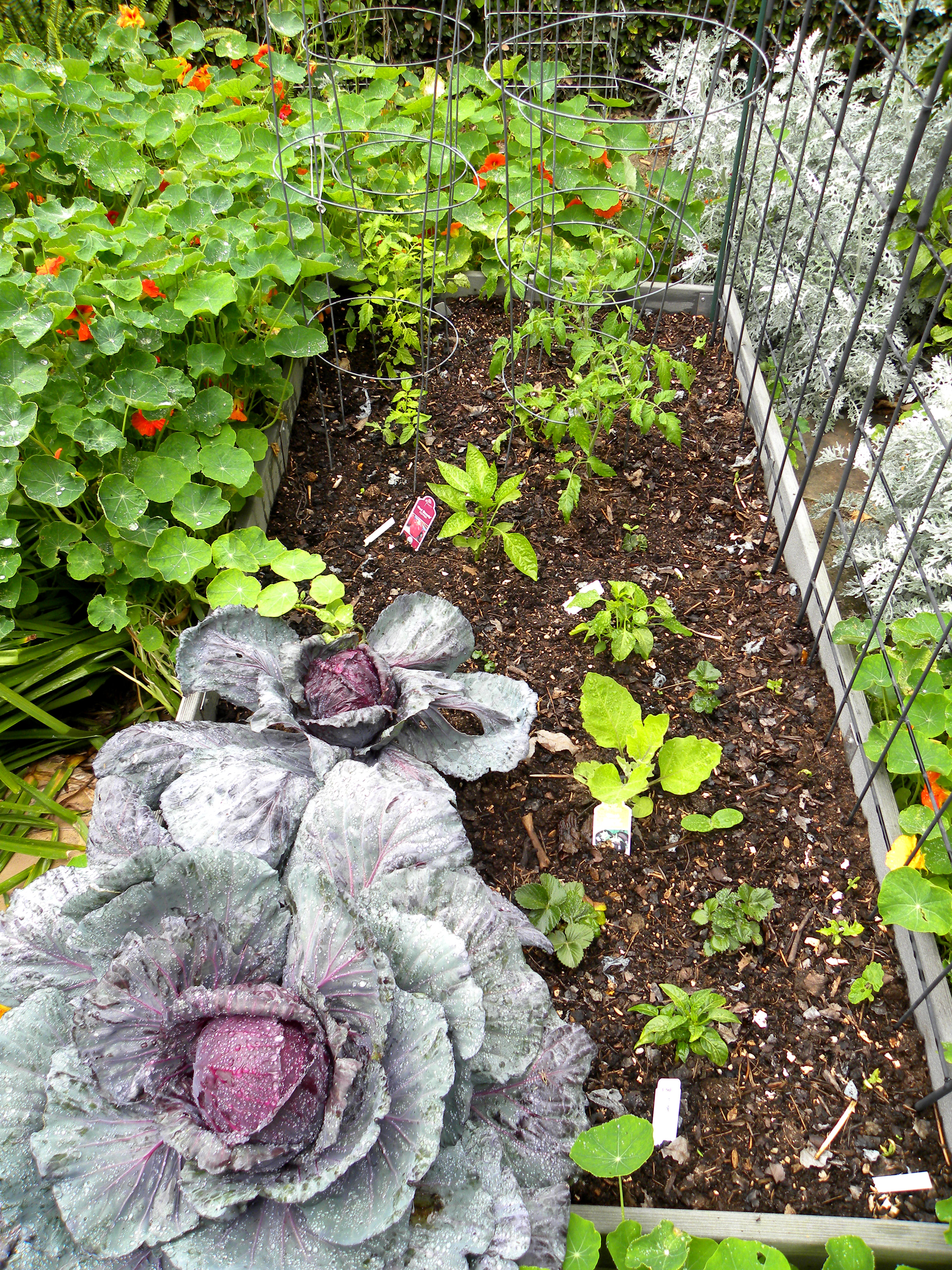
Bed 3 with more tomatoes, a row of Blue Lake pole beans that just sprouted, strawberries, some bell pepper plants, a Black Beauty eggplant, and a couple of red cabbages that seem to be making heads. I haven't had a lot of luck with cabbage, so I'm looking forward to actually being able to eat a homegrown cabbage at long last.

I grow peas and beans up a metal pea fence by the deck. These are Mammoth Snow Peas, the second crop of the year to grow up the fence. When they're done, I'll plant pole beans.
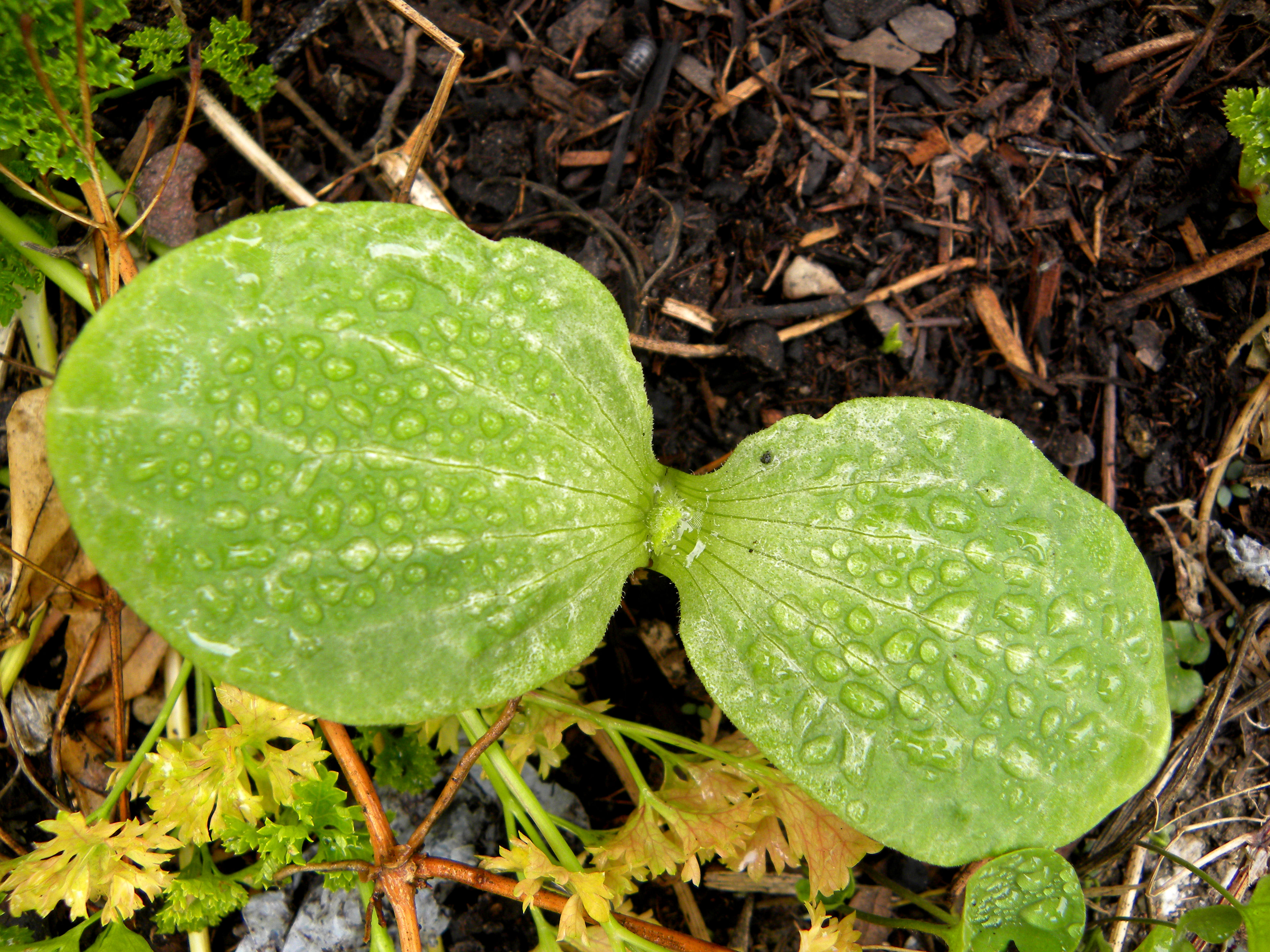
I didn't plant this. It sprouted from my homemade compost. I figure it's a pumpkin or winter squash of some kind. I know that I should weed it out, but I just can't. I figure if it came from my compost pile, it must be something that I grew. But I had some mini winter squash that were hybrids, so it could be anything. Hybrids don't breed true. I'm afraid that my curiosity about what it might grow into may overrule my better judgement (OK, THEM. There are 8 of them sprouted.) Time will tell. What do you say, weed it out or transplant it and see what it grows into?
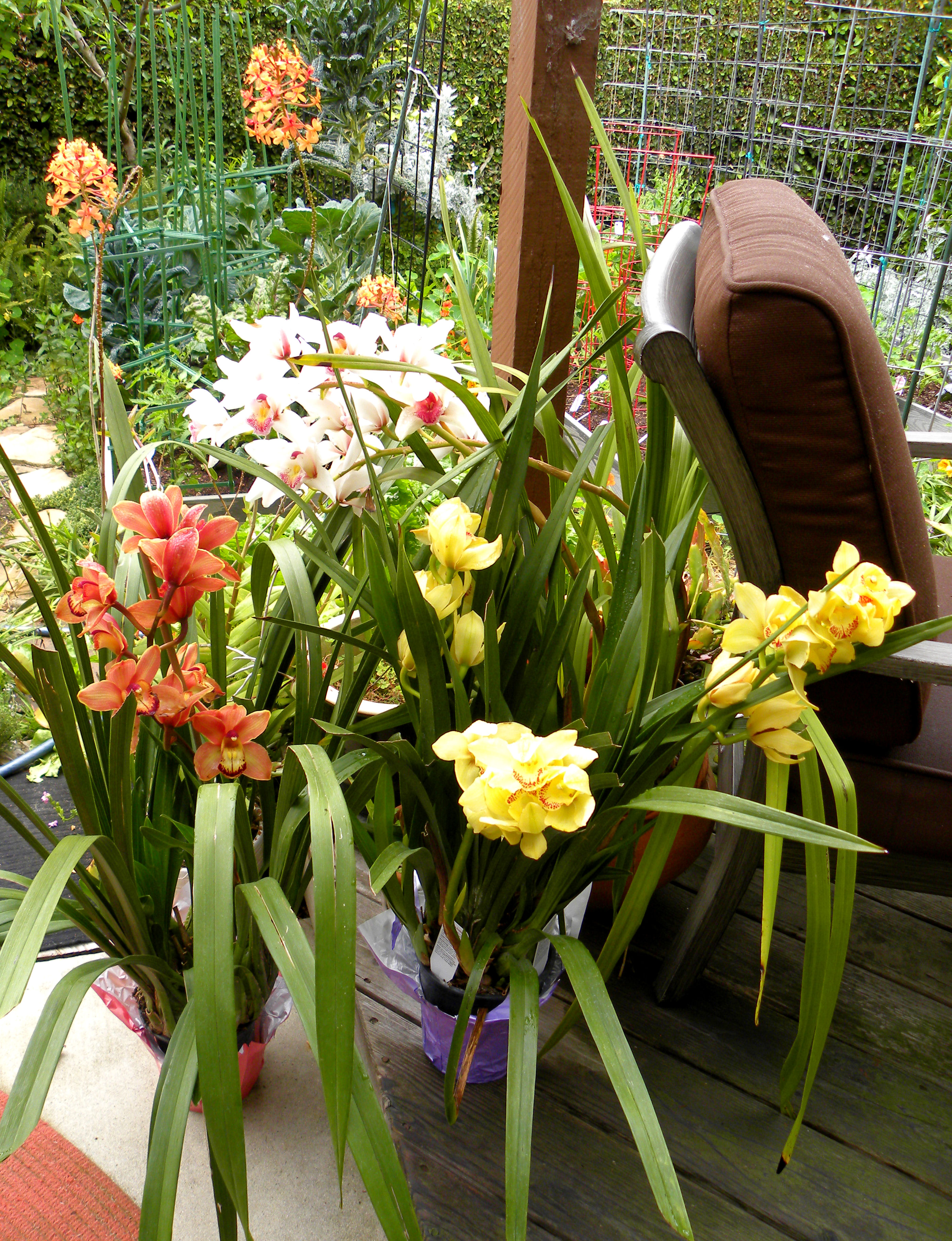
I bought some new orchids this year for the deck. Yep, they grow year-round outdoors in coastal southern California. I really like the three of them massed together.

That’s it for the backyard. Now let’s move on to the less glamorous front.
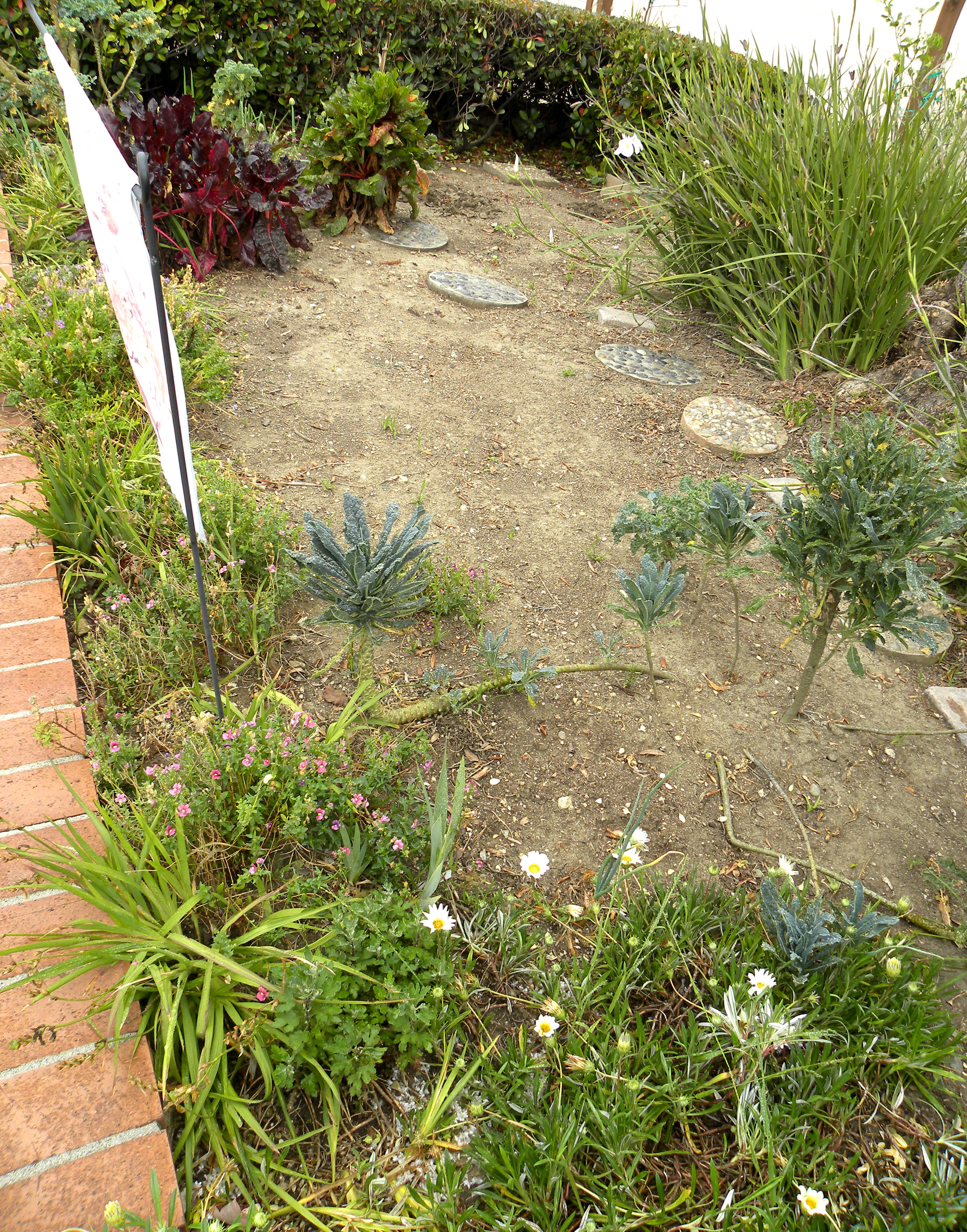
Our front yards are the showplaces of our properties, right? Sadly, not at our house. I have a vegetable garden right next to the sidewalk, and it never does very well. Consequently, or perhaps because, I neglect it. I call this my Garden of Infinite Neglect. It is so sad looking. I have plans to put in a raised bed here and see if that will improve growing conditions. It's going to rain here on Wednesday, so I am hoping to get that project done in the next two days. Or maybe I'll neglect to get "a round tuit."
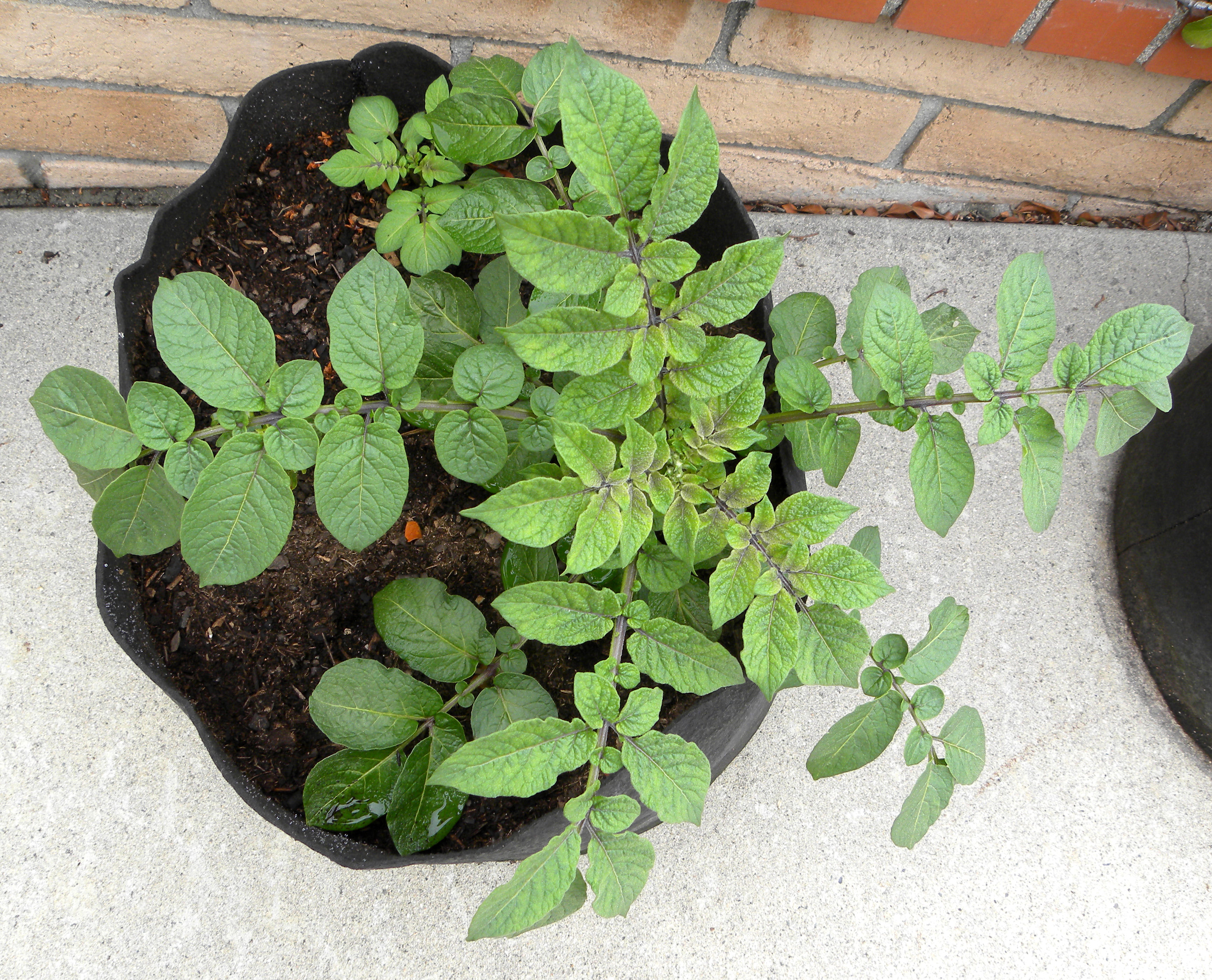
I grow potatoes and yams in Gro-pots in our driveway. Here is a pot of potatoes that volunteered from little potatoes that didn't get harvested. I won't know if they're German butterballs or blue potatoes until harvest time. They could even be Russets. I've grown them all in these fabric grow-pots. I just add more fertilizer and reuse the potting soil and pots.

A pot of succulents in front of the Garden of Perpetual Responsibility has flowered. Nice flower.
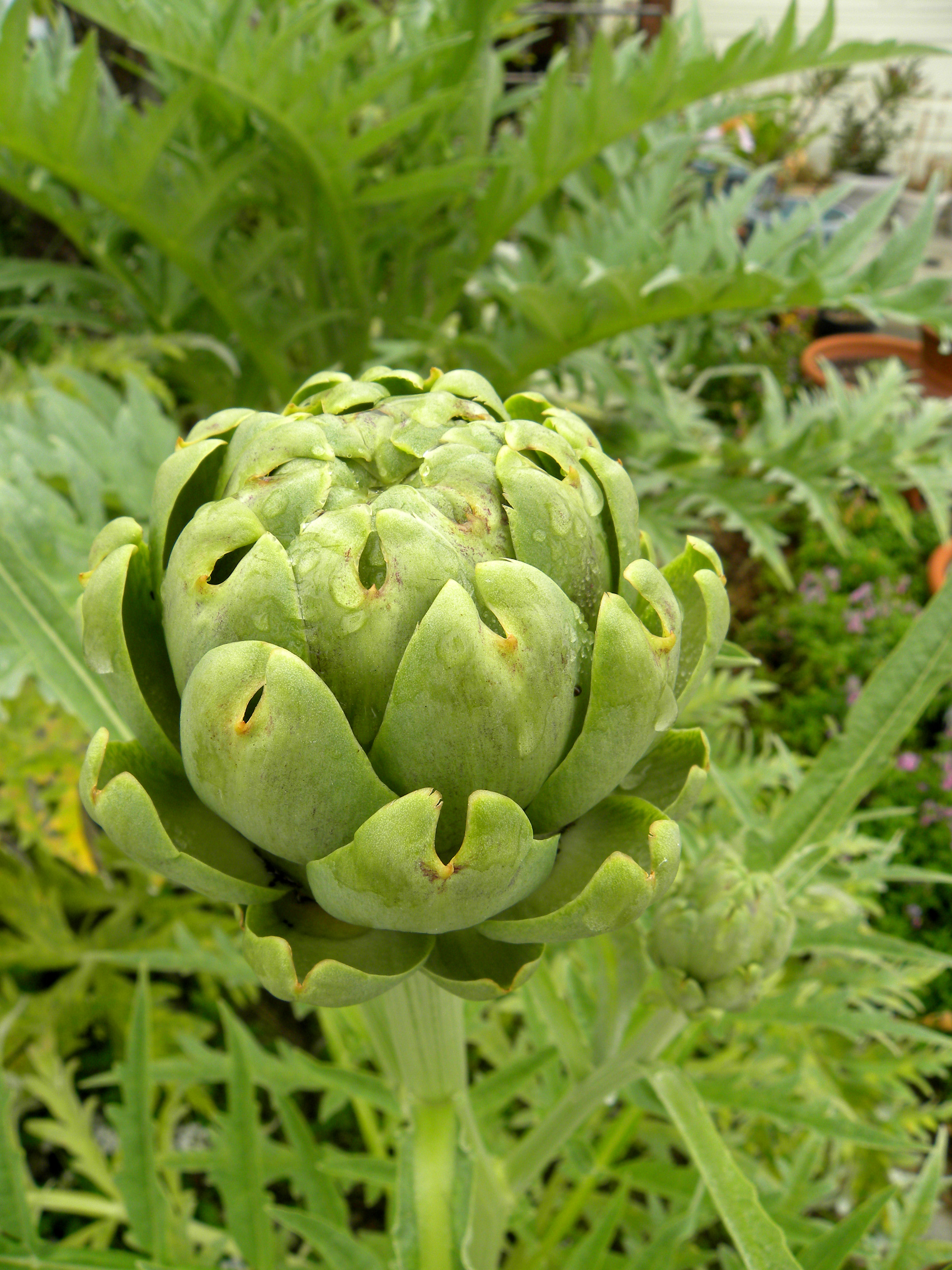
I see artichokes on the menu for dinner tonight. They were almost ready to harvest on Friday when we left for the weekend, but I didn't want them to just sit in the refrigerator. This one is a bit past prime. But it will go great with some chicken or steak cooked on the BBQ.
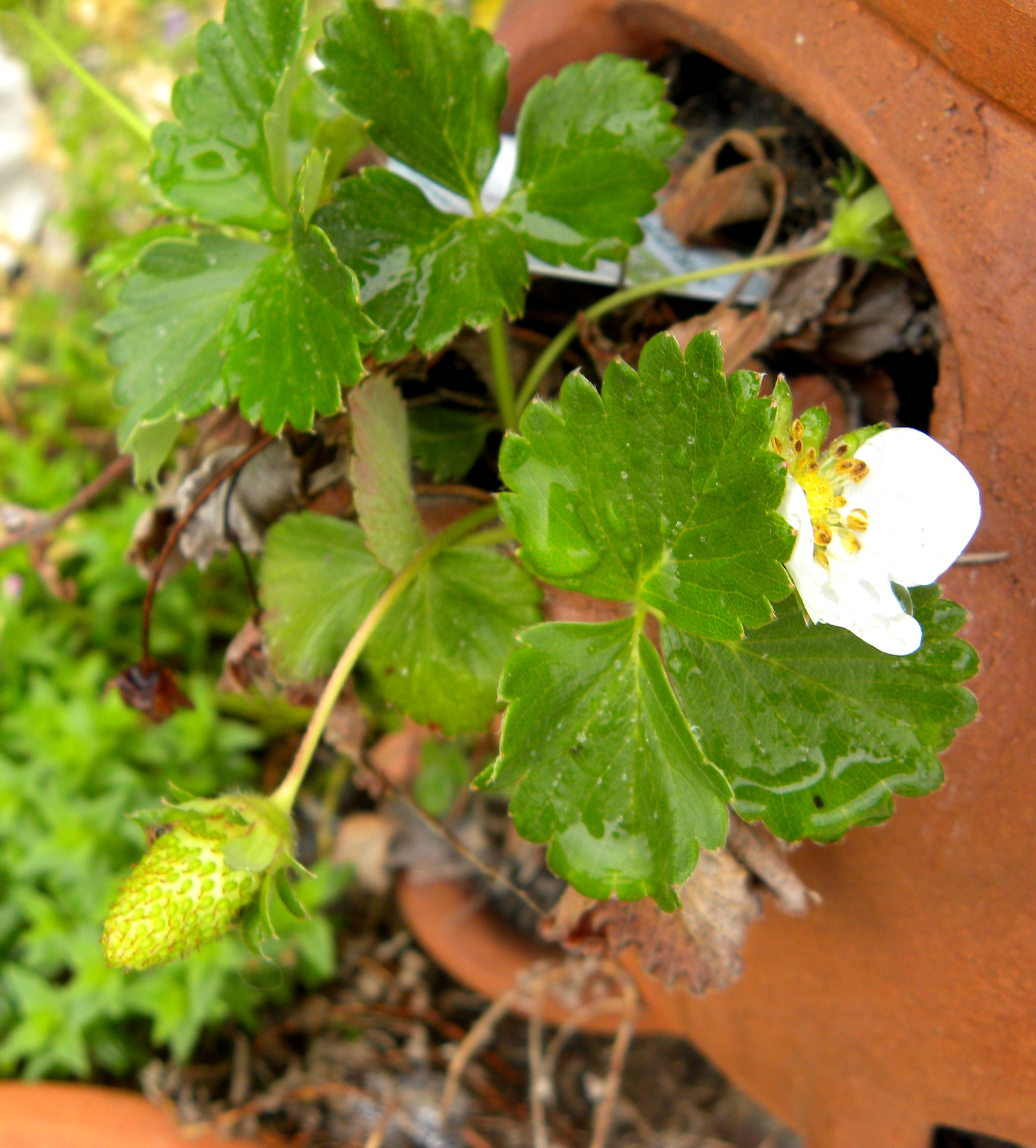
My strawberry pot got a bit neglected last year, but the strawberry plants survived. I fertilized and watered them, and am hoping for at least a small crop of berries this year.

Our Fuyu persimmon tree has a half dozen flowers on it. It didn't produce any fruit last year. It might this year, but I STILL don't have it planted. It's in its original nursery pot. I think it would do a lot better if I actually put it into the ground. It's going into the Garden of Perpetual Responsibility, which is always loaded with weeds.
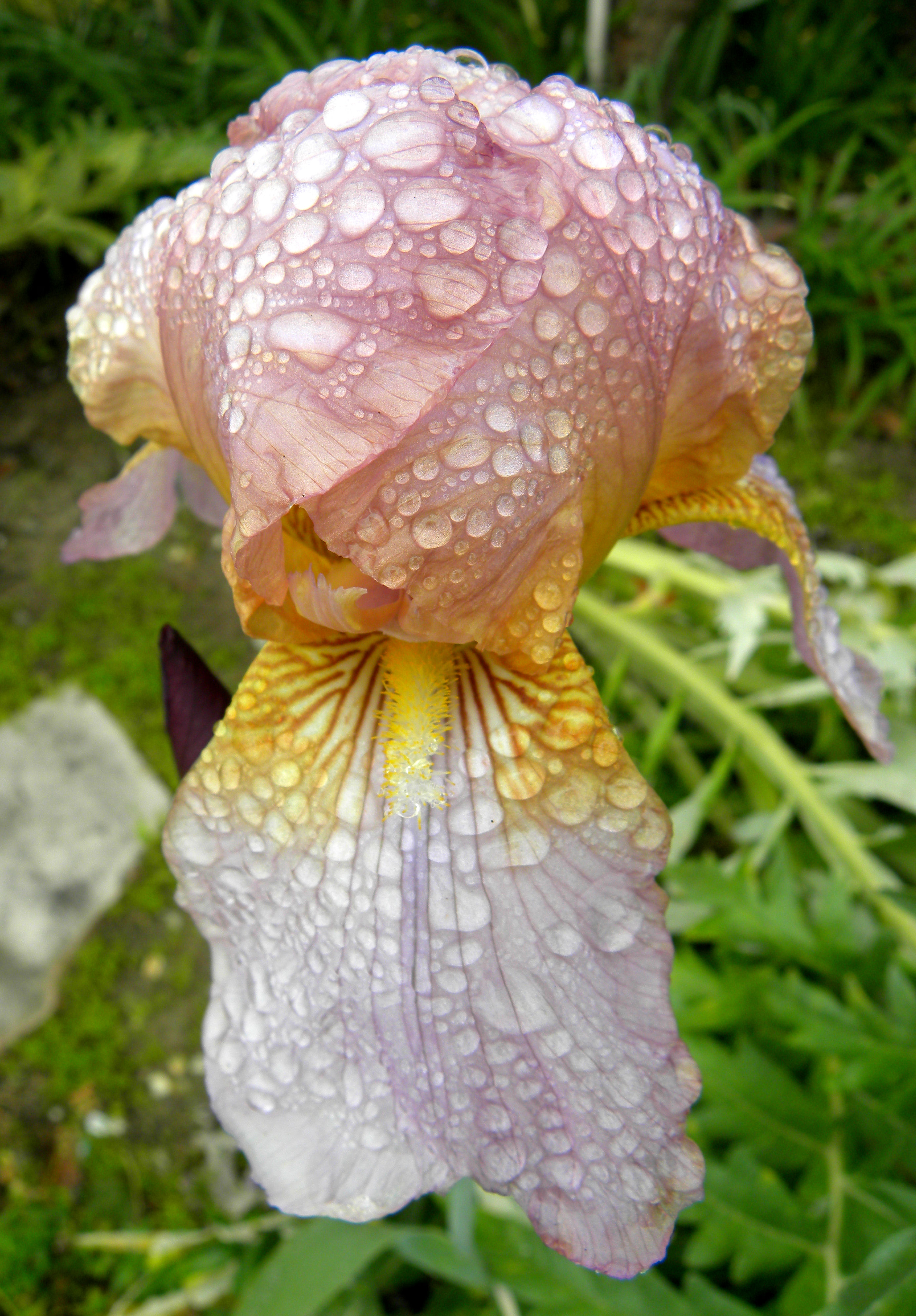
I got some free irises from someone a couple of years ago. They are supposed to be white with ruffled edges. This one is neither. But I like it anyway. This is the first year of bloom for it. The other irises from that source are still small and haven't bloomed yet. Maybe they're the white ruffled ones.

And that is the state of my home garden on April 23. I’ll blog about my community garden plot some other time. On to my itty bitty Harvest Monday.

Fruit

14.5 oz avocados

Vegetables

2 oz Deer Tongue lettuce

Total Produce 1 lb 0.5 oz plus 10 eggs

If you had a harvest, or you just want to see what others are harvesting, visit Daphne’s Dandelions.

Posted in Uncategorized | Tagged , , , , , , , , , , , , , | 21 Comments

Box Car Willie and Radiator Charlie’s Mortgage Lifter

Of course I’m talking about heirloom tomatoes. I bought some heirlooms at a fund-raising sale by Fullerton Arboretum last month. Who could resist tomatoes with names like Box Car Willie, Brad’s Black Heart, and Radiator Charley’s Mortgage Lifter? I’ll get to the names of the other varieties that I bought in a bit.

Newly transplanted Box Car Willie tomato plant.

Unfortunately, some of my tomato seedlings began to get damping off, which is a fungus that turns the stems black, then kills the plant because nutrients can’t get from the roots up the stem. A couple of the plants that I bought totally crumped, including my Brandywine Sudduth’s, but I was able to (presumably) rescue a couple of others by cutting off the top above the wilt and putting the tops into a glass of water.

Hooray, Bull’s Heart has sprouted roots. Oddly enough, the root section also was alive and resprouted new shoots. So I may get two Bull’s Heart plants. Or none. Same thing happened with my Super Marzano and Black Prince.

I transplanted most of the tomatoes before last week’s rain. I planted the others after. I now have 16 tomato plants in raised beds, a few volunteers that sprouted from my compost pile that I overwintered, and three more sprouting roots in glasses of water on my windowsill.

If you have never planted tomatoes from transplants, here is what to do. Prepare the soil by digging in planting compost (purchased or homemade), composted steer manure, and E. B. Stone’s Sure Start organic fertilizer. This fertilizer contains beneficial soil microbes and will help get your plants off to a great start.

Prepare a hole about two to three inches deeper than your pot. Add some Sure Start and mix it in. Fill the hole with water and let it soak in. This step is really important. Roots grow down, so it is important that the bottom of the hole have water in it before you put in the plant. Don’t rely on just watering from the top when you transplant. Filling the hole with water first helps the plant avoid transplant shock. If your plant is wilted the next day, it may be suffering from transplant shock. It will probably recover, but its growth will be set back.

Remove the tomato plant by turning the pot gently upside down and tapping or squeezing the tomato plant out into your other hand. You might need to pull gently on the plant to remove it.

Loosen the root ball by gently “breaking” the root ball at the base. Put the tomato plant into the hole. GREEN SIDE UP! You want the soil line of the plant to be about 2 inches below the finish soil line. Tomatoes will grow new roots out of their stems, and this helps feed the plants. Tamp the plant down to remove any air pockets. Fill the hole with soil and retamp. Water again. Place a tomato cage around your plant.

Flicking the yellow tomato flower gently with your finger will help to set the fruit if there aren't enough natural pollinators (bees) around.

If you want early fruit set, you can spray the blossoms with blossom fruit set, and/or flick them in the morning with your finger to help pollinate the flower. If you have bumblebees in the neighborhood, they will do the job of pollinating, but it doesn’t hurt to give them a hand as they may not visit every blossom. Tomatoes need nights of 55 degrees or warmer to set fruit as well.

If you follow those steps, you should have good luck with tomatoes.

I am not done buying tomatoes. I’ve only filled my raised beds at home. I haven’t even begun planting at the community garden plot. I will plant mostly hybrids at the community garden.

Each tomato plant needs at least one square foot in a square foot garden. I give them a bit more room than that. This 18 square foot bed has seven tomatoes, plus some leeks, an eggplant, and a row of pole beans on the north side that haven't sprouted yet.

These are the varieties that I have planted so far.

Amish Paste, a late season paste variety, an Amish heirloom that produces 10 oz, heart-shaped fruit with a sweet flavor.

Black Plum, a mid-season paste tomato that produces big black paste tomatoes with rich flavor, good for cooking and canning as well as eating fresh.

Black Prince, an early season, deep garnet, slicer tomato that produces abundant mid-size round tomatoes with great flavor. Smaller than Black Krim, but similar great taste and far more productive.

Box Car Willie, a slicer, produces 6 to 10 oz tomatoes, late bearing, producing over a long season. Named after a country singer who sang in Nashville at the Grand Old Opry in the 1930s.

Brad’s Black Heart, a slicer, produces exceptional black tomatoes with rich, sweet, complex flavor, mid-season, 12 oz heart-shaped fruit.

Bull’s Heart, a late season Russian ox-heart variety that produces an abundance of pink tomatoes that grow up to 2 lbs and have an excellent sweet flavor.

Early Girl, a hybrid slicer, produces4 to 6 oz fruit early in the season.

German Johnson, a beefsteak variety, late season, 1 lb pink-red tomatoes, great flavor, good yield, meaty fruit with few seeds.

Mammoth German Gold, beefsteak variety, late season, bicolor golden 2 lb fruits with red streaking, with both high acid and high sugar content, great flavor.

Mortgage Lifter, a late season red beefsteak that produces 1 to 3 lb fruits that are meaty with few seeds and has old-fashioned tomato flavor. This was a tomato developed by Radiator Charley. He said it was so productive that it allowed him to pay off his mortgage during the Great Depression. I was underwhelmed with its productivity when I have grown it in the past, but I like the name so much that I’m growing it again. It’s great on a BLT.

Paul Robeson, named after the famous black scholar, athlete, lawyer, activist, singer and star of the Silver Screen. Born in 1898, son of a runaway slave, Robeson found Europe more tolerant of people of color that America, and made England his home for some time. He traveled extensively in Russia and the Ukraine, home of black tomatoes. Not long after the Berlin Wall fell, seeds from the Paul Robeson tomato arrived in the US, given to Seed Savers Exchange in 1992. Farmers by the Black Sea had named it in honor of this remarkable man. The Paul Robeson tomato is a medium season slicer that produces fine black tomatoes with a complex sweet, yet tangy, flavor.

Pearson, a determinant(means that it will quit growing, won’t grow indefinitely like the other varieties here, which are indeterminant), late season variety that produces large, solid, meaty fruits that are perfect for canning. Produces well in hot climates.

Russian Big Roma, a large, late-season, paste tomato, 2 inches by 4 inches, deep red fruits with exceptional flavor that are great for making tomato sauce.

Super Marzano, a hybrid late-season paste tomato with VFNT disease resistance, an outstanding vigorous hybrid and one of the best paste tomatoes available.

So that’s what I have in the ground so far. I wouldn’t have selected a Pearson because I prefer indeterminant tomatoes and it doesn’t get hot here on the southern California coast, but it was a gift.

I want to get some Brandywines, as they have incomparable flavor. I made a spaghetti sauce one year using just Brandywines and it was incredible. I also would like to get Big Boy, Better Boy and Celebrity, just because they do well in southern California. Space, space, I need more space!

Posted in Uncategorized | Tagged , , , , , , , , , , , , , , , , , , , | 10 Comments

Spring flowers and summing up the harvest so far this year

Spring has sprung with a vengeance in our yard. Flowers are popping out everywhere it seems. I’m going to show you some of my pretty flowers before getting to the food harvest.

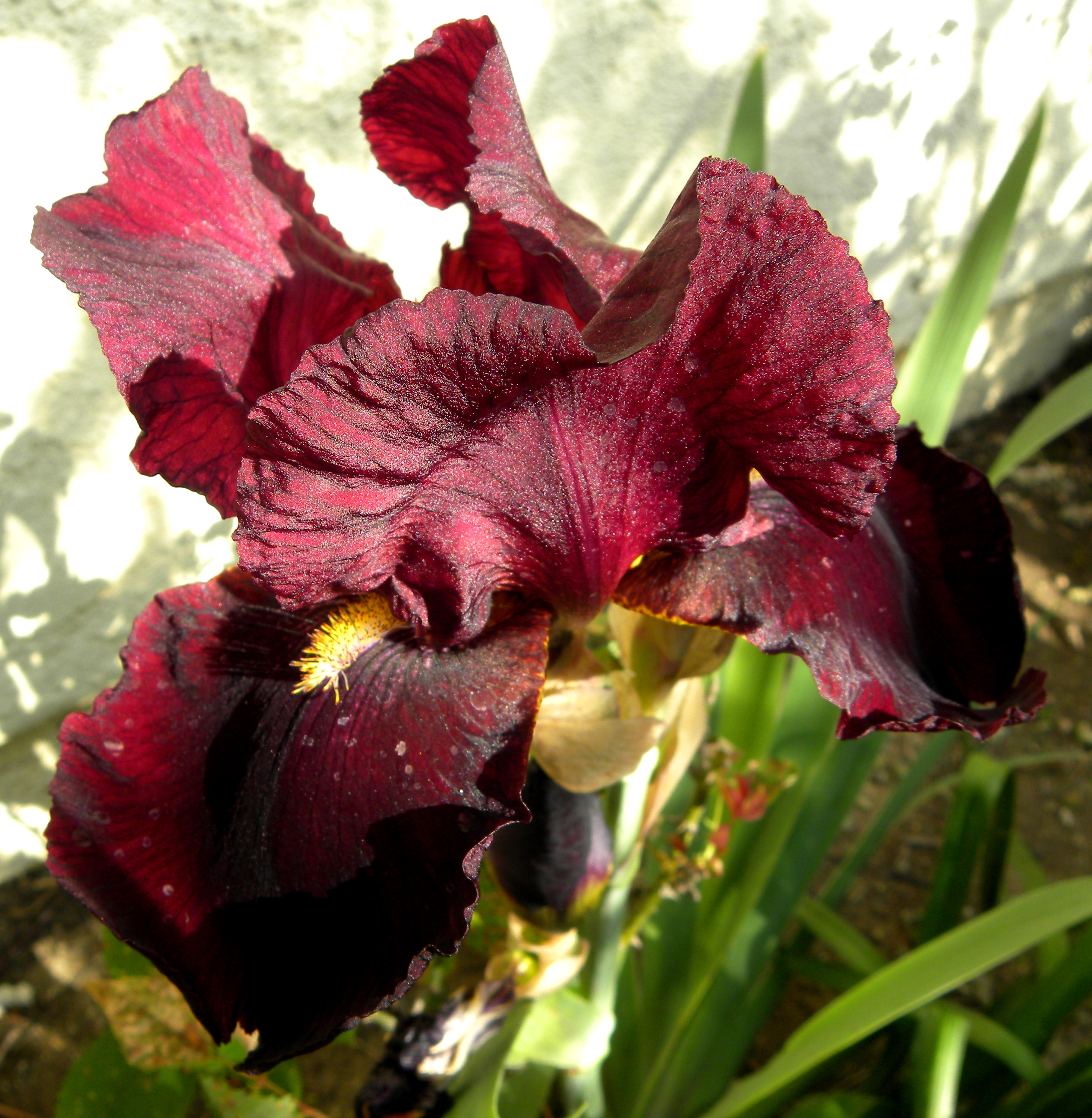
Ida Red is a new color of bearded iris, the reddest of the irises. I got this one from http://www.greenwoodgarden.com. I just love it. When it's ready to divide in the fall, I plan to interplant it with some nice white irises.

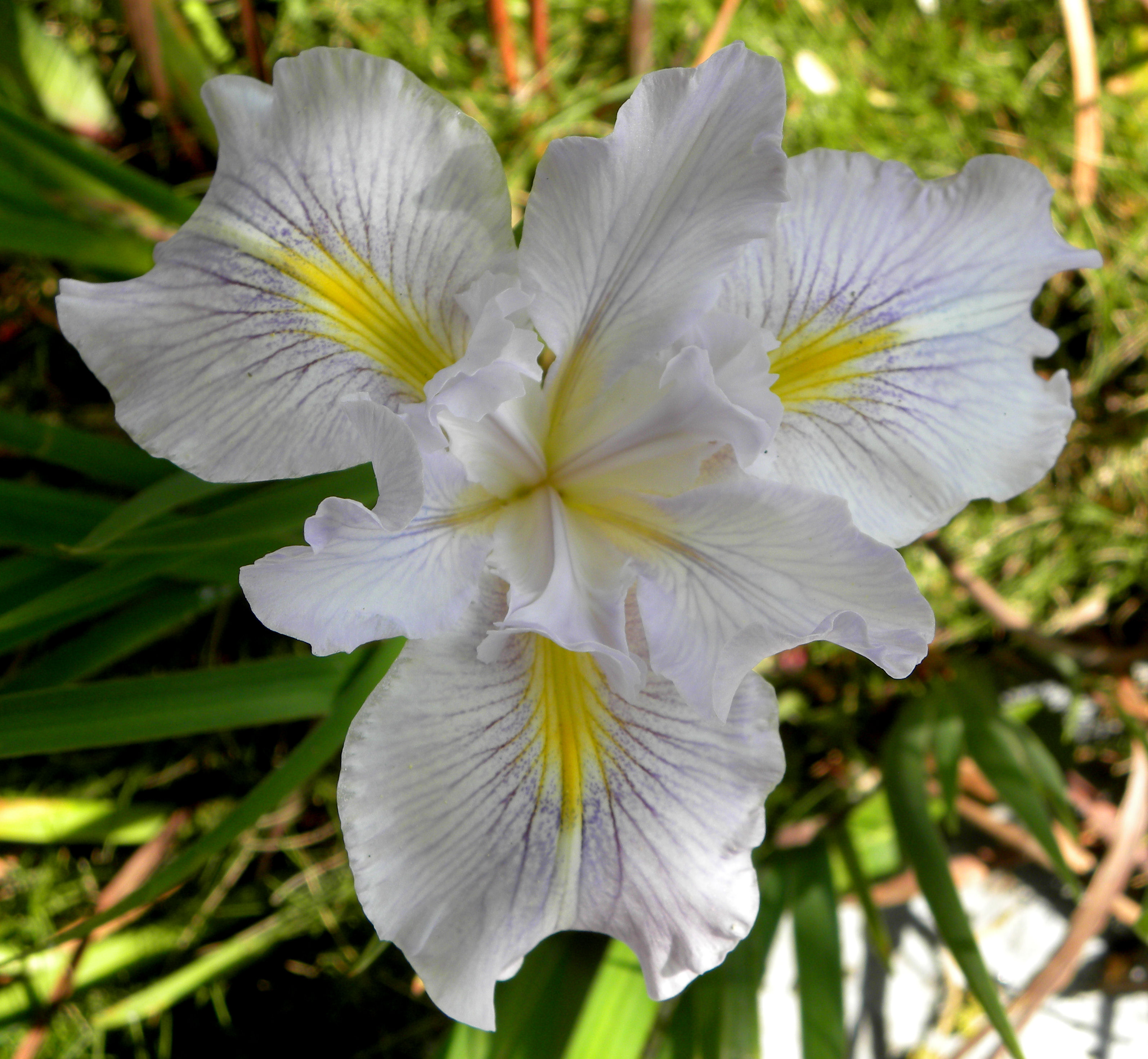
Dutch iris are non-native, but this Douglas Iris is native to California. I just love these. I'm thinking that I should get some more to plant around the pond.

This is the purple Pacific or Douglas iris. I also have a white one, but it isn't in bloom at the moment. They are good plants for riparian habitats, areas that are watered to get 32 inches of rain a year. I cluster my riparian plants to conserve water.

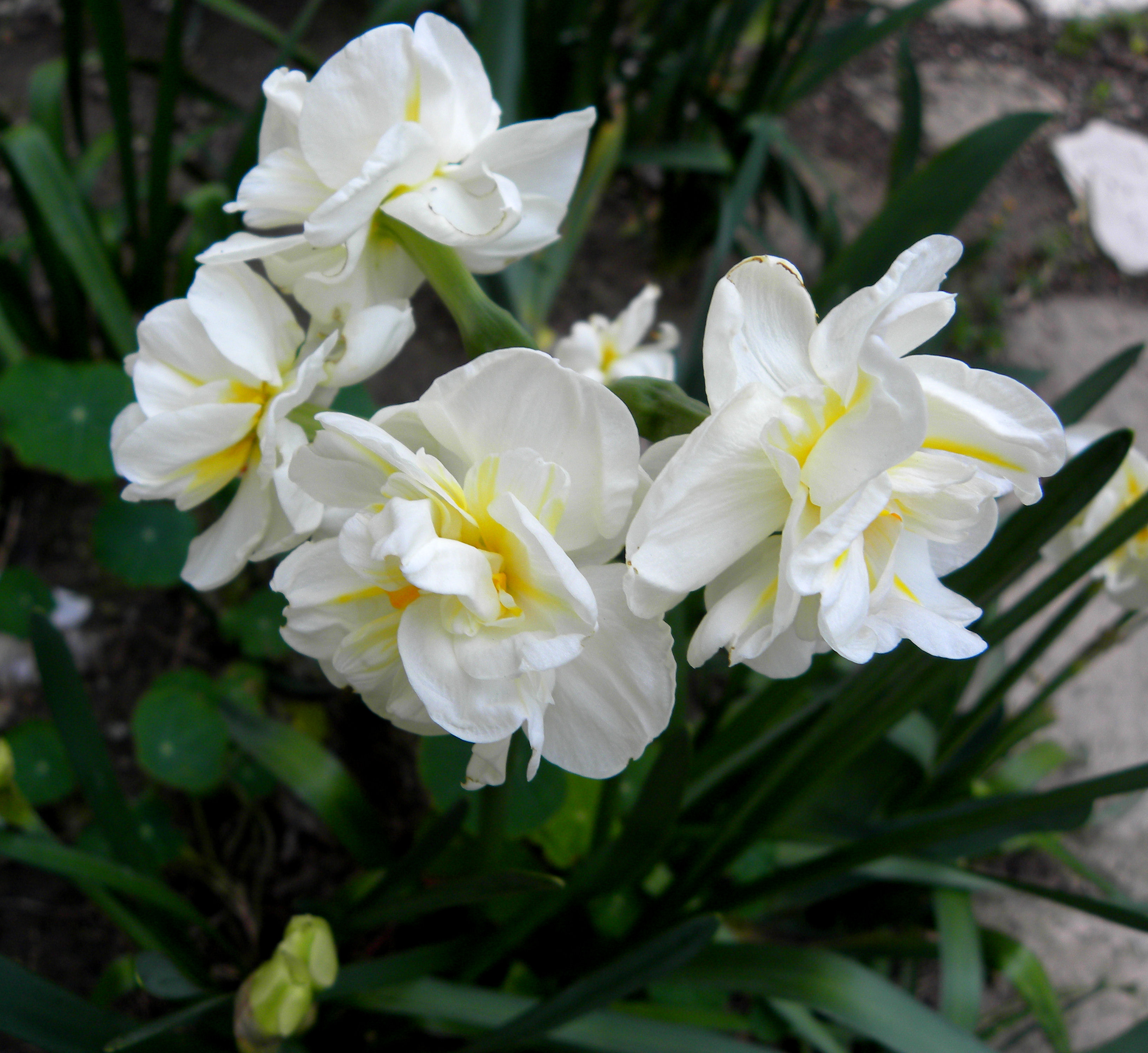
My paperwhites stopped blooming long ago. The Tahiti Narcissus just finished. Now it's the turn of these lovelies.

Another view. The first photo showed these narcissus a bit more yellow than they really are.

The whole back yard that isn't in raised beds is covered in nasturtiums. I feed the leaves to the chickens. They don't seem to care much for the flowers. I tried making nasturtium vinegar one year by soaking the flowers in white vinegar for several days, but I didn't really care much for the flavor. Tasted like nasturtiums!

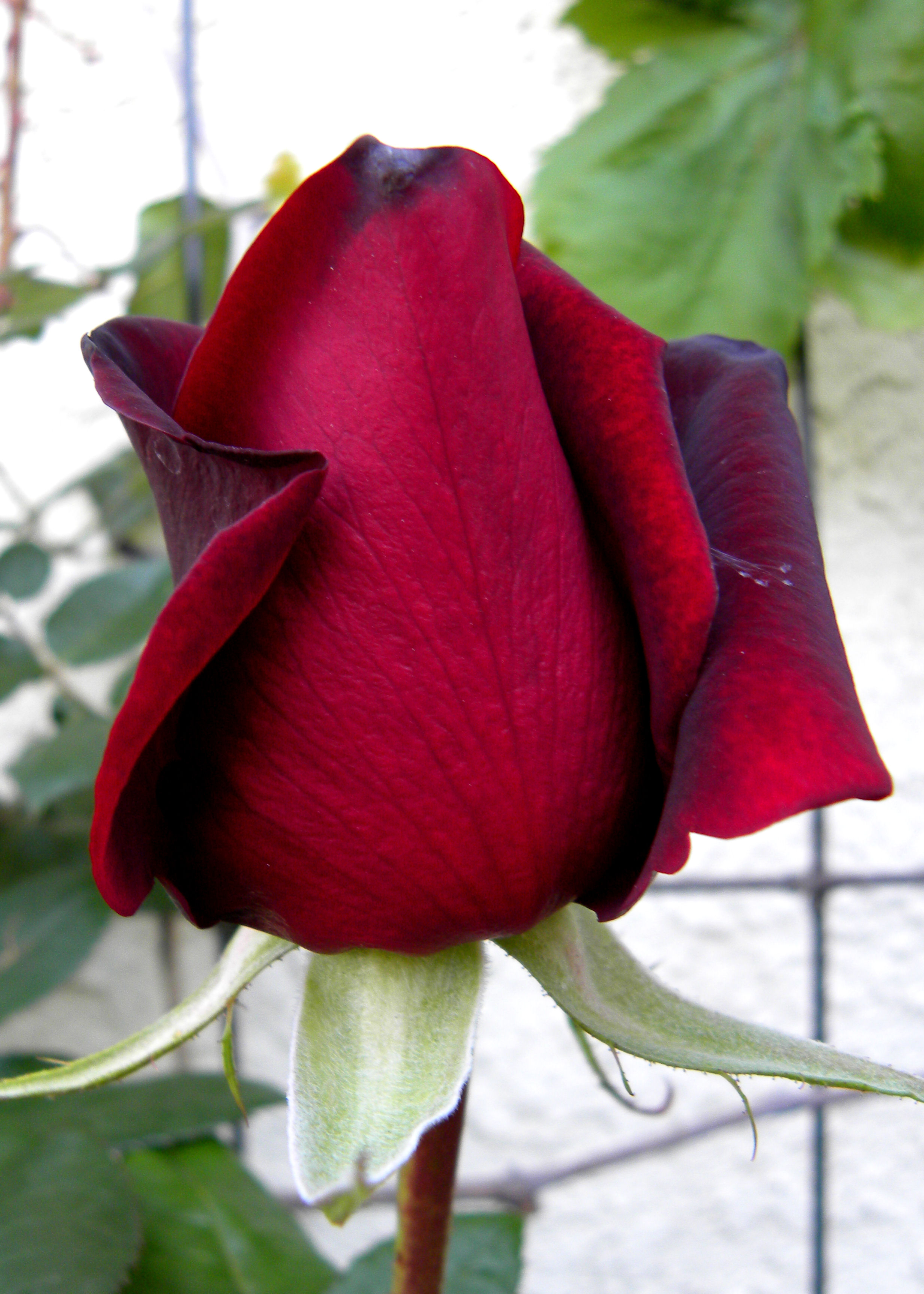
The first rose of summer is about to open. Summer? It's APRIL!

I bought two new cymbidium orchids, the yellow and the rust-colored ones, to add to my existing white and pink one. They look nice in a set of three.

Pink cobbity daisies in the front yard. I want more, but haven't found them at the nursery when I've looked.

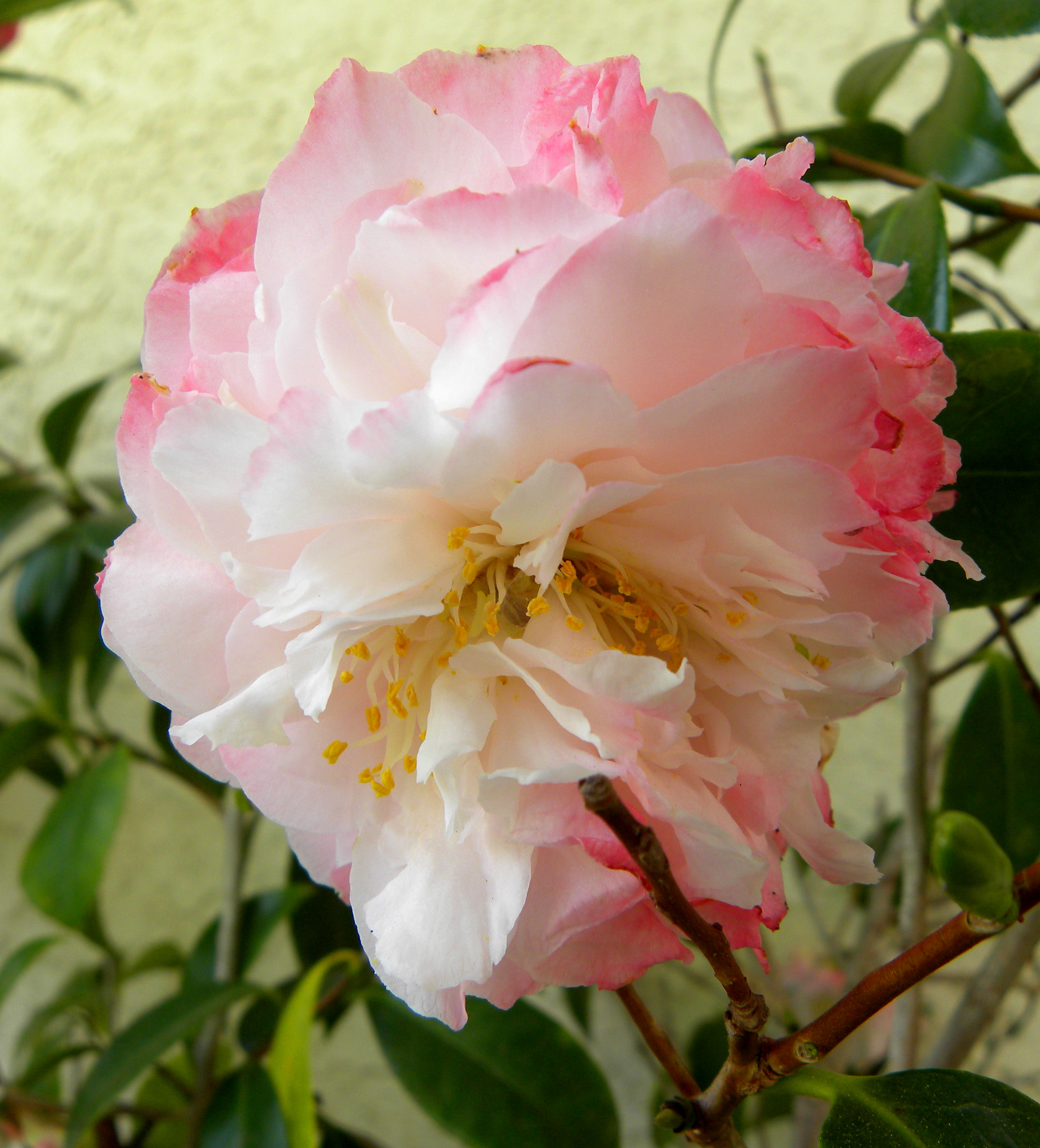
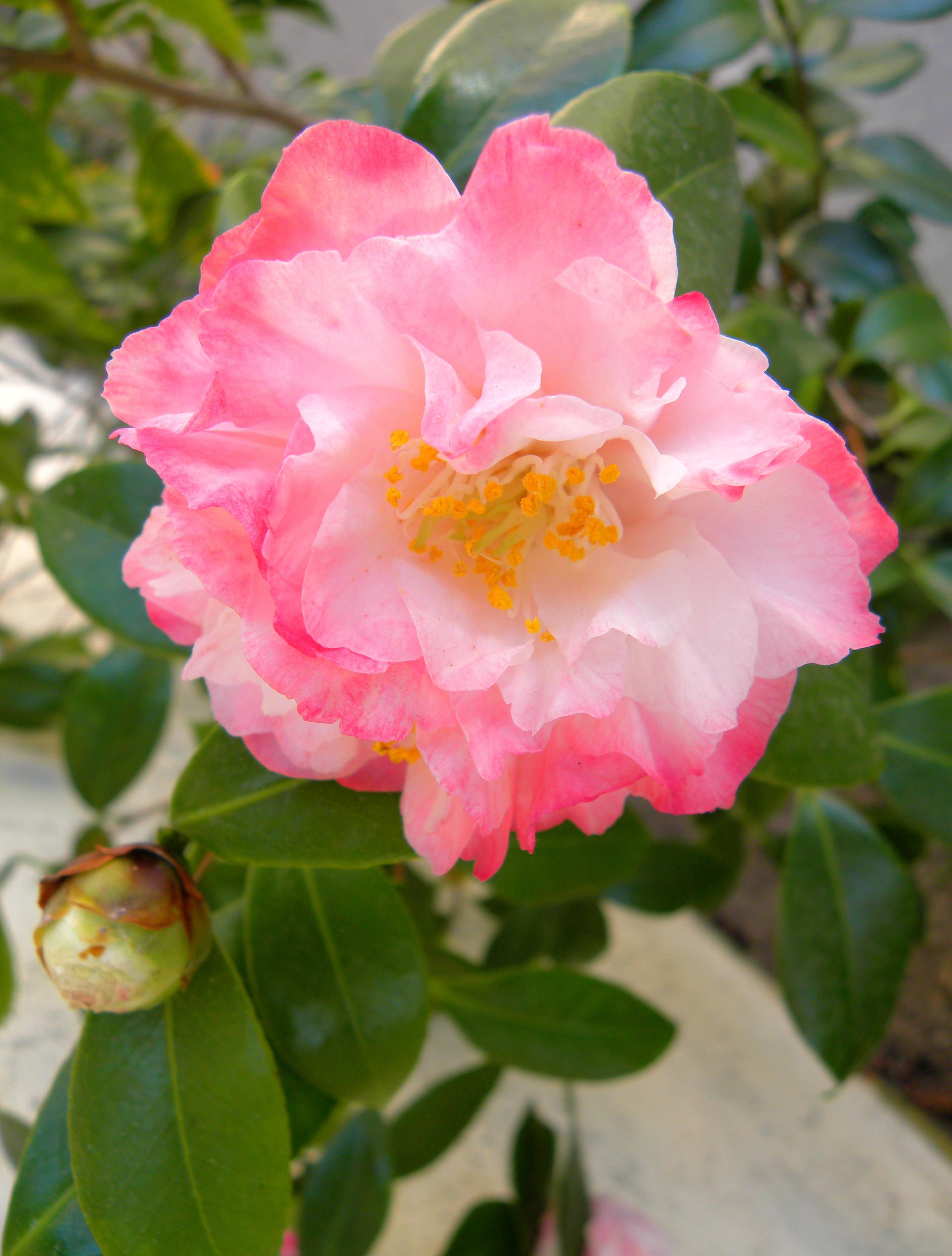
My two early season camellias have finished blooming. Now it is the turn of this late season one.

This is the largest bud on my orchid cactus. When they open, they're spectacular, as large as my fully opened and wide-stretched hand. I have two color varieties, a pinky peach and a salmon.

OK, none of those were edible, except for the nasturtiums. I put them in for beauty alone. Here are some flowers which promise fruit in the future.

My Granny Smith dwarf apple tree is in full bloom. It normally sets about 30 full-size apples. The Gala and Fuji apples are still dormant, as are my two Asian pear trees. However, we had a warm winter, and they might not have received enough chilling to set fruit. Darn global warming!

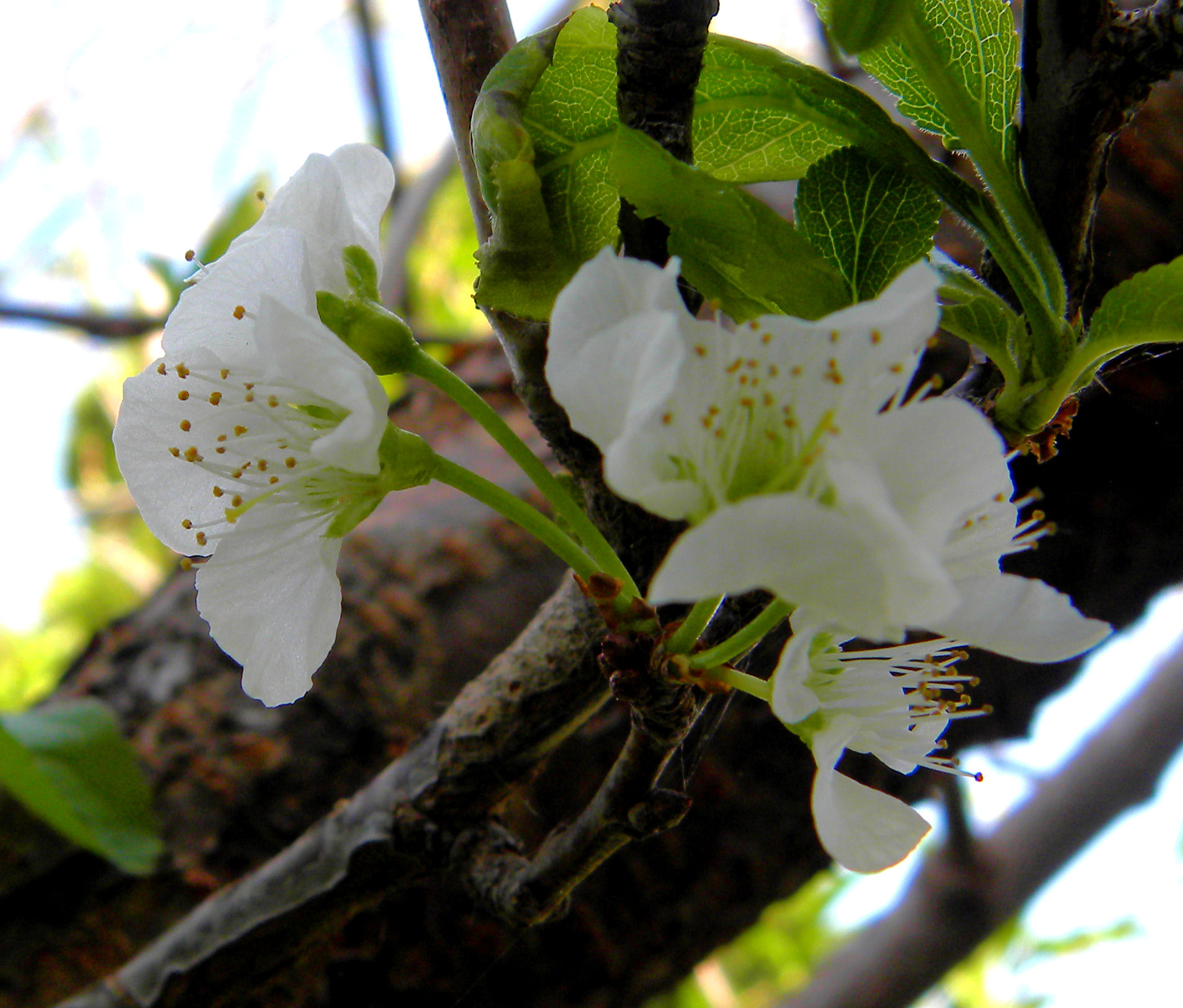
Our Santa Rosa plum is blooming poorly, as usual. We'll be lucky to get a dozen plums. However, that is more than we usually get since the night critters usually get all the fruit. This year I'm live-trapping them relentlessly. We've relocated seven possums already this year.

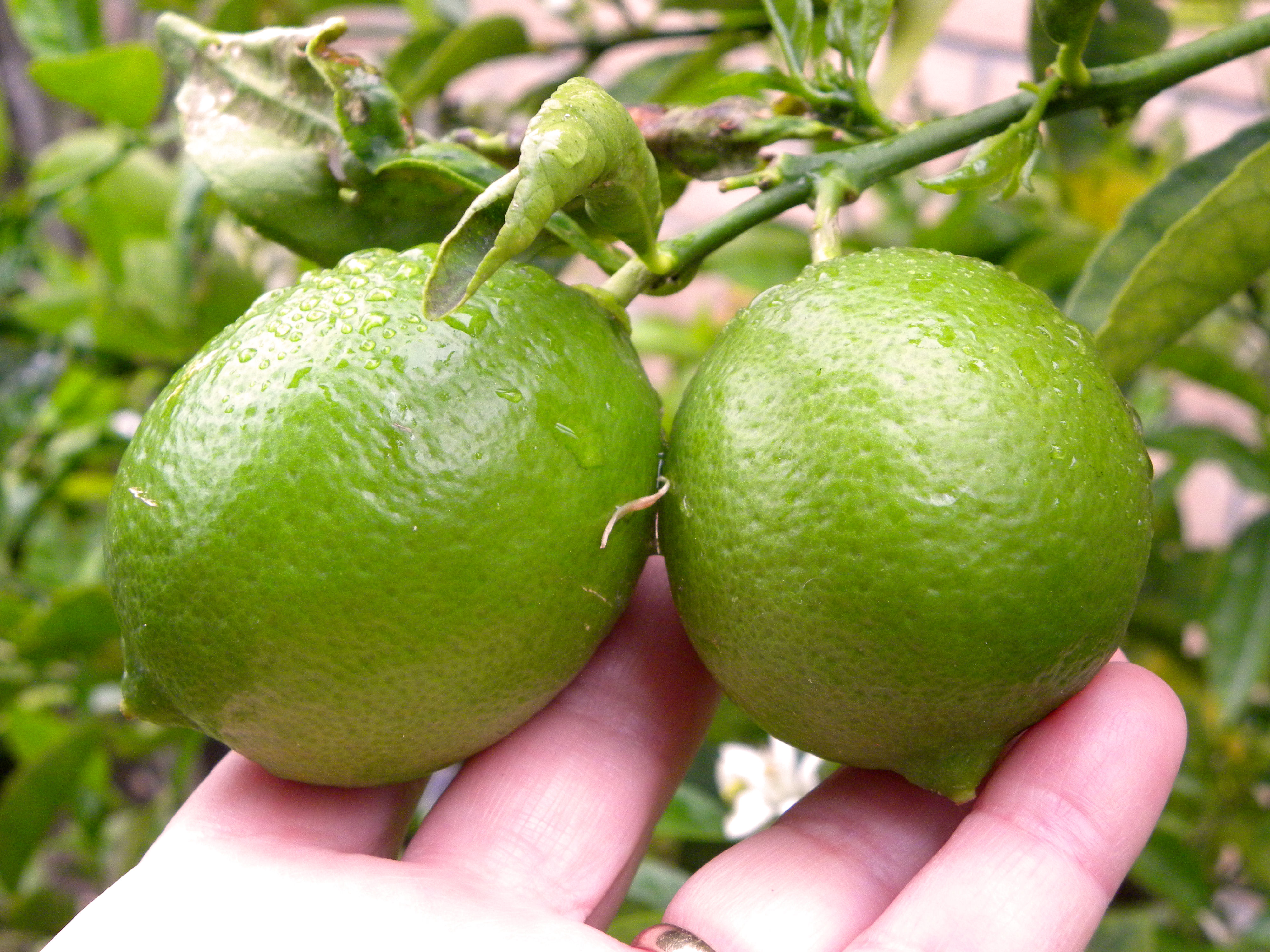
These are lime blossoms from my Bearrs lime tree. Note the tiny limes on the right. That's what they look like after the petals fall off. Most of the flowers don't result in fruit, but we get plenty of limes from the tree anyway. The navel orange and Meyer lemon trees are also in exuberant bloom.

These itsy, bitsy little green flower buds are the ones that are exciting me the most. They are the first ever flowers on my Red Flame Seedless grape vines. I planted the vines four years ago (or was it three, can't remember) and they are now showing signs of producing fruit. We have eight clusters of flowers so far, and more may open as the grape vines are just now getting going for the summer. I hope we get actual grapes but a lot of things can happen between now and harvest. Mold, mites, birds, night critters, etc. I have my fingers crossed.

My Mammoth snow peas are up. They sure aren't mammoth at this stage. This is the second planting of 2012.

My red cabbages are coming along. In general, my cole crops did poorly this winter. I think it was too warm for them. But I have three remaining red cabbages and all have made heads. They're too small to harvest yet though. I hope they make it to harvest time.

We've harvested and eaten three artichokes so far, with more coming along. I had four artichoke plants that came back from the roots this year. They are a short-lived perennial. I may have to replant this fall. Or maybe I'll get another year out of the existing plants. Time will tell.

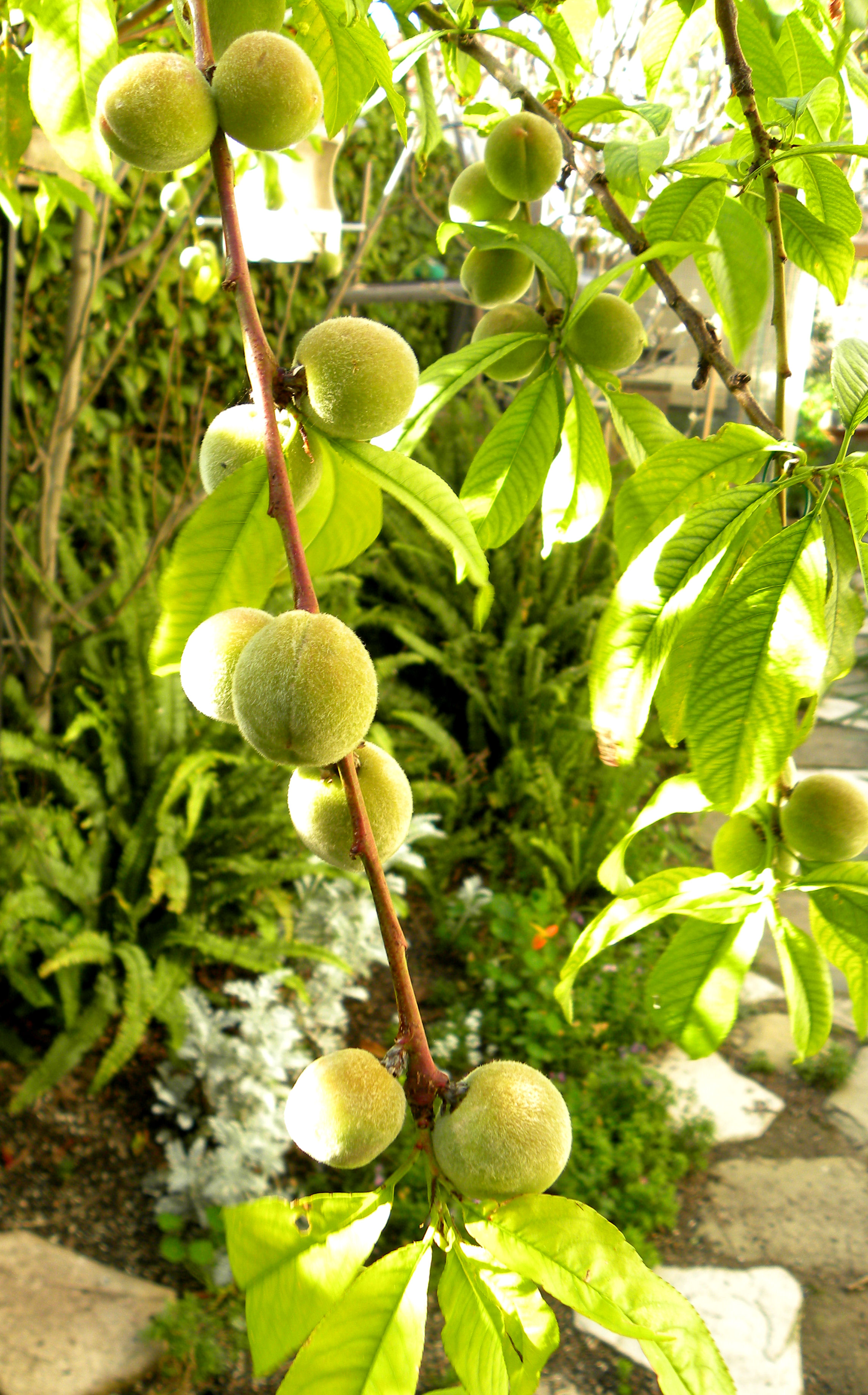
Our Florida Prince Peach tree is loaded with fruit, about 250 peaches. Last year, they were very small peaches. I hope that they're bigger this year and worth canning. I thinned out the peaches a bit, hoping that the remaining ones would get large, but I probably didn't thin enough. I just can't bear to pick them off as tiny babies. I want them ALL to grow big.

This is another view of the Florida Prince Peach. The Babcock Improved Peach is nearly finished blooming, and it looks like it might set 100 fruit this year. The August Pride Peach, which is probably a mis-labeled May Pride, has only three peaches on it. Our Panamint nectarine has set about 30-40 nectarines. The Snow Queen nectarine is just now blooming, but fruit set isn't likely to exceed a dozen. Our poor little Katy Apricot set only three apricots this year. The critters usually get all of the apricots anyway. I keep hoping to get some for myself.

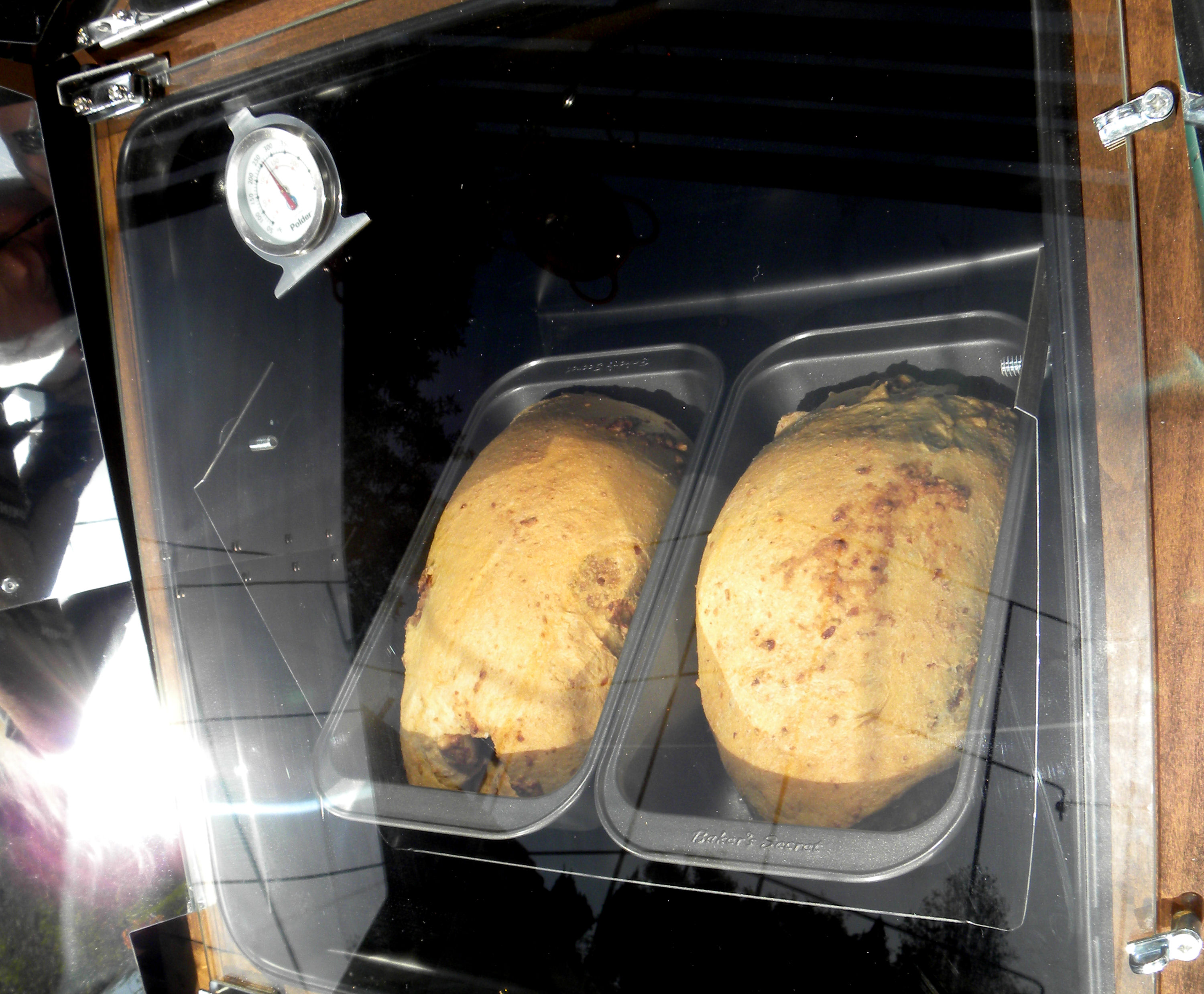
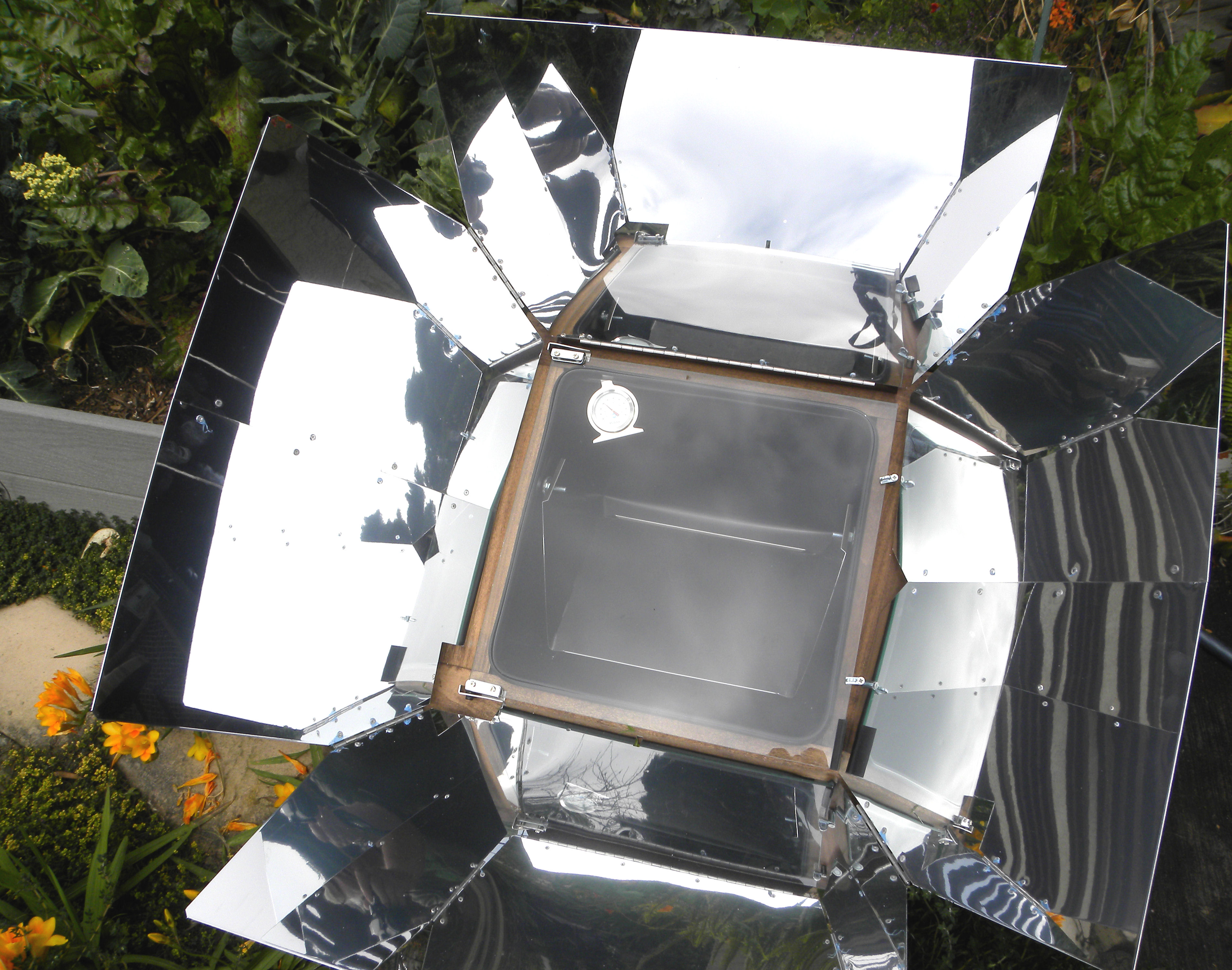
It isn't a plant, but I wanted to show you that I'm still using my new solar oven. I've baked 6 loaves of bread in it so far, plus lamb and lentil curry, beef stew, pot roast, chicken, etc. Amazing thing, it cooks with just the heat of the sun. I'm fighting global warming every way I can.

I’ve done a pretty good job of keeping up with the Excel spreadsheet of my harvests this year, if not getting around to blogging as often as I’d like.

Here is a summary of what my garden has produced so far this year. Note that this is the production for my first quarter, not for the week.  The harvest for this week was 1 oz green onions, 12 oz artichokes, and 8.5 oz of yams.

EGGS, 144 (Yeah, hens! Way to go.)

FRUIT, 43 lbs

Avocados, 111 ounces

Lemons, 110 ounces

Limes, 10.5 ounces

Oranges, 453 ounces

VEGETABLES, 33 lbs

Artichokes, 22 oz

Beets, 160 oz = 10 lbs

Broccoli, 46 oz

Cabbage, 85 oz

Carrots, 50 oz

Cauliflower, 15 oz

Chard, 28 oz

Eggplant, 2.5 oz

Herbs, 2.5 oz

Kale, 4.5 oz

Komatsuna, 6 oz

Lettuce, 4 oz

Mizuna, 5 oz

Onions, green, 2.5 oz

Peas, Snow, 72 oz

Spinach, 1 oz

Tomatoes, 8 oz

Yams, 8.5 oz

TOTAL PRODUCE, 76 lbs

To see what others are harvesting, visit Daphne’s Dandelions.

Posted in Uncategorized | Tagged , , , , , , , , , , , , | 18 Comments

First day of spring and the week’s harvest

It is gorgeous out: clear blue skies, perfect temperature, singing birds, and bright hope after the weekend’s storm. We needed the rain. The snow pack in the mountains was only 34% of what should normally be there.

My three raised beds look good from this angle, but the cool weather crops aren't doing all that well after the heat wave of a couple of weeks ago.

It’s about time we got some good weather. We’ve had record-breaking heat, which isn’t good for my garden. My cool weather crops are refusing to make cabbage heads or Brussels sprouts, and the lettuce has bolted already. The early heat confuses things and makes them burst open too soon. Well, we shall see what the 2012 gardening season brings.

This is pretty much the entirety of my tiny backyard. Three raised beds for vegetables, a chicken coop, some fruit trees and flowers. No lawn! All organic.

A double narcissus. I forget the variety.

My red flame seedless grapes are off to a good start. I expect to get my first crop of grapes this summer and can hardly wait to see if the vines will have flowers this year.

The heat wave tricked the Granny Smith apple into opening some of its buds a bit earlier than normal.

The Florida Prince peach has set a LOT of peaches, more than any other year. My August Pride peach only set three peaches though. It's still a pretty small tree. The Babcock Improved peach is just now blooming, and I hope will give me some late season peaches. It too is a young tree, and this may be its first year of making a decent crop.

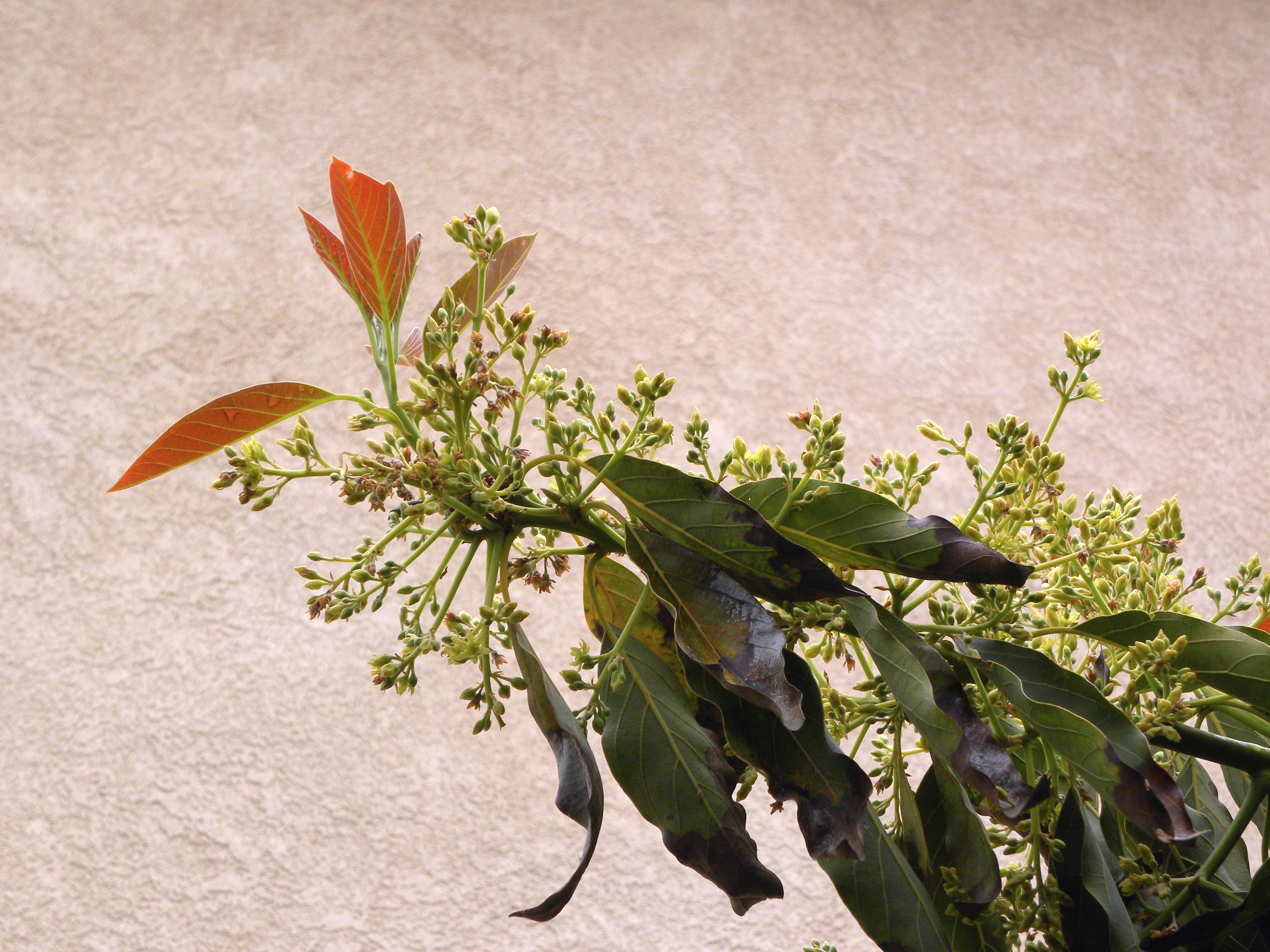
The Littlecado avocado tree made a decent amount of avocados for the first time ever last year. I still have a dozen fruits left on the tree. They don't ripen until picked, so I can extend the harvest over several months. The tree is in bloom again, and I can hardly wait to see if I get a good fruit set again this year.

I'm about midway through the harvest of my limes and lemons, but the oranges are nearly all gone. Only a dozen left. The navel orange tree is blooming again, and I have hopes of another good crop next season.

This is my citrus harvest from last week. They all went to my son Scott and his family. I love being able to share the bounty from my yard with my family.

I absolutely love my solar oven. I've used it every sunny day since it arrived last week.

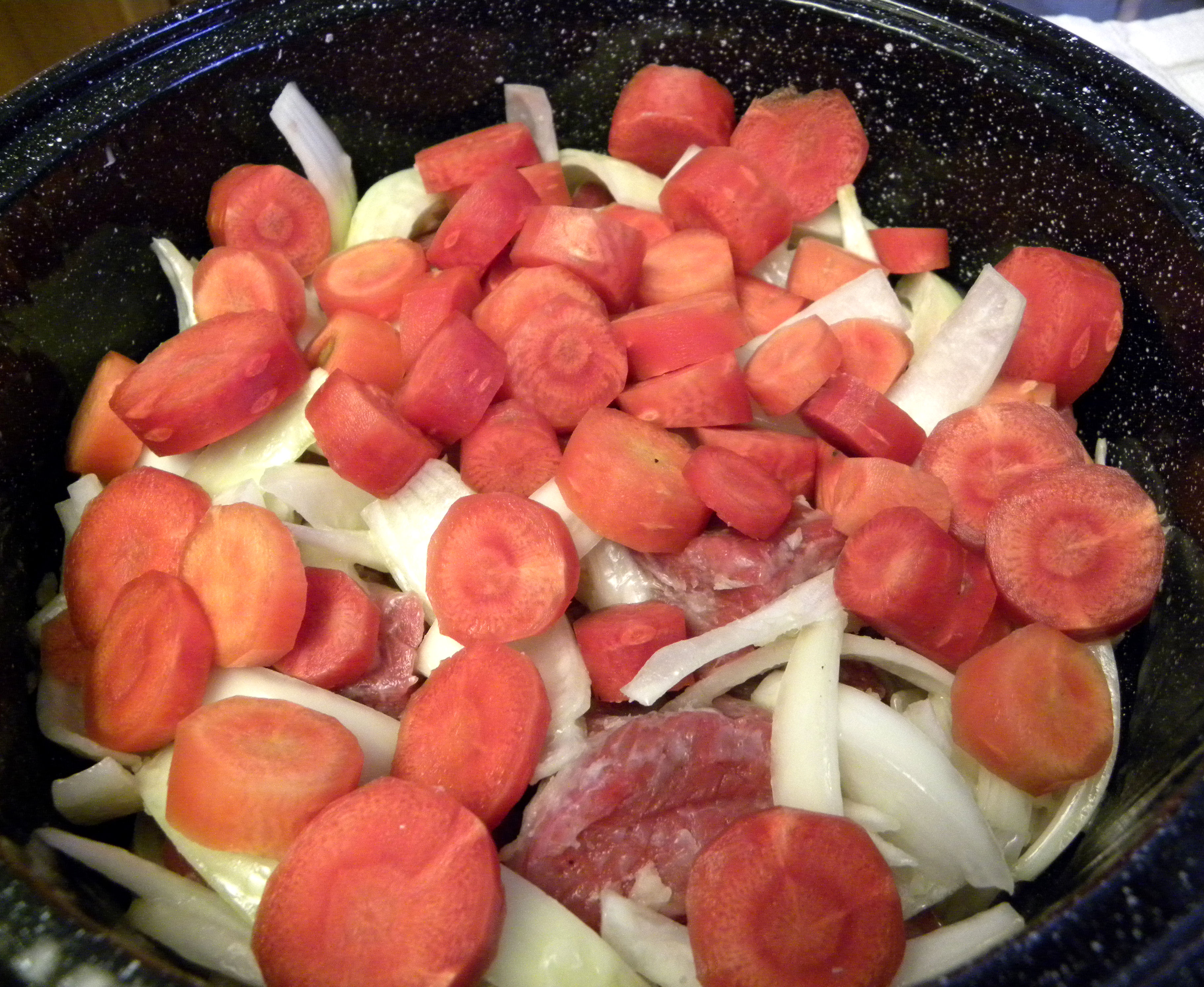
I made a pot roast in the solar oven with two pounds of chuck roast, a sliced onion, six Kyoto red carrots from my garden, a package of dry onion soup mix, and a half cup of red wine. Fabulous!

Last night's dinner, an Italian chicken casserole, was also made in the solar oven. I marinated two chicken hindquarters, 3 sliced bell peppers, a sliced onion, 5 Danvers half long carrots from my garden, and two small potatoes cut into cubes in a marinade of Weber Grillmates Italian herb marinade with 1/4 C olive oil and 1/4 C water. After a half hour, I put it all into the solar oven and let it simmer at 300 degrees for about three hours. I used a glass lid and the top layer of vegetables browned up nicely. Everything was tender and the taste was incredible.

On to the harvest.


FRUITS

12 oz avocados

5  lbs 10 oz navel oranges

1 lb 14 oz lemons (Meyer and Eureka)

2 oz lime, Bearrs

Subtotal fruit 8 lbs 6 oz

VEGETABLES

6 oz broccoli

3 oz cauliflower

2.5 oz snow peas

Subtotal vegetables 11.5 oz

TOTAL PRODUCE 9 lbs 1.5 oz plus 15 eggs

Posted in Uncategorized | Tagged , , , , , , , | 6 Comments

Why I garden

Ali at Henbogle asked an interesting question today on her blog. Why do you garden? My answer is too long to put into the comments section of her blog, so I’m writing today’s post on that question.

I garden in part because I have to. I don’t mean out of financial necessity, because Lord knows I spend far more on my garden than the food is worth from a strictly financial point of view. I garden because it is in my genes. Deep down in my DNA. Ten thousand years of my ancestors tilled the soil instead of manufacturing shoes, working in silver, or weaving tapestries. If you look at my family tree, it’s farmer, farmer, farmer as far back as I can go right down to my father in present times.

My ancestors arrived in the New World as early as 1644 in Jamestown. They settled in the states of Virginia and North Carolina mostly, moving west to Kentucky and Tennessee, then north to Indiana in the 1800s. They were pioneers, often the first white settlers on their property. They cleared, plowed and planted.

Actually, my father didn’t farm as an adult, but he did until he was 16. He was raised on a farm, and growing things was in his blood too. We often went back to the farm where he was raised to visit his cousin, who was running it.

My father showed me how to plant a vegetable garden when I was 12. I don’t remember paying any attention, which must have been a disappointment to him, but the lesson stuck. His mother, my Grandma Wilson, raised a vegetable garden in her backyard and canned. It was just what people did.

I planted my first garden during my marriage to my first husband, back in 1962, at the community gardens at Purdue University, where I was an ag major, of all things. That garden was a short-lived, one season effort.

I didn’t have a garden again until 1976, when I lived to a 7-acre farm in Higganum CT with my present husband. We only lived there a year, but we grew a garden the entire time we were in graduate school, 1976-1981. My inspiration was Jim Crockett’s Victory Garden on PBS out of Boston.

We got our doctorates in 1981, moved to southern California and began a stressful life as college professors. I gardened then to destress. I had a garden at our first house out here, then a plot at the local community garden after we moved to our present house in 1988 with its pathetically small yard.  For some reason, I quit gardening in 1997 and that community garden went defunct not too many years later.

My mother died in the summer of 2005, and my son Bob died three months later. I went into a blue funk and didn’t climb back out for a couple of years. I neglected the yard entirely during that period.

Then I read Barbara Kingsolver’s “Animal, Vegetable, Miracle.” I vowed to do my bit to fight global warming and to eat locally grown food as much as possible, preferably home-raised. That was the year I began planting my mini-orchard in earnest. It is now five years later and the fruit trees are coming into good production. This should be a banner year for fruit production in our yard.

So long story short, I garden in part to destress.

Other reasons are that I like to try new-to-me varieties of vegetables. I love reading seed catalogs, and want to try everything once. Not possible. I love to cook, and enjoy having fresh, organic produce available right out the back door.

But why do we dig in the cold, miserable mud at the first sign of spring? Why do we swelter over a hot stove during the humid days of August to put up tomatoes and preserves? Why do we mourn the passing of each growing season and rejoice when we can plant again? Maybe it’s because we love to see those first tiny green shoots poke up out of the rich, brown dirt. It symbolizes hope and renewal. It promises an abundance of food. I think one reason that I garden and can is for food security, or at least the illusion of food security. We can provide for ourselves. We have a stockpile of food for the long, cold days of winter ahead.

Another reason to garden in today’s modern world is food safety. We see mass prepared foods cause epidemics of food poisoning. One badly butchered cow can ruin a million pounds of hamburger. That’s one reason why I buy ground beef only from stores with an in-house butcher, where the hamburger was ground on site.  OK, I’m not raising cows at home, but it’s the same principle. Today’s mass production can cause problems in the food chain. Even organic spinach can kill people if it is contaminated with H1N1. I think that’s the right designation for the bacteria from cows that can blow into a field of lettuce or spinach.

Another safety issue is organic versus non-organic food. I don’t want herbicides and pesticides on my food. If I grow my own, I know what has or has not been put onto it. Also, supporting or practicing organic farming also supports good stewardship of the land. No-pesticide/herbicide gardening or farming is safer for wildlife, including humans and especially small children.

So there you have it. Genetics, a connection with my ancestors and the land, a destressing activity, greater variety of food, fresher produce, food security and food safety. Bottom line–it makes me happy.

Posted in Uncategorized | Tagged , , , , , , | 6 Comments

Solar oven cooking with my new Sun Oven

Post script on my Sun Oven solar cooking experiment. It worked perfectly! The Greek beef stew was tender and delicious, and the rice in the pot below the stew was perfectly done. I think if I make that recipe again, I’ll use ketchup instead of tomato paste, and maybe increase the wine to half a cup.

I learned a bit about solar cooking too. If it isn’t done by 4 pm, you might as well give up, because the temp really starts to drop when the sun isn’t directly overhead. Best times to cook are probably 10 am to 2 pm. Also, when the solar oven is good and hot (350), the lid steams up a lot, which drops the temperature. I had to keep opening the oven to wipe off the condensation from the lid. Hard to say which dropped the temp more, the condensation, or opening the lid. Anyway, it worked.

Yesterday I cooked a pot roast in the solar oven, but conditions were partly cloudy due to a marine layer (one of the benefits of living near the Pacific Ocean–natural air conditioning). Unfortunately, I didn’t get started until 12:30, and thus missed most of the time that the sun is directly overhead. The temp in the oven peaked at 270, but went down to only 150 by 3 pm. That won’t even boil water. I had to finish up the pot roast in the regular oven for the final hour of cooking. It came out fabulous! That may have been the best pot roast I’ve ever cooked. I used up the last of my Kyoto red carrots for this dish. Wish I had had some potatoes to put into the pot.

If you want to see what others are using from their garden or preserved foods from their garden, visit Robin at “The Gardener of Eden” on Kitchen Cupboard Thursdays.

Solar Oven Pot Roast

2 lb chuck roast

1 onion, sliced lengthwise into strips

6 carrots, peeled and cut into chunks

1 pkg dehydrated onion soup mix

1/2 C red wine

Put ingredients into a covered pot in order given. Cook in a solar oven for three hours at 300-350.

Posted in Uncategorized | Tagged , , , , , , , , | 7 Comments

Cooking with the sun!

I’ve been wanting to upgrade my solar cooking ability for some time now. It’s the green way to cook. I made a solar oven a few years ago out of a Styrofoam box inside a cardboard box, with aluminum foil over the cardboard flaps, and a sheet of glass over the top, but it wasn’t very effective. It took all day to heat up a can of baked beans in my homemade contraption.

I had looked at manufactured solar ovens a few years back, but none of them had all the features that I wanted. I looked again online last week, and found the Global Sun Oven, made by Sun Oven International in Elburn, Illinois. It had everything I wanted in a solar oven and more. Visit http://www.sunoven.com to see their great video on how it works.

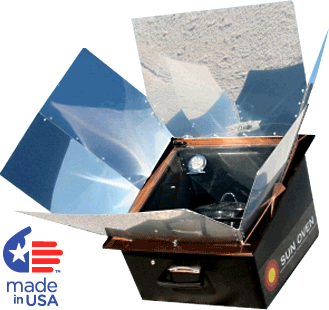
The Sun Oven is made in the USA, a selling point for me.


I ordered one immediately, along with their emergency preparedness package that included drying racks for dehydrating food, a set of double stacking enamel pots with two lids, two bread pans, parchment paper, and a couple of other items. I also bought two solar cookbooks from them.

The oven shipped in two days and I was able to track it by FedEx. The features that sold me on this oven were the built-in adjustable leg so I can tilt the oven for winter or summer sun angles, a swinging rack on which to place the pot so the liquid stays level and doesn’t spill when the oven is tilted, a collapsible reflector, an included thermometer, and the fact that it was manufactured in the USA. And, it came with three dehydrator racks so it can be used to make sun-dried tomatoes, jerky, and other dried foods.

My new solar oven arrived yesterday, and required a bit of set up. Just unpacking it and removing the plastic film from the reflectors took a while. Then I had to heat soapy water in it in a pot this morning, and scrub the interior before the first use. I think that step may be to remove volatile plasticizers before using the oven to cook food.

To make a Greek beef stew in a solar oven, put 1.5 lbs of stew beef in the pot, add one sliced onion and 1/4 C melted butter. Toss to coat.

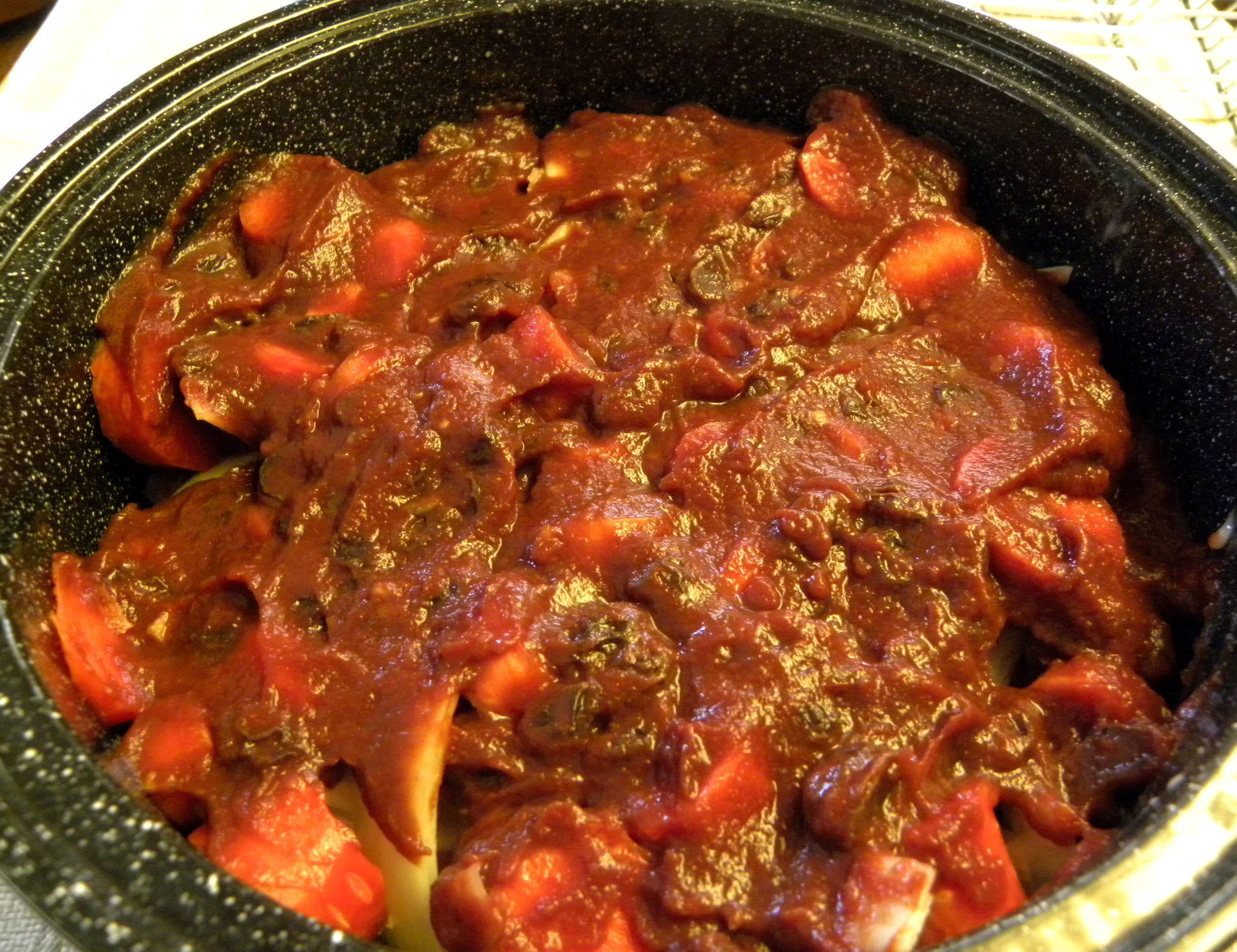
While it was preheating again, I mixed up a Greek stew of cubes of beef, onions, butter, carrots (from my garden), tomato paste and seasonings (red wine, sherry vinegar, brown sugar, garlic from my garden, cumin, cinnamon, cloves, and bay leaf from my garden).

Slice five carrots and put on top of beef and onions. These are Kyoto reds from my garden.
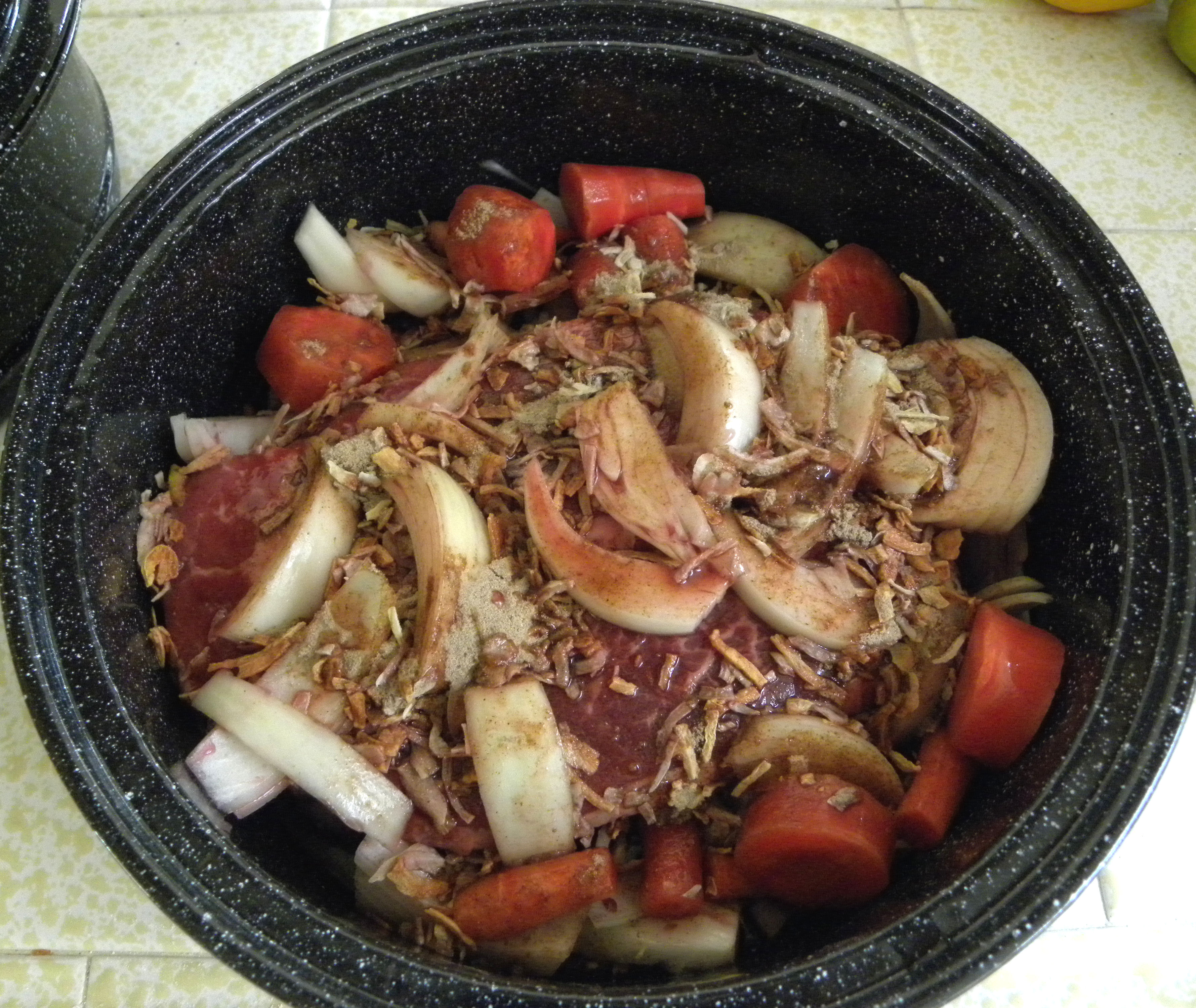
Add 1-2 cloves of pressed garlic (OK, I used 7 here, but my homegrown garlic cloves are small) to one 6 oz can of tomato paste along with 1/2 C red wine, 2 T sherry vinegar, 1 T brown sugar, 1/2 tsp ground cinnamon, 1/4 tsp ground cumin, 1/8 tsp ground cloves, and 1/4 C raisins. Stir together, and spread over the top of the carrots.

The tomato paste mixture is fairly thick, even with the wine and vinegar added. Apparently solar cooking uses very little added liquid. Top the stew with one or two bay leaves (I picked my bay leaves off my little tree), cover, and cook in the solar oven until done, about 3-3.5 hours.

I'm so excited. My first meal is cooking in the driveway in our new solar oven!

I modified the Greek stew recipe that I’m showing here from one in the “A Month of SUNdays: Solar cooking at home” solar cookbook by Sharlene Thomas.  I also bought “The Solar Chef: A Southwestern recipe book for solar cooking” that is produced by Solar Ranch. (I made their chile cheese bake casserole this morning in my regular gas oven and it was fabulous.)

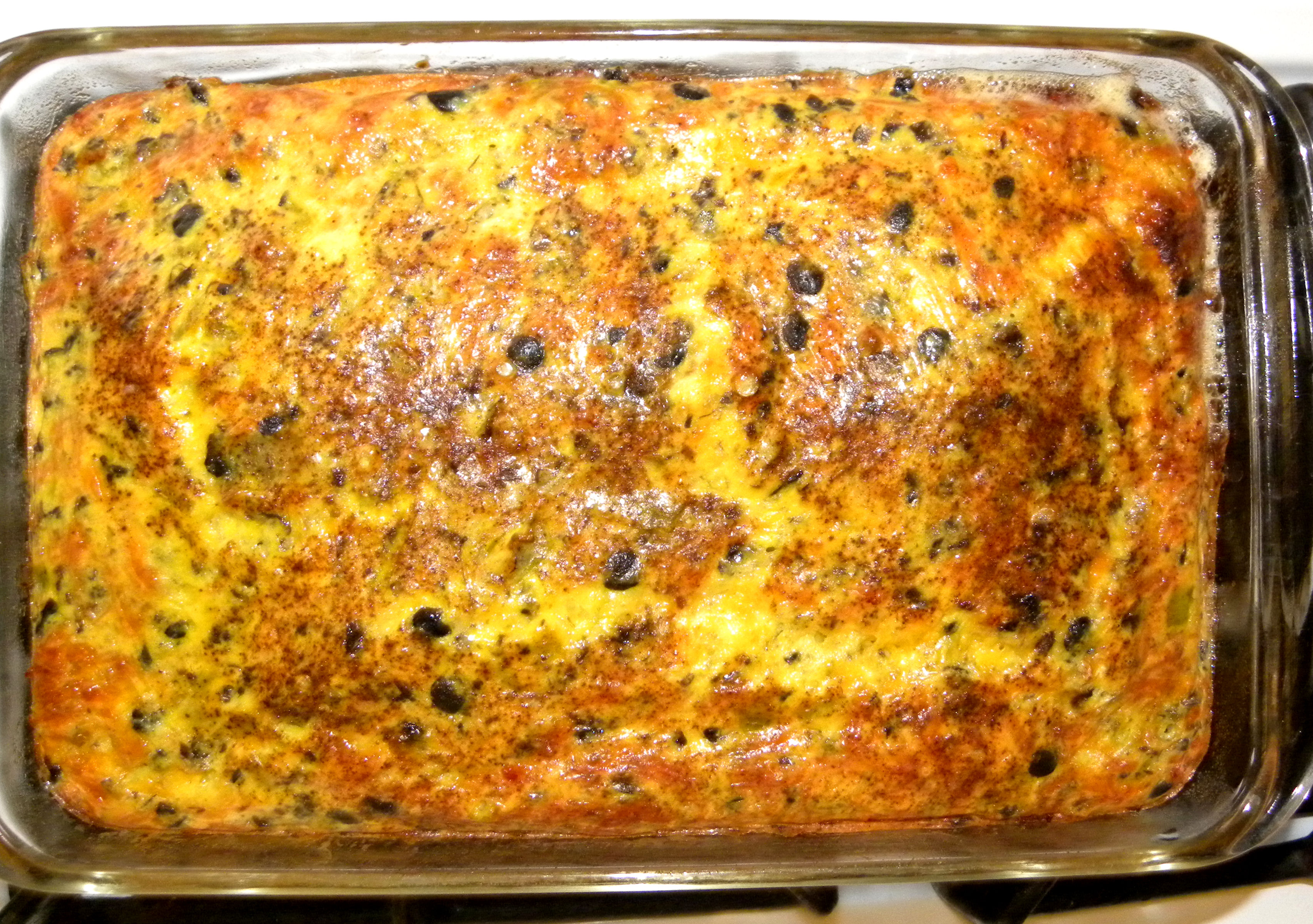
I made this chile cheese bake from a recipe that I modified from The Solar Chef, baking it in our regular oven because the solar oven was busy with the Greek beef stew. For my version of the chile cheese bake, combine 5 beaten eggs, 1/4 C flour, 3/4 tsp baking powder, 2 oz can of diced green chiles, 2 oz can of chopped ripe olives, 8 oz sour cream, 2 C grated Mexican cheeses, generous dash of Louisiana hot sauce, 1 T melted butter and 4 corn tortillas cut or torn into pieces. sprinkle paprika on top. Bake at 400 degrees for 30 min in a regular oven or 45 minutes to an hour and a half in a solar oven until top is puffy and eggs are set. Boy, this was good.

The solar oven came with a stacking, lidded, double pot, so I put rice and water in the bottom pot and the Greek stew in the top pot, topped with a lid. By the time I had the stew ready to go into the oven, the temp of the oven was already up to 340 degrees. Amazing. Just with the sun.

I’m rotating the oven every half hour to maximize the heat. I also have to clean off the condensation on the inside of the glass lid to keep the oven cooking at a good hot temperature. It’s running at 300 degrees, which is plenty hot enough to cook our dinner. The stew and rice should be cooked in about two to three hours. It’s been two hours already and it smells really great every time I open the oven to clean off the condensation.

I’m really excited about my new solar oven. Some of the benefits are that I can cook without using any fossil fuel or putting carbon dioxide into the atmosphere. Every meal I cook on it fights global warming. The sun’s energy is free, so I’m saving money on fuel. Hahaha, not that I ever expect to save enough on fuel to offset the cost of the solar oven. another benefit is that I will be able to cook in the summer without heating up the kitchen. If we had air conditioning, that would be a cost savings, but as it is, it will merely be a comfort benefit. Mostly I’m doing this for FUN.

I had planned to get a dehydrator this year anyway. It would have cost about the same as the solar oven and it would have used electricity. This was a sweet deal to get a solar oven and dehydrator all in one package.

I am utterly amazed at all of the different things that can be cooked in it–bread, cookies, soups, stews, rice, roasts, and whole chickens.

Well, while the stew is cooking itself with the power of the sun, I can’t help but remember that I have a bottle of red wine open. 🙂 I just have to remember to keep moving the oven to follow the sun and stay out of the shadows.

Posted in Uncategorized | Tagged , , , , , , , | 6 Comments

Blooming Monday, March 12 2012

Wow, spring is just bursting out all over in our yard. In addition to updating my harvest, I want to show some pics of stuff in bloom.

Our Katy apricot tree had very few blossoms this year, so I'm not anticipating much of a crop. Actually, the birds and night critters usually get all the apricots anyway.

This is our Katy apricot. There are few blooms on it this year, so I’m not anticipating much of a crop. The night critters generally get the entire harvest anyway, but I’ve been live trapping the possums relentlessly this spring. Haven’t caught one in over a week, so maybe I’ve really been able to move them out of our yard.

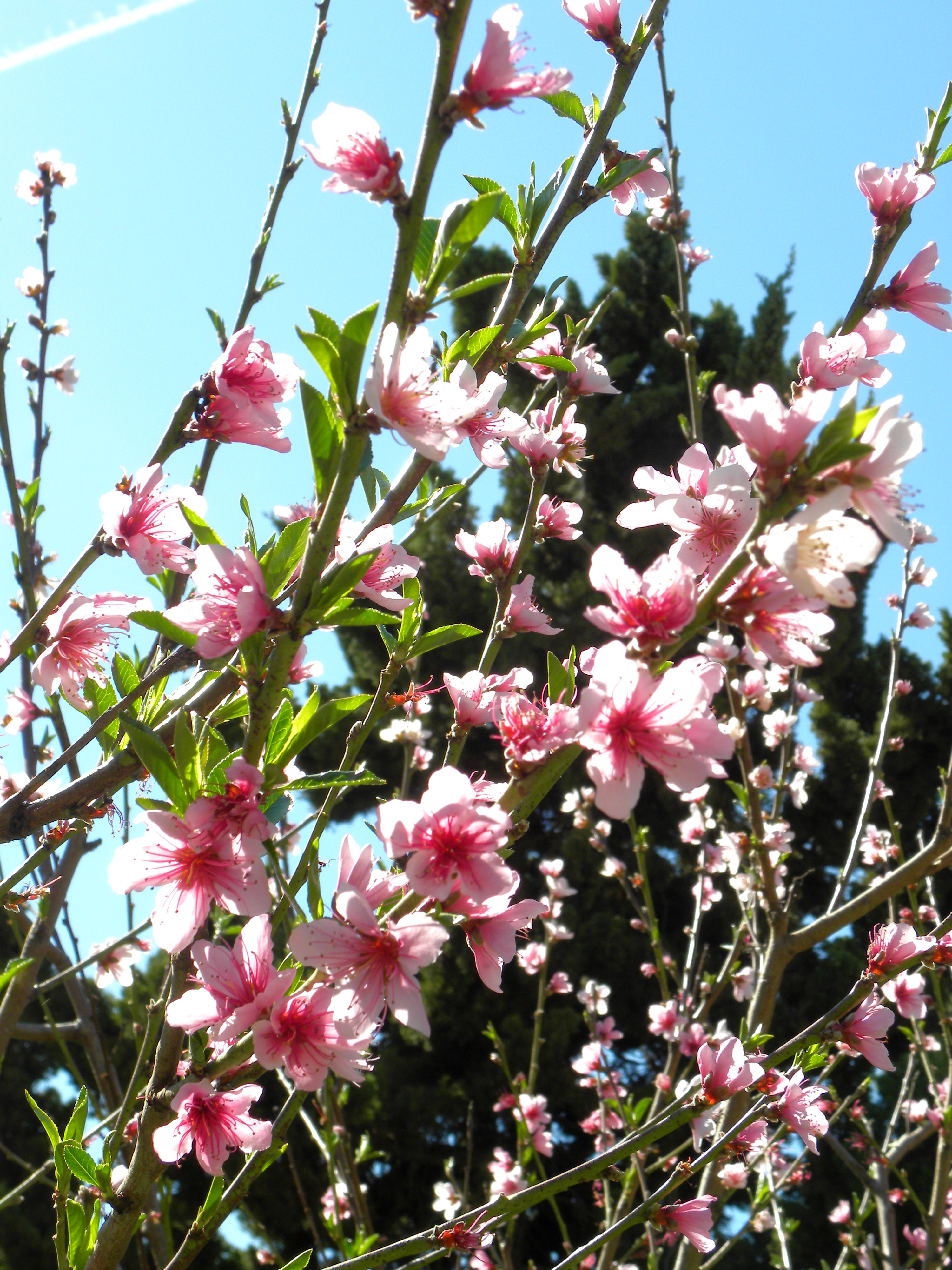
This Garden Gold peach is a dwarf. This is the first year that it's had any significant number of blossoms on it, so maybe I'll get to see what this variety of peach tastes like.

The Florida Prince Peach sets fruit really early in the season. This year it set a record number of peaches. I'm really hoping that I have some to can for the first time ever. If not, then we'll have our usual peach pie, peach cobbler, and sliced peaches on cereal and ice cream. I can hardly wait.

Our Panamint nectarine also has a record number of blossoms. It generally gives us a good amount of fruit, but I don't know what to do with nectarines other than eat them fresh. I've heard that they don't can well. I'm wondering if anyone makes nectarine pie or freezes them. I'm pretty sure that they would make good jam, but have never tried it. This is going to be the year!

My three raised beds in the back yard are doing well. The winter crops are nearly finished, and it's time to think about summer crops. Tomatoes! Yeehah!

The back yard raised beds are looking great. Don’t ask about the community garden. The powers that be (Southern California Edison) are still dithering about what we can and can’t have there. I’ve put in three separate fences, put in beautiful redwood raised beds that had to be removed, and a cute little garden flag that also didn’t meet with their approval. I had to remove my first set of vinyl coated wire tomato cages, as well as my fiberglass coated tomato stakes and my bean trellis. They’ve said no decorations, no raised beds, no metal, no trellises higher than four feet (ever try to grow pole beans on a four-foot trellis? Ridiculous.)  I already bought five varieties of pole beans for this year before that new ruling came out!)

I spent $1500 on that garden plot last year, which was really just a hard-compacted gravel parking lot, and got very little produce out of it because of poor soil and rabbits. I’ll be darned if I’m going to waste my time and money on it until they get their stupid minds made up about what they are and aren’t going to allow. Part of the problem is one cranky person whose property backs up to the Edison property. She didn’t want the gardens there, so to appease her, they are saying no decorations and no chairs in the gardens.  She sued the city anyway for allowing the gardens there.

Fortunately, they do allow plastic storage bench seating such as the bench seat that I bought. I’m old and have to sit down between short bouts of labor. That is the ONLY thing that I bought for my garden that is still allowed.  Ah, but I digress. Back to happy springtime in MY yard. For now, to heck with the community garden.

Yippee, our hens are laying again. We get three eggs a day on a good day, but overall we're getting 7-12 eggs a week. I just love having chickens.

Every spring, we get a pair of mallards that hangs out in our yard. They stay about six weeks. We think that our yard is a feeding territory since the female has never nested here. They swim in our little pond and scarf up any bird seed they find. I put out a bit of chicken feed for them too since I enjoy their visits.

Our mallards are "park ducks" that come up to be fed instead of flying away when I open the front door.

I planted a butterfly garden and the butterflies actually use it. We had 10 monarch caterpillars this year on the bloodflower milkweed. They ate the plants down to bare sticks, which is what happens if you're raising butterflies.

This is a monarch chrysalis, with a bit of sun flare in the photo.

My butterfly garden has a variety of sages, lantana, bloodflower milkweed and yarrow in it. We get a number of different species of butterflies coming for nectar, and if any of them lay eggs, they’re safe in our yard. No pesticides or herbicides in our all organic yard. Cabbage loopers and tomato hornworms are not safe, however. I feed them to the chickens or squash them if I find them.

Camellia

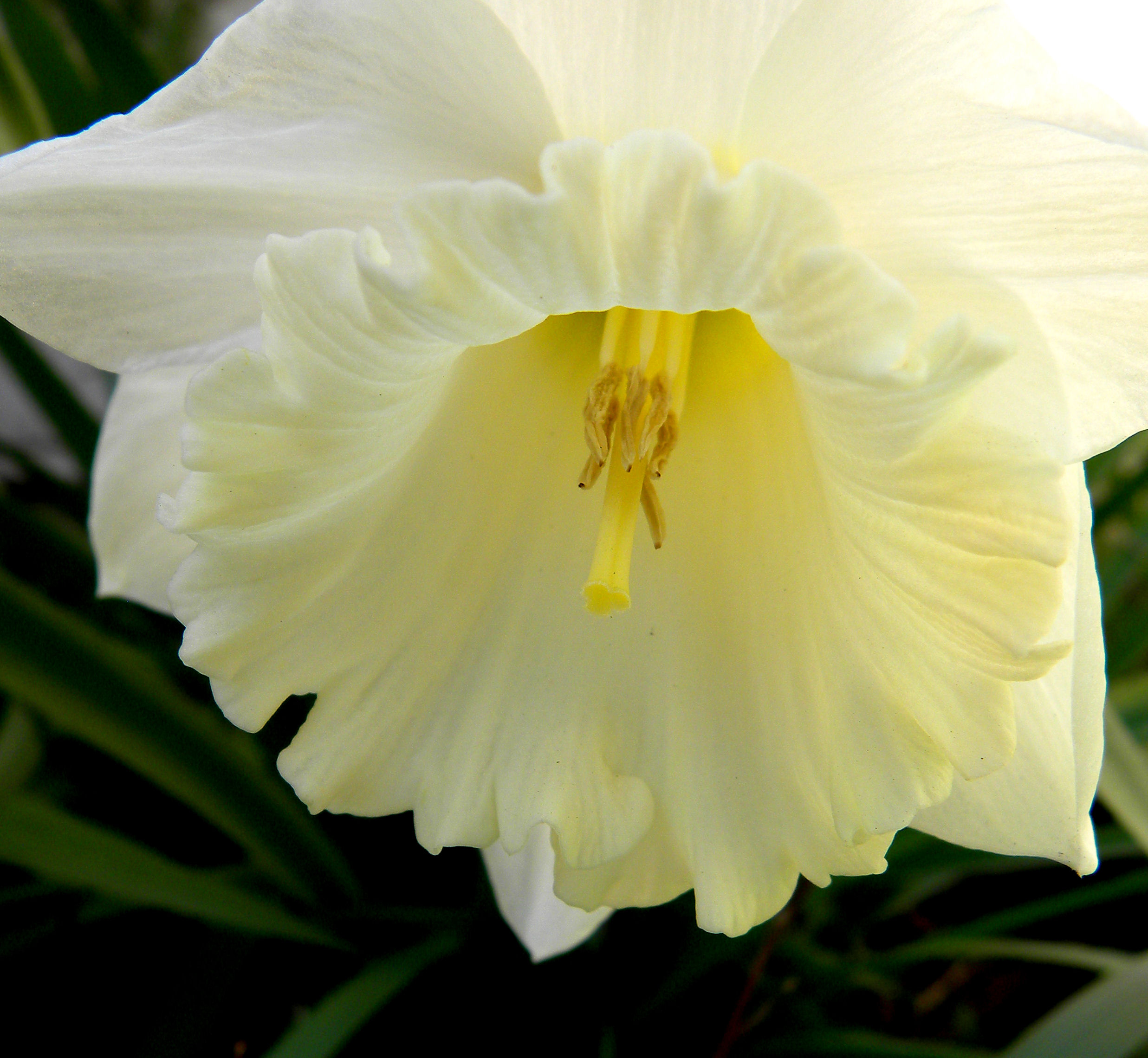
Mt Hood daffodil

Kafir lily

Freesias in the marjoram

OK, on to the food section.

Stuffed breast of lamb

We bought a side of lamb a couple of years back, and still had this cut in the freezer, a breast of lamb. I had the butcher cut a pocket in it when we had the meat processed. Finally got around to cooking it. Stuffed it with bread stuffing with onions, celery, raisins and one of the last apples from our fall harvest. I put diced potatoes with rosemary from the garden around the edge, and roasted the whole thing. Delicious.

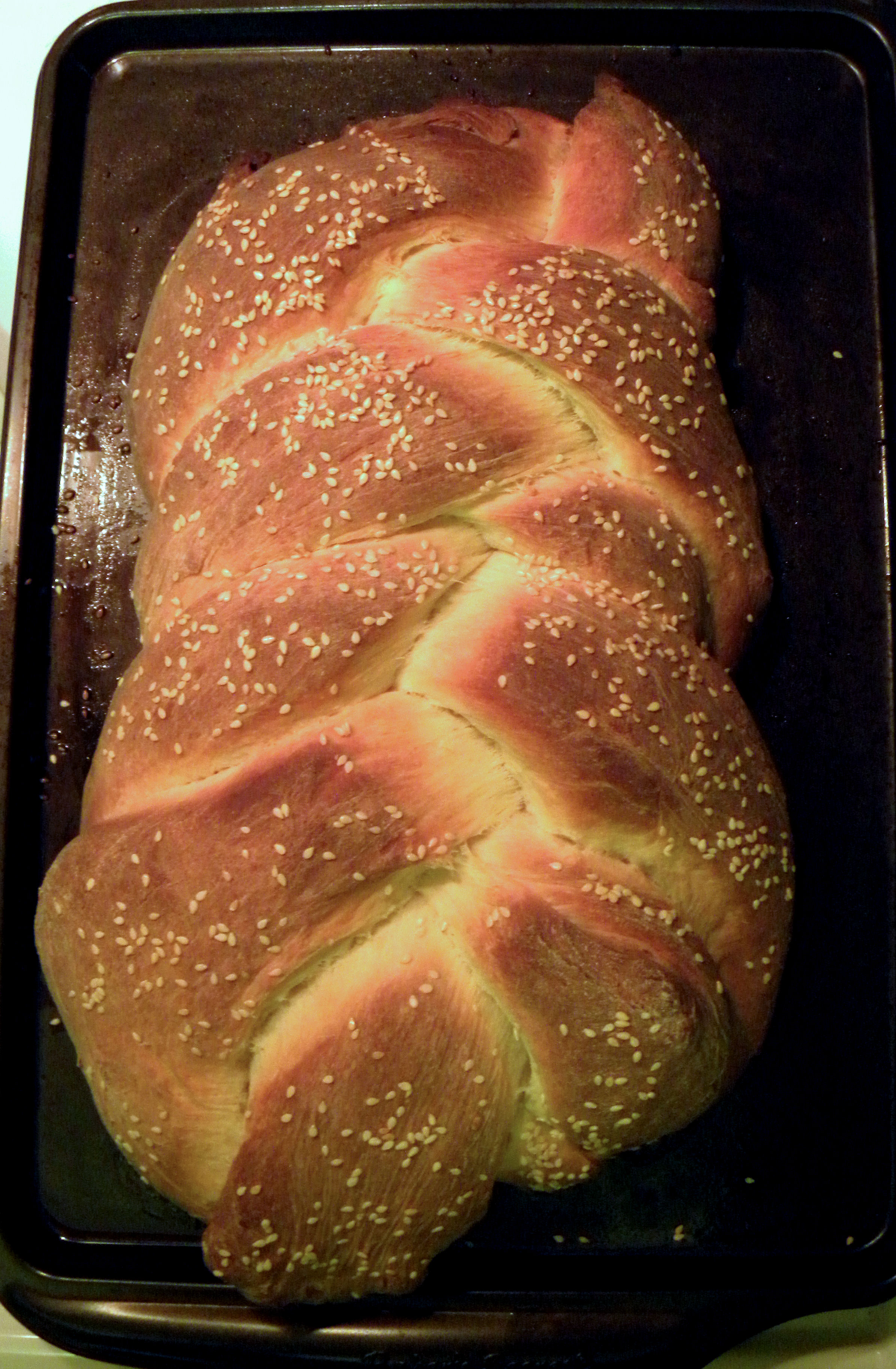
This beautiful loaf of challah bread uses two eggs from our chickens. I make the dough in the bread machine, braid it, and bake it in the oven. Really easy.

I didn’t take pictures of my harvest this week. Indeed, not for many, many weeks now. But I have had harvests. I’m getting citrus and avocados galore. I’ve been making sorbets with the citrus and they’re coming out really good. I mix orange, lemon and lime juice for the sorbets.

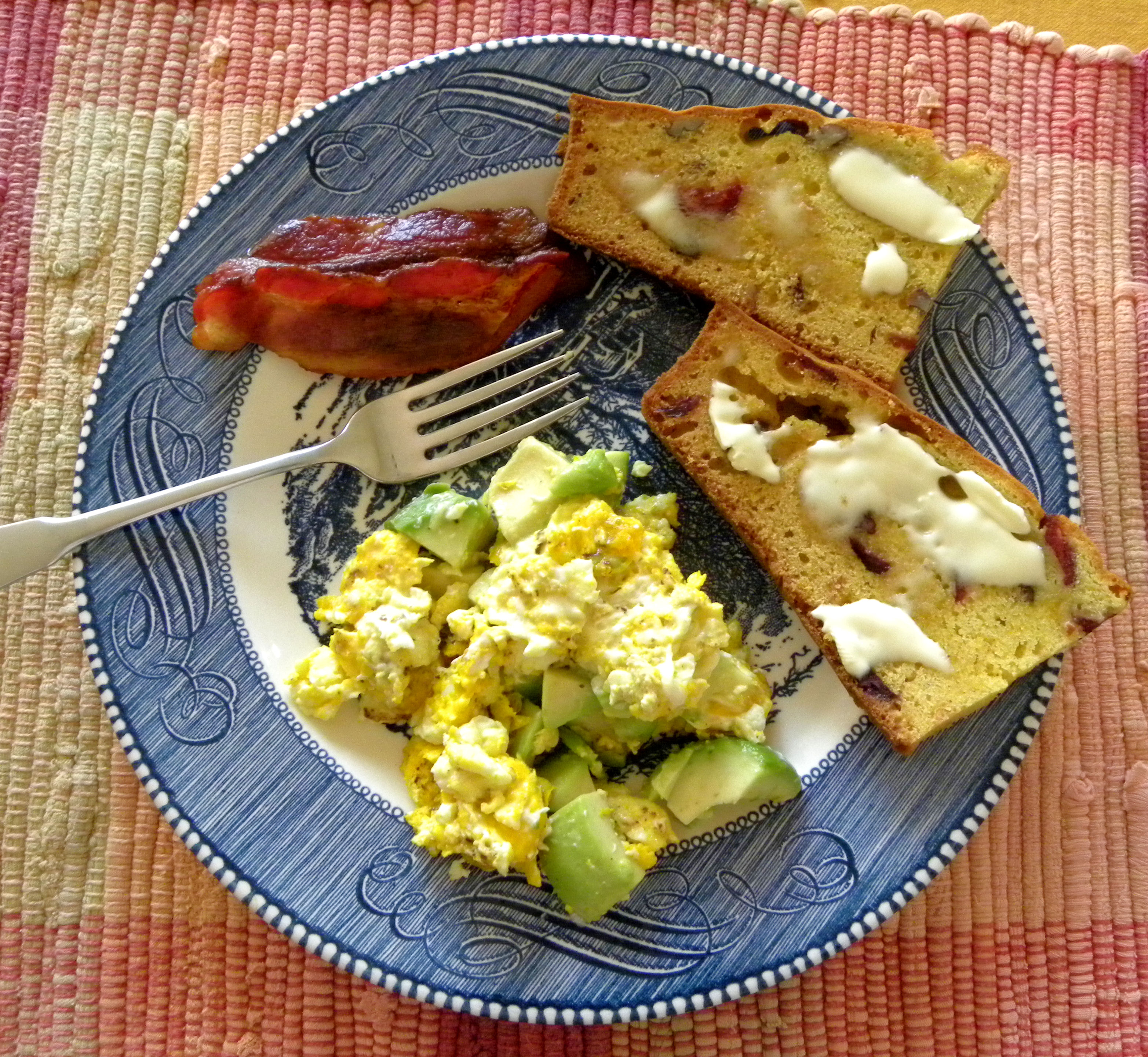
Some oranges went into this pecan-cranberry orange cake shown below. It doubles as dessert or a breakfast bread, since I didn’t bother to ice the cake. An avocado and some cream cheese went into scrambled eggs this morning. Thank you, chickens, for the eggs.

Breakfast this morning was so late that it turned out to be brunch. Homegrown eggs with homegrown avocado and store-bought cream cheese can't be beat.

On to the harvest for this week and last.

Harvest Monday Feb 27-March 11, 2012

FRUIT

12 oz avocado

4 oz lemon, Meyer

5 oz limes

17 oz oranges, Navel

Subtotal 38 oz. or 2 lbs 6 oz.

VEGETABLES

8 oz broccoli

0.5 oz green onions

3 oz kale, Lacinato

1 oz parsley

4 oz snow peas

Subtotal 16.5 oz or 1 lb 0.5 oz

TOTAL PRODUCE 3 lbs 6.5 oz. for two weeks

EGGS 8 + 12 = 20 eggs for two weeks


Posted in Uncategorized | Tagged , , , , , , , | 8 Comments

San Jacinto Wildlife Area

Vic and I drove to the nearby San Jacinto Wildlife Area near Hemet and Moreno Valley on Sunday. There have been reports of a rare gyrfalcon there this winter. The bird is definitely there, but it has eluded us so far. We’ve tried twice with no luck. Others have gone eight times and also not seen it. However, it is a good place to photograph other bird species. Here are a few shots from our Sunday trip.

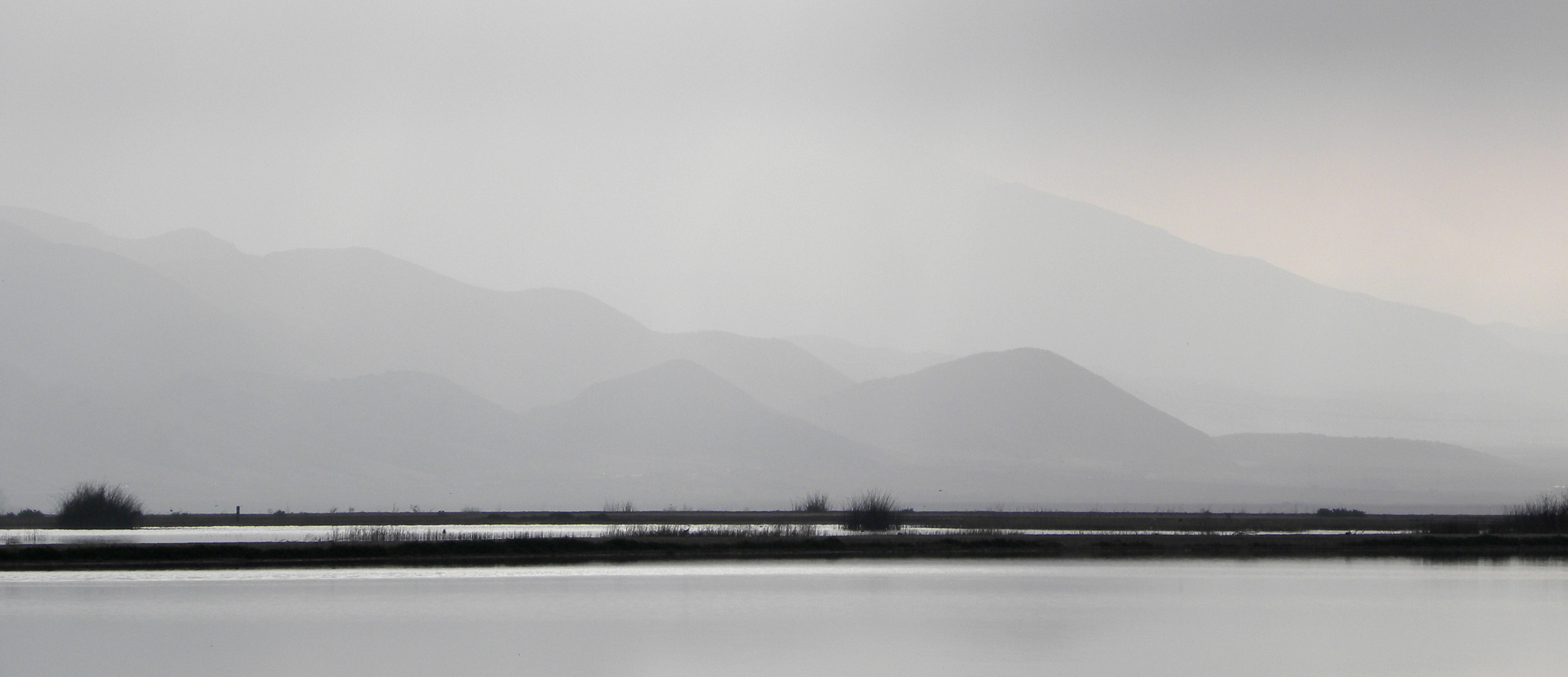
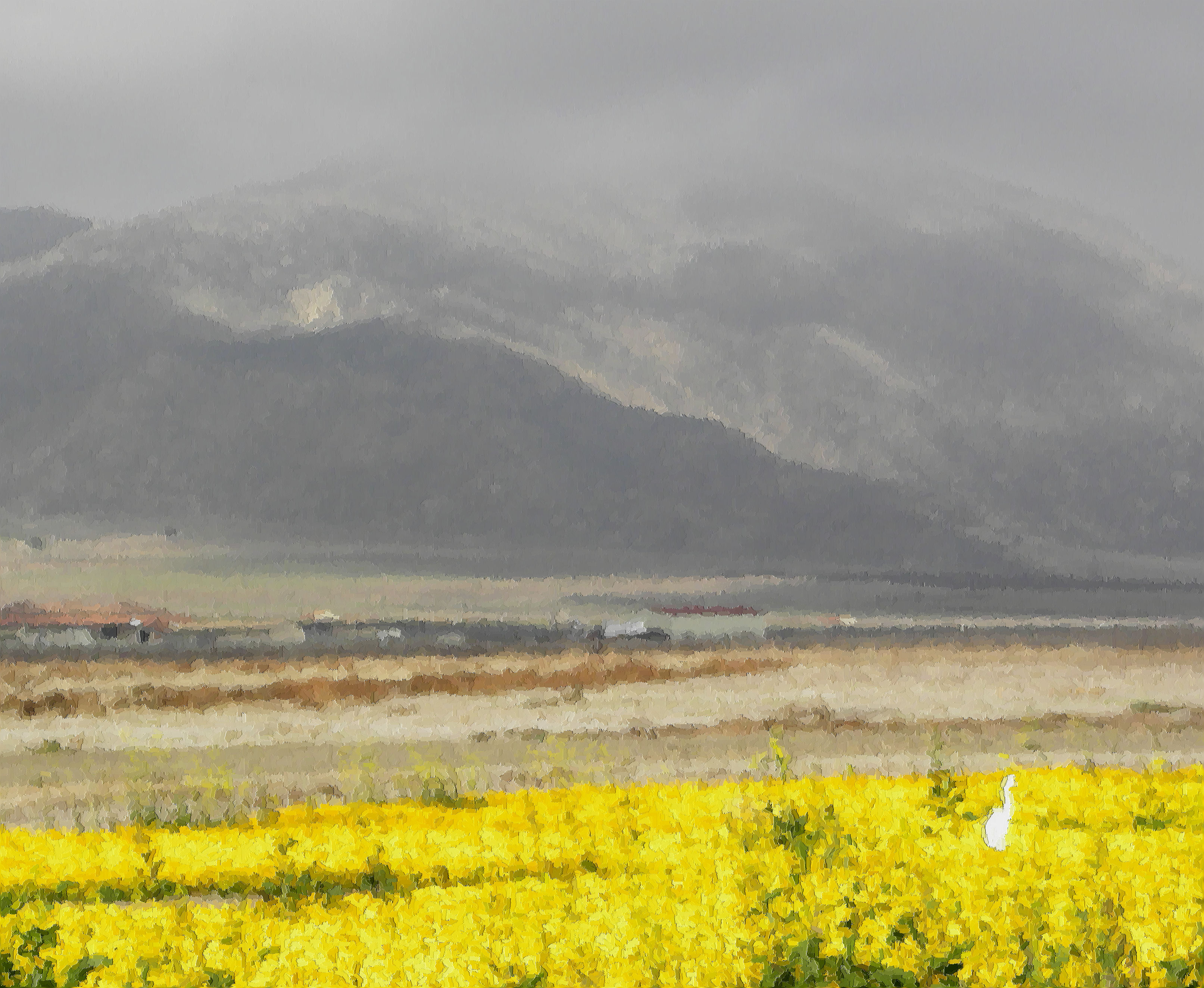
Morning mist at San Jacinto Wildlife Area, looking SE. Yes, this photo is in color, but it came out as a monochrome.

The hills east of San Jacinto Wildlife Area are shrounded in morning mist. Palm Springs is on the other side of the hills to the east.

Burrowing Owl

I played with this landscape view to the west and turned it into an "oil painting" with Paintshop Pro.

Greater Yellowlegs

Intermediate color phase first year redtail hawk.

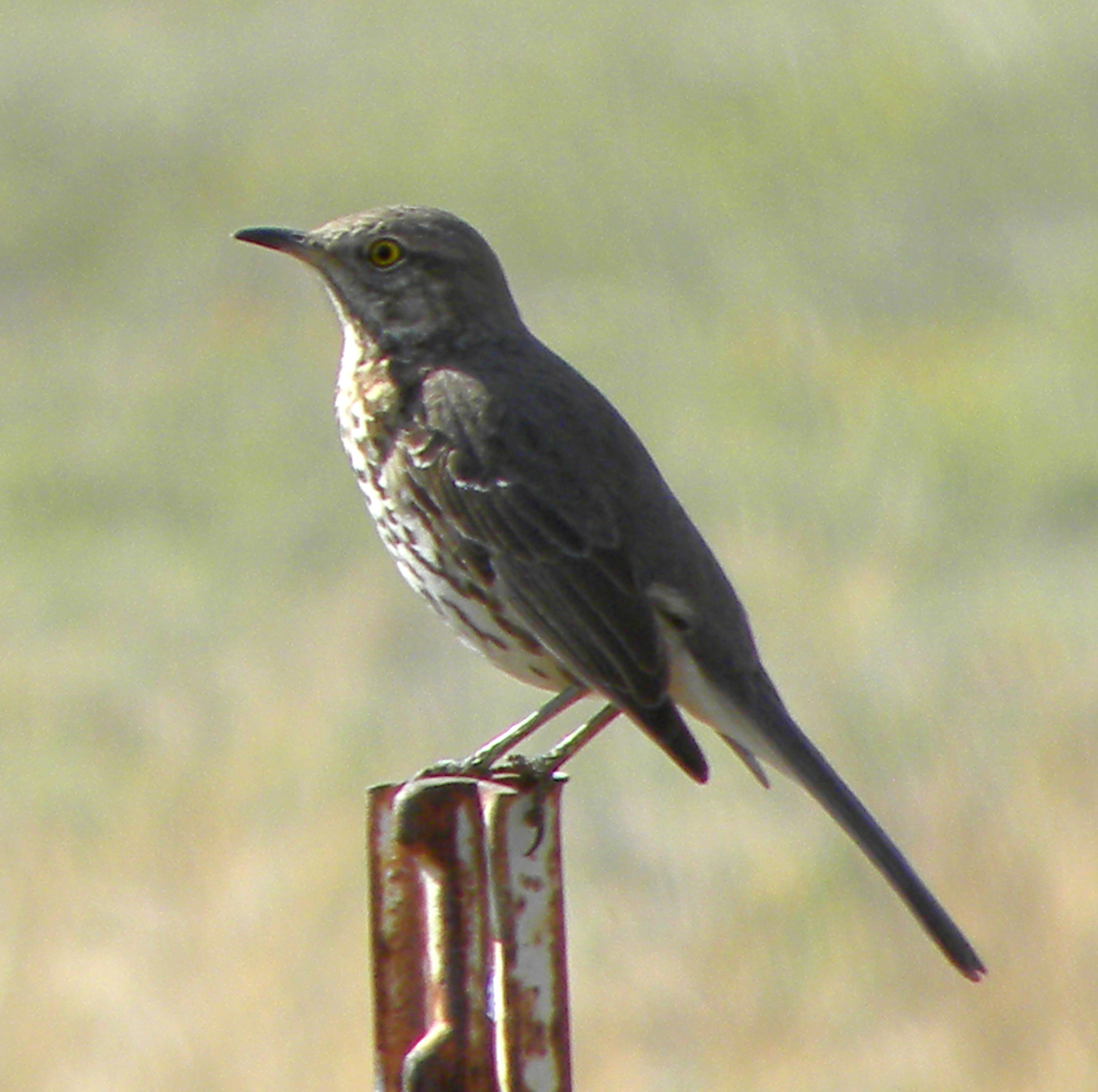
Sage Thrasher

Sage Thrasher

Really bad photo of a Canyon Wren in the distance.

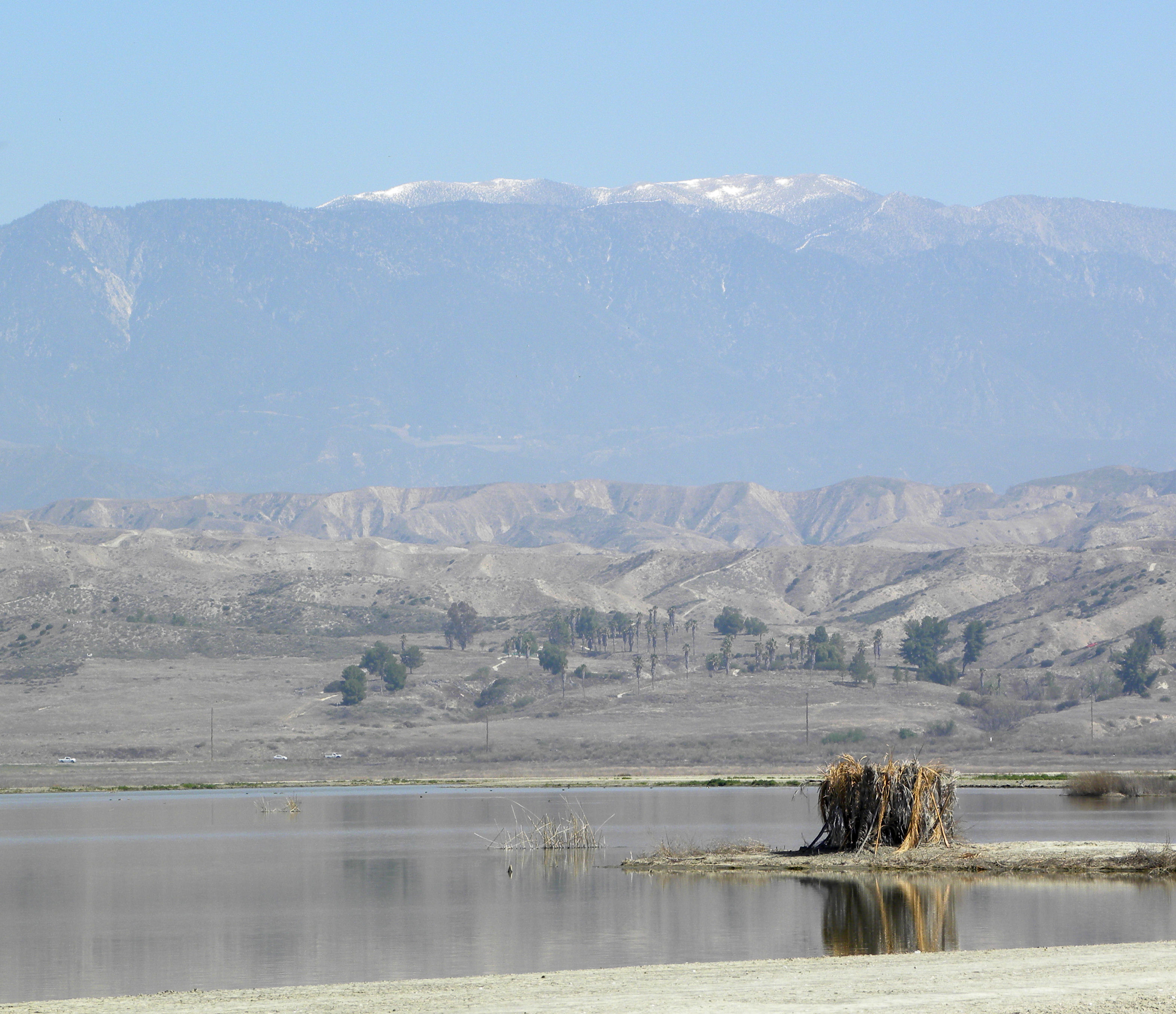
By noon the fog had lifted, showing snow on Mt. San Jacinto. Palm Springs is on the other (east) side of the mountains.

This shot looking east shows snow on Mt. San Gorgonio. Palm Springs is on the other side of the mountains just to the right of the mountain range shown in this photo. The fog lifted, but the gyrfalcon remained out of our sight. We left for a lunch of Mexican food nearby in Moreno Valley.


Posted in Uncategorized | 4 Comments

Squamous cell carcinoma — why I haven’t planted my spring garden yet.

I have debated whether or not to make this post, because (1) the images are really graphic and (2) I’m reluctant to make my medical information public.

But if this can help educate people to the dangers of squamous cell carcinoma, and the hazards of relying on an HMO for medical treatment, then it will have been worth it. I’m putting the photos at the very end so as not to gross you out too much.

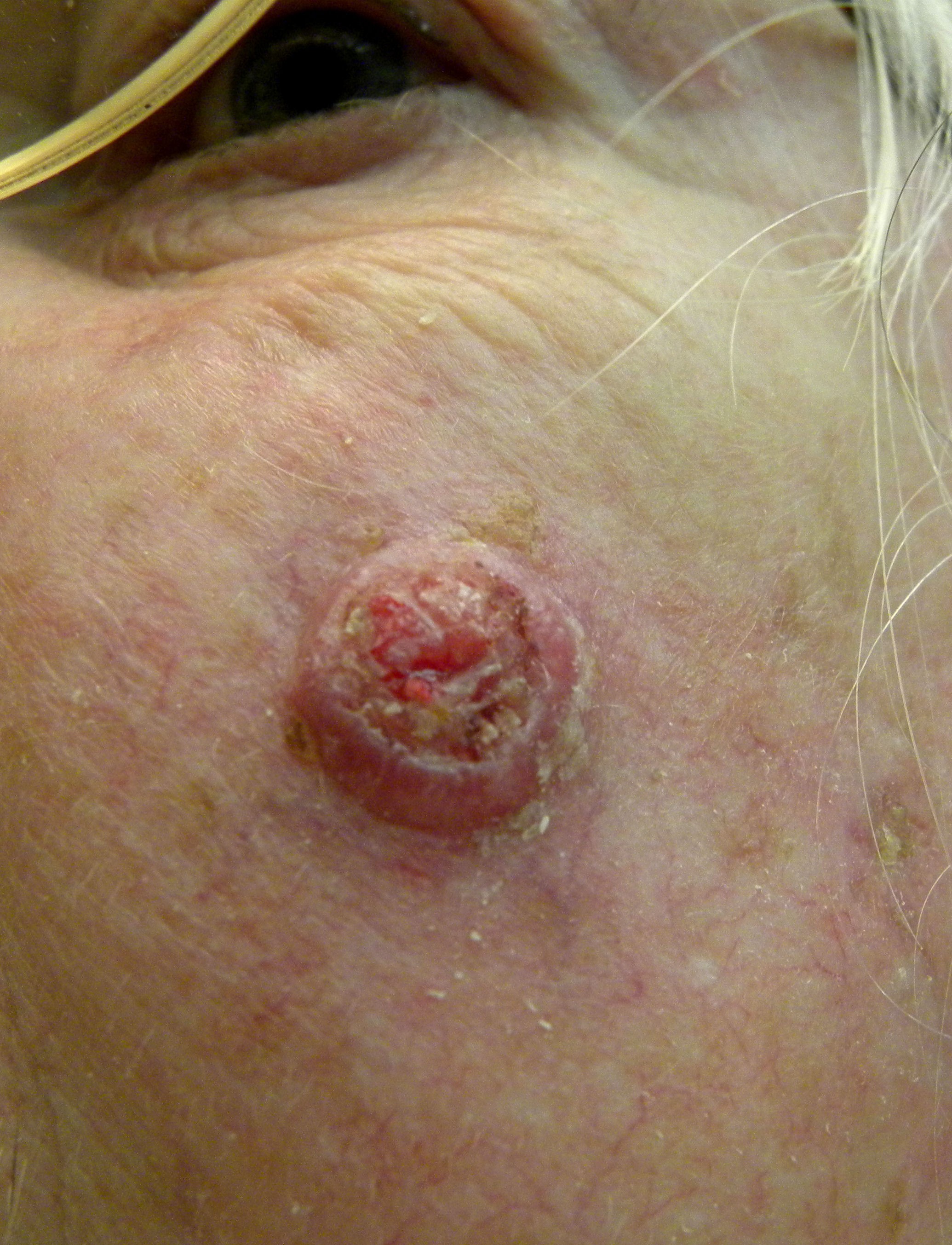
I noticed a “small pimple” on my left cheek in early December. By three weeks later, I was sure that it was no pimple. It was growing like gangbusters with a scaly surface. It looked like a little red crusty volcano. And at the rate it was growing, I wanted it gone yesterday.

I called my primary care physician on December 27 and asked for an immediate referral to a dermatologist. Protocol with my HMO is that I am supposed to see the primary care physician first, but I had no time to waste. Fortunately, my primary care doctor knows that I can recognize a squamous cell carcinoma, and she gave me an immediate referral. That was one week shaved off of the process of getting health care in today’s managed HMO system. I got the first available appointment with the HMO dermatologist, which was a bit over a week later.

In retrospect, I would have been better off bypassing my HMO and calling a dermatologist who did Mohs surgery. I would have had to pay out of pocket, but I would have gotten my cancer taken care of while it was still small instead of being given the run around from one doctor to another and another and another. As it is, I’m left with a scar on my face that is over two inches long. But I’m getting ahead of my story.

The HMO dermatologist did a shave biopsy, which doesn’t necessarily remove the cancer. By the time I saw her around January 6, my cancer was already 6mm by 11mm. I wish that she had cut a bit deeper and a little wider and taken it all, but my HMO won’t pay for removal without a biopsy confirming that it is cancer. Well, I knew it was cancer, and so did the dermatologist. She even subtyped it as keratoacanthoma type of squamous cell carcinoma, which is a very fast-growing and aggressive cancer. She said to return in a month.

The cancer looked gone after the biopsy. But the wound didn’t heal, a characteristic of cancer. I was forced to deal with twice daily wound care that consisted of washing the open wound with hydrogen peroxide, applying antibiotic ointment, and covering it with a bandage.

At the first sign that it was coming back–and that didn’t take long–I called the dermatologist and asked for an immediate referral to the Mohs physician. I wasn’t about to wait a month to see her and then wait even longer to get an appointment with the Mohs surgeon.  The dermatologist had informed me at the time of the biopsy that my HMO doesn’t have any Mohs surgeons on staff and that I had to go outside the system for that type of surgery.The HMO pays for the surgery, of course, but it has to be with one of the Mohs surgeons that they contract with.

With the Mohs technique, the doctor does cryosections of the tumor and examines them under a microscope to make sure that all of the margins of the tumor are gone. She also looks at the base of the tumor, the part opposite the surface, to make sure that she got all of the “roots.” Tumors can send long “fingers” of cancerous tissue down deep into the normal tissue. If any cancer cells are left behind, then the cancer will return.

The HMO dermatologist gave me a referral to a Mohs surgeon dermatologist that my HMO contracts with for the surgery, but my HMO won’t pay that doctor to close the wound. I had to see a plastic surgeon within the HMO system for wound closure, which meant going to a different office in a different building later in the day, and getting yet another round of local anesthetic injections. Unbelievable.

My HMO decided that this wasn’t an emergency, and put me into the 5-day approval process. I straightened them out about that. I got immediate approval and shaved another week off of the time it took to get treatment.
Unfortunately, I had to see both of those doctors for consultations before they would schedule the tumor removal. That took a week. Scheduling the surgery took another week, and I was only able to get it scheduled that fast because of a cancellation. Meanwhile, the cancer cells were doubling every day and my biopsy site was not healing.

It was January 31 before I got the Mohs surgery, a month and a couple of days after my first phone call to my primary care physician. In the world of HMOs, that’s remarkably fast. Most people don’t get treatment until 2-3 MONTHS after the initial visit.

But by Jan. 31, my tumor was huge. The round incision to remove the tumor left a hole the size of a quarter in my face.  Note that this is only six weeks after this thing was large enough that I knew it was cancer, and three weeks after the biopsy had almost removed it all. Cancer can be very aggressive.

The plastic surgeon would later enlarge the opening into the shape of an ellipse so that the wound could be sewn shut without puckers. That’s why I ended up with a 2 inch scar. If I could have received treatment at the end of December, when I already knew that it was cancer, then the wound probably would have been no larger than my little fingernail.

Unfortunately, neither surgery went smoothly. During the first surgery, the Mohs surgeon hit an artery, which spurted all over the place. Hey, these things happen and that was no fault of hers. But it wouldn’t stop bleeding, so she had to suture the artery closed. Unfortunately, the nurse handed her sutures which were not dissolvable. Since these would stay below the skin, they had to be dissolvable. So the doctor took out the first set of stitches and put in a second set.

Meanwhile, the local wore off and she had to inject me again. Each round of injections was about 8 shots into my face around the tumor. Since there were two separate rounds of surgery (the first cut hadn’t gone deep enough and the doc had to cut down into the subcutaneous fat in a second round to get it all), and the anesthetic kept wearing off (I’m sensitive to epinephrine, can’t have it, and that is what helps the anesthetic last long enough to keep you numb the whole time) that meant that I had probably 40 injections into my face during the first surgery.

Finally, the first procedure was done. I went to lunch with a big bandage on my face while waiting for my appointment with the plastic surgeon. That’s when things really went bad.

Remember I said that I can’t have epinephrine? Well, the plastic surgeon didn’t remember and he used a local with epinephrine in it despite the fact that we had discussed the issue extensively on my consultation visit. I hadn’t had any epi in about 40 years. My older body reacted to it even more badly than my young one had. I began to feel bad before he had finished injecting my face. My heart started to race and I had trouble breathing. It was like the worst panic attack you can imagine.

I asked him if he had put epi in the anesthetic and he said that he had. I asked him to call the paramedics, because if I had a heart attack as a result, I knew that a plastic surgeon didn’t have the equipment or the knowledge to handle it. I also asked for my son, who was in the waiting room.

The doctor was in full panic mode. He knew he had screwed up, and seemed incapable of acting. The doctor was not taking my vitals, so I asked my son to take my pulse. It was 131 while I was lying down. My son asked the doctor to take my blood pressure. But the doctor didn’t have a blood pressure cuff! He had just moved to the new office and wasn’t unpacked. He didn’t even have any soap by the sink in the room where I was being treated. And he hadn’t had me put on a gown (I had to ask the office assistant for one), and in contrast to the first surgery, I had no surgical cap and no drape either. It was like Third World surgery.

By the time the paramedics arrived, I was pretty much out of it mentally. I had said goodbye to my son, because I thought I was dying.

Fortunately, I didn’t. The paramedics said that my blood pressure was 208/110, if I remember correctly. They did an EKG and found that I was not having a heart attack. They wanted to take me to the emergency room anyway though because BP that high is stroke city. But my body was metabolizing the epinephrine, and my pulse was dropping. My blood pressure fell to 180/100 (more or less, my mind wasn’t working right at the time and I can’t remember) while they were still there.

I had already had so many injections to my face that I wanted this over with, so I declined to go to the ER. And God only knows how long it would have taken to get another appt for wound closure. I couldn’t go around with that big hole in my face. The paramedics strongly recommended that I go as soon as the procedure was finished.

Well, the plastic surgeon was a basket case. My son and I had to calm him down enough so that he was able to finish the procedure. I went to the ER afterward, had another EKG and was released with no treatment despite still having high BP. My BP didn’t drop back to normal until the next day.

My body was so stressed by this experience that I didn’t recover my strength until early March, really just a few days ago. I missed a month of work from being so wrung out physically.

Oh, and that wasn’t all of it. I had the stitches removed a week after the surgery, but the plastic surgeon left one in. I had to go back a week later and have that one removed. He didn’t wear gloves, and I bled with stitch removal. This is not proper standard of care. Now I have to ask myself could this guy be HIV positive or have hepatitis. And it feels like he might have used a non-dissolvable suture at the very end of the wound. So my nightmare still isn’t over. Honestly, I’m getting stressed all over again just thinking about this.

Here are the photos.

This is my squamous cell carcinoma about three weeks after the biopsy, and on the day of surgical removal. The tumor had looked gone after the biopsy. Note the raised appearance. The cancer went down into the tissue of my cheek as well as outward.

This is the hole that was left in my cheek after the removal of the tumor. Note that I am wearing a surgical cap and a gown. My wound was draped during the surgery, and I was in a surgical suite in the Mohs dermatologist's office. The blackness is due to electrocautery of the open wound. I was a bit swollen and bruised, but no, it didn't hurt. Amazingly I was able to have lunch with no problem.

This is what my cheek looked like after closure of the incision while I'm still on the table. Note how pale I am. I have not manipulated the color. I think I nearly died due to the reaction to the epinephrine. Also note that I am not wearing a surgical cap. The plastic surgeon hadn't even asked that I put on a gown. I had to ask the office assistant for one because I didn't want to bleed onto my clothes. There was no cap, no drape, no surgical light, just a bare office with a table. There wasn't even any soap by the sink! This place was just not set up to do surgery. At least the doctor wore gloves, but he didn't when he removed the stitches two weeks later, and I bled. That is not good.

So that is why I haven’t planted my spring garden yet. I have been utterly exhausted, I suspect from the trauma caused by the epinephrine.  I hope to get back to participating in Harvest Monday next week.

Fortunately, squamous cell carcinoma is cured with surgery. No need for chemo or radiation. But it will kill you if you don’t get it removed. If you have a suspicious spot, get it looked at.

Now I just watch and wait to see if the cancer is really all gone. So far, so good. The incision is healing very nicely.

Posted in Uncategorized | Tagged , , , , , , , , | 38 Comments