Harvest Monday–April 5, 2010

Once again, I’m doing Harvest Monday late. I went to Los Angeles yesterday with a friend to see the Renoir exhibit at the LACMA. We had a great time, but it didn’t give me time to post my weekly harvest.

I got a new rain gauge so I can keep track of what little rain we get here in southern California. Yesterday’s storm brought us a mere 0.15 inches of rain. That’s it for the week. But my rain barrels collect rain off the roof, which collects from a broad area. I was able to save many gallons of rainwater with even this little storm.
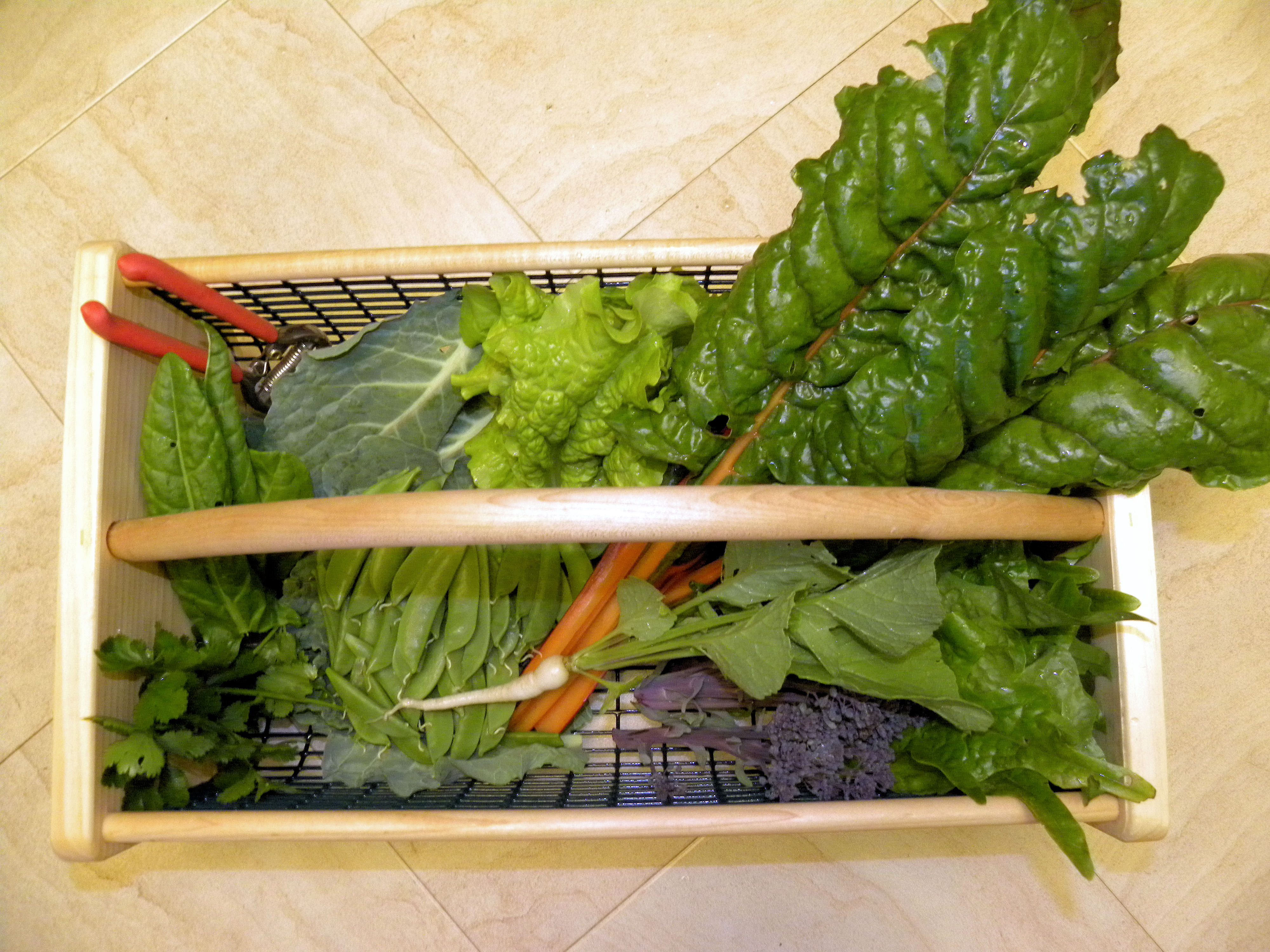
The harvest this week included chard, snap peas, cabbage leaves, purple broccoli, radishes and loads of lettuce.

Before I get to the specifics of this week’s harvest, let me catch you up with spring in our garden. The ginger has FINALLY poked its head above ground. The rhubarb has come up.
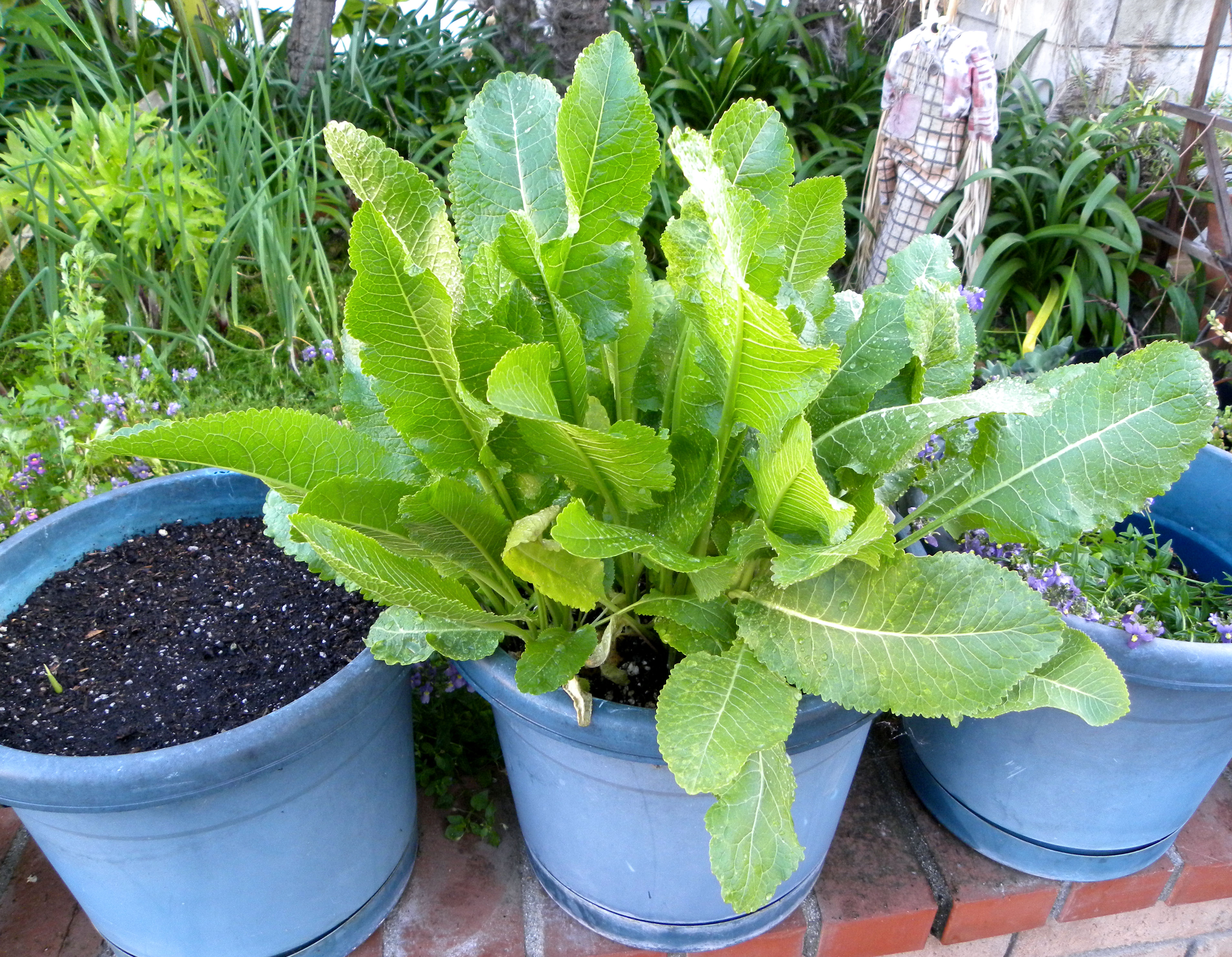
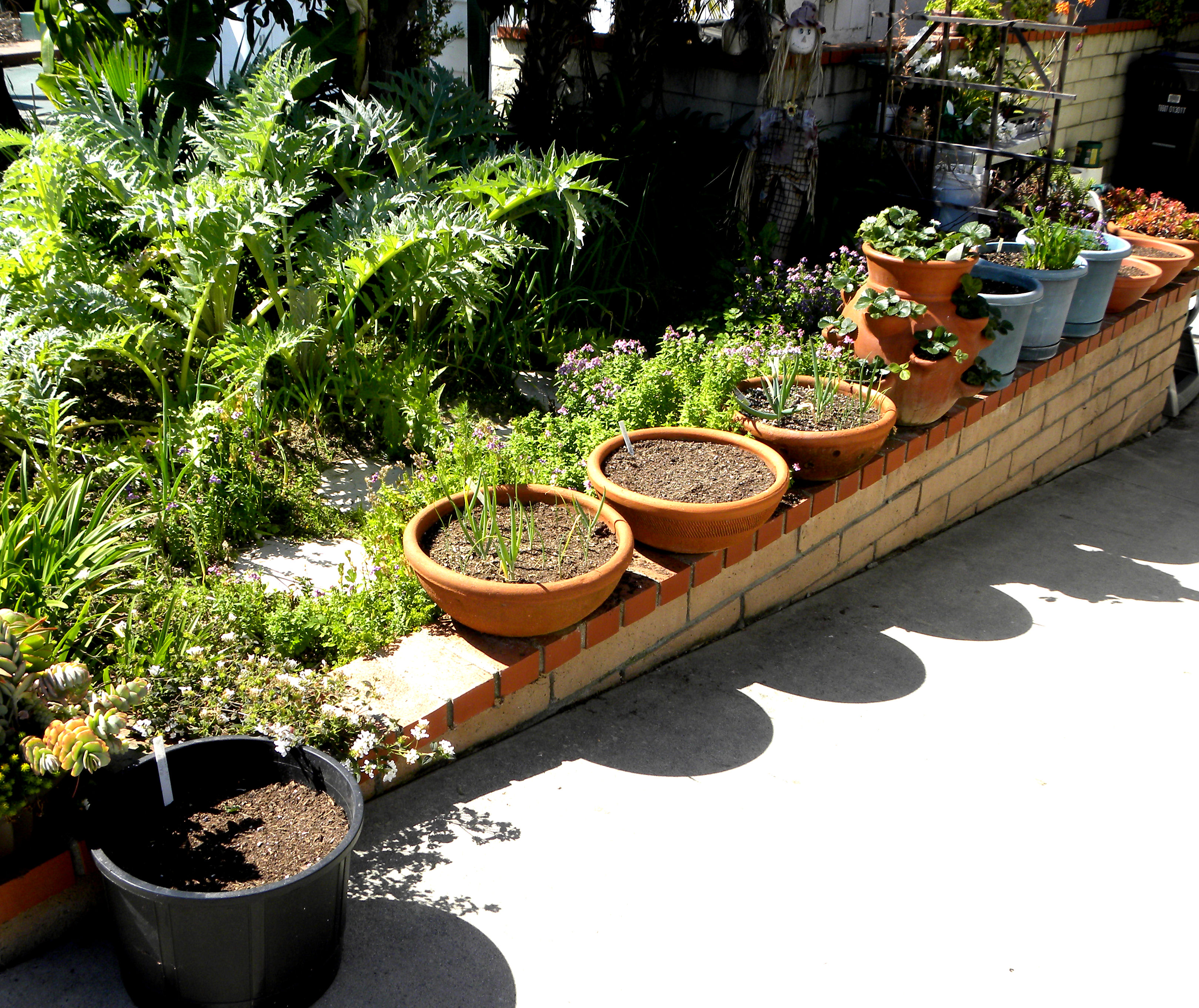
Growth on the horseradish in the center pot is rampant. Ginger in the pot on the left has just poked the first sprouts above ground. All three ginger roots have now sent up a plant shoot.

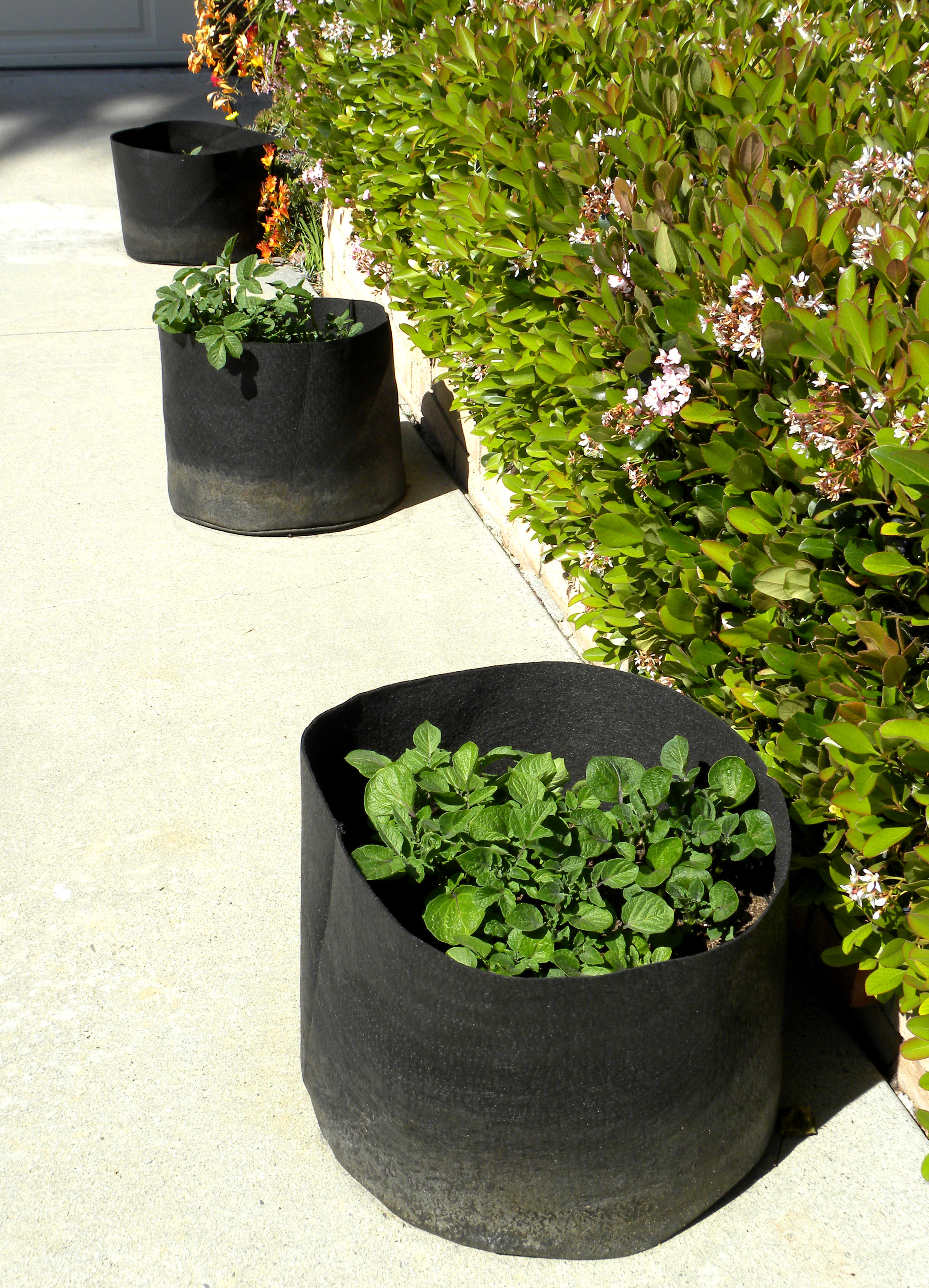
The blue potatoes in the first two Smart Pots are doing well, as are the sunchokes in the back left.
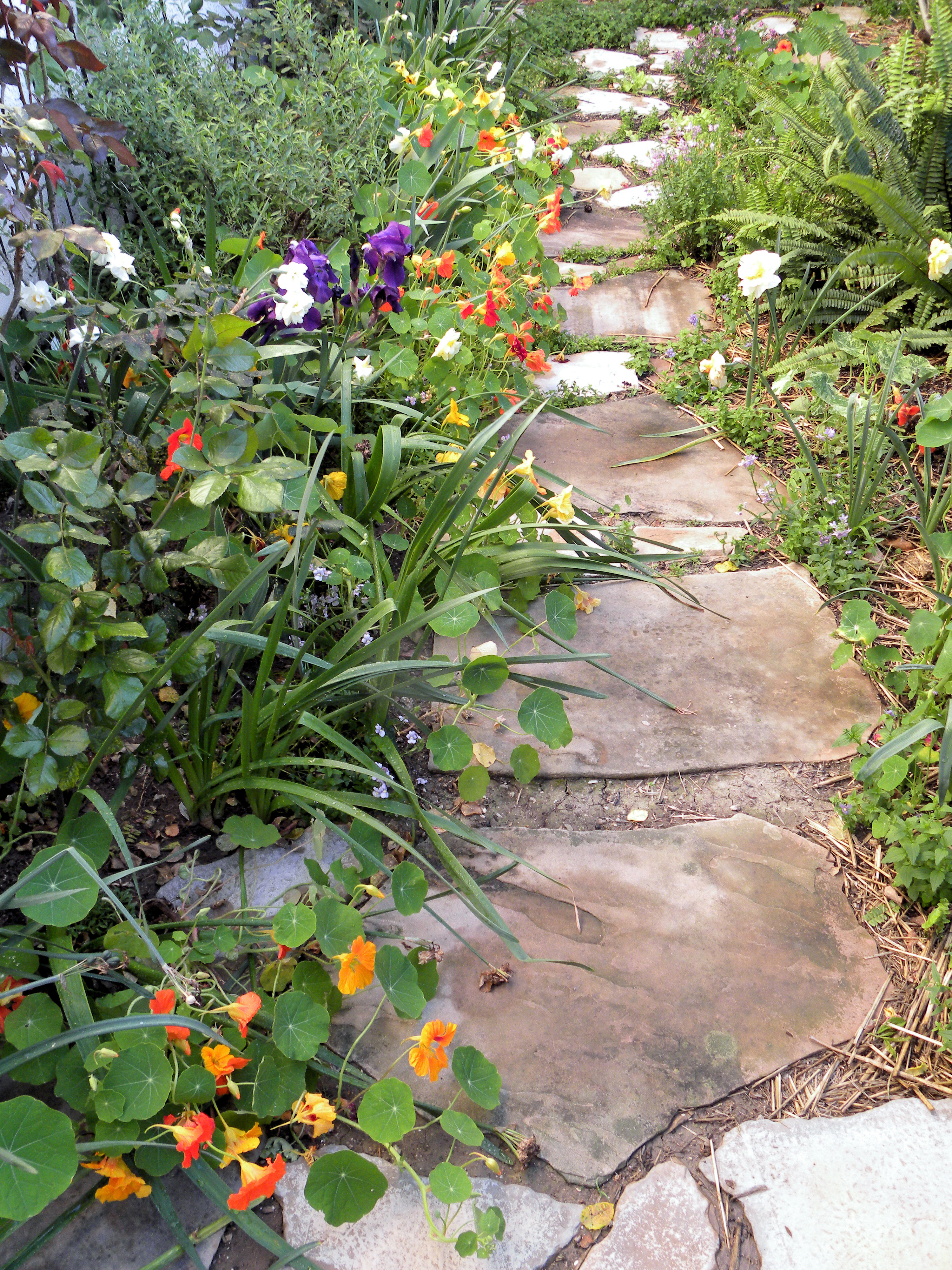
The stone path in back is beautiful this year with nasturtiums, irises, narcissus, roses, allysum, Nemesia and pansies.
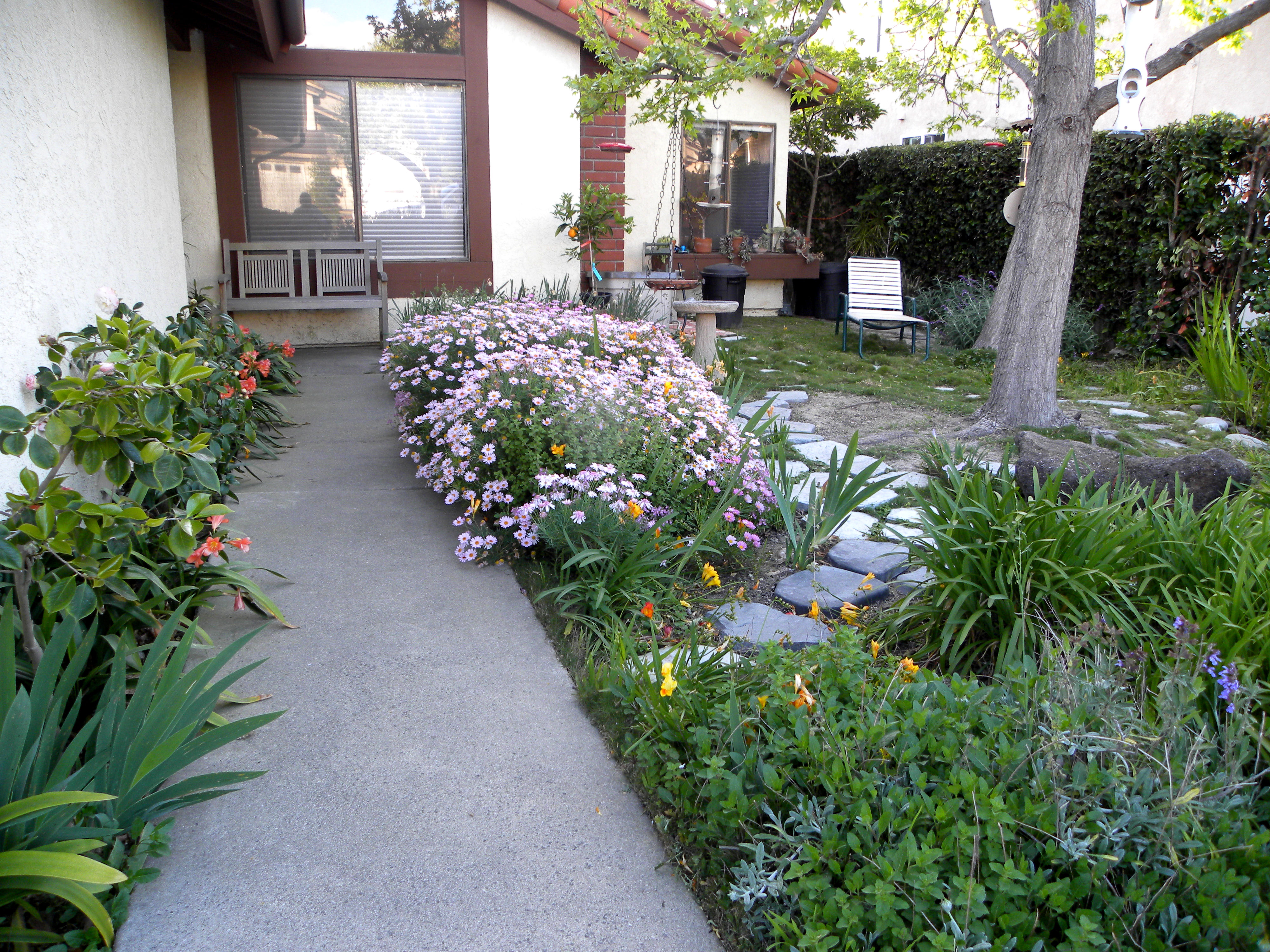
The beautiful Mt. Hood daffodils have finished blooming in front, but the pink cobbity daisies, orange Kaffir lilies, and camelias are blooming nicely.

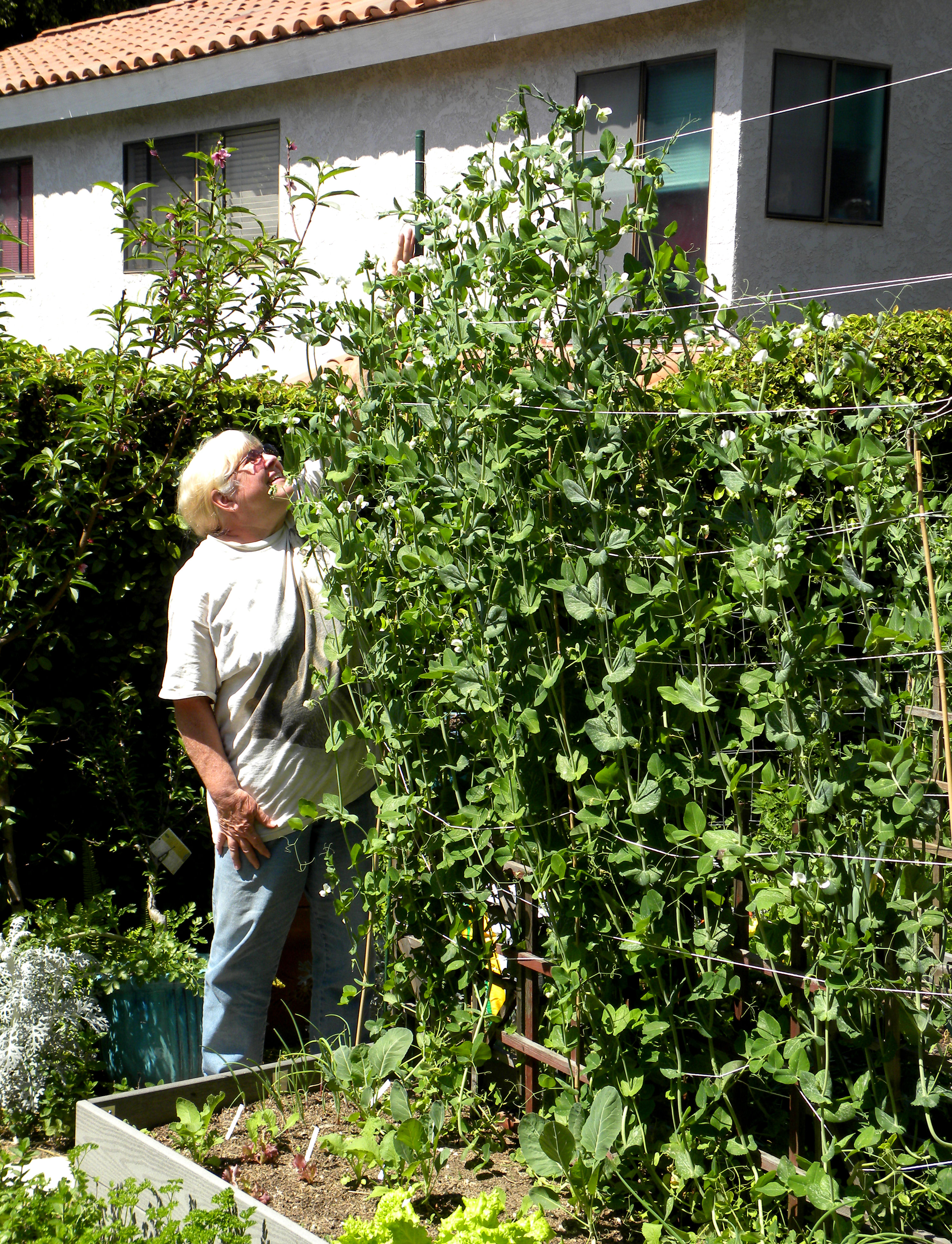
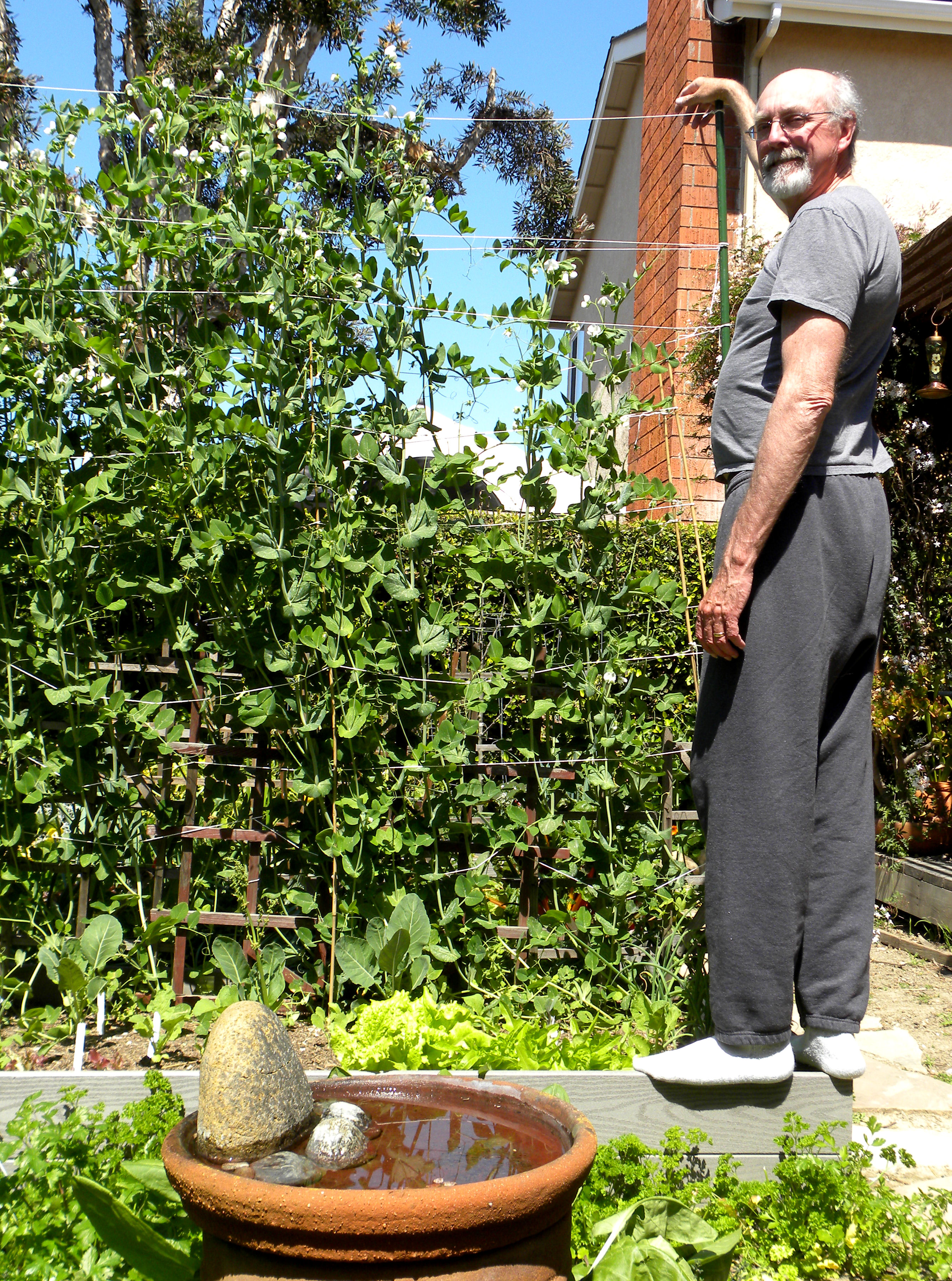
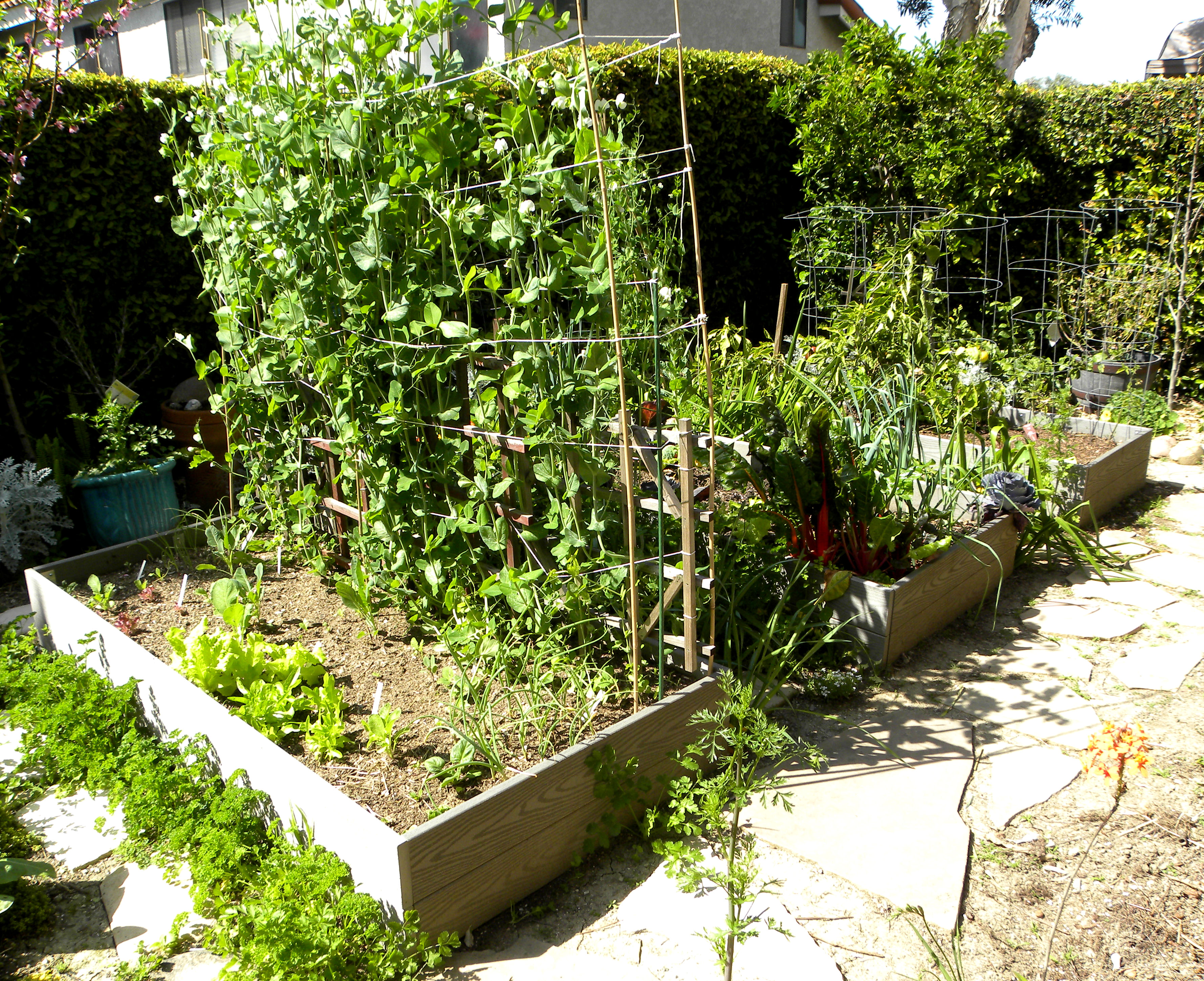
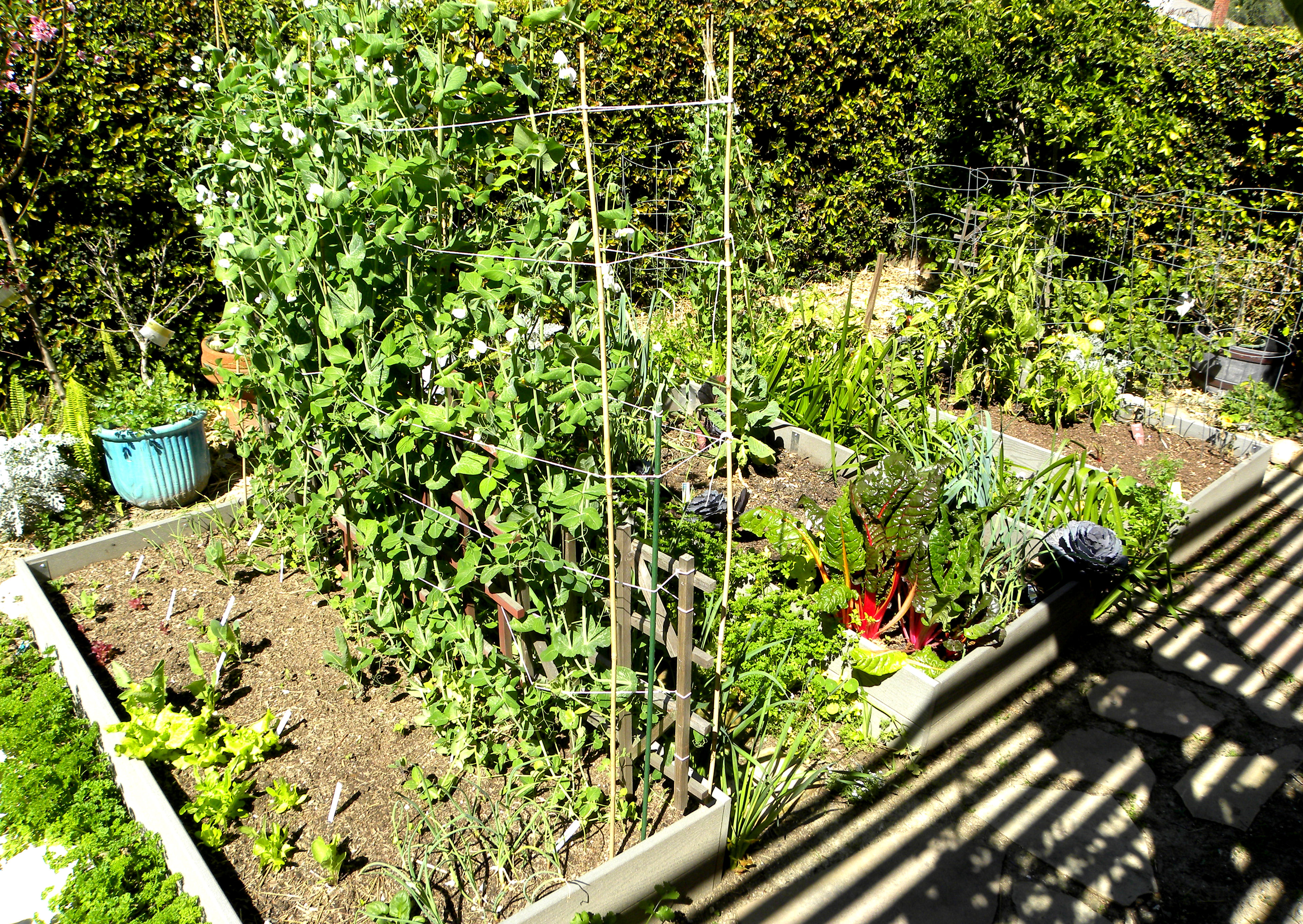
And the Super Sugar Snap Peas that ate Los Angeles are now a whopping 8 ft tall. Given that they’re in a raised bed, that means that I can no longer reach the peas to harvest them. I have no intention of pruning them. I’m thrilled that something in my garden grows so nicely.
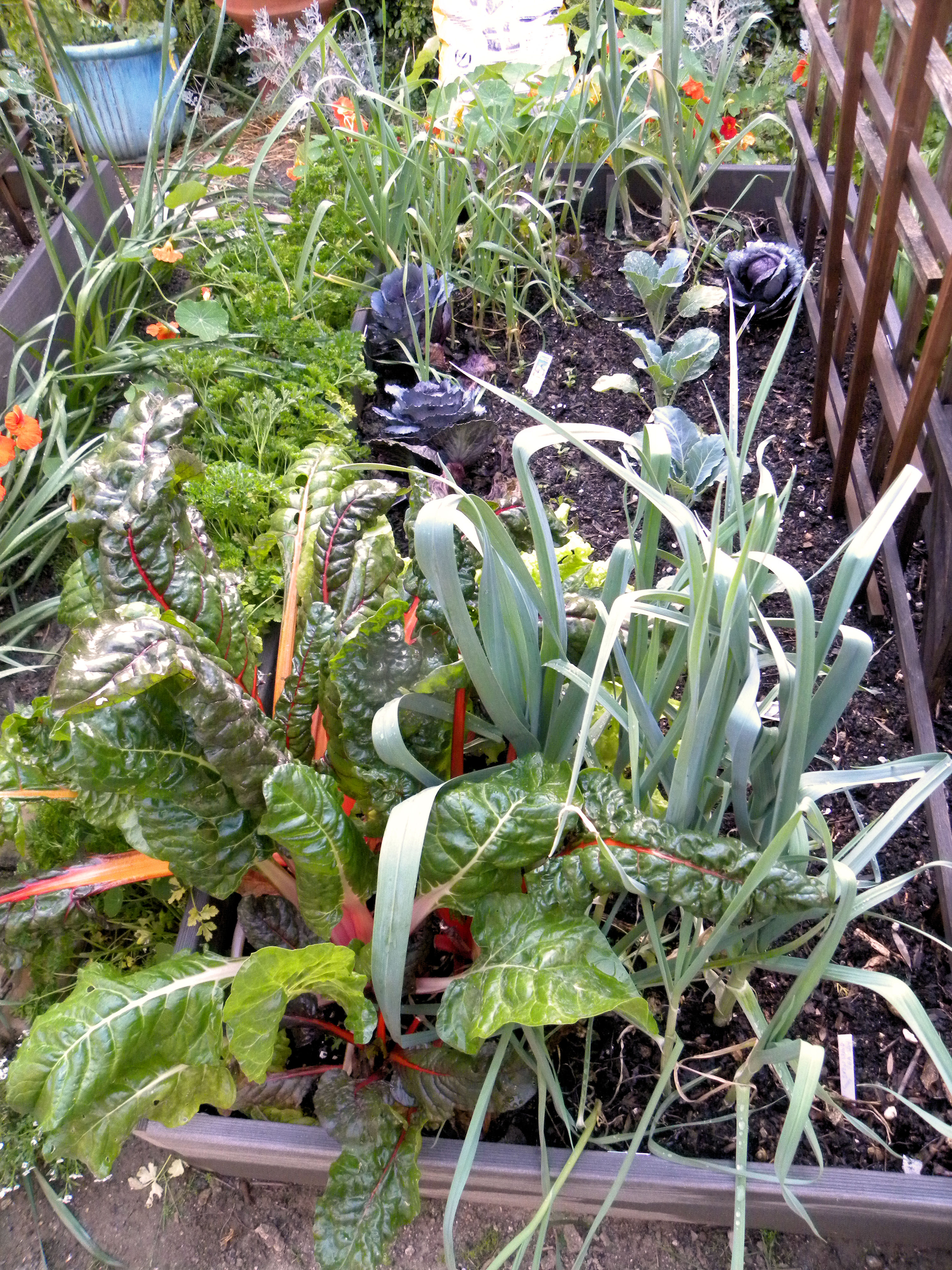
Raised bed #2 has chard, lettuce and leeks ready to harvest, plus garlic, red cabbage, white cauliflower, radishes, and Snow Wind Peas coming along.

I thought I was growing purple cauliflower, given that the tag on the transplants said "cauliflower," but it is clearly broccoli. No matter, it tasted fine in a stirfry.
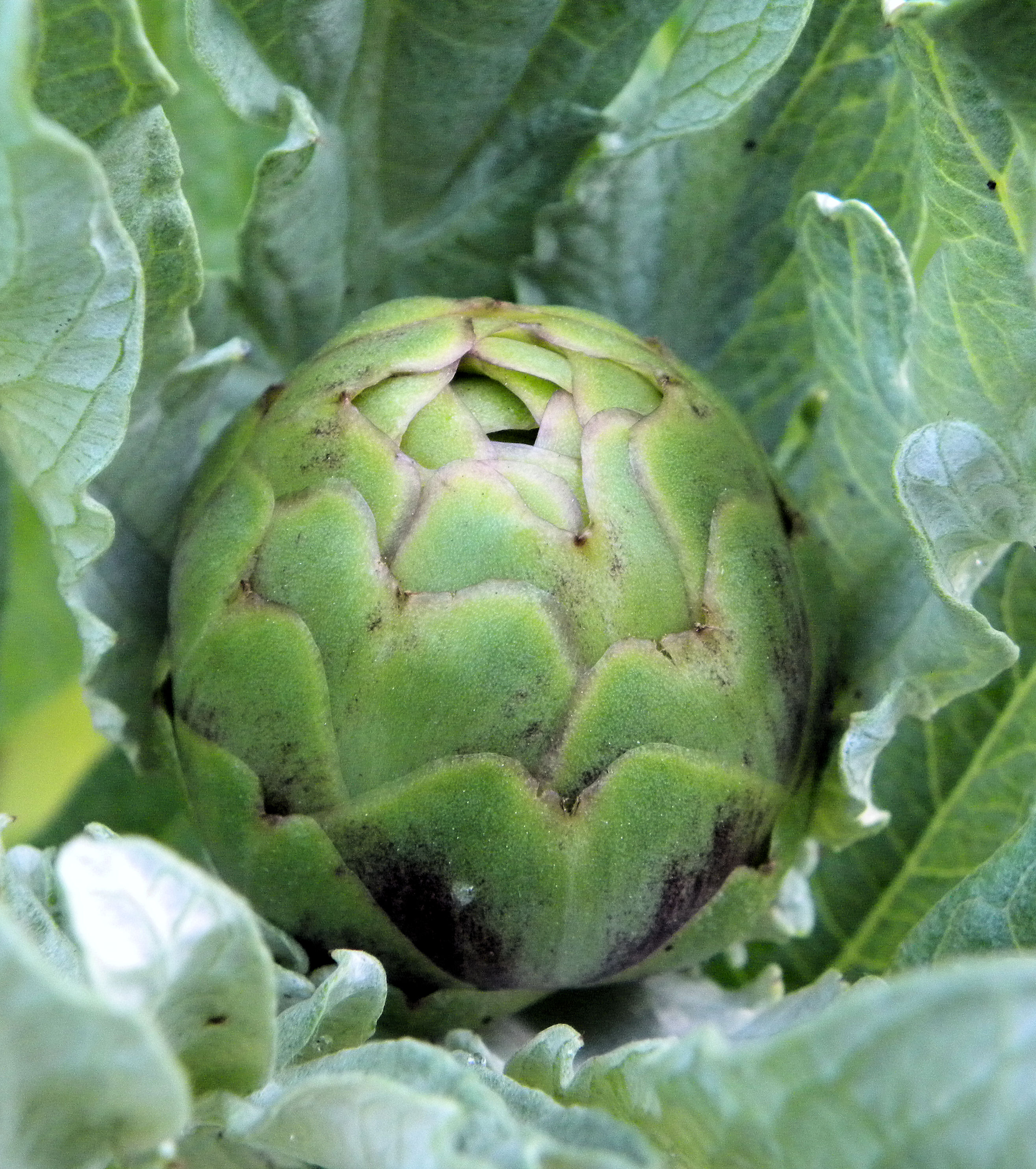
The first artichoke has formed and is growing. I wonder how many artichokes my eight plants will give me this spring.
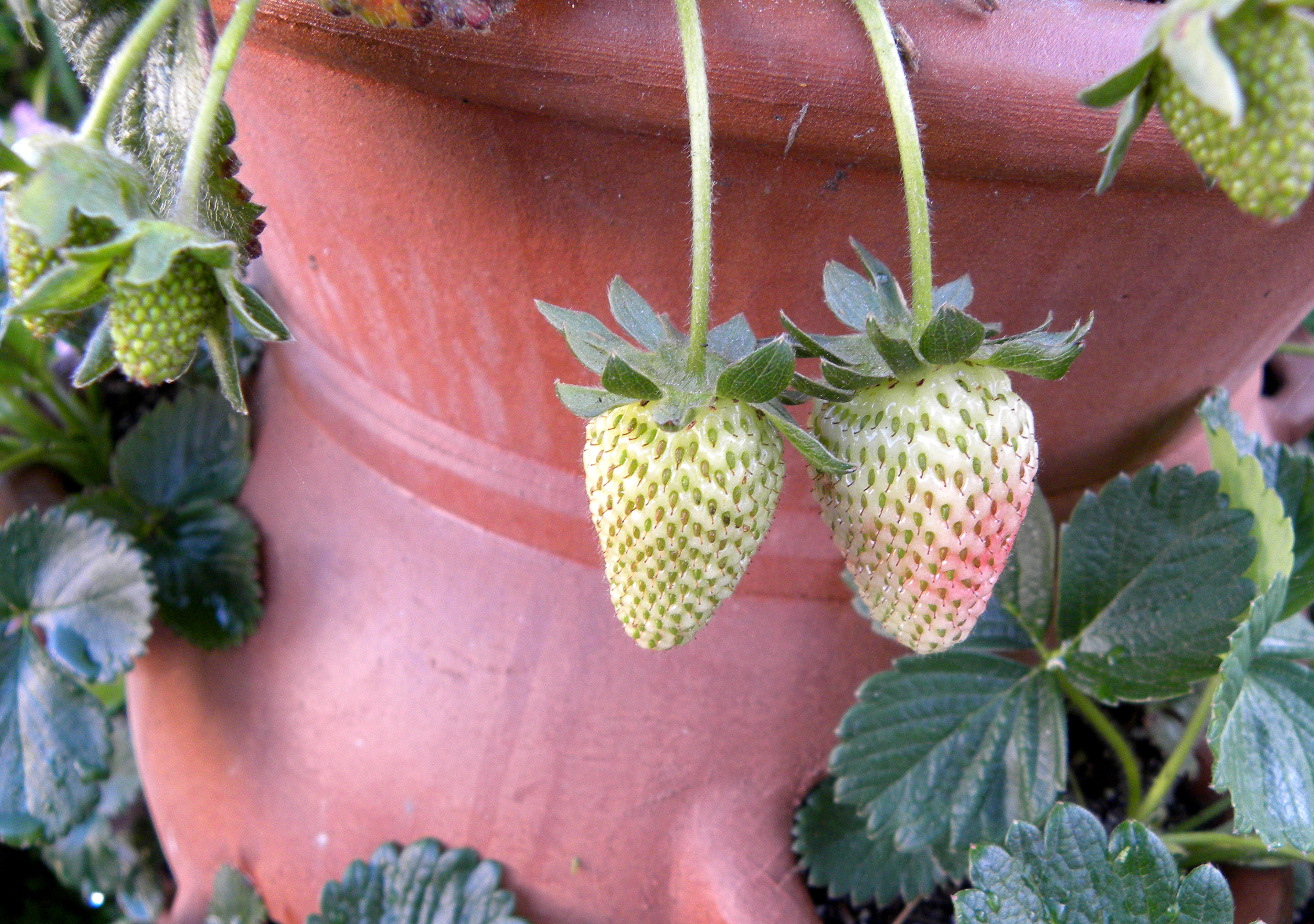
These strawberries have now turned red and are ready to pick today. How exciting. My first strawberries from a strawberry pot. It's working very well, with the promise of a small but ongoing harvest for some time to come.
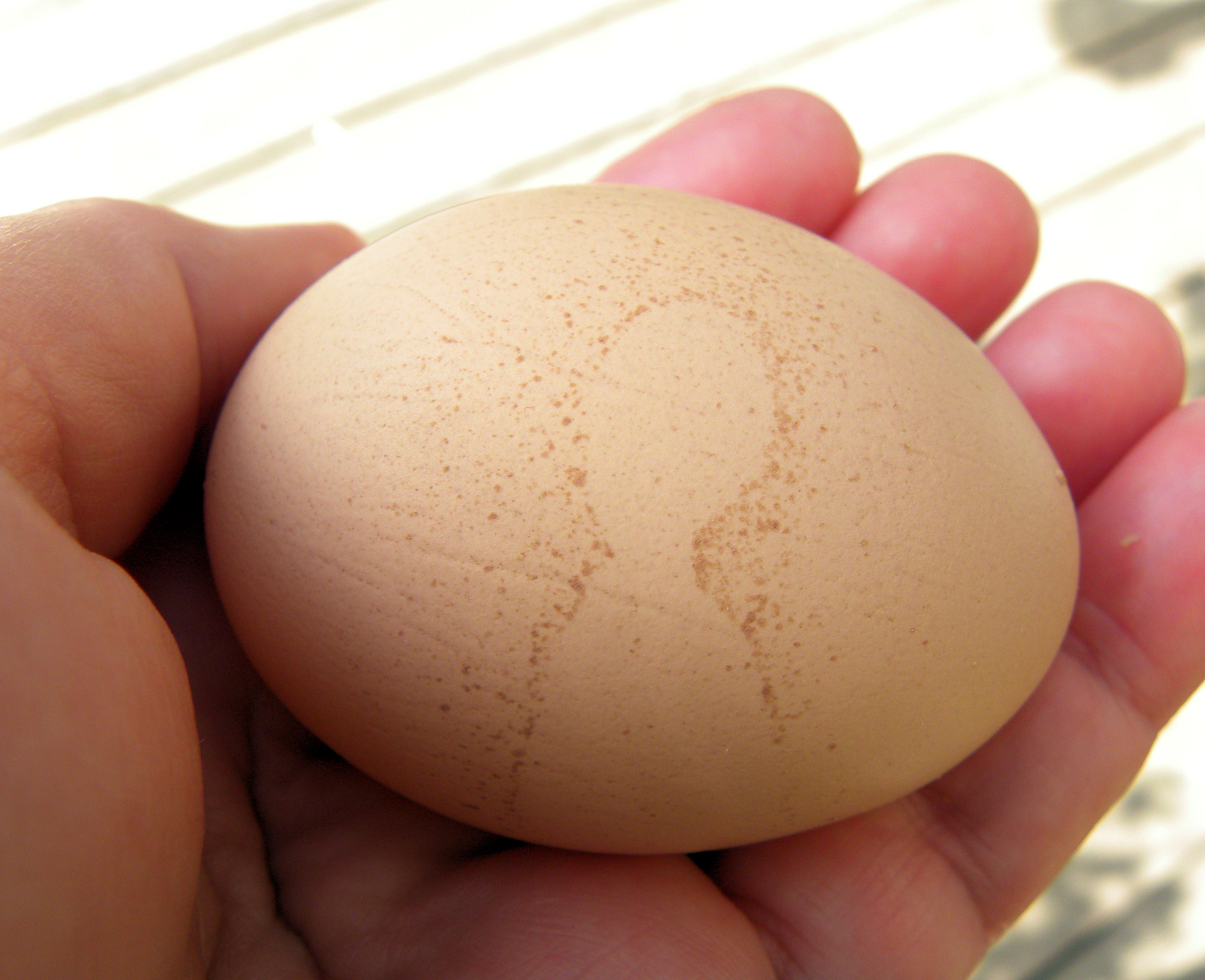
I had to share a photo of this egg with you. Henny Penny always deposits a pattern on her eggs. This one looked like, well, since it was laid the day before Easter, I call it a risen Christ egg. We ate it for a Seder dinner that we attended at a friend's house.

And with that lovely jumbo egg, I’ll get on to the harvest from last week.

14 eggs

13 oz. snap peas

3 oz. kale

6.5 oz. lettuce

2 oz. parsley

3 oz. (3) German white icicle radishes

2.5 oz. cabbage leaves

8 oz. chard

2 oz. purple broccoli

1 oz. sorrel and cilantro

TOTAL HARVEST: 14 eggs plus 3 lbs, 5 oz. produce

To see what other’s are harvesting this week, or to add your own, visit Harvest Monday at Daphne’s Dandelions.

Posted in Uncategorized | Tagged , , , | 4 Comments

Whole lotta shakin’ going on – 7.2 Easter earthquake in Baja California

Wow, what an exciting Easter we had, with a 7.2 magnitude earthquake.

Vic and I were visiting our son Scott in San Diego, so we were closer to the epicenter than we would have been at home. The shaking went on a long time, seemed like a full minute. Very noisy. It sounds like a freight train going by with rattling and banging. And of course you shake. Walls and windows bulge in and out and everything indoors and out rattles. Kinda exciting if there’s no damage.

Earthquake map for southern California minutes after the 7.2 Mexicali temblor.

Scott immediately logged onto his laptop to see where the epicenter was. It felt pretty close because of the duration and intensity. We were 140 miles away, with the epicenter in Mexicali. The automatically generated initial reports pegged the temblor at 6.9, but analysis by a researcher upgraded it to 7.2.

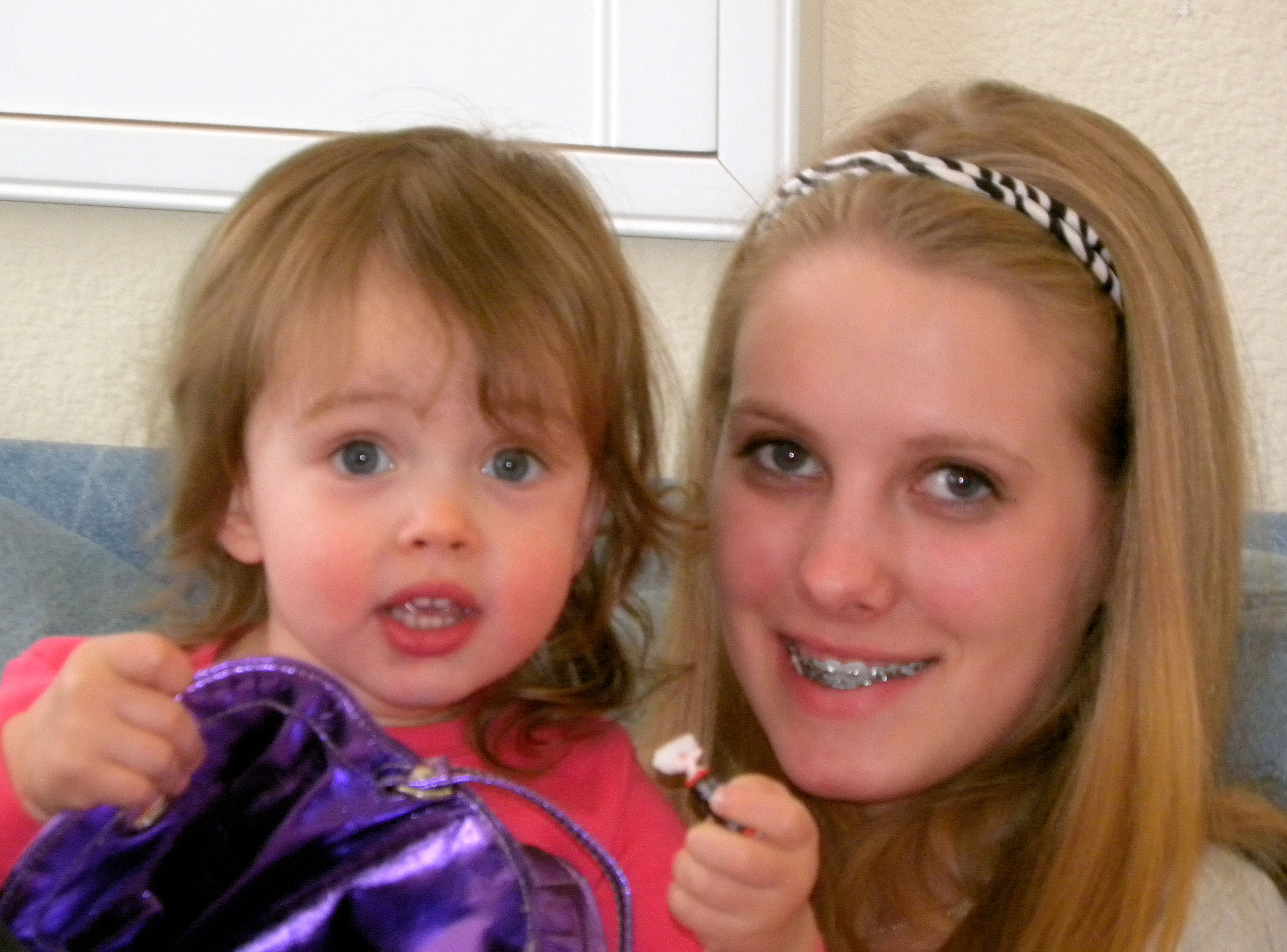
My 2-year-old granddaughter was on the couch beside me. Her eyes got huge. I grabbed her and held her close, while she watched the windows bulge in and out and the trees shake outside.  We told her that it was an earthquake, which she dubbed an “earth shake.” She talked about it non-stop until we felt the aftershock a short time later. “Ground outside shake. Nana hold me.”

Meagan and Shannon

Our 16-year-old granddaughter Shannon was visiting from Seattle. We told her that we like to have earthquakes for visitors. That was a pretty exciting one, the biggest one I’ve felt in a long time. Pictures were knocked askew on the walls, but there was no damage. There have been LOADS of aftershocks as the earth readjusts to the new positions of the plates.

The twins were upstairs taking their naps, but Allison woke up. She told her mother that her lamp was shaking. It was the twins’ first big quake, but Lauren slept through it.

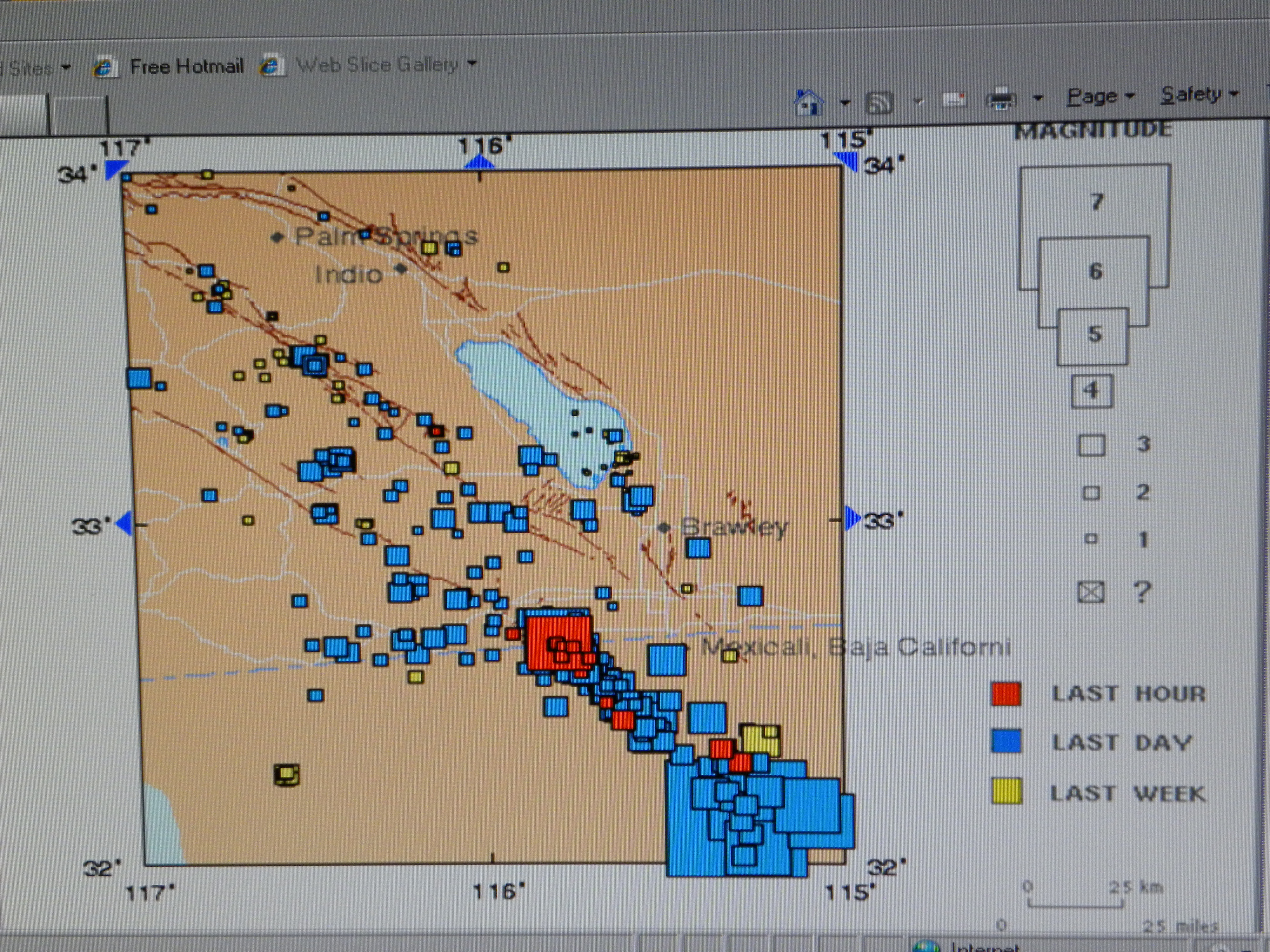
Southern California earthquake map about 17 hours after the initial big quake. There are hundreds of aftershocks. Size of squares indicates intensity of quake while color indicates how recent the quake was. Red means within the past hour, while blue indicates within the last 24 hours. Yellow indicates within the past week. As you can see, the San Andreas is very active today.

The ground has continued to shift and shake overnight, but we haven’t felt any of those aftershocks in Huntington Beach. You can see the latest California-Nevada earthquakes on a map at

http://quake.usgs.gov/recenteqs/latest.htm.

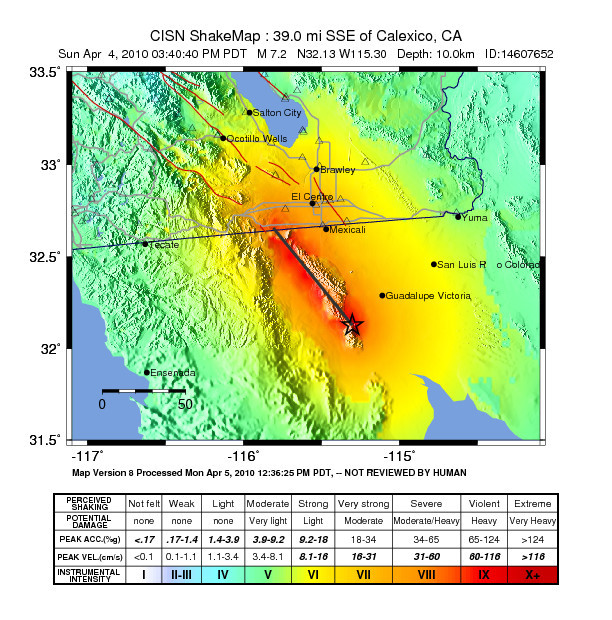
This map from USGS shows the intensity of the initial quake over a broad area. We were in the light green zone, and felt moderate shaking with no damage.

Posted in Uncategorized | Tagged , , , , , , | 5 Comments

Harvest Monday March 29, 2010, and the peas that overgrew Los Angeles

I can no longer reach the top of the peas. That's some vigorous growth!

Someone needs to tell my Super Sugar Snap Peas enough, already. I keep putting up taller and taller trellises and they keep outgrowing them. My 6-ft-tall husband drove 8 ft stakes into the raised beds, tied a string to top, and the peas are now 6″ taller than that string. It’s really getting to be ridiculous. I can’t reach the top peas to harvest them. Note to self. Don’t plant this variety of peas in a raised bed again.

Even 6-ft-tall Vic has to stand on something to reach the top of the peas.

Well, at least something grows in my garden. After crop failures of my cabbages, it’s nice to see such lush growth. It isn’t all vine. They’re making peas too.

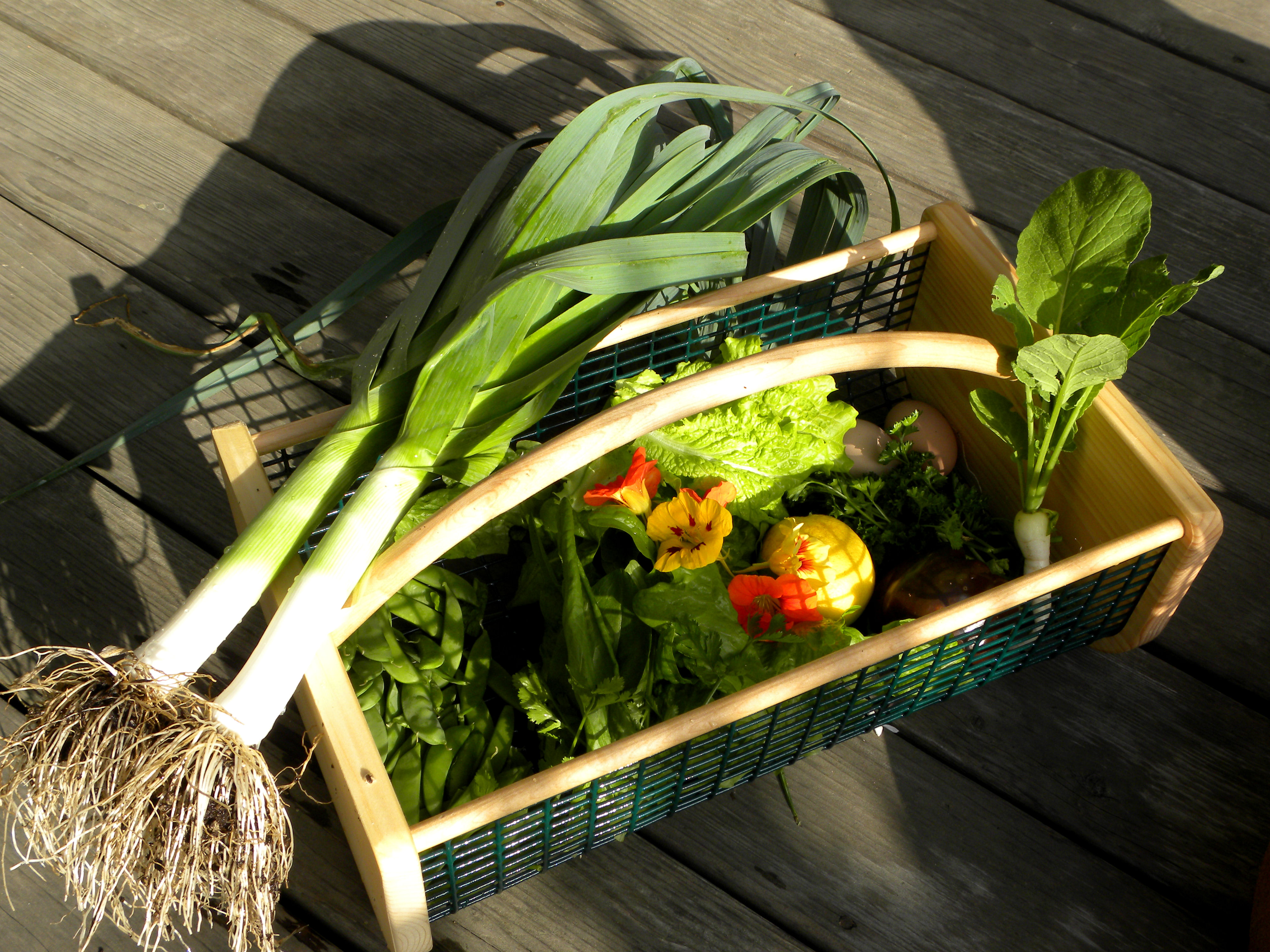
One day's harvest included these lovely leeks, as well as makings for a stirfry and salad.

Here’s the harvest for this week.
17 eggs
1 Meyer lemon (6.5 oz.)

2 leeks (7 oz after trimming)

1 radish (1 oz.)
1 bell pepper (4.5 oz.)
lettuce (5 oz.)
herbs and nasturtium flowers (2 oz.)
kale (6 oz.)
snap peas (14 oz.)
Total harvest: 17 eggs and 2 lbs 14 oz. produce
 
If you had a harvest this week, visit Daphne’s Dandelions and post your results!
Posted in Uncategorized | 12 Comments

Birding at the Salton Sea

My husband, Vic Leipzig, leads birding and natural history field trips for classes, groups, and individuals. Sometimes I tag along to take photos.  Here are some pics from two of his recent field trips to the Salton Sea, one in late February with Audubon and one in early March with his natural history class for senior citizens.

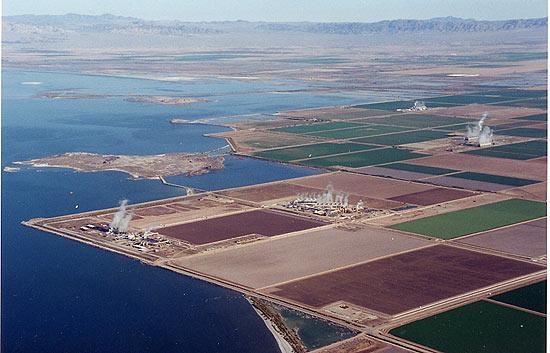
Aerial view of Imperial Valley and geothermal power plants, courtesy of The Center for Land Use Interpretation

 Because magma is close to the surface in this geologically active area, geothermal electricity-generating plants are springing up everywhere.

Geothermal power plant

 The Imperial Valley is an important agricultural area. The salty sea, numerous freshwater ponds, and a patchwork of fields of lettuce, sugar beets, cauliflower, broccoli, onions and alfalfa offer plentiful habitat for a wide variety of birds and other wildlife.

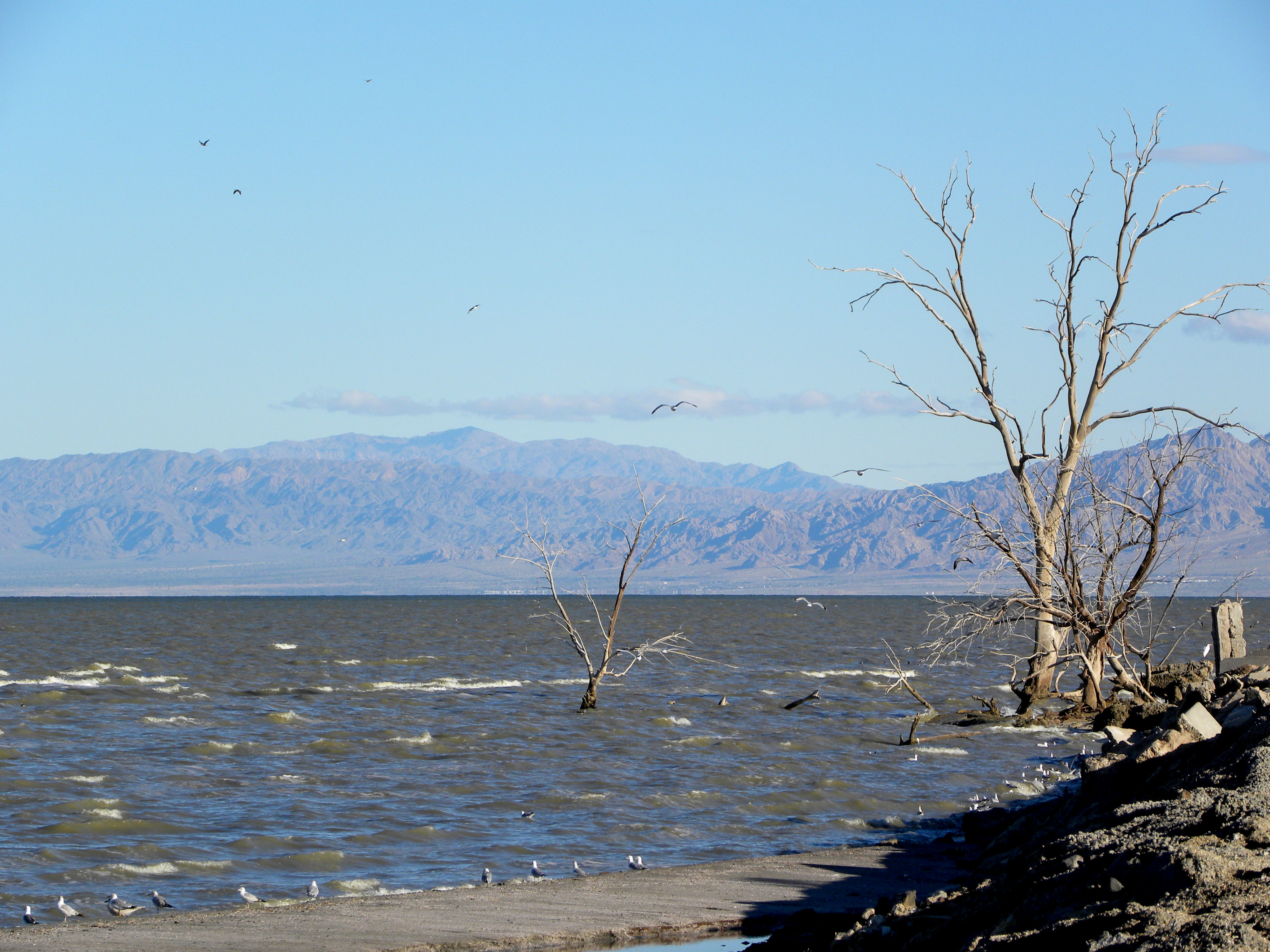
Salton Sea is a man-made lake that has turned saltier than the ocean over its 100+ years of existence.

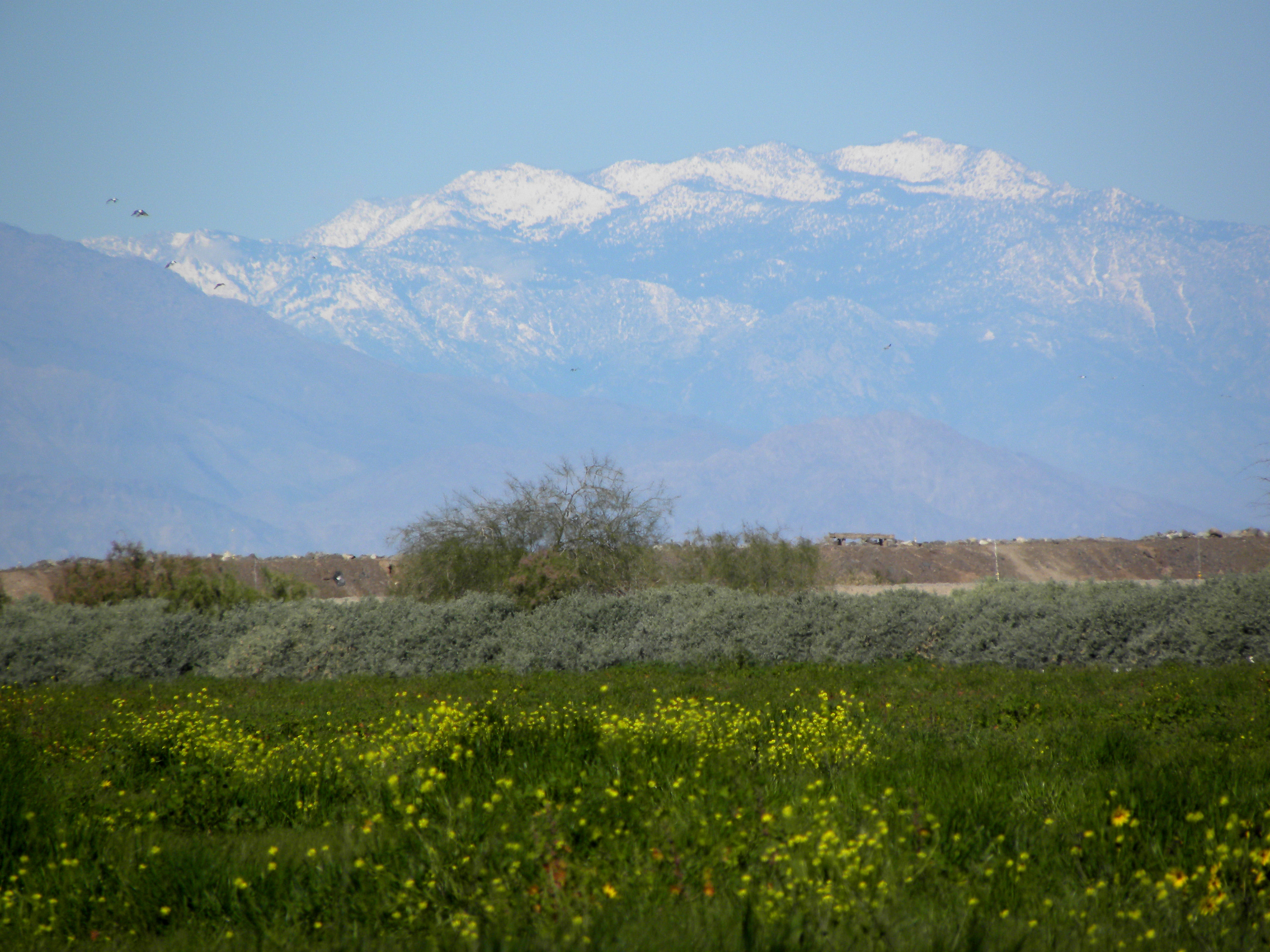
The Salton Sea and Imperial Valley have a beauty all their own.

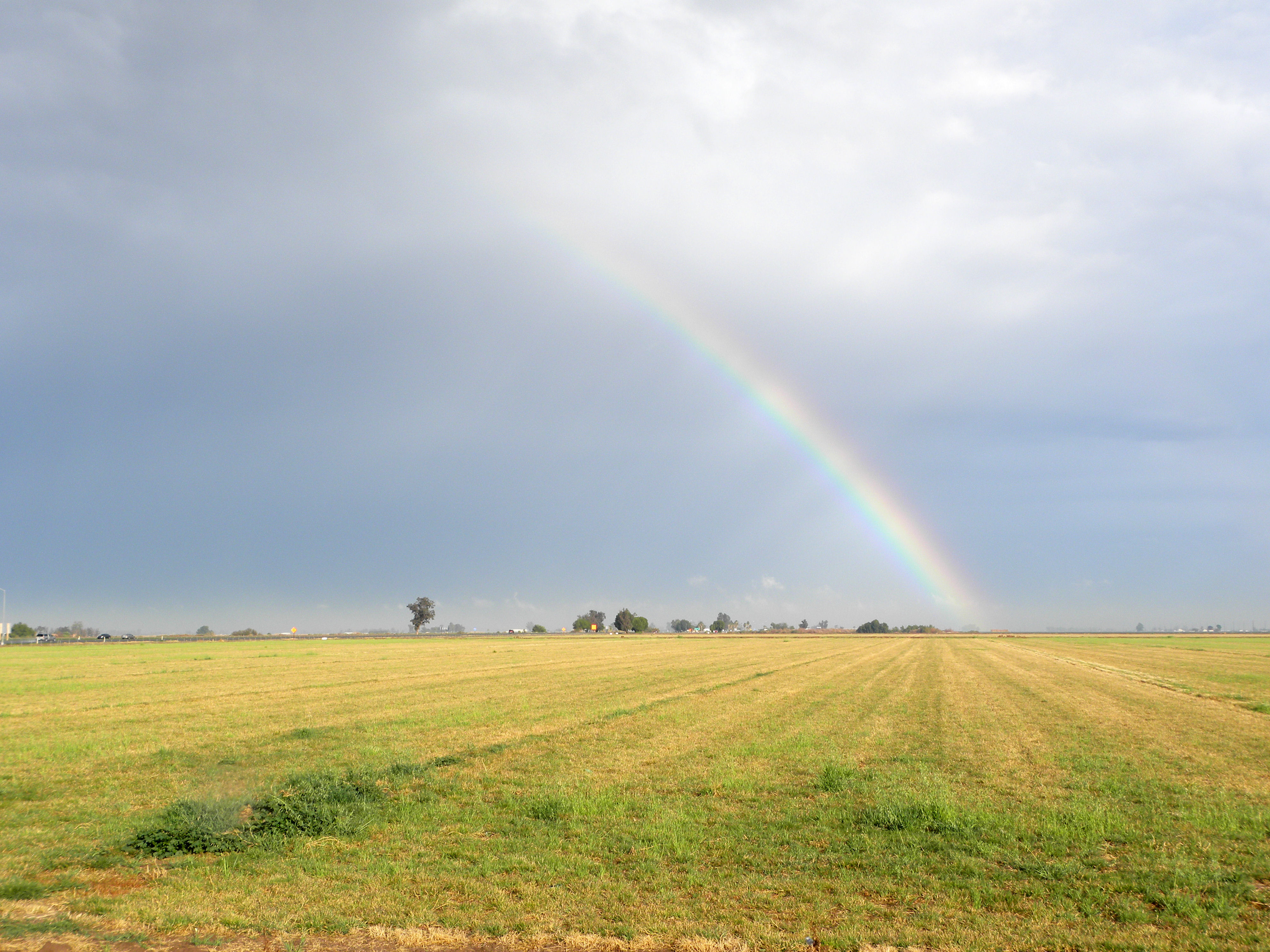
Rainbow over a mowed field.

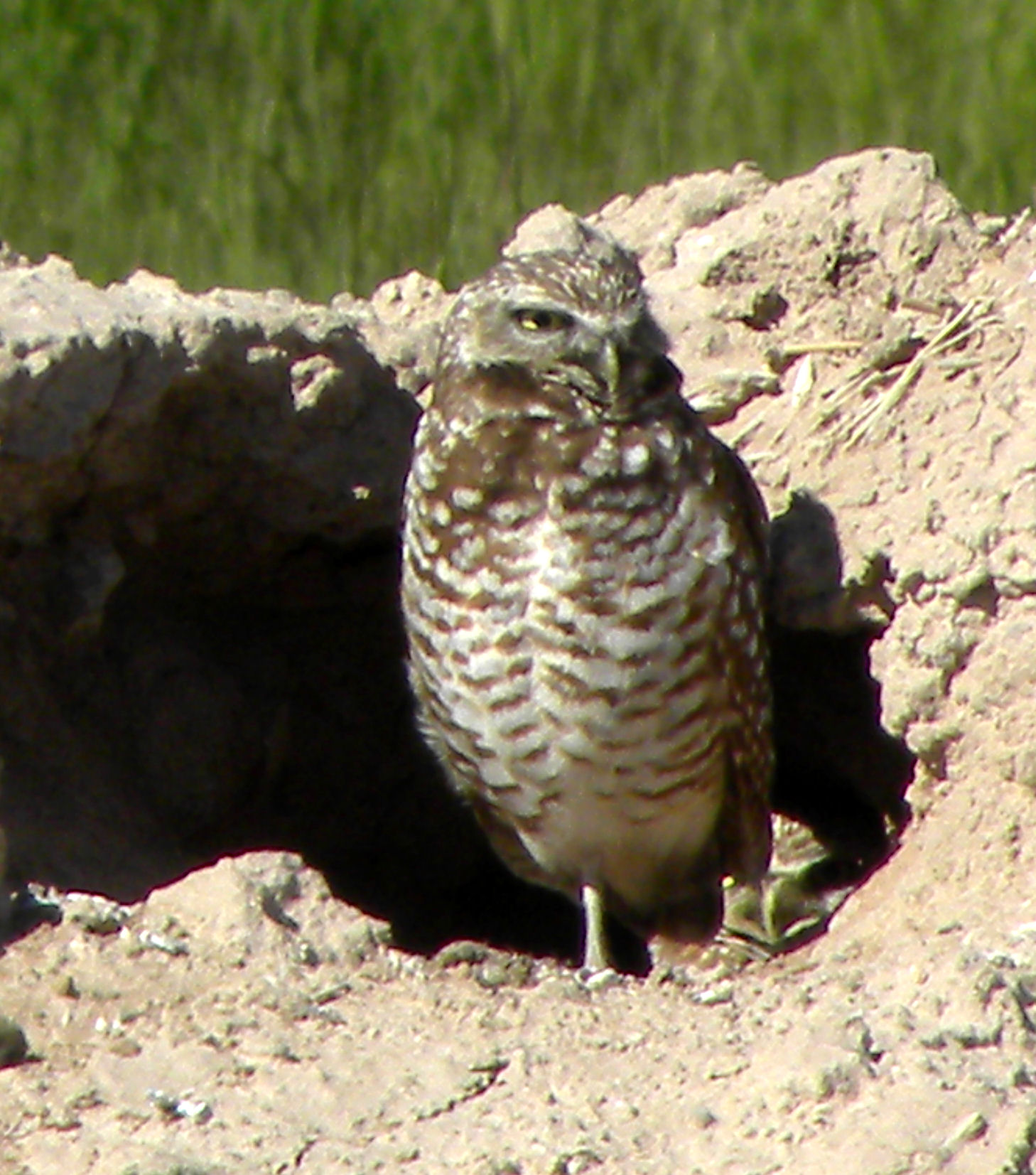
Burrowing Owl

One of the advantages of having a guide in this area is that he can take you right to specialty birds like this sleeping Barn Owl.

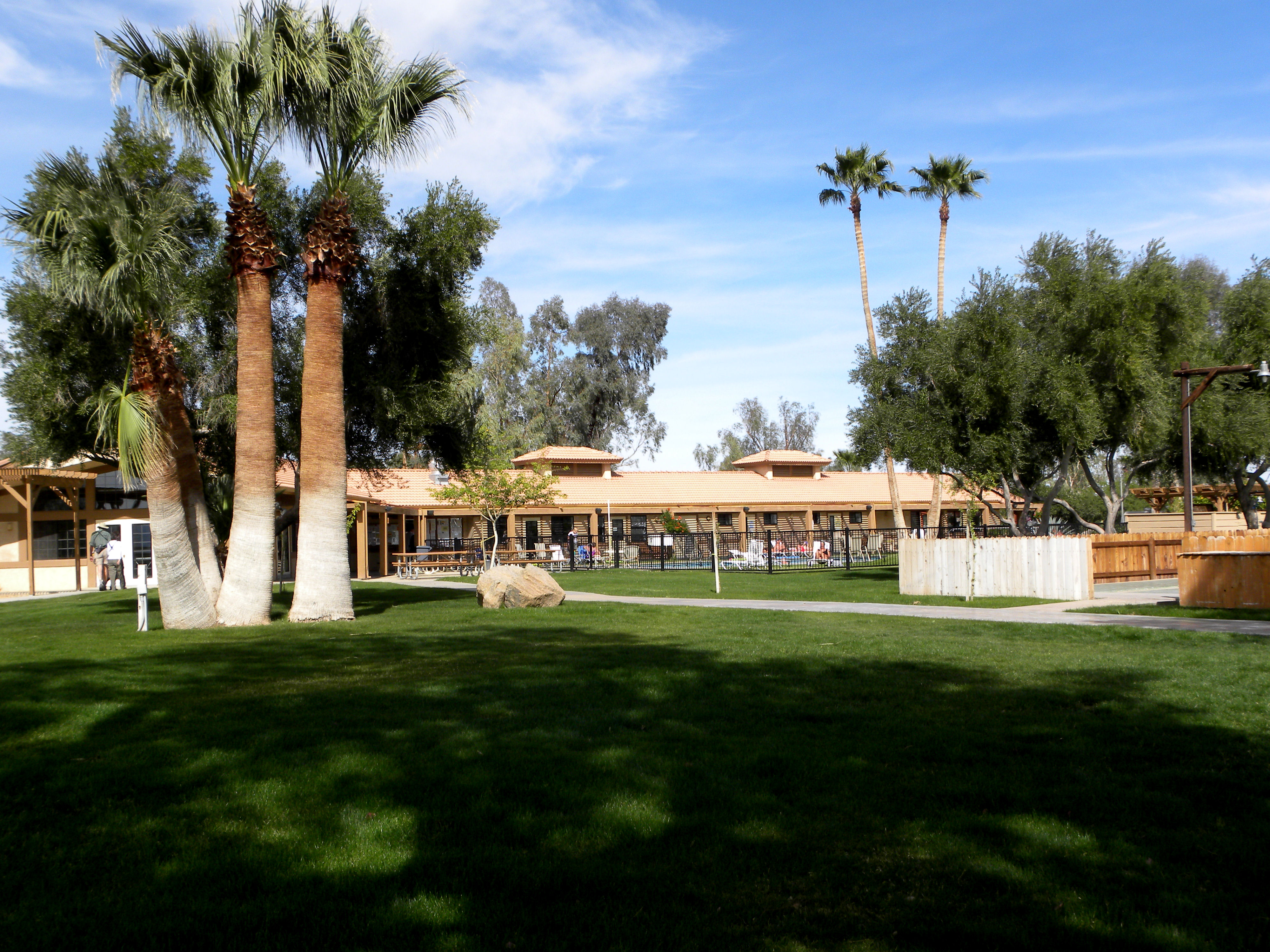
Rio Bend RV Park near Fig Lagoon makes a good place to meet. Our group had lunch in their cafe.

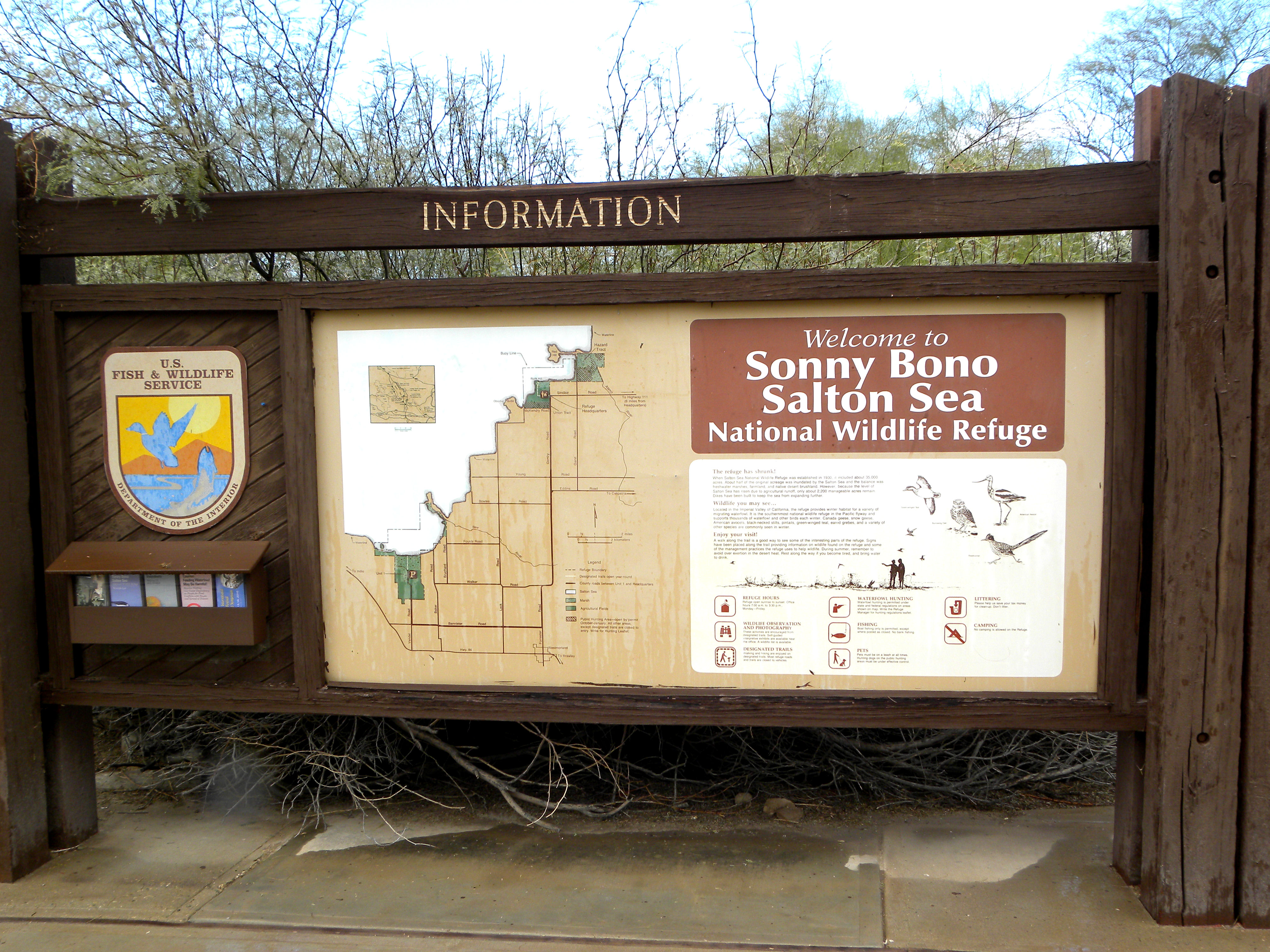
The Sonny Bono National Wildlife Refuge visitor center is a great place to see some of the area's specialty birds up close.

male Gambel's Quail

female Gambel's Quail

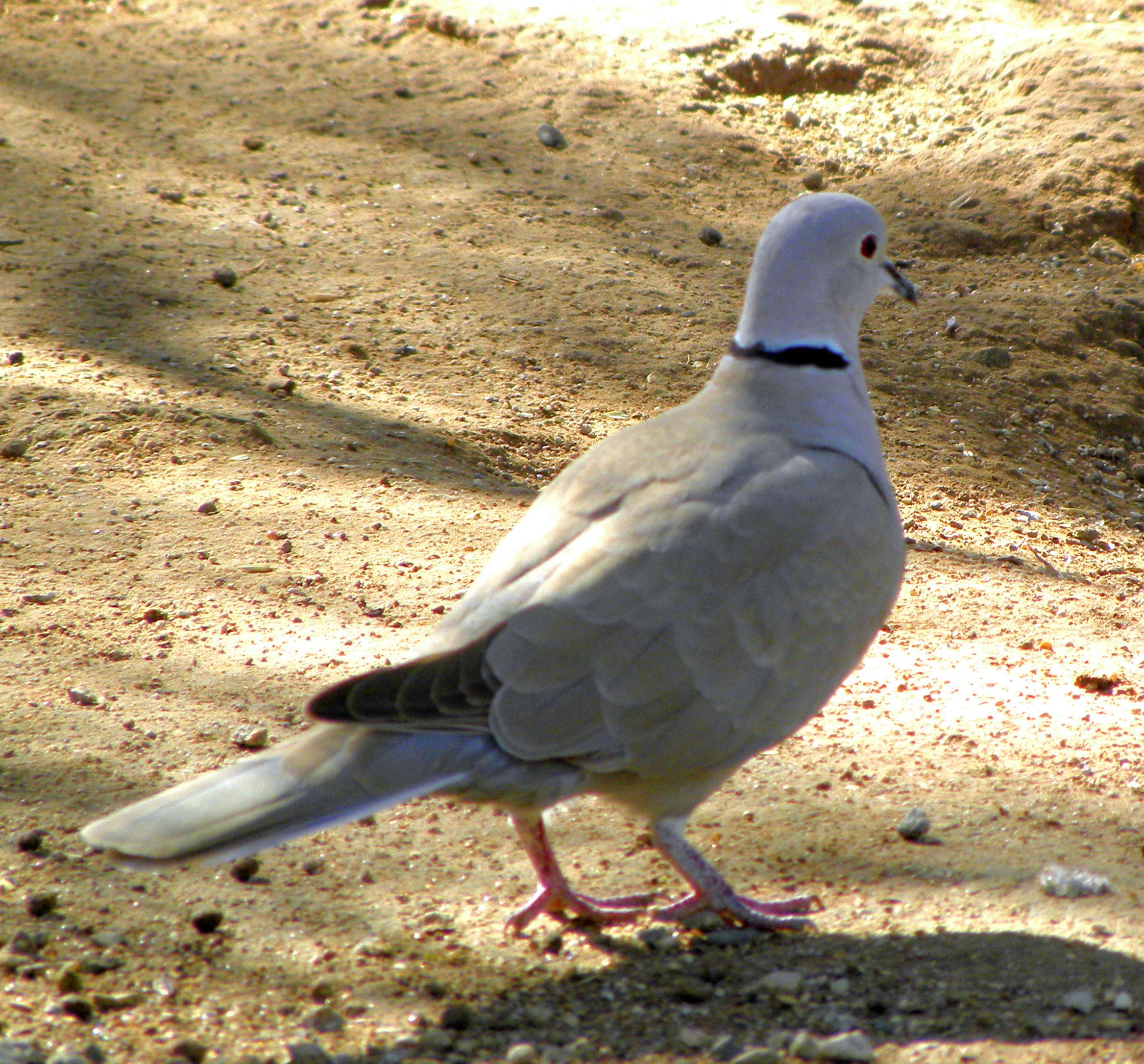
Eurasian Collared Doves are spreading their range in southern California

Eurasian Collared Dove

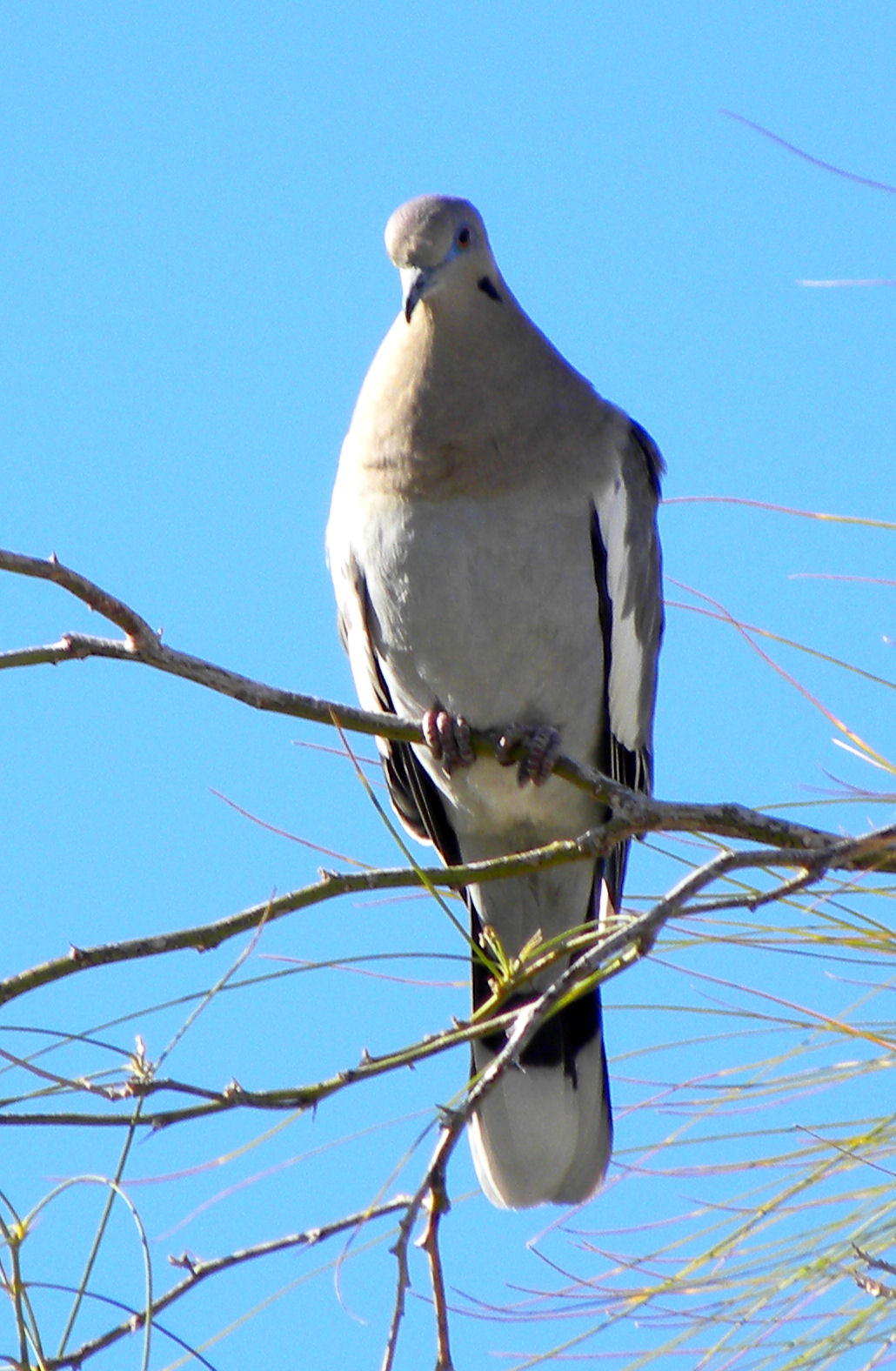
White-winged Dove

Ground Doves are smaller than Mourning Doves and have scaly breasts.

White-crowned Sparrow

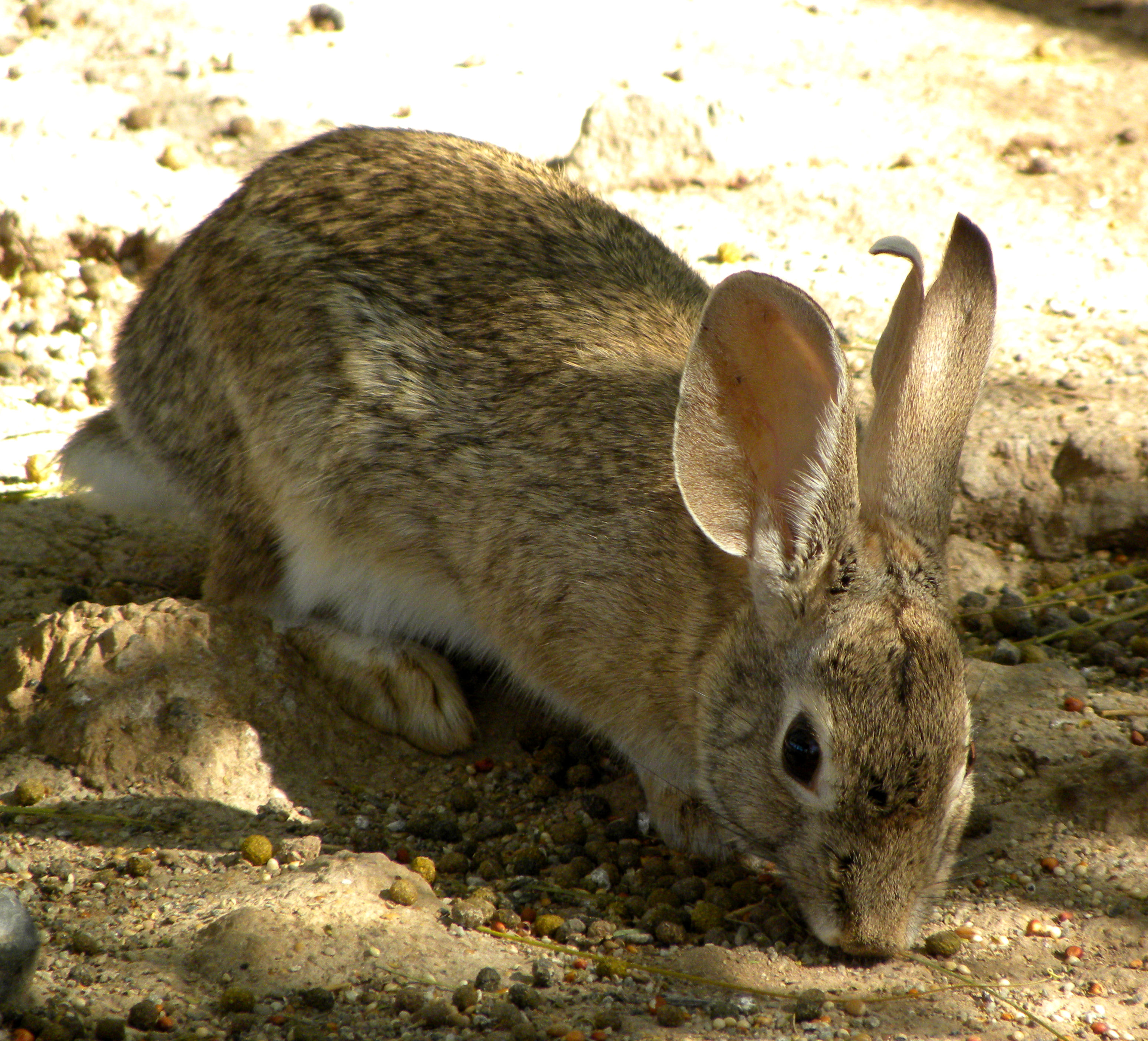
Audubon's Cottontail

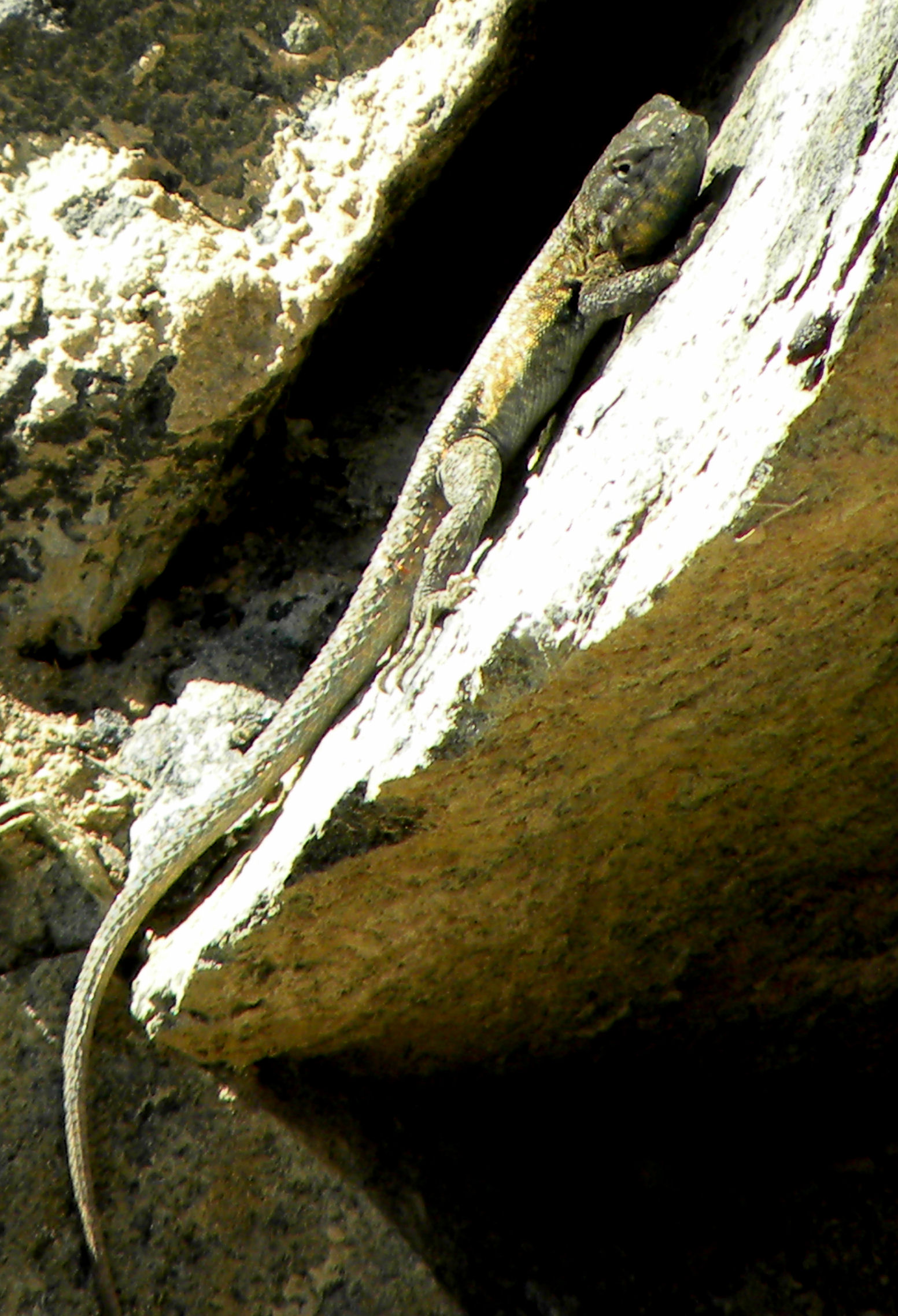
You might encounter lizards such as this Side-blotched Lizard.

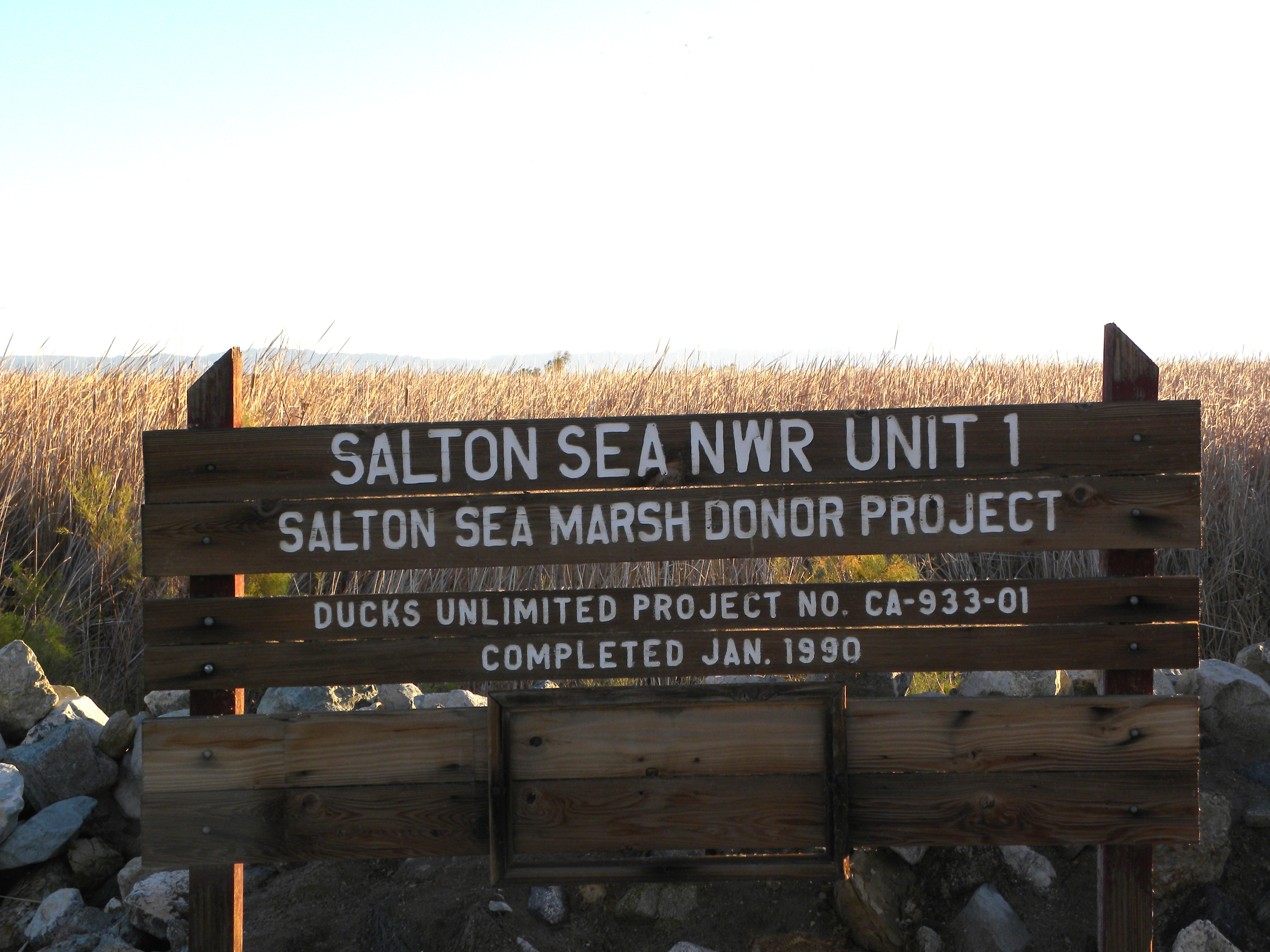
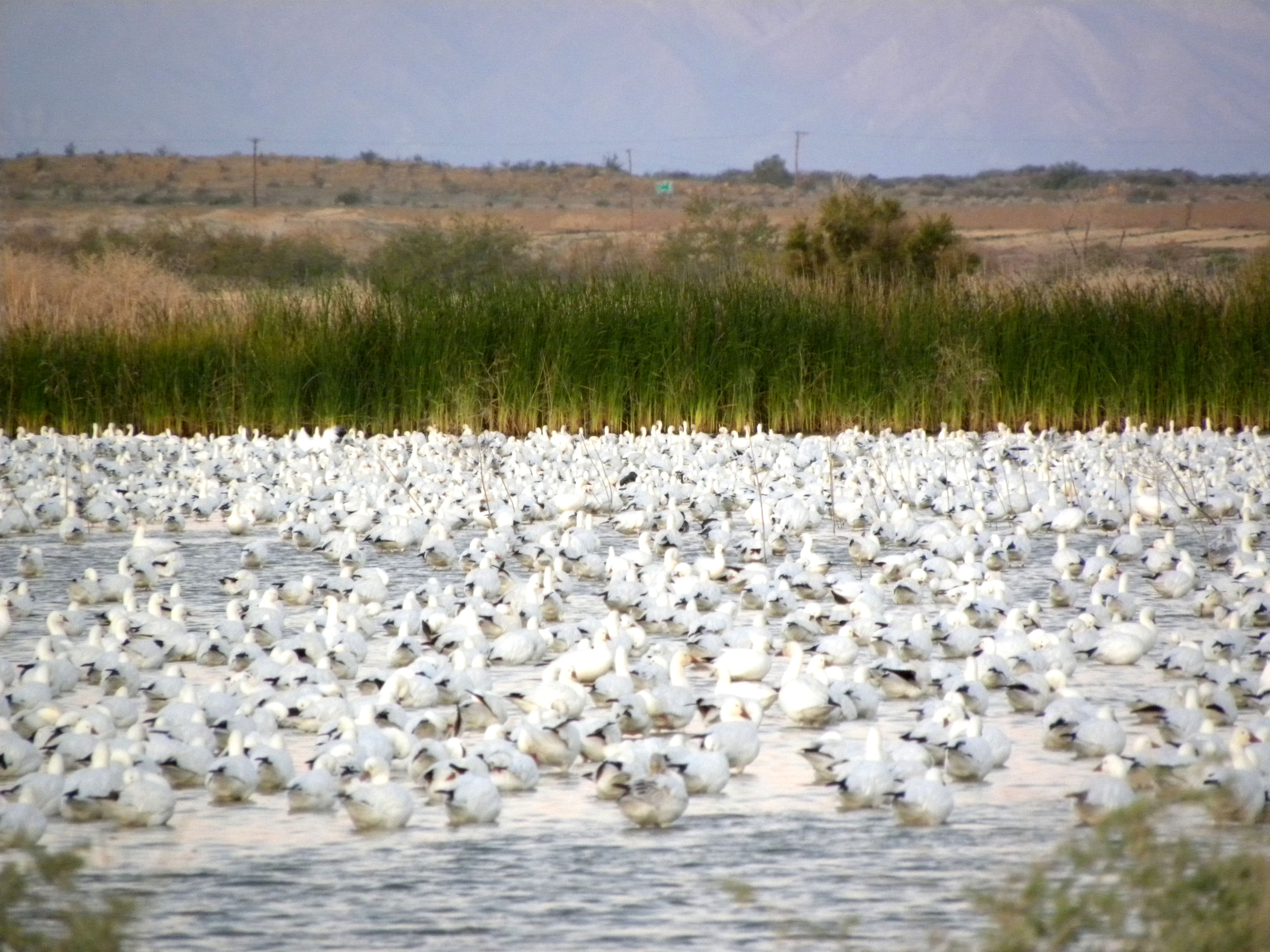
Vic likes to take his groups out to Unit 1 to see the Snow Geese lift off the ponds at dawn.

Geese by the thousands sleep on the ponds at night.

 At dawn, the Snow Geese preen, become restless, and generally lift off just as the sun hits the water. Sometimes they lift off as one, but on this morning they took off by the dozens instead of all at once.

Can you feel how cold it was out there at dawn in February with the wind blowing?

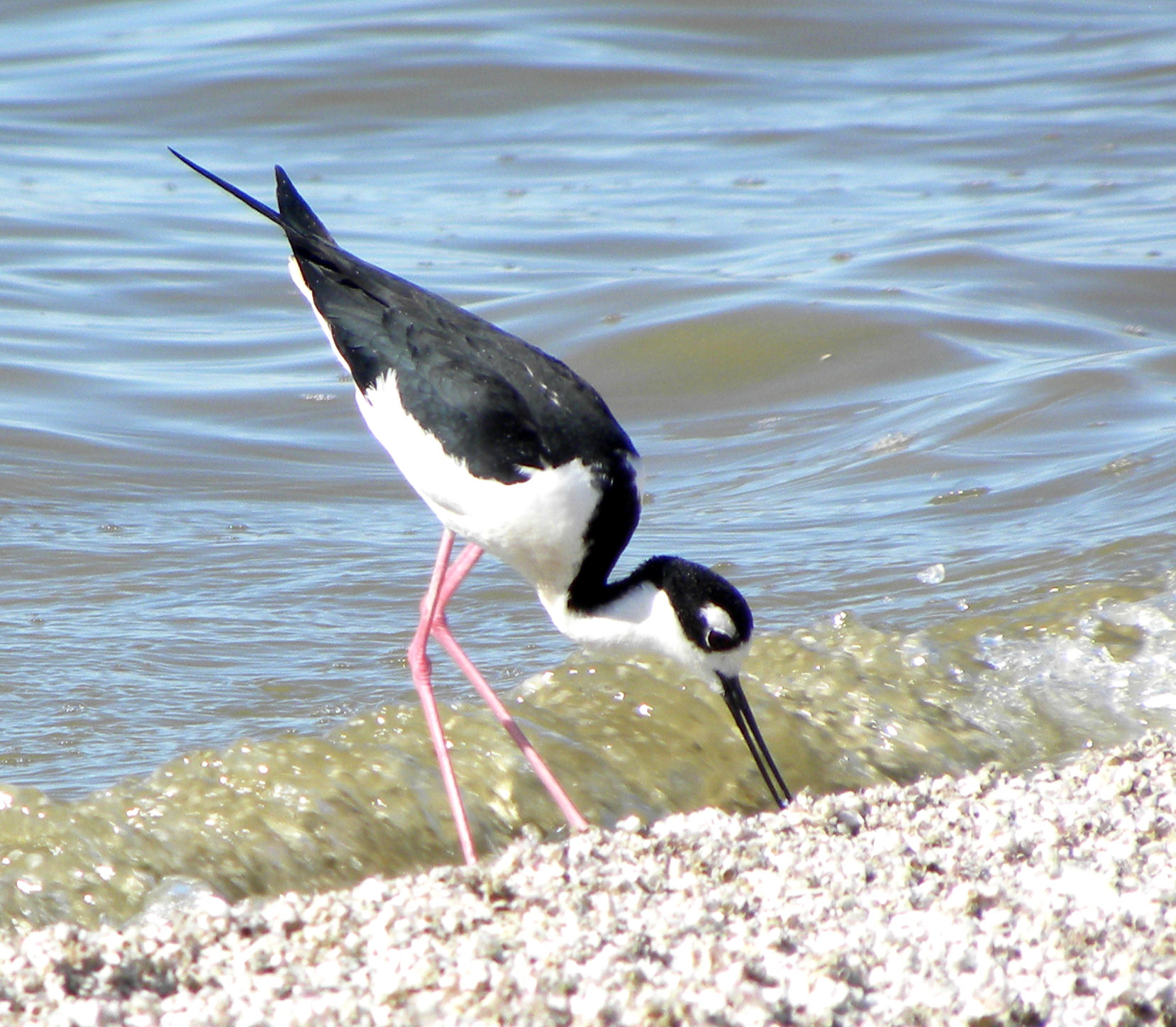
Gulls and shorebirds, such as this Black-necked Stilt, ply the shore of the Salton Sea, searching for brine flies and brine shrimp.

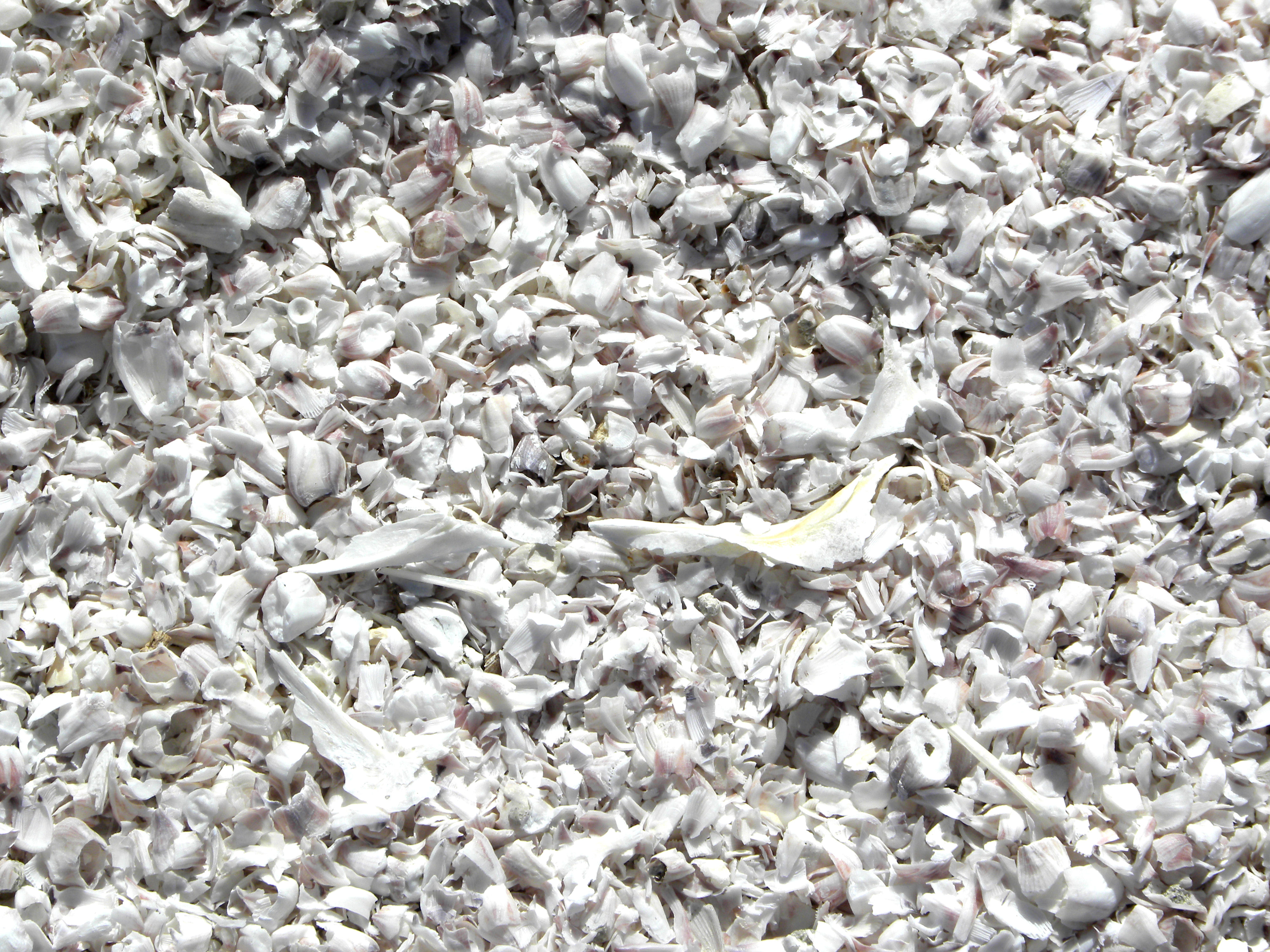
The white "sand" on the beach is actually bleached fish bones and dead barnacles.

Depending on when you go, you might see Yellow-footed Gulls, nesting Great-blue Herons, Wood Storks, or even Lesser Flamingoes. In the winter, three quarters of a million Eared Grebes swim in the sea.

One of the attractions of the Salton Sea is the sheer number of birds present, like this flyover of White-faced Ibis.

Vermillion Flycatcher is one of the specialty birds of the area, along with Verdin and Abert's Towhee.

Fig Lagoon (seen here) and Cattle Call Park are other popular areas for birding.

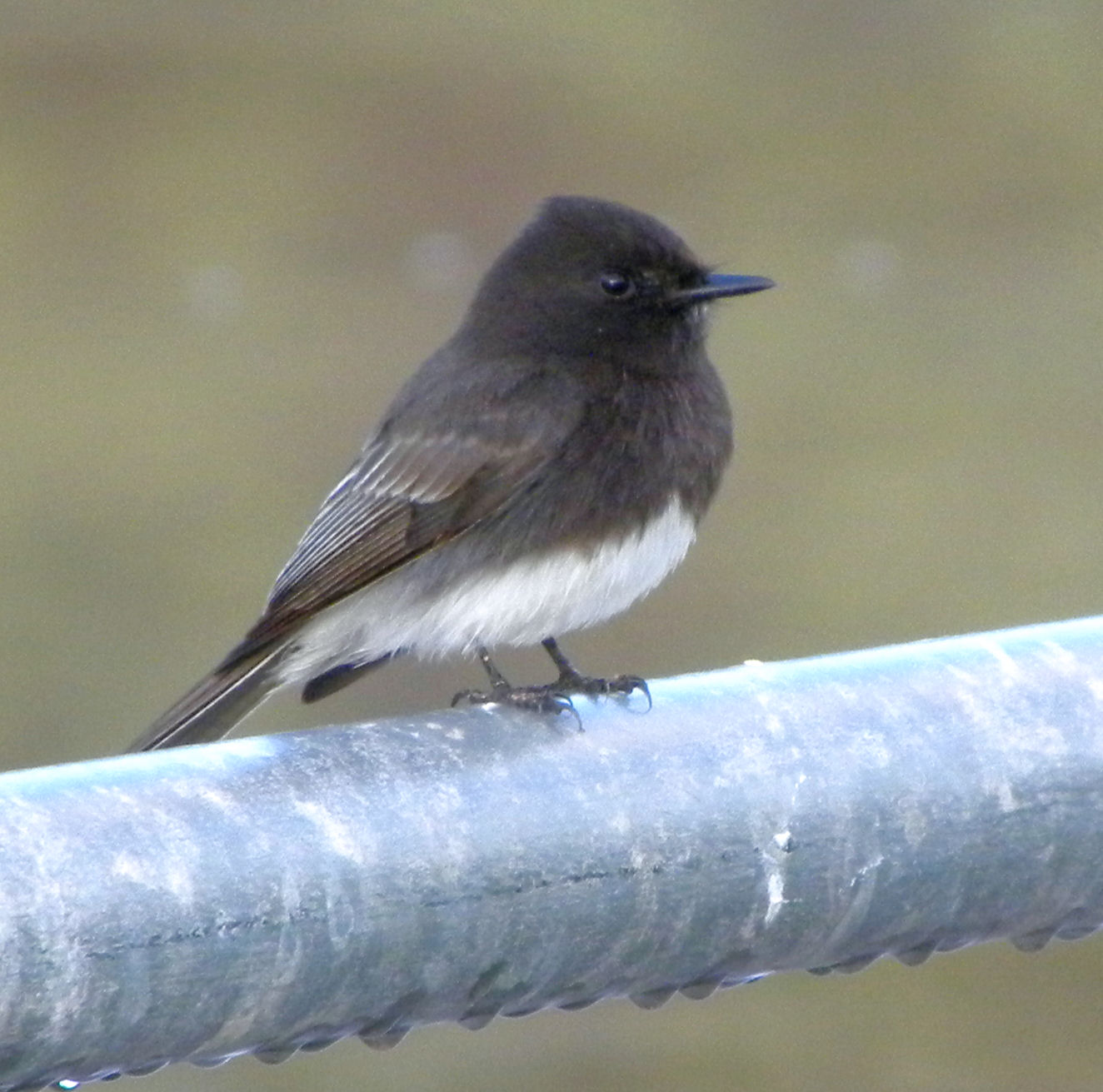
Black Phoebes, Say's Phoebes, and other flycatchers abound.

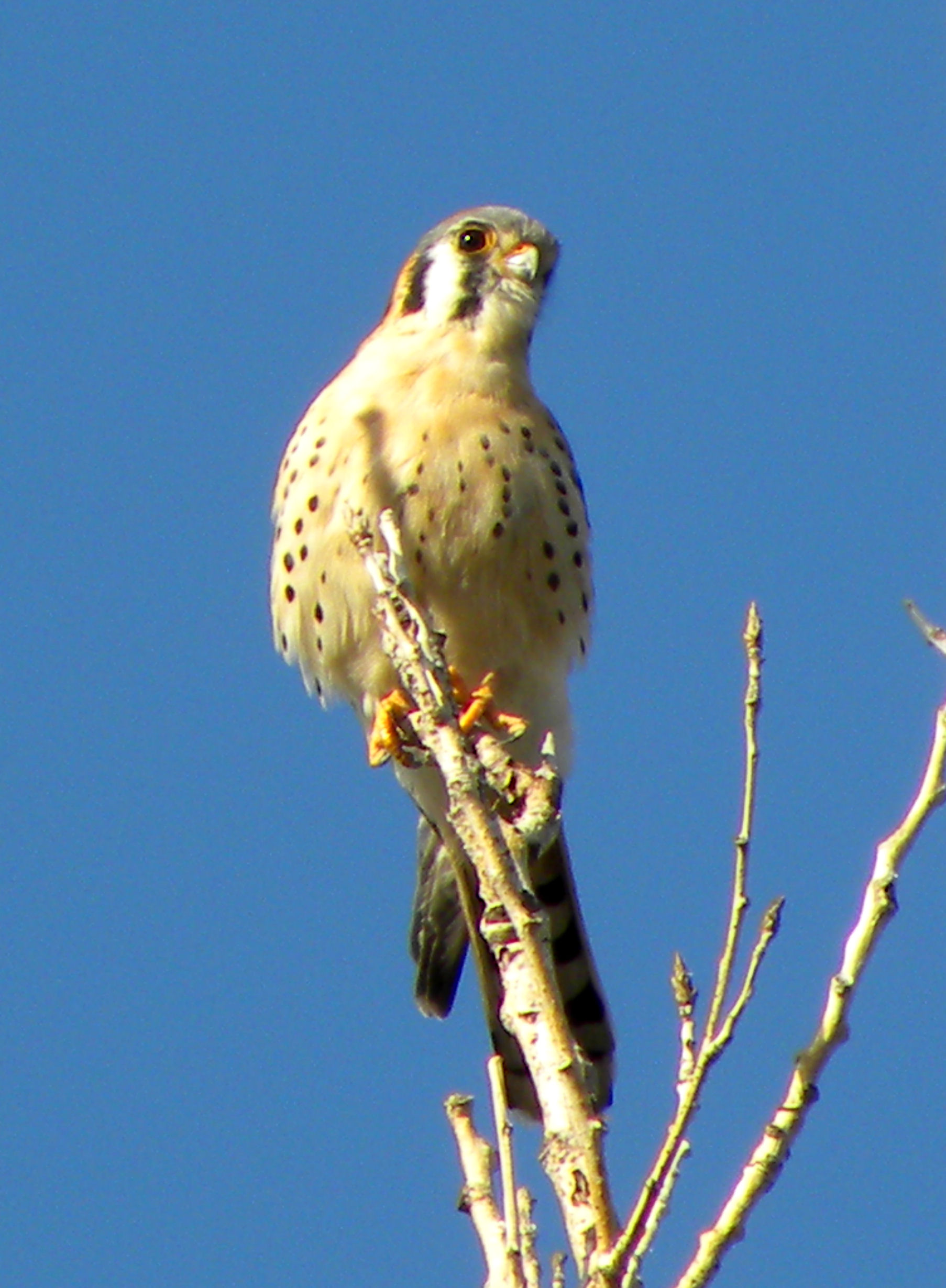
Kestrels thrive in this area. You can also see Red-tailed Hawks, migrating Swainson's Hawks, and the occasional Peregrine Falcons.

It’s fun to watch the Cattle Egrets jockeying for space as they come to roost for the evening.

This part of the Imperial Valley is criss-crossed with dirt farm roads that can become muddy after a rain.

While 4WD isn't necessary, a high clearance vehicle helps. You should expect your car to get dirty.

 Parking with all four wheels on the soft muddy shoulder after a rain is a good way to get stuck. But if you have a number of people in your party, getting unstuck is simple enough.

Brownie's in Brawley is a popular local diner that offers both American and Mexican food.

We usually stop at Oasis Date Garden in Thermal for a date shake on our way home.

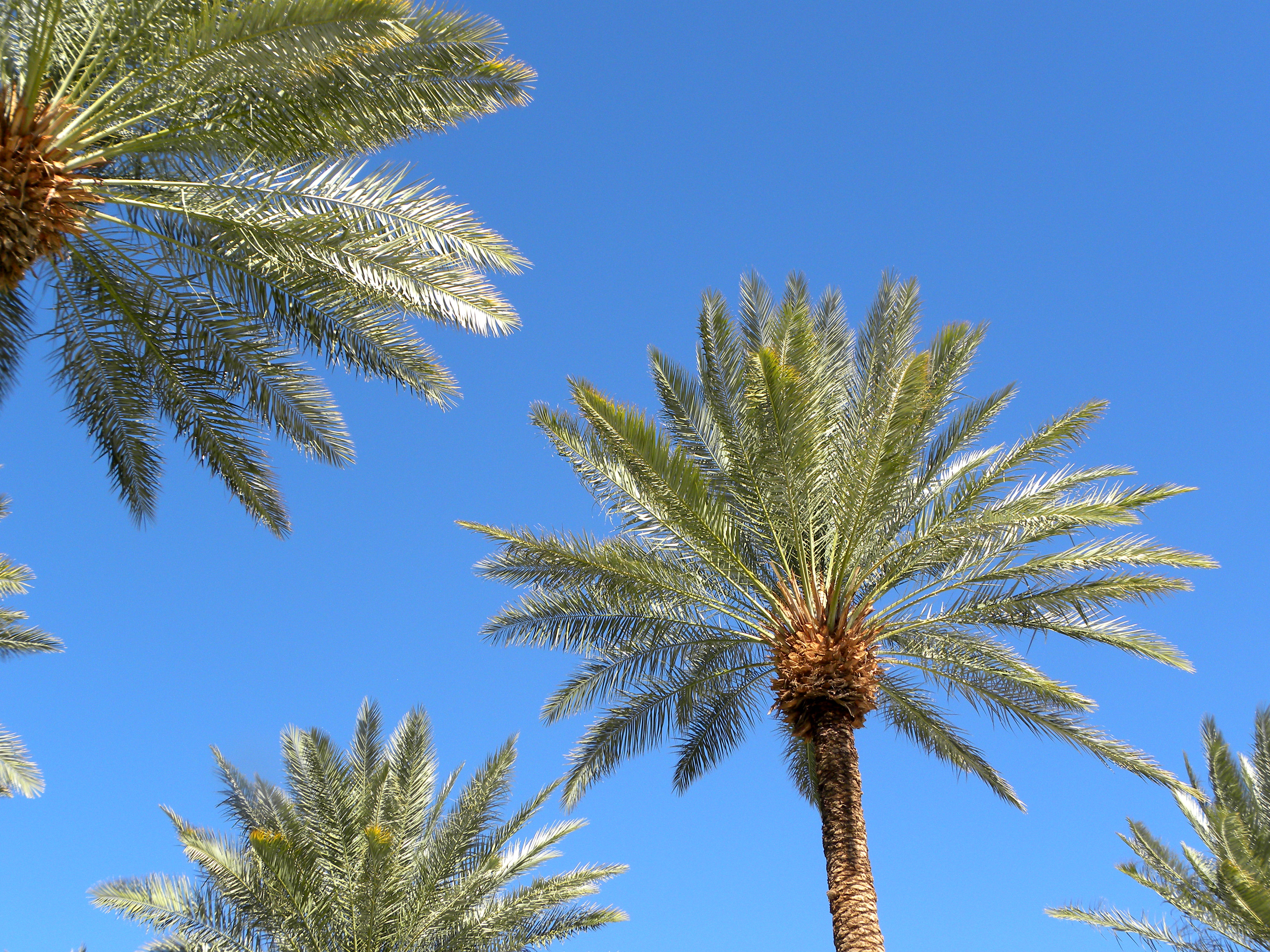
Date palms. We usually buy some fresh Medjool or Black Adaba dates while we're in the area.

Hope you enjoyed this quick tour of the Salton Sea. If you’d like to arrange for a bird guide, visit www.southwestbirders.com. Vic or one of his partners (Henry Detweiler, Bob Miller, or Bruce Aird) would be happy to show you around.

(To read more of Lou Murray’s environmental writing, see her weekly column, Natural Perspectives, in the Huntington Beach Independent at http://www.hbindependent.com/blogs_and_columns)

Posted in Uncategorized | Tagged , , , , , , , , , | 2 Comments

Spring wildflowers at California’s Anza-Borrego State Park

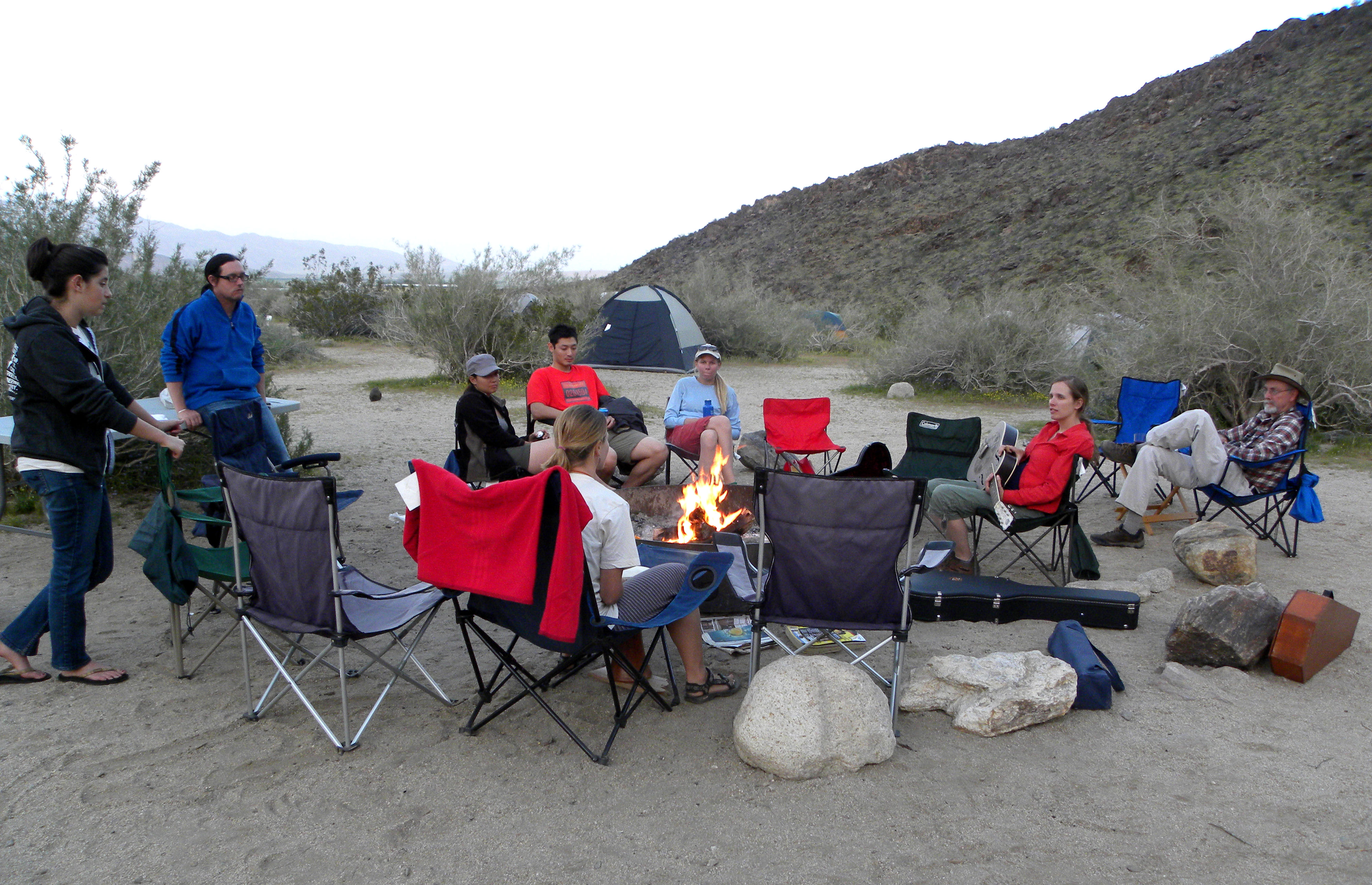
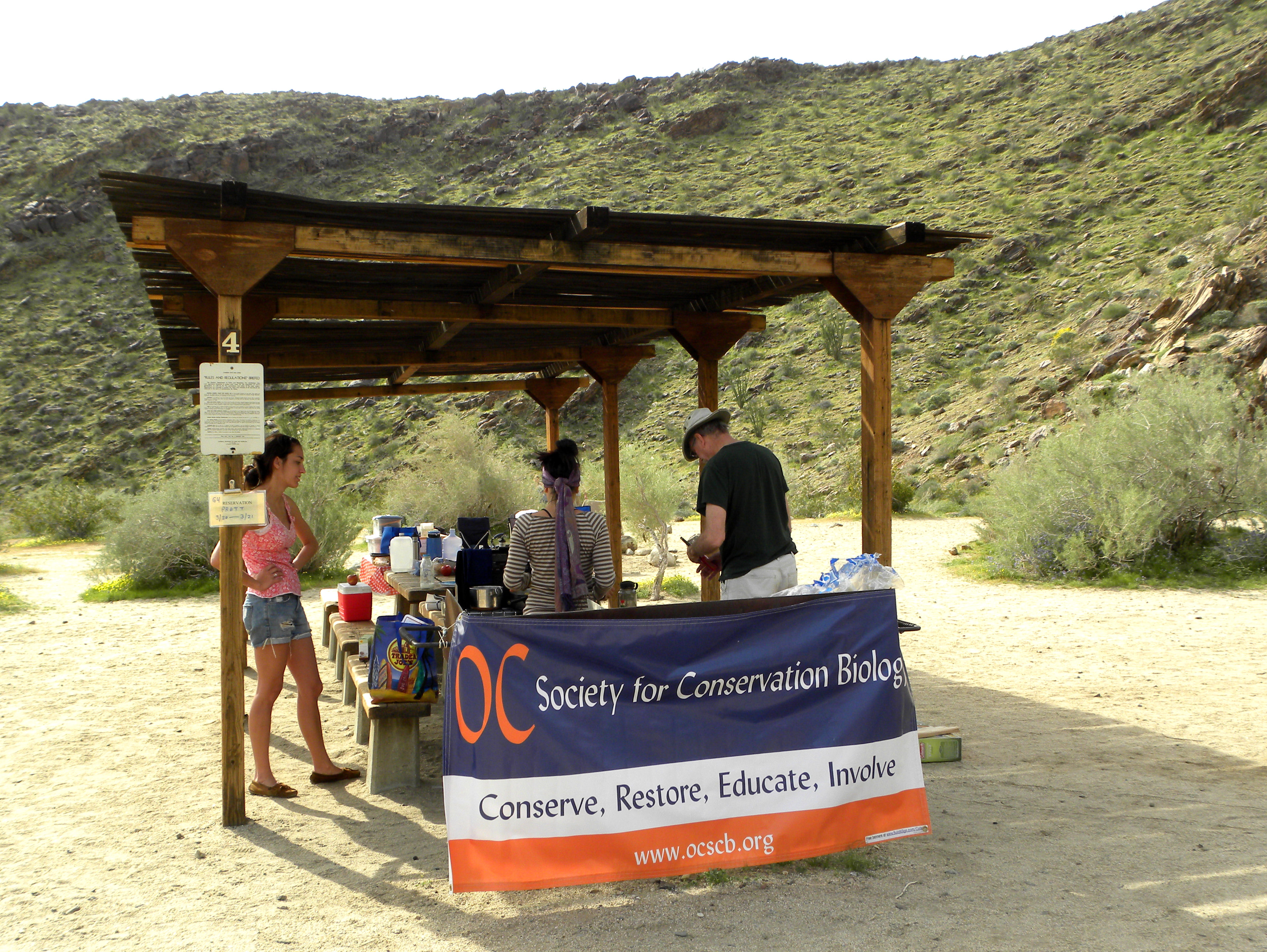
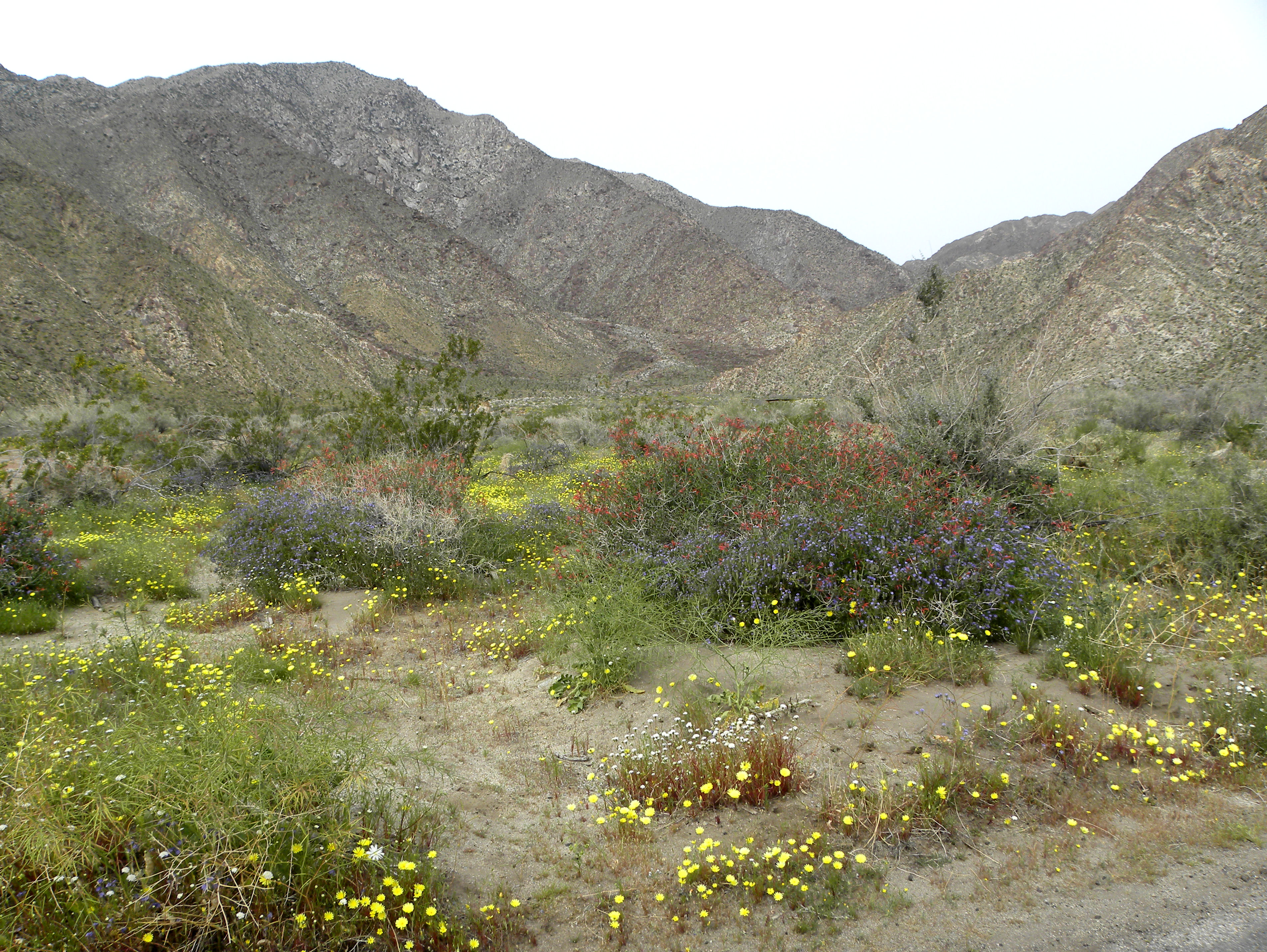
Last weekend, Vic and I camped in a group camp at Anza Borrego State Park in San Diego County with 23 other people from the Orange County Society for Conservation Biology. Seeing the peak bloom of desert wildflowers and searching for life-sized metal sculptures of prehistoric animals in Galleta Meadows made the trip extra enjoyable.

Everyone cooked and ate on their own. After dinner, we sat around the campfire. I gave a campfire Powerpoint presentation on my laptop about the extinct flora and fauna of the Anza-Borrego region from 1-6 million years ago.

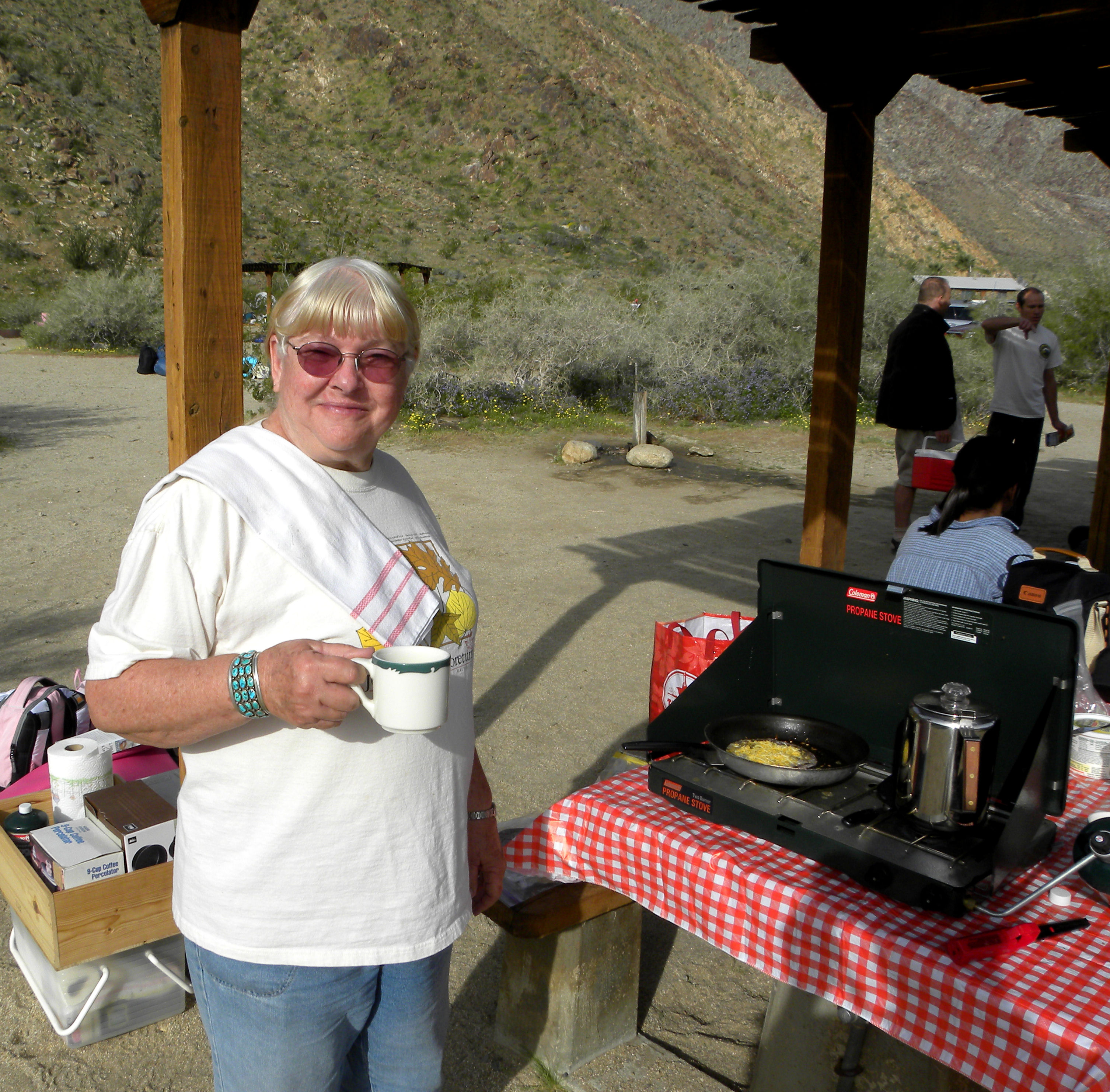
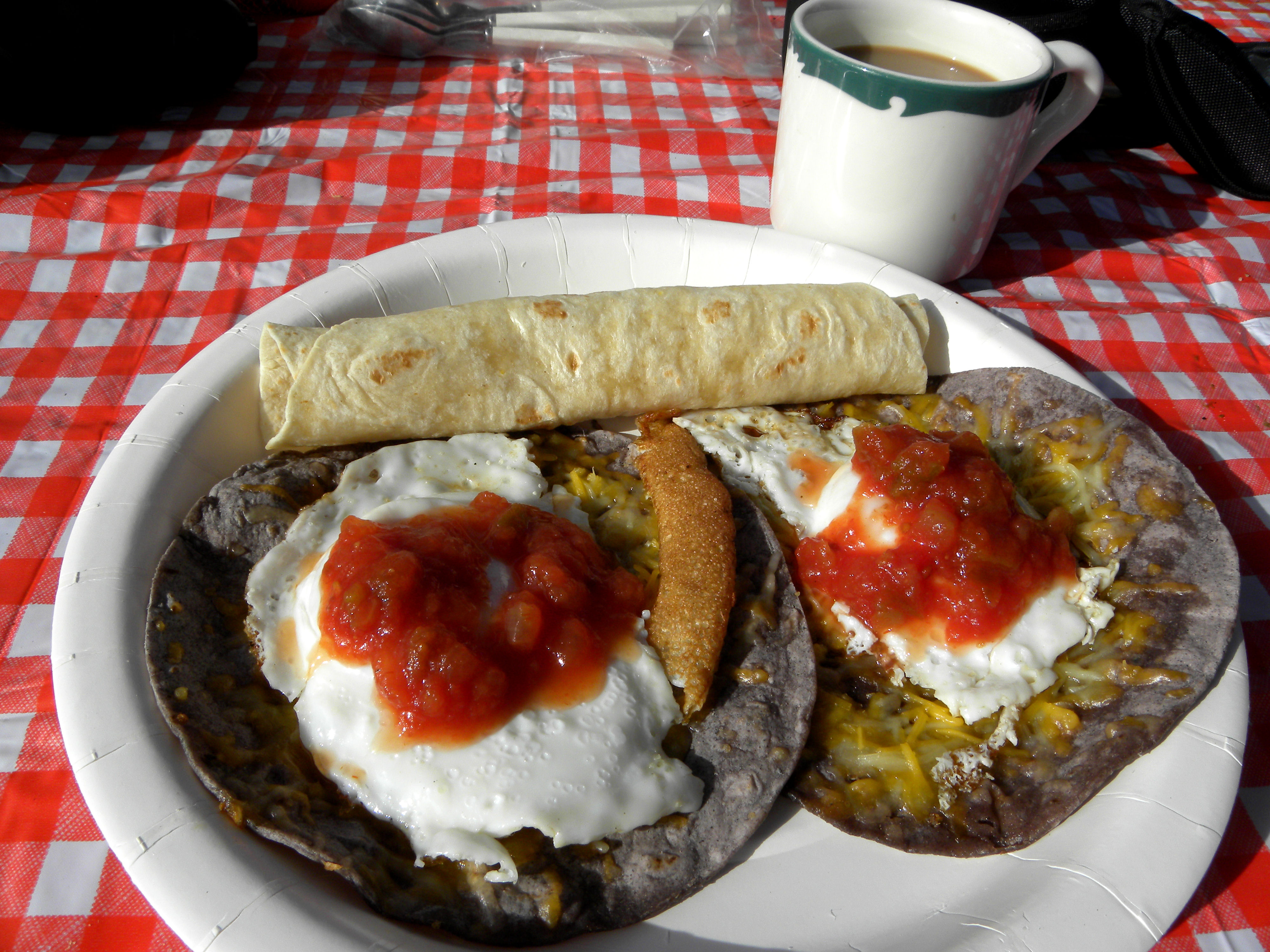
Vic made coffee and I cooked huevos rancheros for breakfast, using eggs from our own chickens of course.

Not a bad-looking camp breakfast.

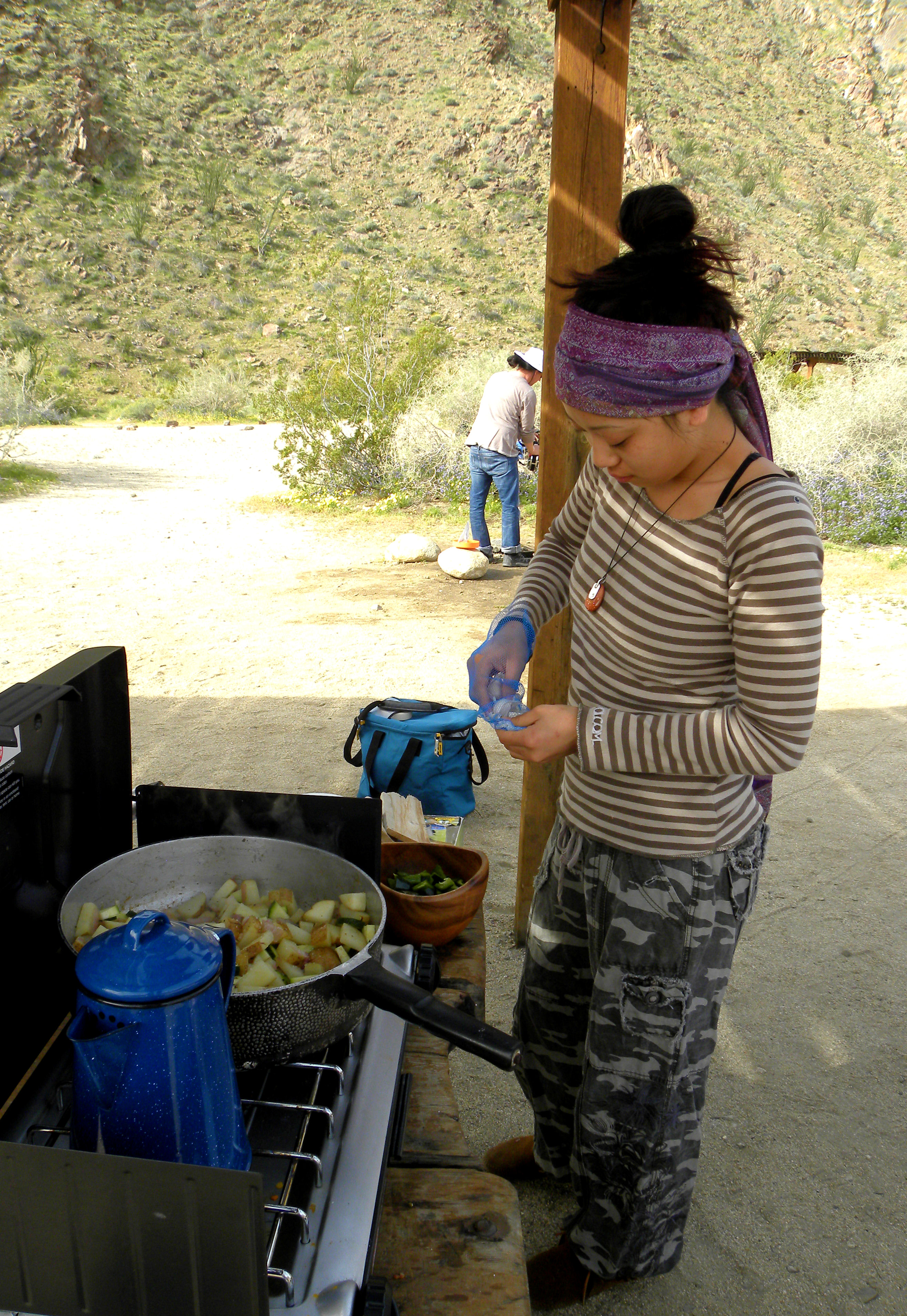
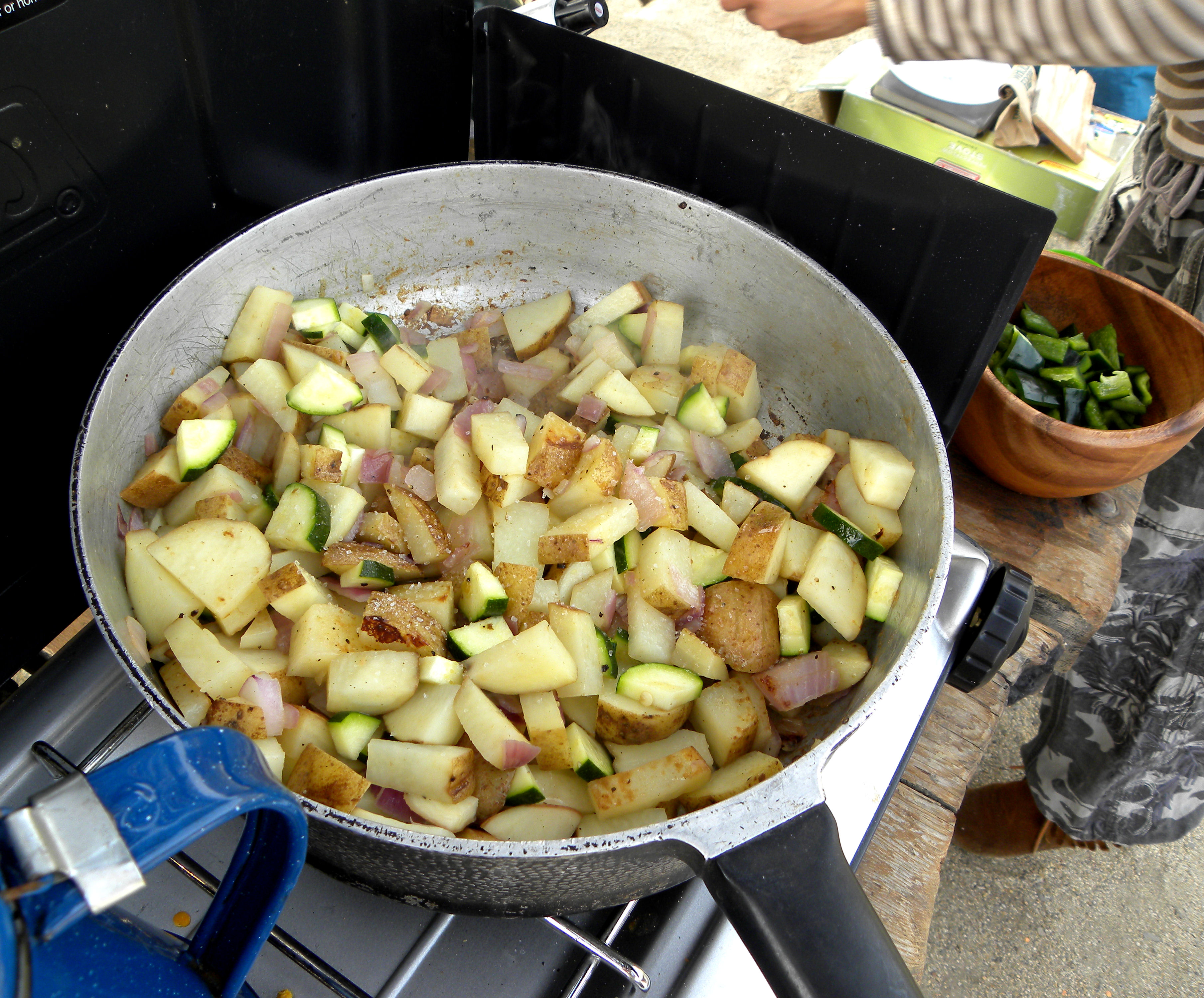
Mami (hope I got the spelling right) cooked a gourmet breakfast of potatoes, zucchini, onions and garlic with eggs scrambled into the veggies.

I wish I could incorporate the smell of this wonderful dish, but a photo will have to do. The eggs haven't been added yet.

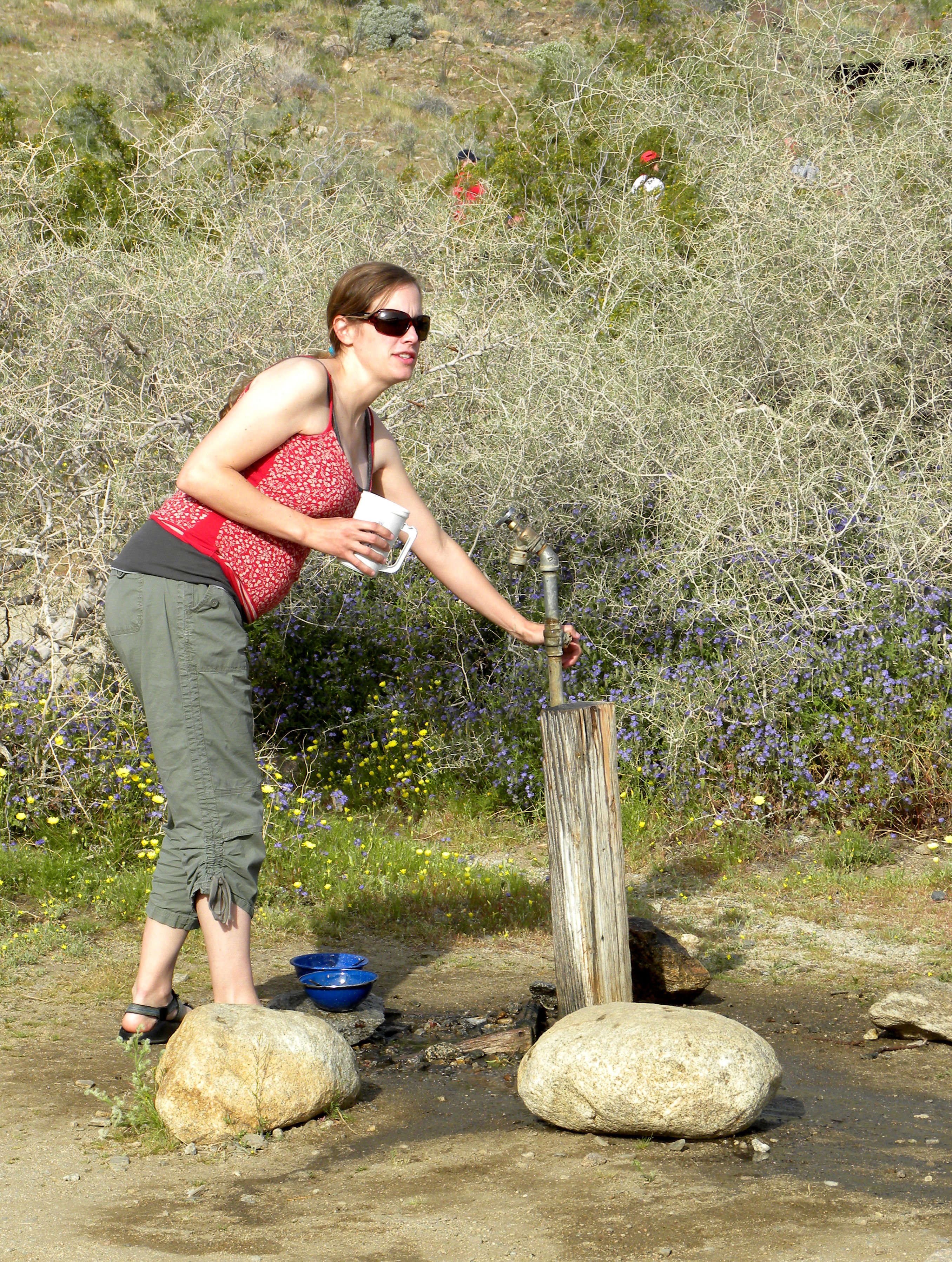
Margaret gets some water at the spigot in camp.

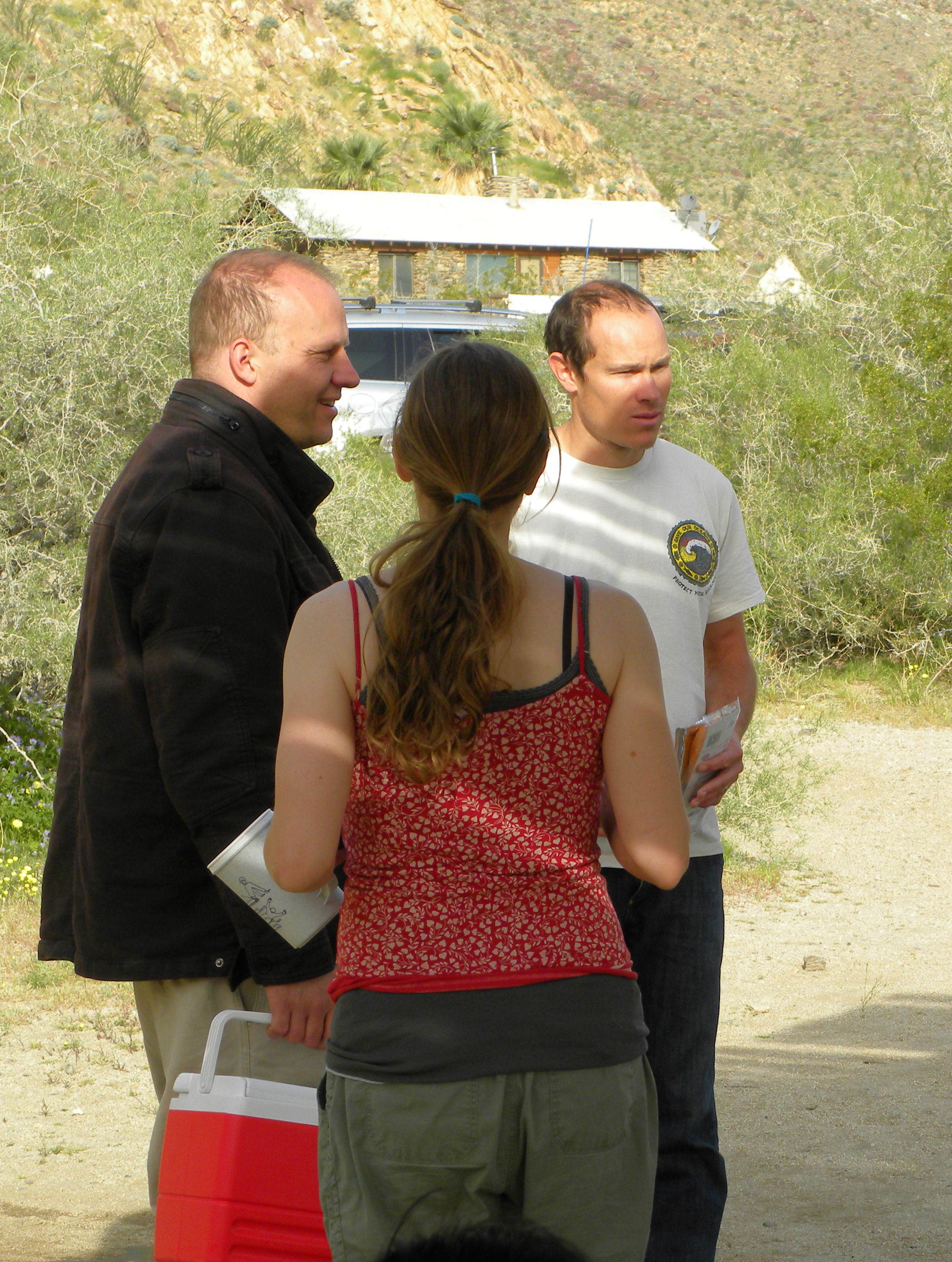
Dave, Margaret, and Riley chat after breakfast.

By late morning, the tents were struck and cars packed. People headed their separate ways for a day of hiking and/or photography before heading home.

We camped at the Palm Canyon campground. The hike up Palm Canyon is straight ahead. We have taken that hike before, but didn't on this trip.

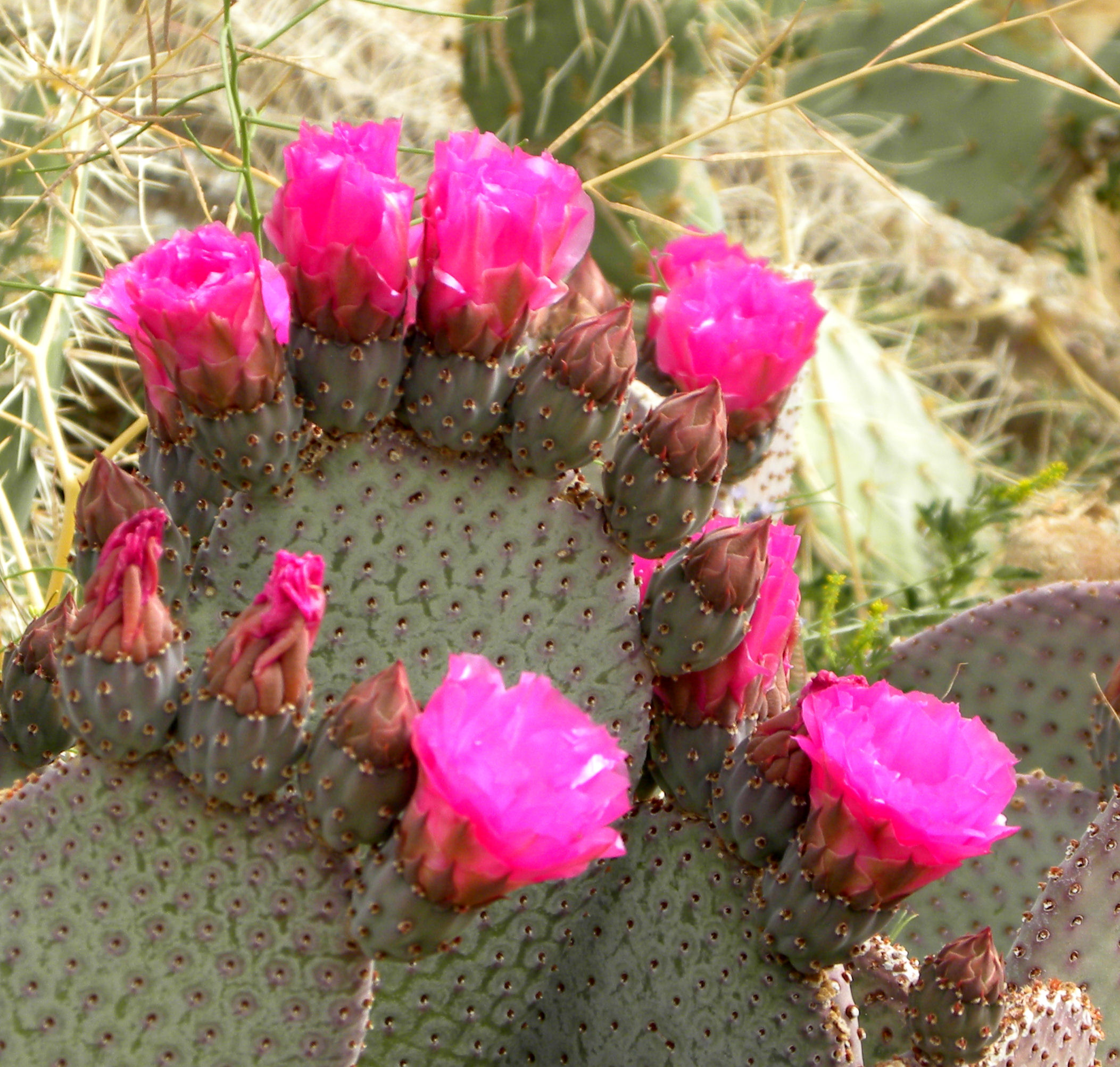
Beavertail cactus

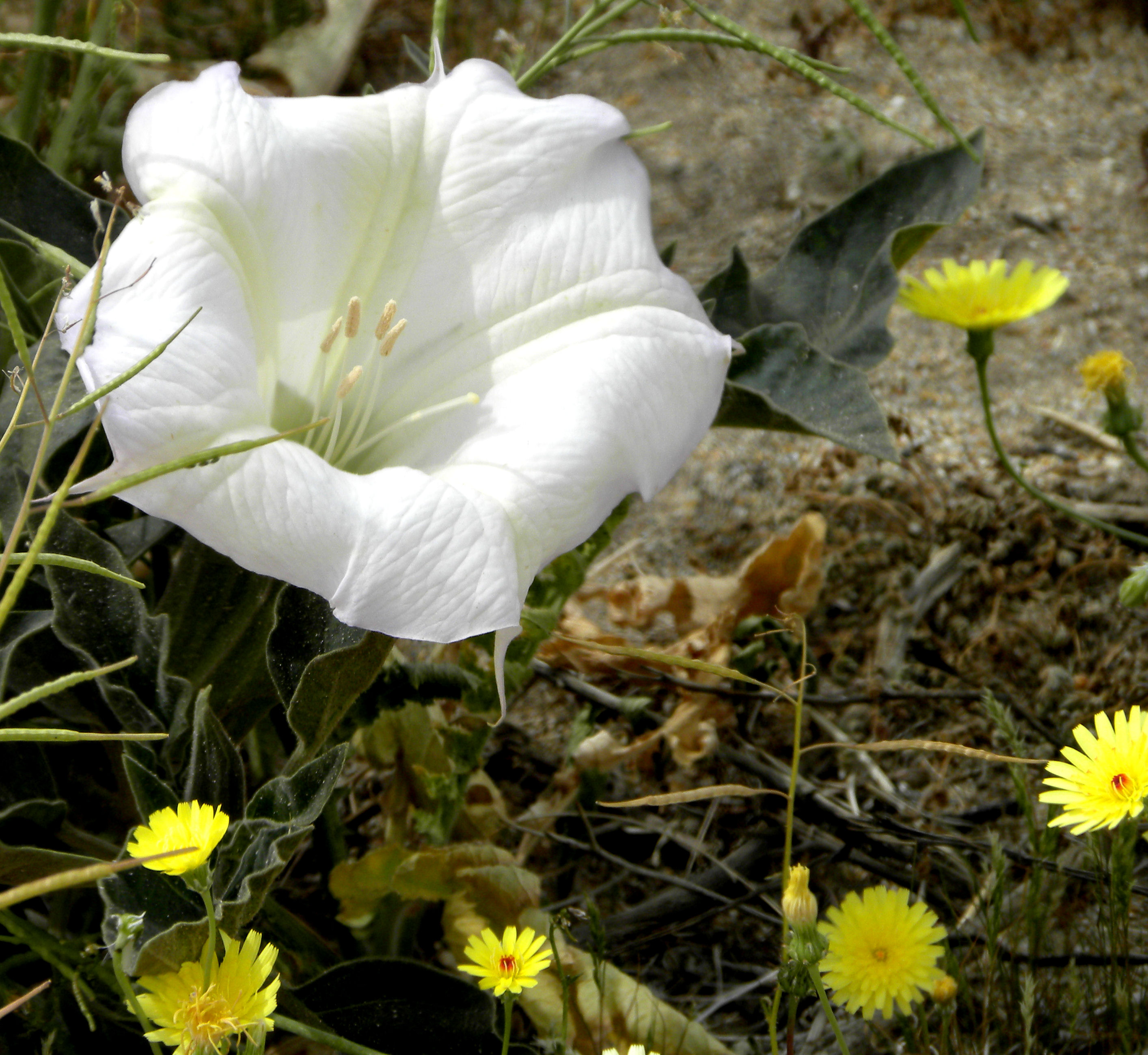
Datura (Jimsonweed) and desert dandelion

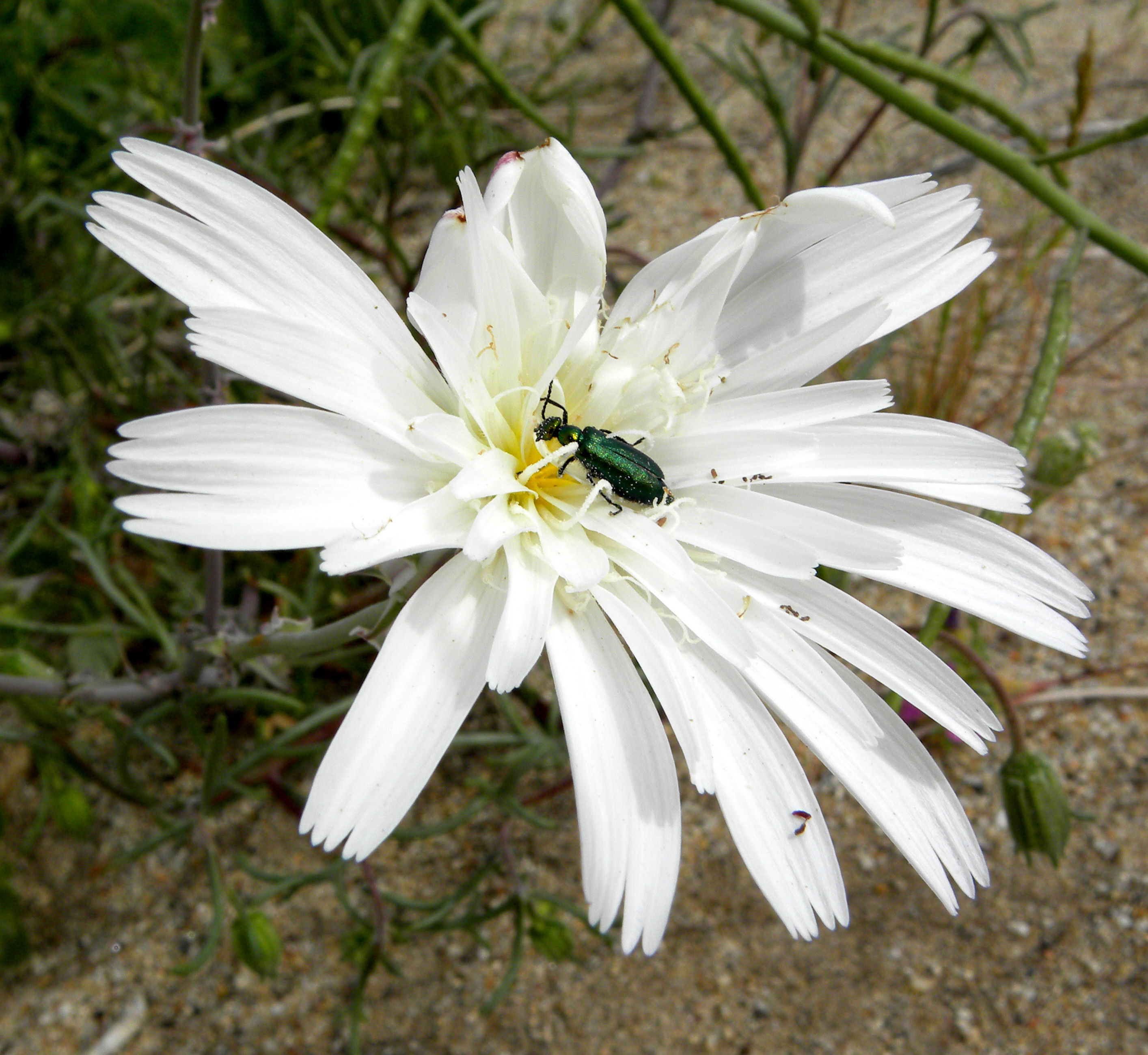
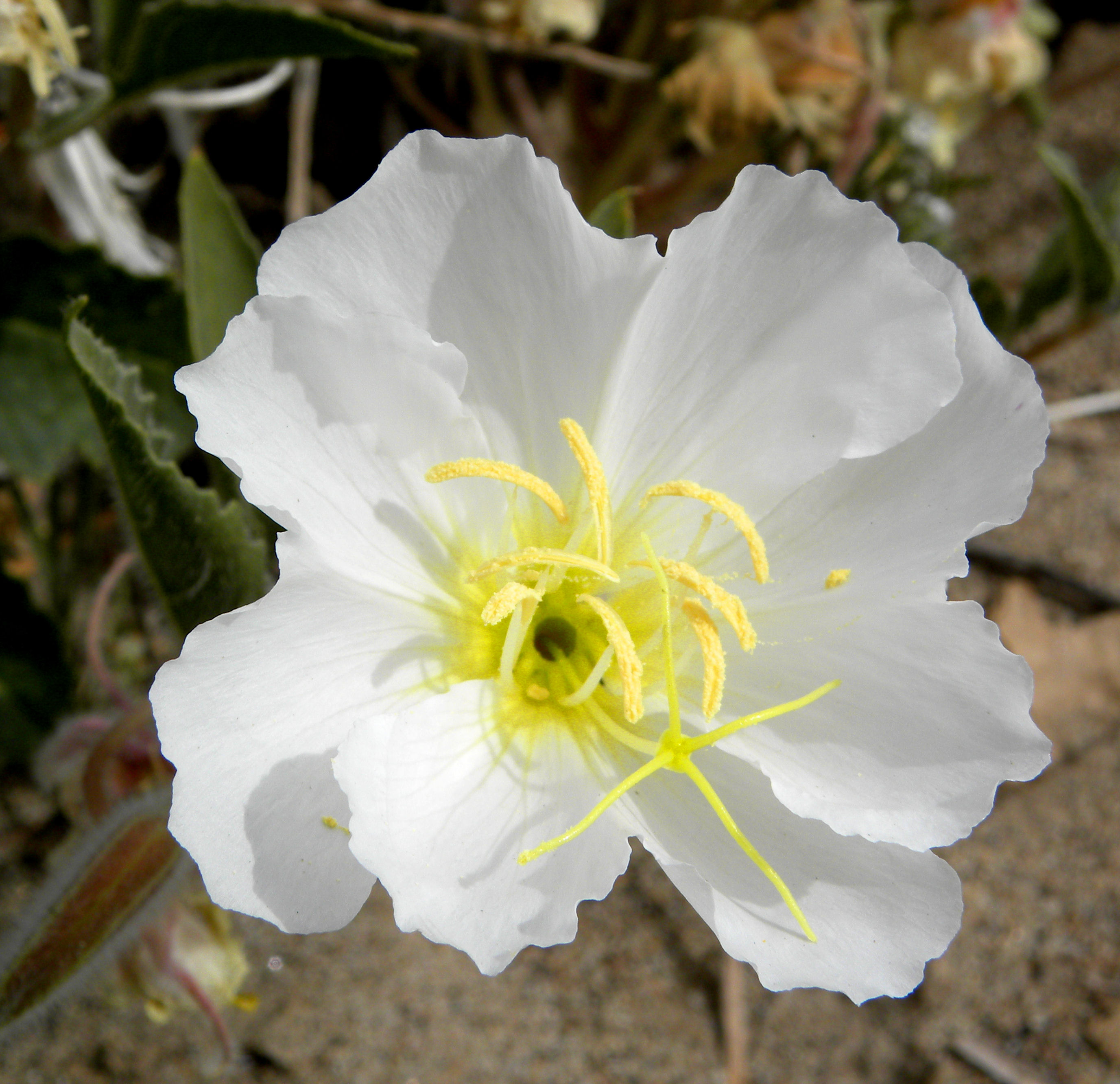
White flower with green beetle

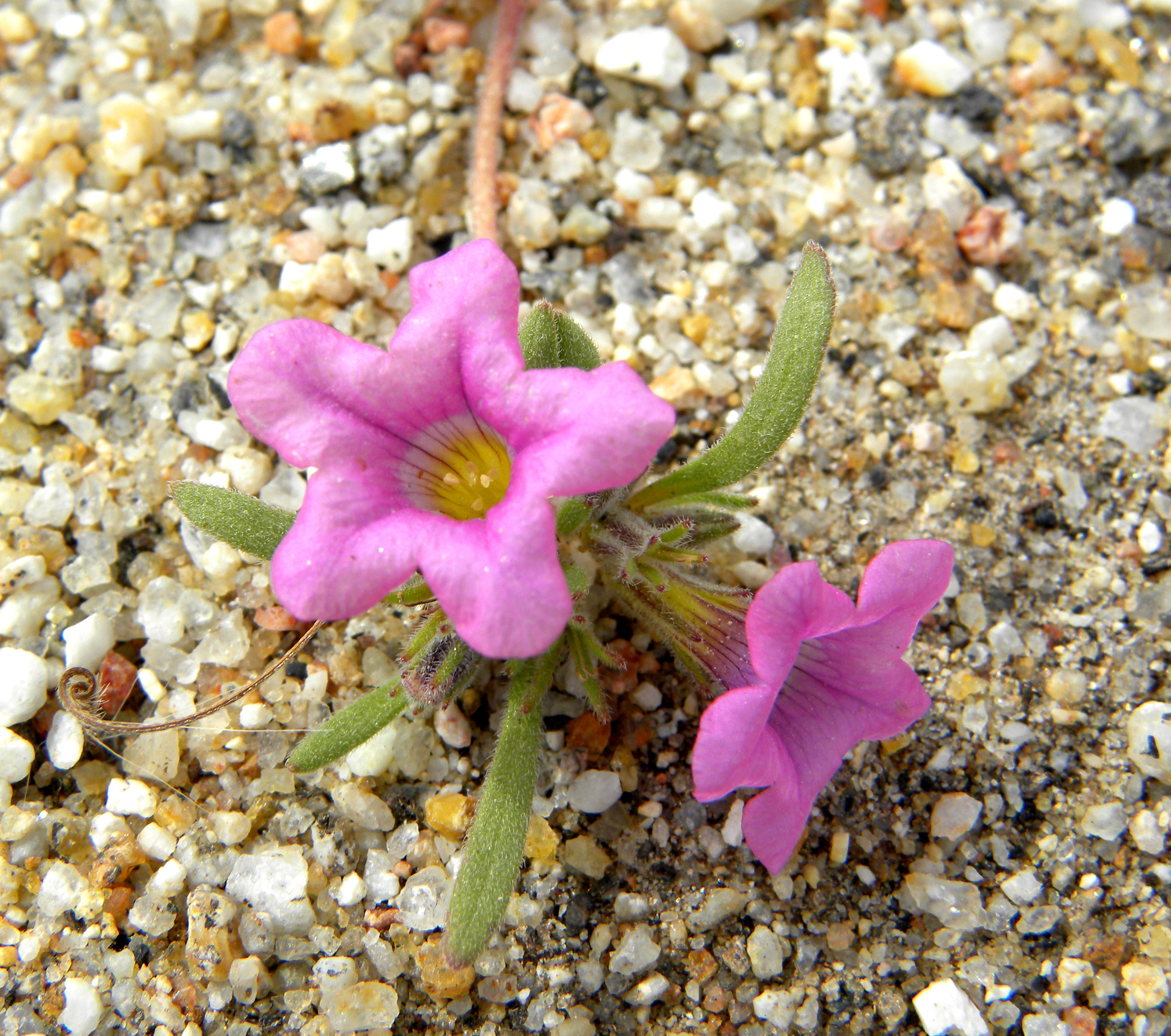
These tiny pink flowers were the size of a fingernail.

 I think that the pink flower is Purple Mat, one of the so-called “belly flowers.” You have to get down on your belly to really see these tiny things.

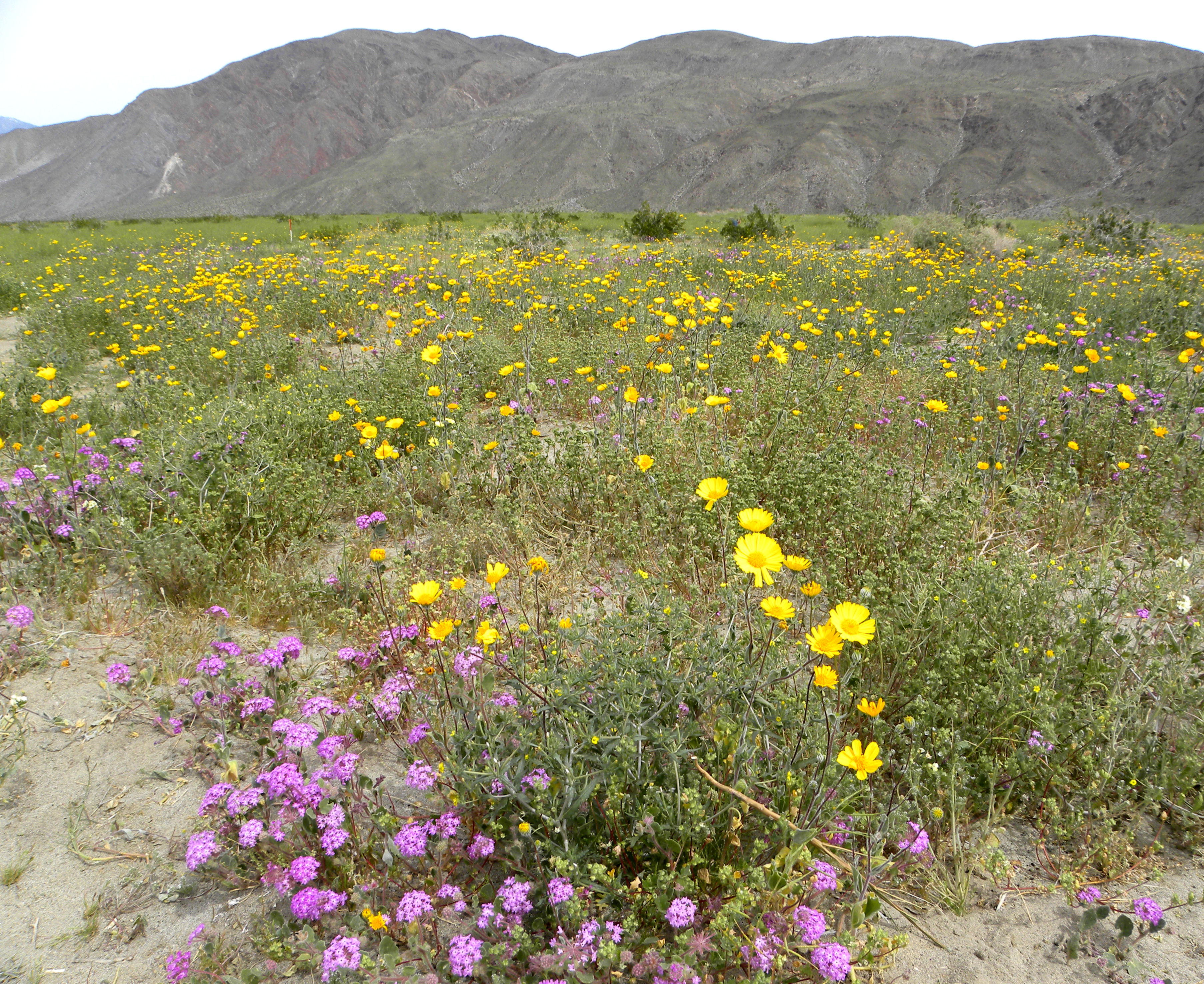
The desert wildflowers along Henderson Road in Borrego Springs can be spectacular. Unfortunately, an invasive mustard is crowding out the native wildflowers. The mustard grows taller and blooms earlier than the natives and will crowd them out in a few decades. This area has been handweeded of mustard to give the native flowers a chance.

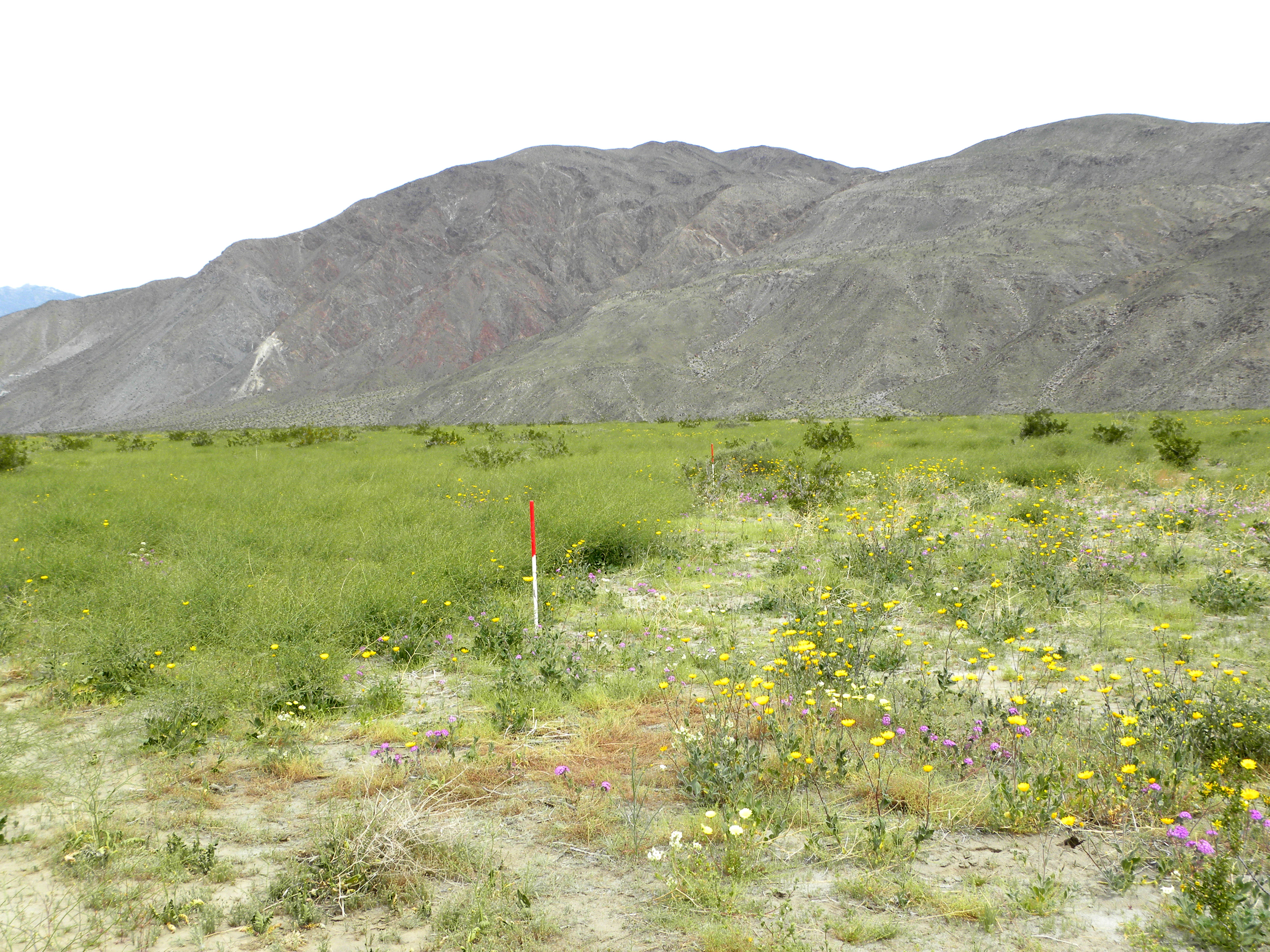
The previous photo showed a weeded area. This photo shows the boundary between the weeded area on the right and the non-native mustard on the left.

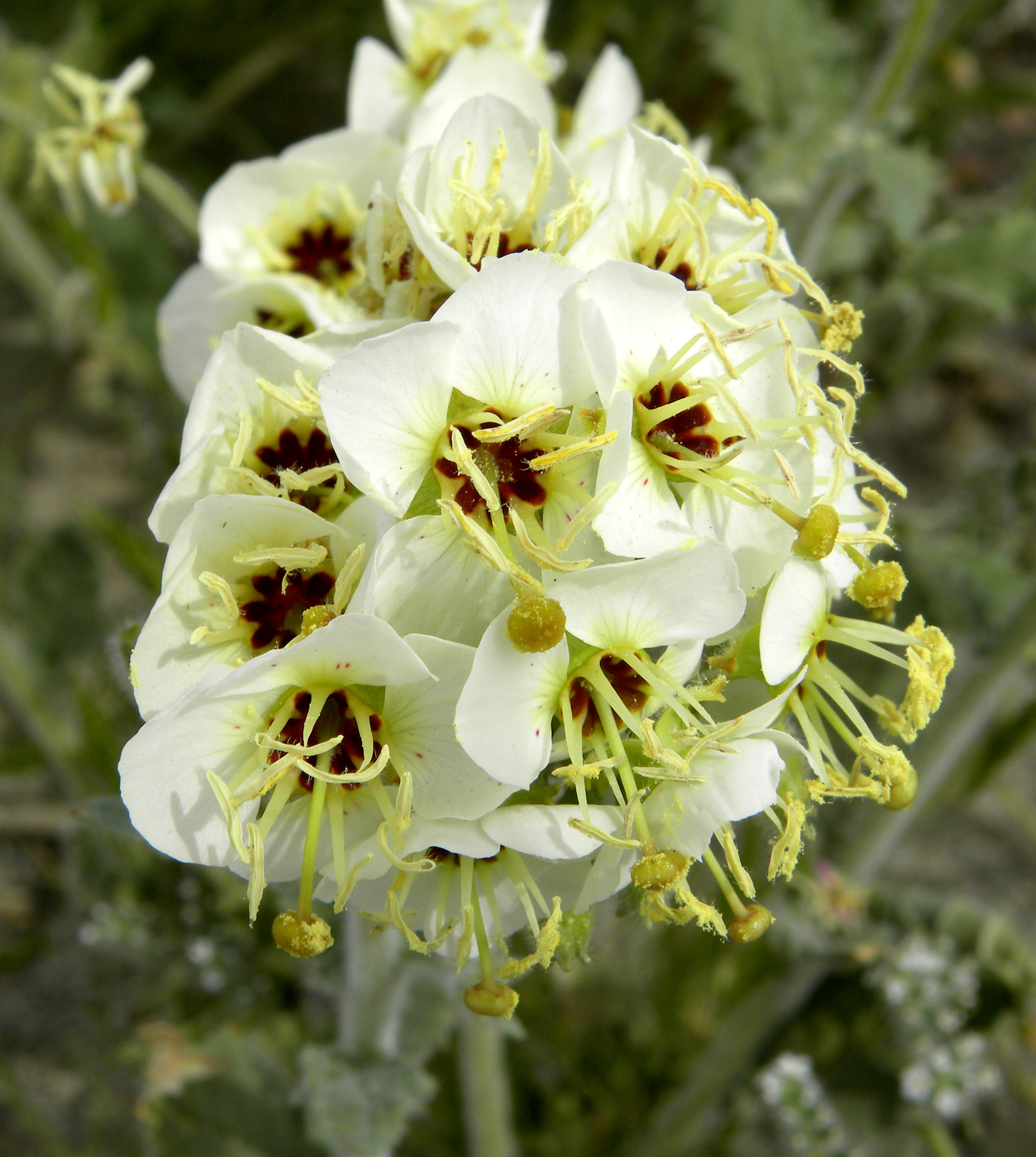
Brown-eyed Primrose

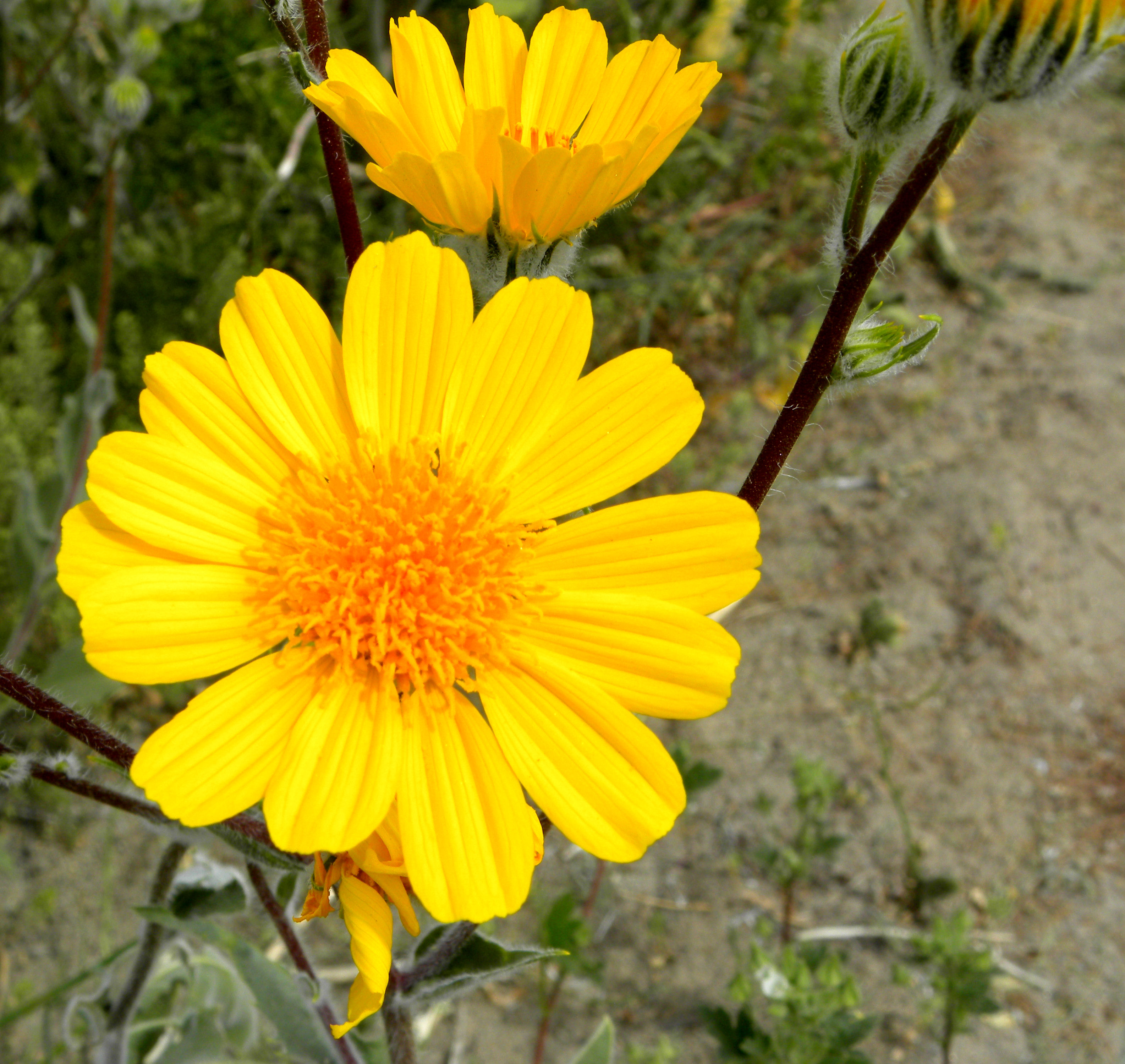
Not sure what this yellow flower is, maybe desert sunflower.

I wish I knew my desert wildflowers, but I can only identify a few of them. This isn't one of them.

Yellow flower

 This yellow flower may be one of the blazing stars, of which there are several species.

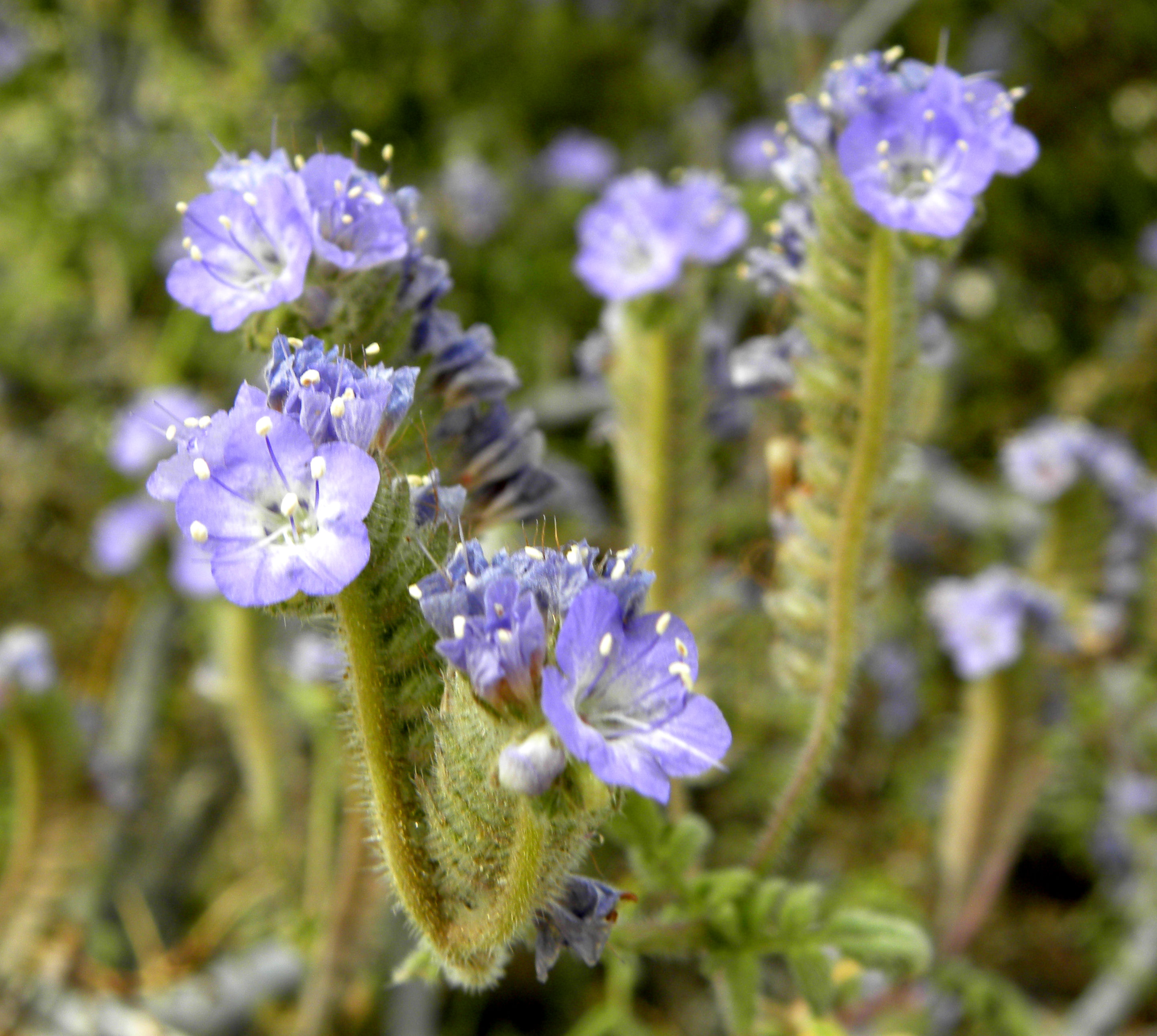
A blue Phacelia.

 Many of the Phacelias have fuzzy stems that can irritate the skin or cause rashes, so be careful about handling them.

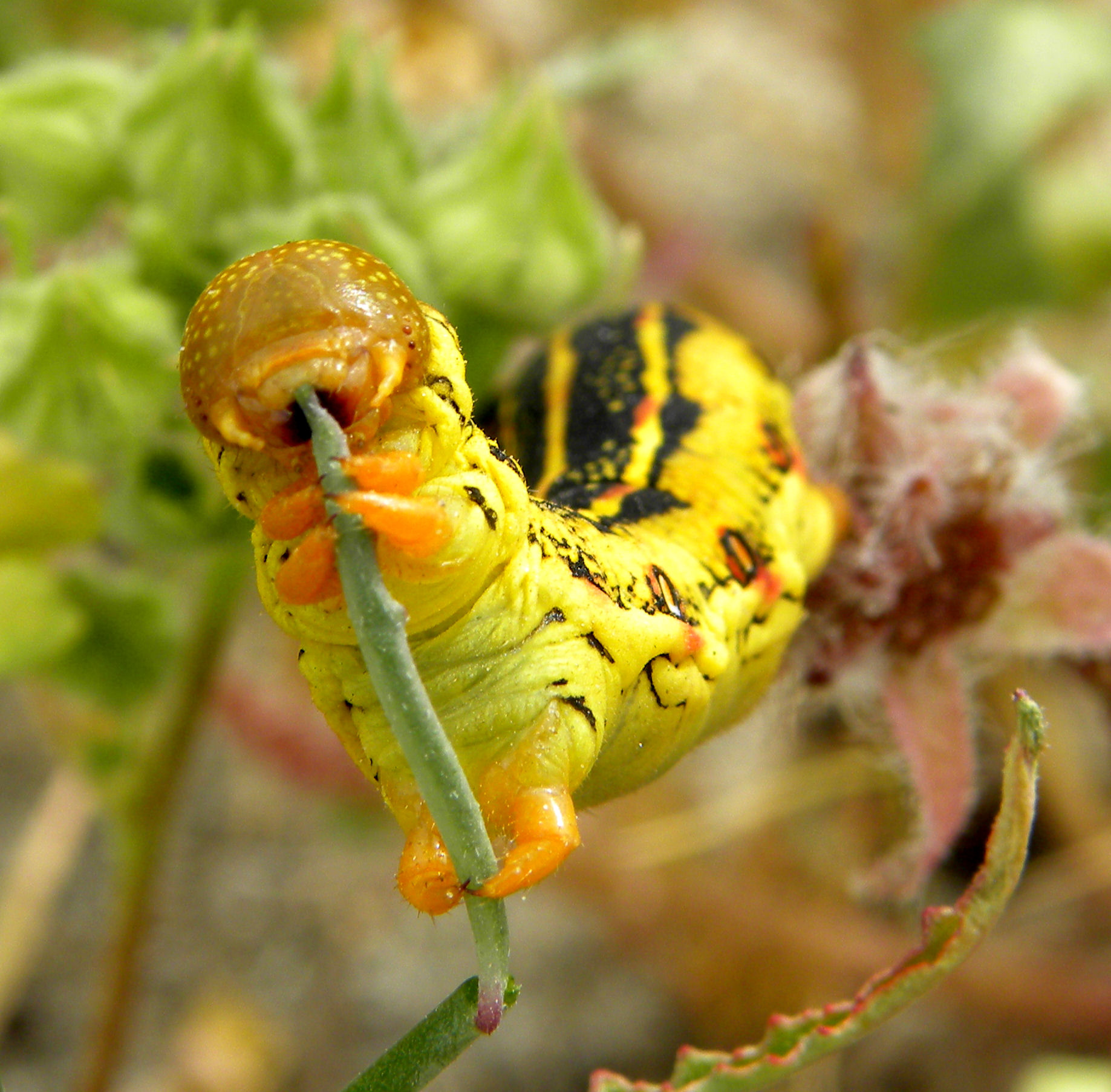
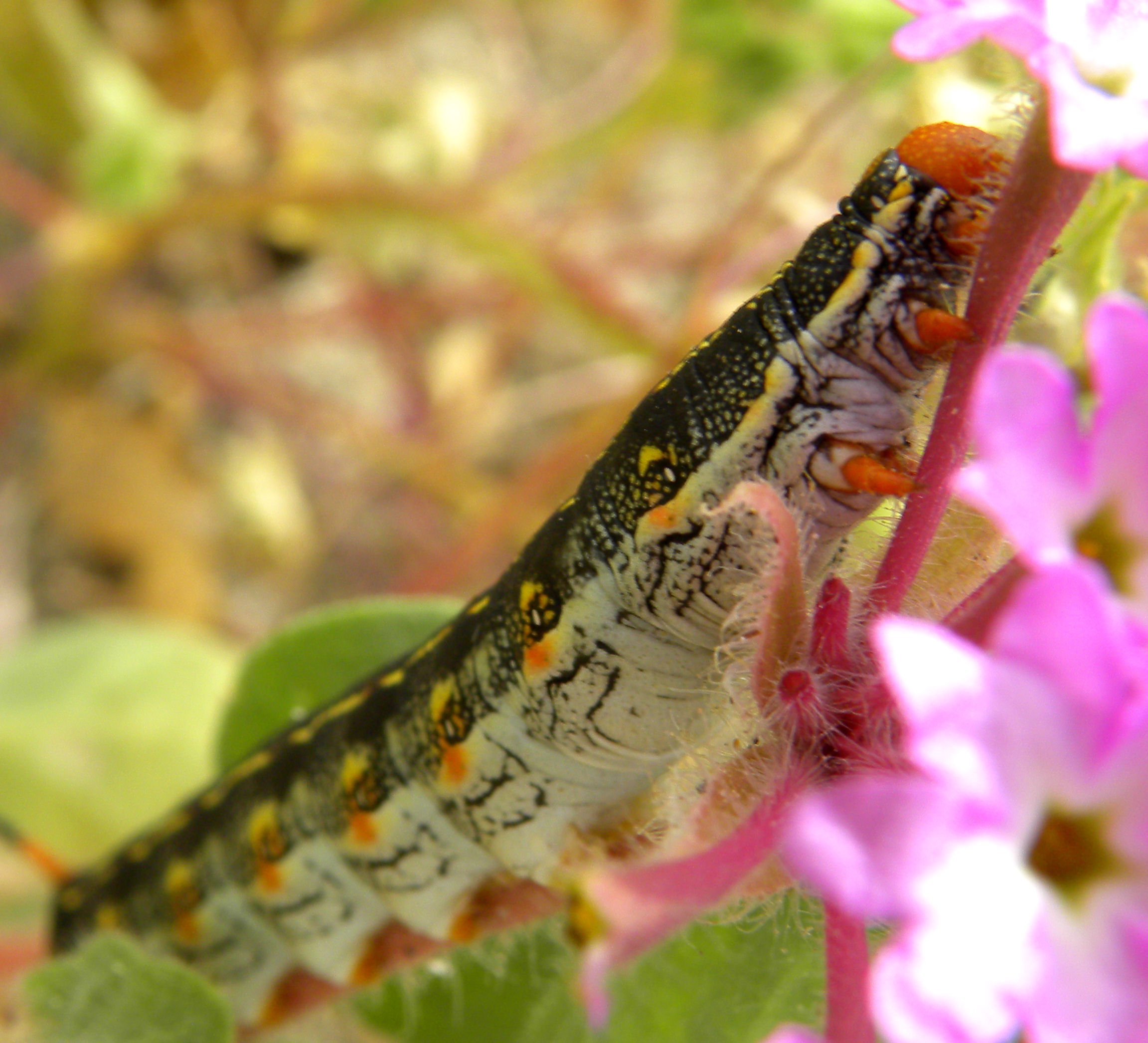
Creepy caterpillars can make beautiful butterflies. This is most likely the caterpillar of the White-lined Sphinx Moth, which isn't all that pretty in my opinion.

I think that this is also a White-lined Sphinx Moth caterpillar, just a younger instar of the larva.

 
Check out this video of the caterpillar eating the plant stem. Sorry about the background noise. I was pretty close to the road.

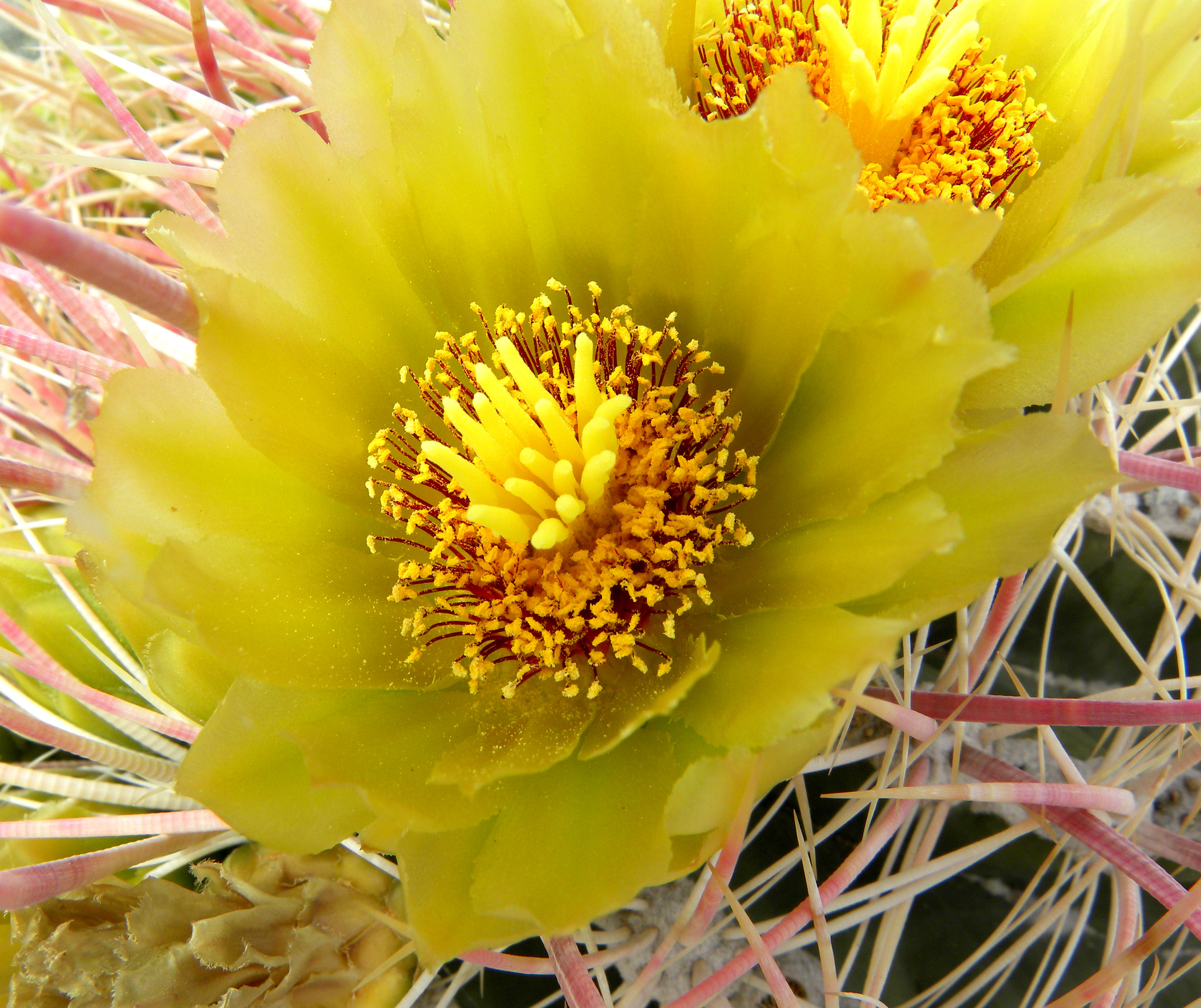
Barrel cactus flower

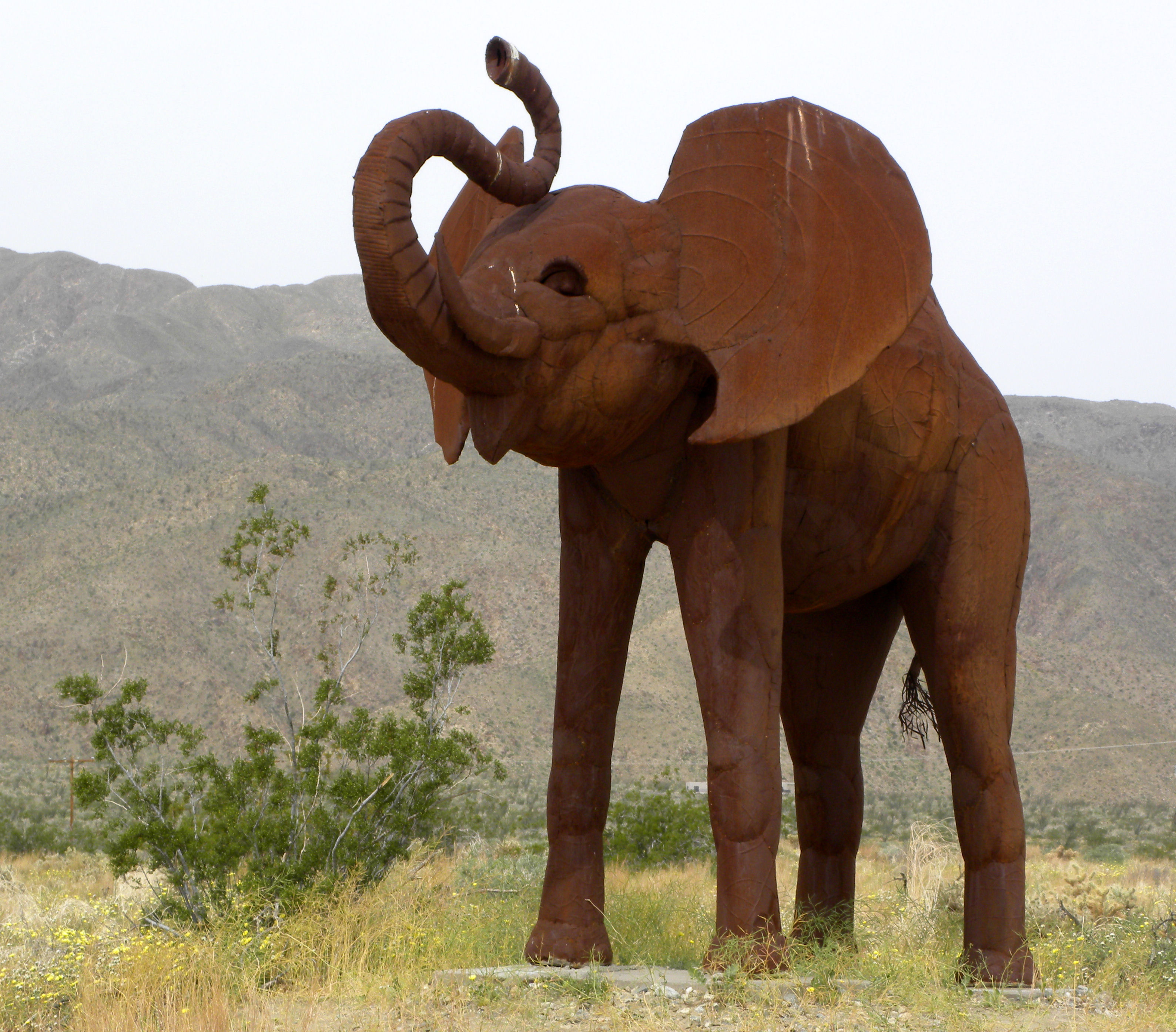
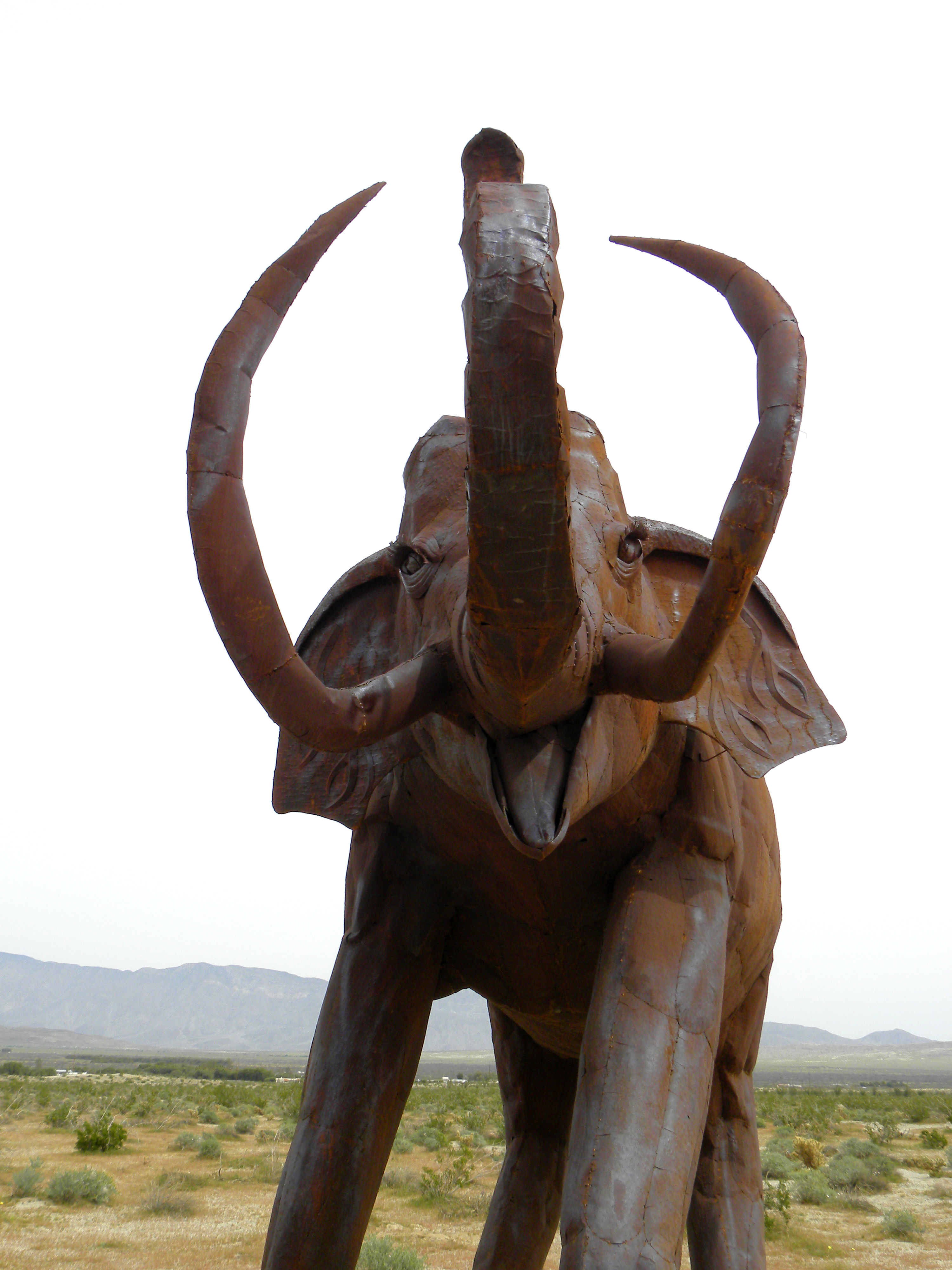
Southern Mammoth sculpture in Galleta Meadows by Perris CA artist Ricardo Breceda. These sculptures of prehistoric wildlife of the region were commissioned by Dennis Avery, heir to the Avery Dennison label company fortune. The sculptures rest on his property in Borrego Springs.

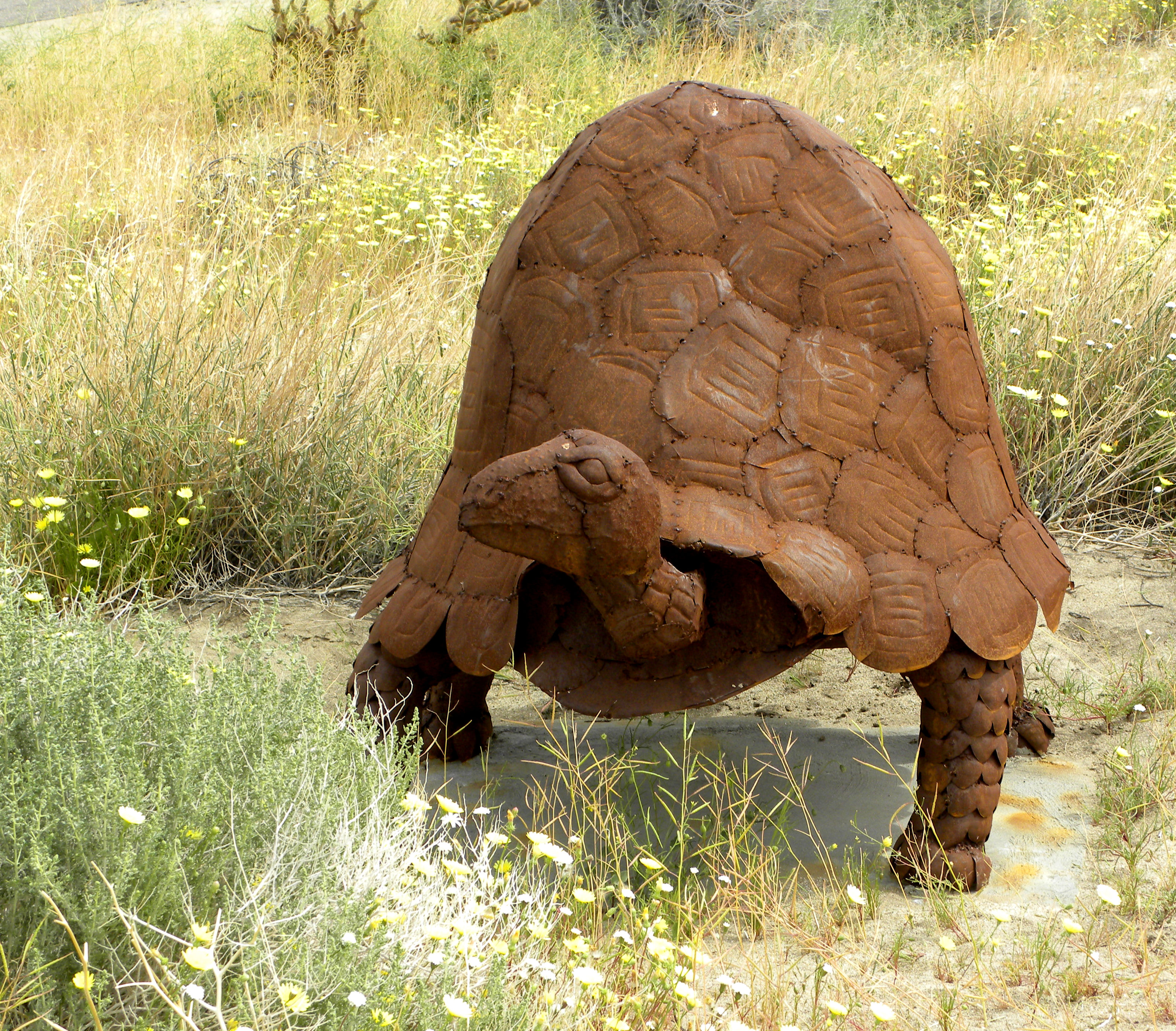
During the Pliocene and Pleistocene Epochs, prehistoric animals such as this Giant Tortoise roamed the Anza-Borrego region. The region then was a moist woodland with braided streams and a coastal delta where the early Colorado River emptied into the Gulf of California.

Columbian mammoths, which also roamed the region, stood 12 ft tall at the shoulder.

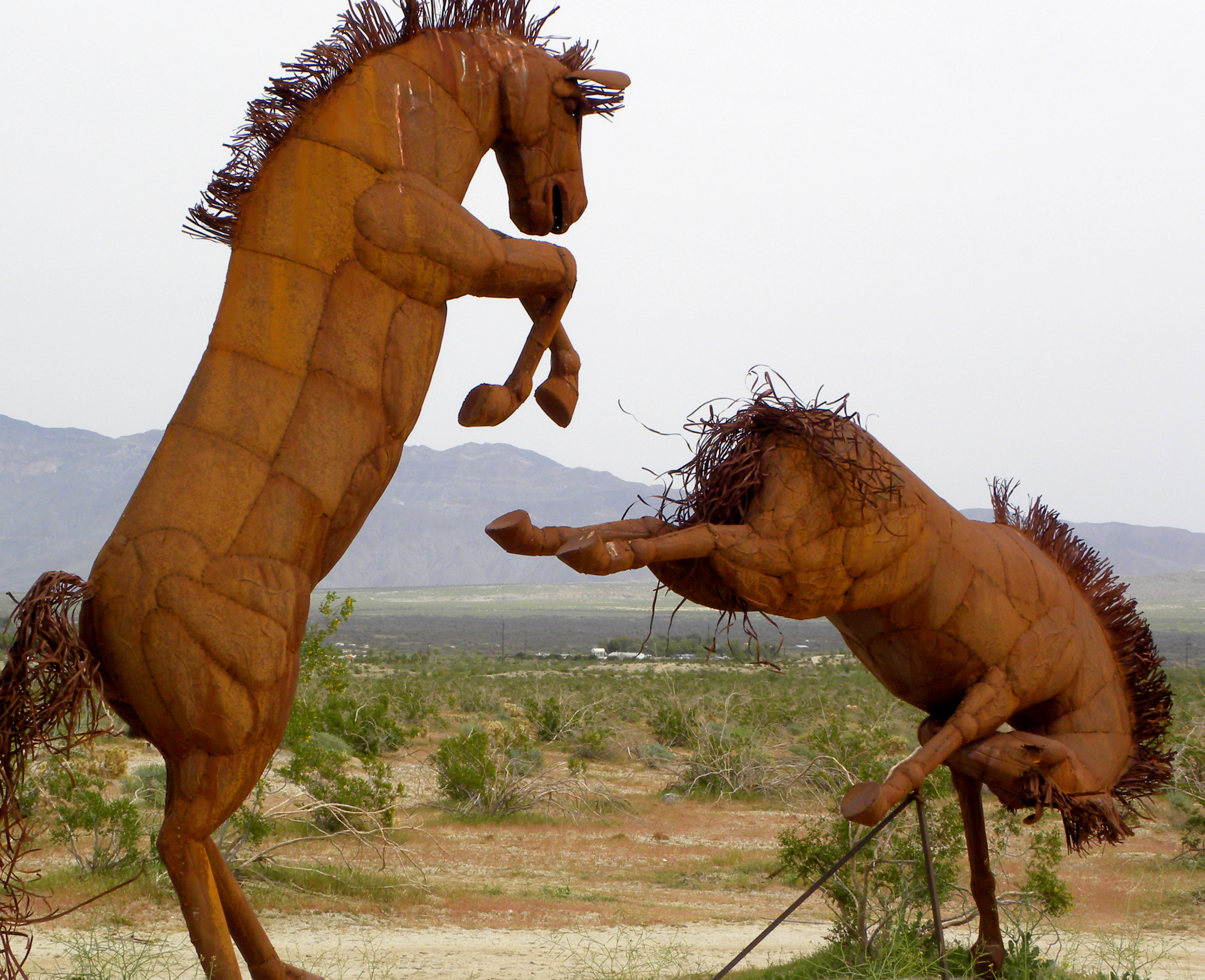
Four species of horses/zebras lived here as well. Horses evolved in North America, migrating over the landbridge with Asia. They survived in Asia and Europe, but died out in North America when the climate changed dramatically at the end of the Ice Ages 12,000 years ago.

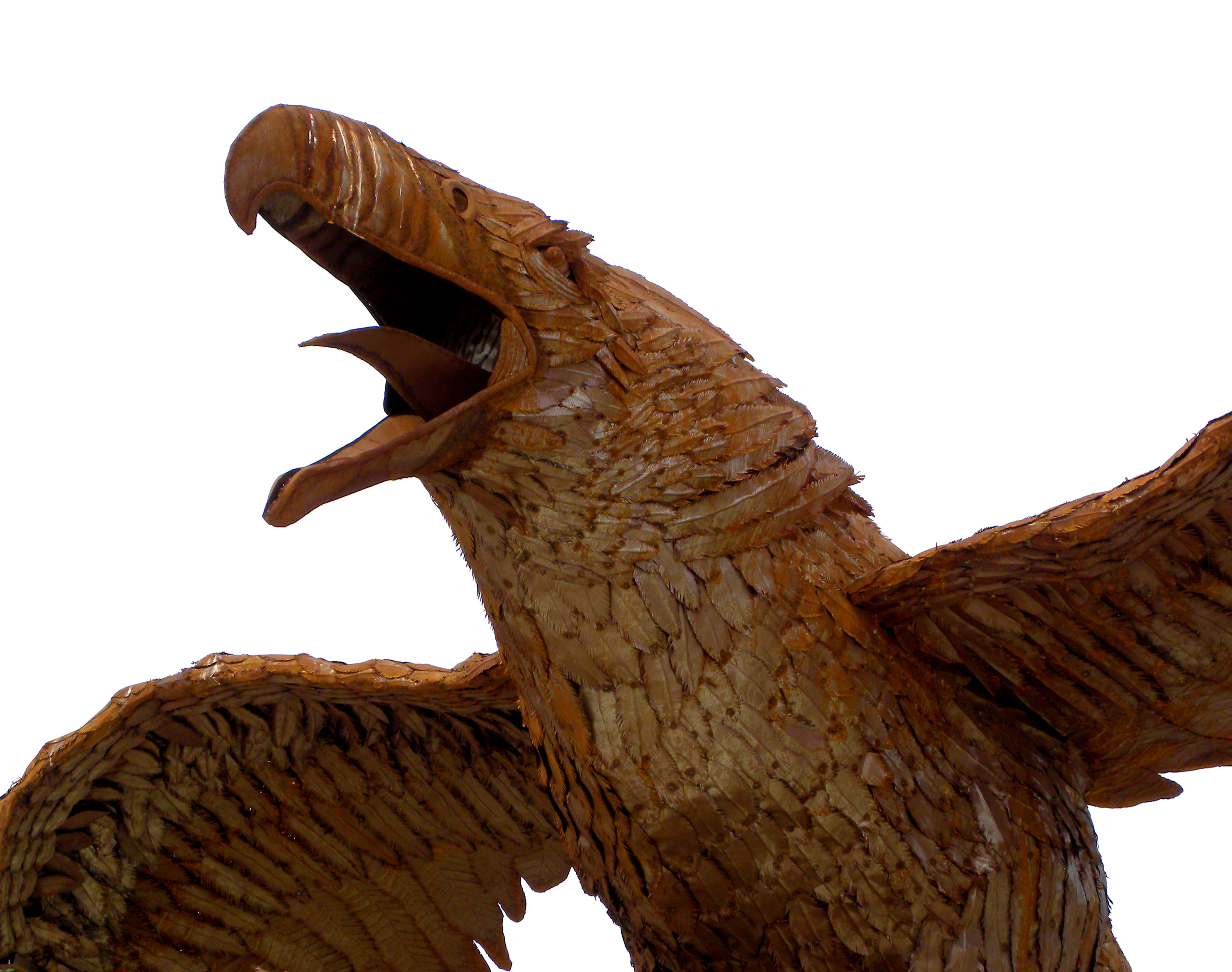
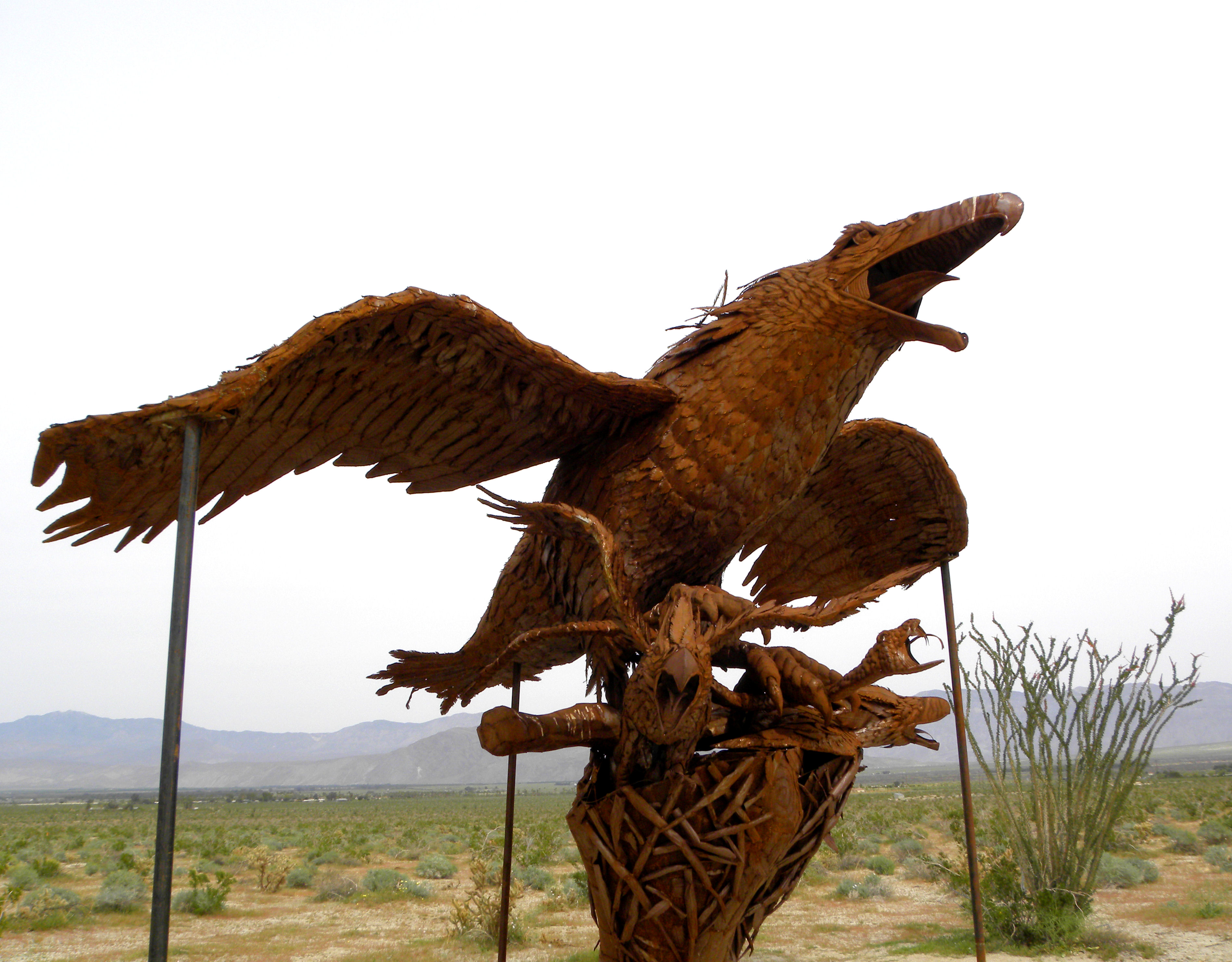
The Incredible Wind God Bird had a wingspan of 16 ft and was the largest flying bird in North America.

Juvenile Incredible Wind God Birds stayed with their parents for up to 12 years, learning to hunt. They may have had to take flight by either running or jumping off a cliff.

Borrego Springs is known for its Seely Red grapefruit. We bought a bag from a local produce stand before heading home.

We drove back through the quaint old mining town of Julian, where the daffodils were in spectacular bloom. Usually we stop in town, but not this trip.

No trip to this area is complete without an apple pie from the Julian Pie Company. But they’re not made in Julian. We bought a pie to take home from where they’re made in Santa Ysabel.

Many of the stores and restaurants in Julian sell apple pies, but pies from the Julian Pie Company are made in Santa Ysabel.

 Another great place to pick up a pie or turnover is Mom’s Bakery in Julian.

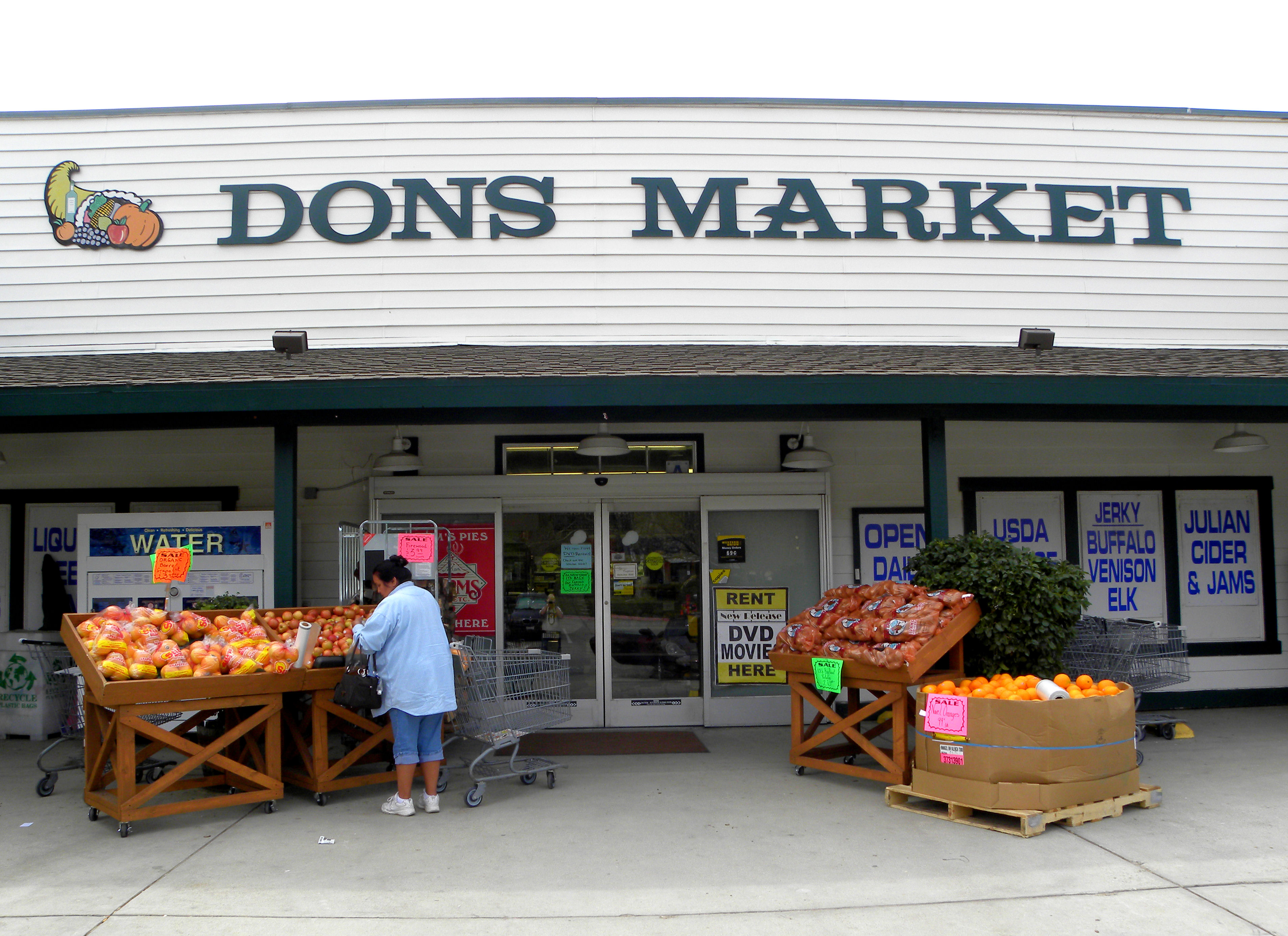
Don's Market in Santa Ysabel is a great place to get local produce, local grass-fed bison, and local wines from Menghini Winery. We also usually stop in at Dudley's Bakery next to the market to pick up some fresh bread.

I love driving through the southern California farmland as well as the wildlands. On our way home, we saw horses, cattle, goats, sheep, bison, and even camels from a local camel’s milk dairy. Amazing place, this southern California.

(To read more of Lou Murray’s environmental writing, see her weekly column, Natural Perspectives, in the Huntington Beach Independent at www.hbindependent.com /blogs_and_columns)

Posted in Uncategorized | Tagged , , , , , , , , , | 2 Comments

Harvest Monday March 22, 2010

Super Sugar Snap peas are towering over the other veggies in the raised beds.

The harvest is beginning to pick up. I’m discovering that a garden ready to pick makes a much prettier picture than a garden that is being harvested from regularly. So I got a nice garden hod in which to present photos of the harvest. I worried that it would make a pathetic photo with one limp radish in a giant hod, but fortunately, the harvest has been a bit better than that. Here is one morning’s harvest for a salad and a stirfry that lasted us two days.

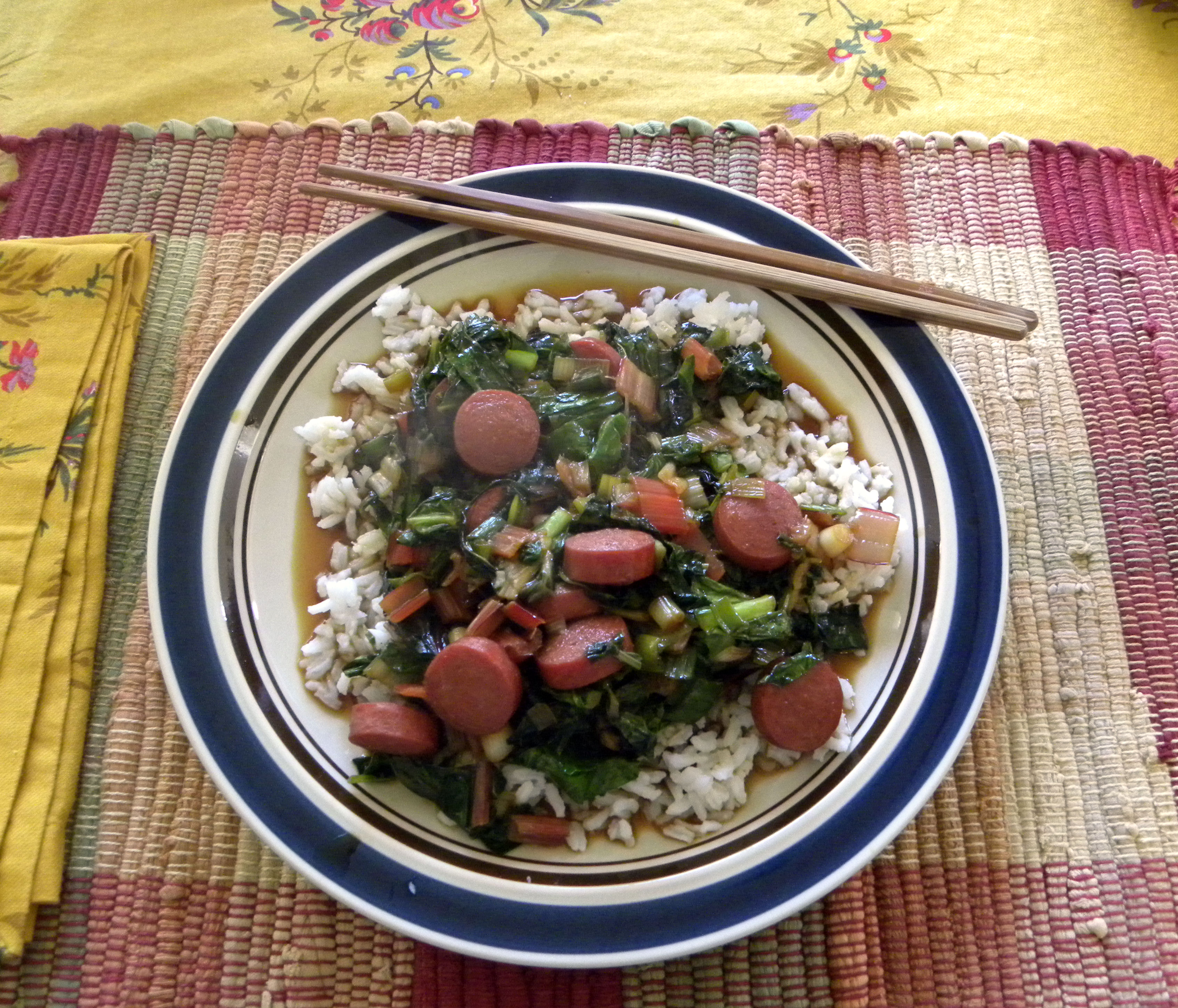
One morning's harvest for a salad and stirfry--radish, cabbage leaves, lettuce, chard, bell pepper, snow peas, cilantro.

This salad has green oakleaf, black-seeded Simpson and red salad bowl lettuce, a couple of baby sorrel leaves, chopped cilantro, a German white icicle radish and a yellow bell pepper that overwintered and just now got ripe.

No two of my stirfrys are ever alike due to changing harvests and the fact that I don't measure the soy sauce, mirin, rice wine vinegar and ginger that I use to spice them. Sometimes I add a sliced Hebrew National beef knockwurst or firm tofu.

Forgot to mention that I fed the last of the cabbages in one area to the chickens, dug up the soil, added more compost, and planted Scotch blue curled kale, Italian lacinato kale (a new variety for me), and Chinese broccoli/kale hybrid (Ryokuho).

My first leeks sprouted today; my Pink Summercicle radishes are up with huge cotyledon leaves and lovely rich pink stems.

Here is my harvest for this week. I don’t count the massive amount of greens that my chickens eat. That gets counted as the egg harvest.

Week ending March 21

16 eggs

4 oz. Super Sugar Snap Peas plus a few tendrils

1 oz. pea shoots

14.5 oz. lettuce (green oakleaf, black-seeded Simpson, red salad bowl)

5 oz. cabbage leaves (darn things never made heads, so I fed the rest to the chickens)

10.5 oz. chard

1 oz. radish (one lone radish)

2 oz. bell pepper (one small out of season bell pepper)

2 oz. (45 flowers)  nasturtium flowers for making nasturtium vinegar

Total harvest 2 lbs. 8 oz. produce, plus 16 eggs

If you had a harvest, visit Daphne’s Dandelions and post your results.

(To read more of Lou Murray’s environmental writing, see her weekly column, Natural Perspectives, in the Huntington Beach Independent at www.hbindependent.com /blogs_and_columns)

Posted in Uncategorized | Tagged , | 10 Comments

Snakes alive

What glorious weather we’re having, sunny skies and temps in the high 70s. Spring is busting out all over.

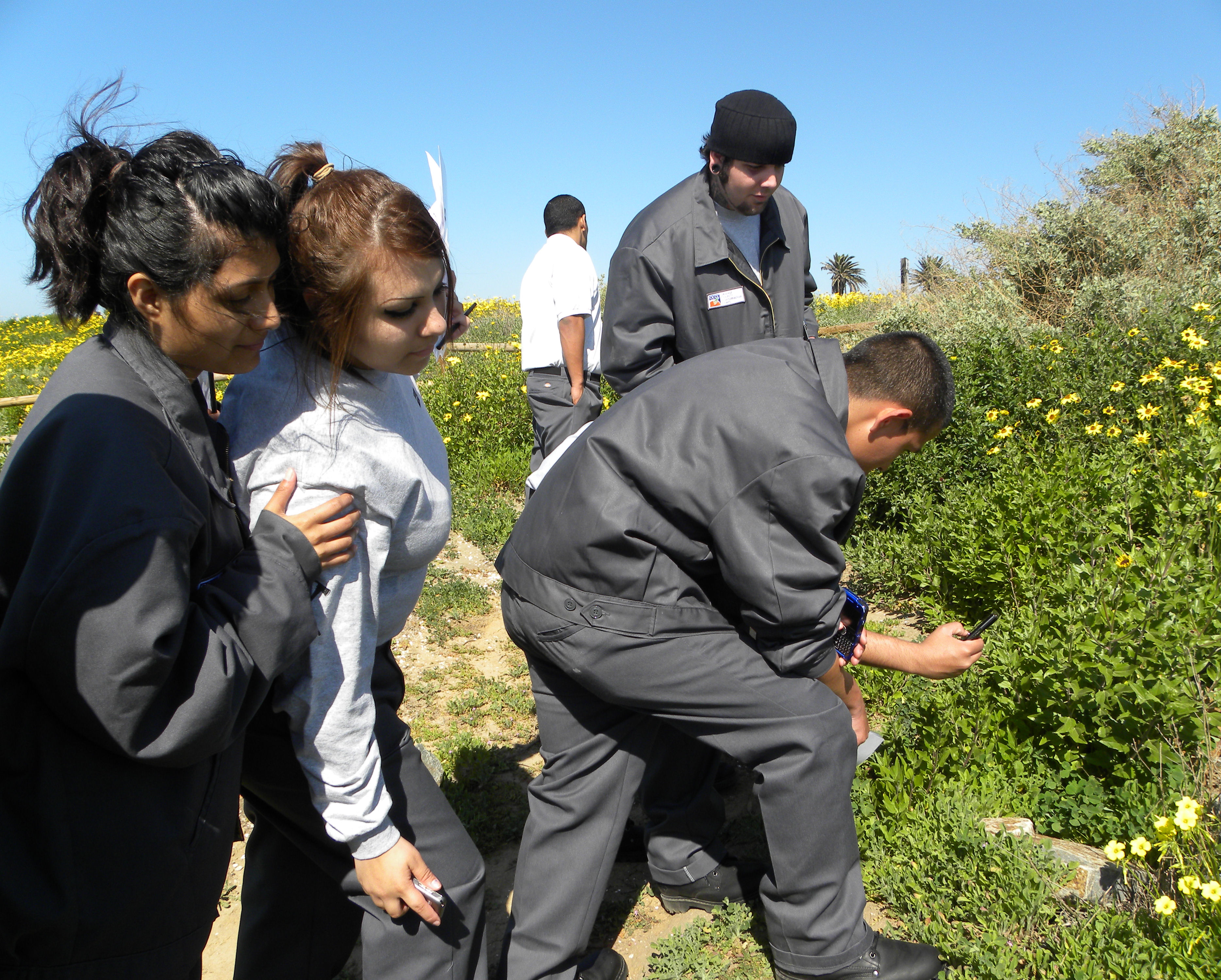
I had a work day this week, so I thought I’d share some photos of this month’s Orange County Conservation Corps new hires.

For our educational day in the field, we did a wildlife survey at the Bolsa Chica Ecological Reserve. I give each Corps member a checklist. They also have photo sheets of the various kinds of wildlife from invertebrates to mammals that we’re likely to see. We found round stingrays on this survey, the first of the spring. Seal Beach and the Bolsa Chica have the largest concentration of round stingrays that is known.

But we saw no sharks. Although gray smoothhound and leopard sharks are present in abundance in the summer, they’re usually not visible from shore.

What do you think they're photographing with their cell phones? Wildflowers? Not a chance.

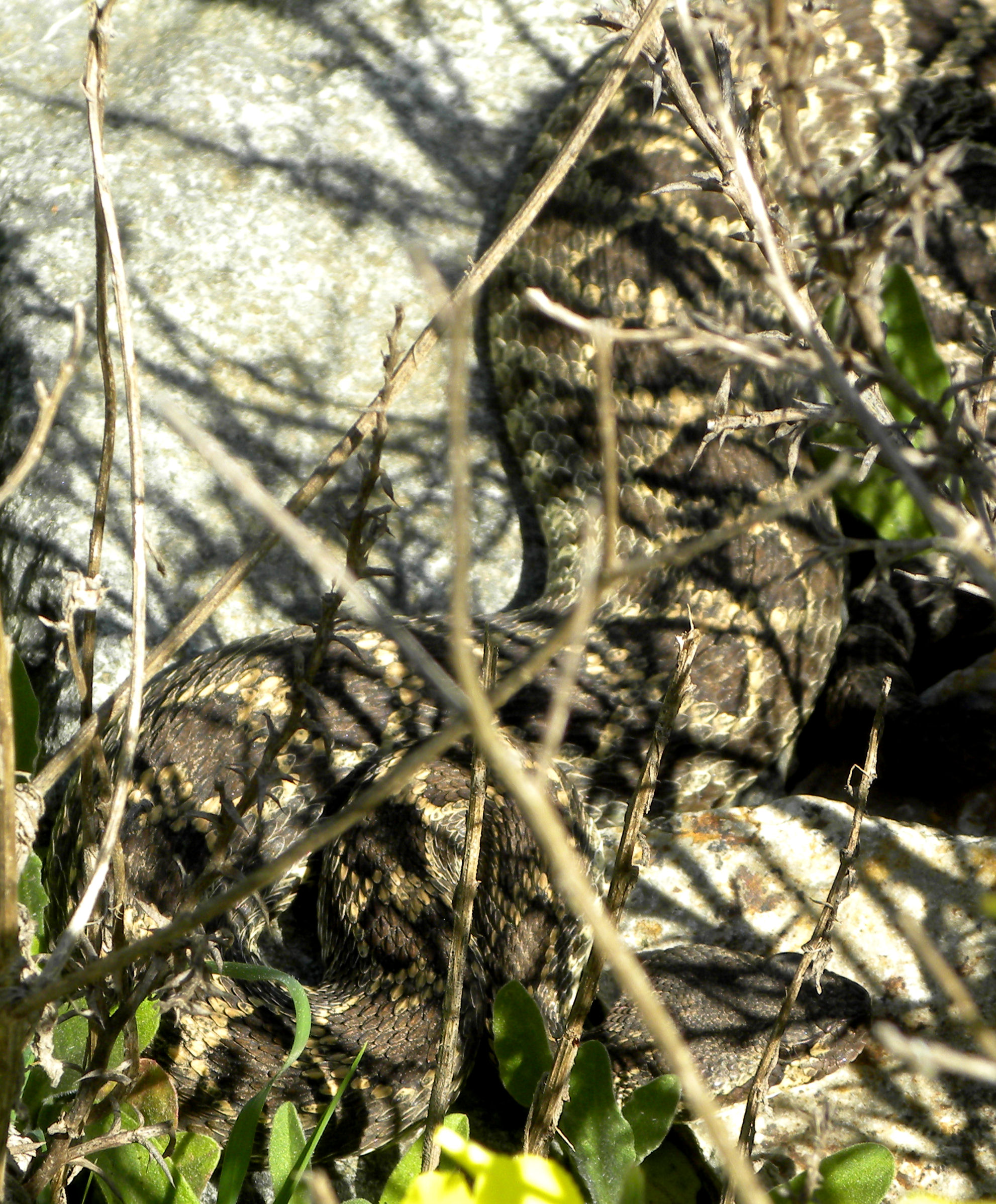
March is when the rattlesnakes come out of hibernation. We survey the rock pile where they den every time we go, but only see the snakes in March. Can you see the head? Lower right corner.

This snake is large, but not full. Looks like it hasn't eaten all winter. As soon as it warms up, it will go looking for a baby ground squirrel for lunch.

The Western Pacific rattlesnake was a rare find. After our field trip, we go to the Bolsa Chica Conservancy Interpretive Center to look at the marine aquarium and touch tank, as well as live non-poisonous snakes such as gopher and king snakes. Fun day.

Yep, this is what I do for a living, such as it is. I’m only working about one day every other month, so I’m pretty much retired these days except for my newspaper column.

(To read more of Lou Murray’s environmental writing, see her weekly column, Natural Perspectives, in the Huntington Beach Independent at www.hbindependent.com /blogs_and_columns)

Posted in Uncategorized | Tagged , , , | 8 Comments

What is (or will be) growing in my garden this year

I promised my readers in the Huntington Beach Independent that I’d list the vegetables that I’m growing in my garden this year. Since it’s only March and spring planting is still underway, with summer and fall plantings only a dream, this is not just what I’m growing now, but also what I plan to grow in 2010.

Most of our vegetables grow in these raised beds, but I have two other small areas of veggie garden as well.

My seed orders from The Cook’s Garden and Kitazawa Seed Company have already arrived, and I’ve made purchases of Botanical Interests and Lilly Miller seeds from our closest Armstrong Garden Center. I also have some free samples from Ferry-Morse. I still need to place my order with Seed Saver’s Exchange. I save seeds, so I have plenty of packs left from last year to choose from as well as some seeds that I saved myself from heirloom varieties of vegetables.

Most seeds will last two years, and some will last five. But I have to confess that I have some seed packets old enough to drive and one old enough to vote! Those seeds are too old to sprout, so my husband plans to use some of them to make a display of various seeds for his introductory biology students at college.

Here are the vegetables that I am or will be growing this year:

Artichoke (Green Globe)

Arugula

Bean (Blue Lake pole, Cherokee Trail of Tears pole, Golden Wax bush, Kentucky Blue pole)

Beets (Chioggia, Golden, Lutz Greenleaf)

Bok Choy (baby white stem) 

Broccoli (I had yet another crop failure this winter with broccoli. I never seem able to grow good broccoli, so I’m giving up on growing my own in favor of store-bought)

Cabbage (Chinese Kaisin Hakusai, Chinese Chirimen Hakusai, Green Savoy, Red)

Carrot (Danvers Half Long, Kyoto Red)

Cauliflower (Candid Charm, Cheddar F1, Graffiti, Violet Queen)

Chard (Bright Lights, Lucullus, Rhubarb)

Chinese Broccoli (Ryokuho hybrid)

Collards (Champion)

Cucumber (Tendergreen Burpless, Japanese hybrid Summer Top, Spacemaster)

Eggplant (Black Beauty, Ichiban, Millionaire, Neon Hybrid, Pingtung Long)

Garlic

Ginger

Horseradish

Kale (Lacinato Italian, Scotch Blue Curled)

Komatsuna (Hybrid Green Boy)

Leeks (Blue Solaise)

Lettuce (Amish Deer Tongue, Black-seeded Simpson, Forellenschuss, Grandpa Admire’s, Green Oakleaf, Lollo Rosa, Red Sails, Red Saladbowl, Royal Oakleaf)

Mibuna

Misome

Mizuna

 Onion (Cipolla Babosa, Evergreen Bunching, Red, Yellow)

Peas (Amish Snap, Golden Sweet, Mammoth Melting Sugar, Oregon Sugar Pod, Snow Wind, Sugar Snap, Sugar Sprint, Sugar Pea Taichung 13)

Potato (Blue)

Radish (D’Avignon [French Breakfast], German White Icicle, Pink Summercicle, Redhead [Roodkopje])

Spinach (Bloomsdale, Olympia–my spinach always seems to come out stunted whether I grow it from seed or transplants and it isn’t worth the space. This is another veggie that I’m giving up on in favor of store-bought.)

Squash, Summer (Aristocrat Zucchini, Bennings Green Tint Patty Pan, Early Prolific Straightneck Yellow, Gold Nugget, Lebanese, Lunar Eclipse Hybrid Patty Pan, Yellow Patty Pan, White Patty Pan)

Squash, Winter (Blue Magic Hubbard, Green Kuri Miniature, Ponca Butternut, Red Kuri Miniature)

Sweet Potato

Sunchoke

Tomato (Better Boy, Black Krim, Brandywine, Champion, Early Girl, Mortgage Lifter, Roma)

Due to limitations of space and sun, some things are growing in bowls and containers.

I have some Amish Pie Pumpkin and Moon and Stars Watermelon seeds as well, but I had been counting on Huntington Beach to get a community garden this summer to give me the space to grow them. Not sure it’s going to happen in time. I have so little garden space that I’m growing things in felt Smart Pots in my driveway this summer. Well, there’s room for more pots in the driveway if the community garden isn’t ready in time.

Blue Potatoes and Sunchokes are growing in Smart Pots in the driveway.

Where there’s a will, there’s a way!

(To read more of Lou Murray’s environmental writing, see her weekly column, Natural Perspectives, in the Huntington Beach Independent at www.hbindependent.com /blogs_and_columns)

Posted in Uncategorized | Tagged , , | 14 Comments

Curried Butternut Soup with Goat’s Milk

I still have a couple of butternut squash left over from last year’s gardening season and need to use them soon. This is what I did with one of them. I know this recipe sounds awful, but it is actually delicious and not at all “goaty.”

I found a recipe for pumpkin coconut soup on Sylvana’s Obsessive Gardener blog (at least I thought that was where I got it, but now I’m not so sure since I didn’t see it there when I checked) and was fascinated by it. I printed it out and decided to give it a try the other day. 

I didn’t have any coconut milk on hand, but I did have a can of evaporated goat’s milk. (Don’t ask me why I had that on my shelf–I have no idea why I bought it). I made some other variations to the soup like using butternut instead of pumpkin and leaving out the brown sugar and cayenne pepper. I thought my soup really turned out nicely.

Curried butternut soup with goat's milk

 Here’s my recipe for Curried Butternut Soup with Goat’s Milk.

1 medium butternut squash

2 T. olive oil

1/2 tsp cinnamon

1/2 tsp salt

Cut squash into quarters, scoop out seeds, brush with olive oil and sprinkle with cinnamon and salt. Roast cut side up at 400 degrees F. for 30-40 minutes, or until butternut is tender and edges are a bit browned. Scoop out baked squash and put into a blender. I ended up with one cup of baked squash, but two cups would work equally well I’m sure. Add the following ingredients to the blender.

2 C. chicken broth

1 tsp ground coriander

1/4 tsp nutmeg

1/4 tsp ginger

Blend until uniform. Pour into a saucepan. Add the following:

1 can evaporated goats milk

2 T. butter

Heat until simmering. Adjust seasonings if necessary. Garnish with chopped cilantro.

I would have added a dollop of creme fraiche if I had had any. I may add a tsp of curry powder to the other spices to punch it up a bit the next time I make this. And I may try it with coconut milk next time.

(To read more of Lou Murray’s environmental writing, see her weekly column, Natural Perspectives, in the Huntington Beach Independent at www.hbindependent.com /blogs_and_columns)

Posted in Uncategorized | Tagged , , , , , | 2 Comments

Happy St. Patrick’s Day 2010

Last week it was cold and windy, but not this week. The weather has been so unseasonably hot in coastal Orange County CA this week, that it’s hard to belive that it’s only mid-March. The heat is confusing my cabbage and it’s all bolting.

I got NO heads of cabbage this spring. Not one. The poor things were so sad looking, split heads or no heads, all chewed up by earwigs, that I’m giving them all to my chickens. They love cabbage and earwigs. No worries, the grocery store had cabbage at 25 cents a lb today.
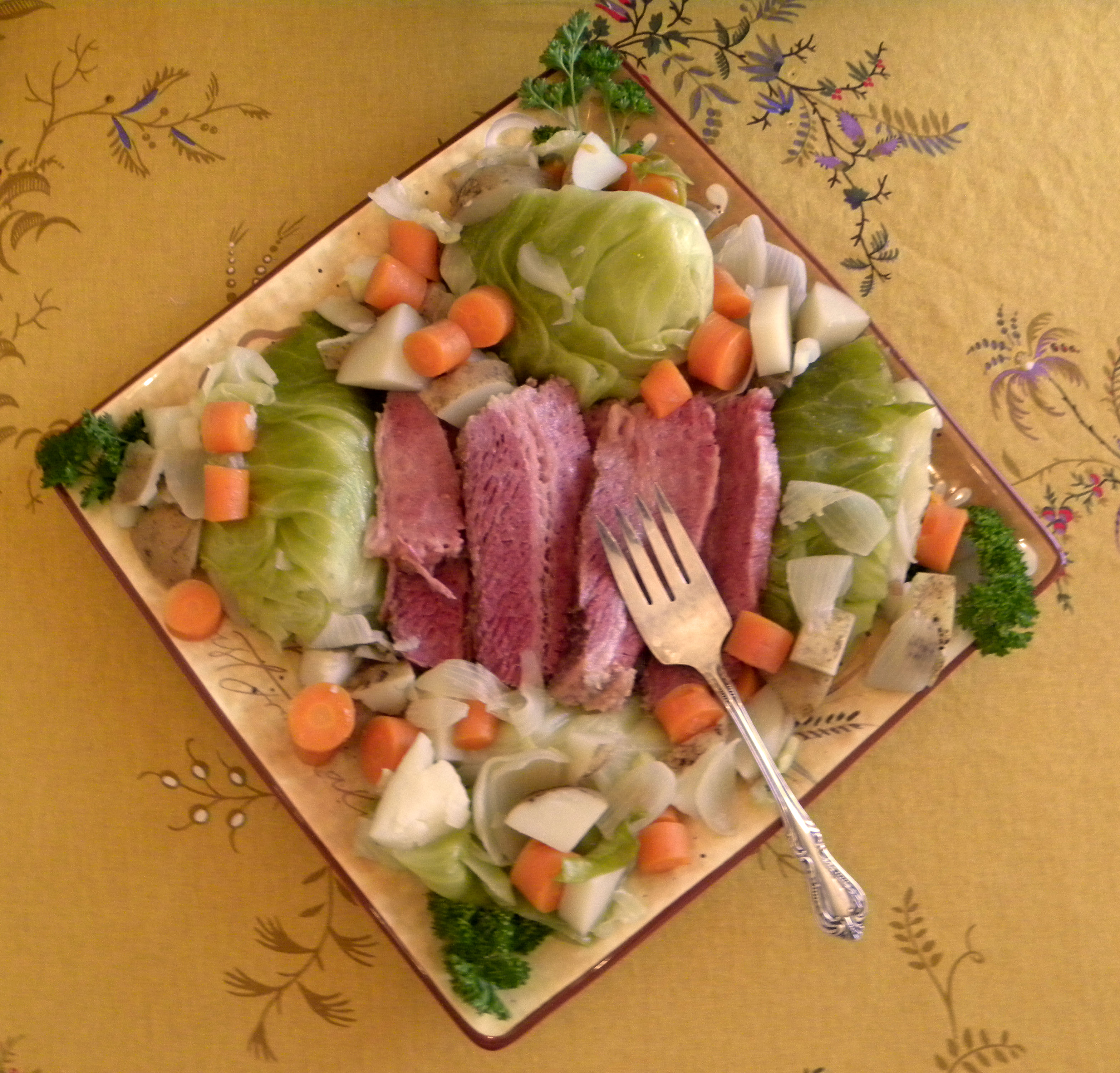
Corned beef and cabbage, with carrots and potatoes, garnished with parsley from my garden.

I tore myself away from the garden long enough today to make some corned beef and cabbage for St. Patrick’s Day. I added potatoes, carrots, and onion, plus a spice packet of my own making. I washed off the black peppercorns (hate them), red chiles (ditto), and mustard seed that came with the Harris Ranch corned beef. I used a couple of locally grown bay leaves, a tsp of coriander seed from my garden, a half tsp of green peppercorns, a half tsp of whole allspice, and a couple of cloves, all tied up in a cheesecloth bag to keep the seeds out of the vegetables. Given the amount of water that I needed to cover the corned beef, I probably could have doubled all the spices.

Cover corned beef (about 2-3 lbs) with water, add spices tied in cheesecloth, and simmer for 2.5 hours. Add 5 sliced carrots, 1 yellow onion cut into sixths, 4 washed but unpeeled potatoes cut into bite sized chunks, and 1 head of cabbage cut into quarters. Simmer for 20-30 minutes or until all the vegetables are done. Transfer the beef to a cutting board and slice. Use a slotted spoon to put vegetables onto a serving platter, add the corned beef, garnish with parsley and serve with grated horseradish. Great dish.

However, I must say that I was terribly disappointed in the ratio of fat to beef in the Harris Ranch corned beef. It was nearly half fat. After cutting off the fat, there were only four small servings of beef. The chickens will get the fat over the next few days, so it won’t be wasted. But at $2.99 a lb, that’s some pretty high-priced chicken feed. It’s feedlot beef, not grass-fed beef or bison, but it should have been trimmed better.

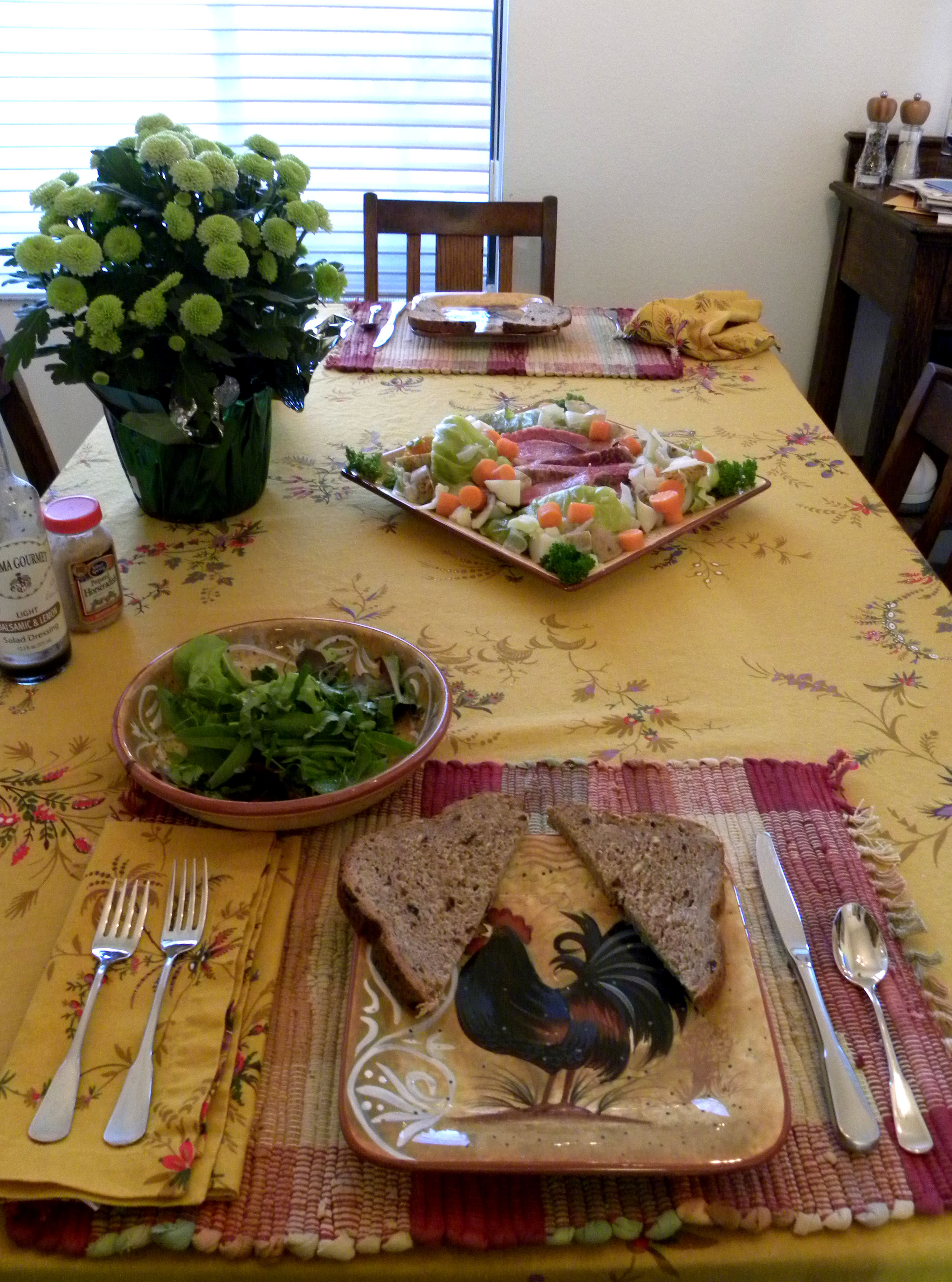
The table is set for two for this St. Patrick's Day meal.

The salad was all homegrown. I used Black-seeded Simpson, Red Saladbowl and Green Oakleaf lettuce, sliced baby sorrel leaves, chopped cilantro, a small handful of snow peas and a few young pea tendrils, which are surprisingly tender and delicious in salads.

Note the bread on the plate. That’s a slice from a homemade loaf of whole wheat-pecan-currant bread. Here’s the recipe of my own making for a 2 lb loaf using a Welbilt bread machine. I put the ingredients in the order given into my bread machine, add the nuts and currants when the timer beeps and the machine does the rest. And yes, I really do mean “white whole wheat flour.” It’s more finely ground than regular whole wheat and baked goods don’t come out as dense. Very nice product if you can find it.

1 1/2 C + 2T water

2T extra virgin olive oil

2 tsp salt

1/3 C dark brown sugar

3 C white whole wheat flour (King Arthur brand)

1 1/4 C unbleached white bread flour

zest of one orange, using a microplane grater

3 T. Bob’s Red Mill dried buttermilk powder

1/2 C dried currants

1 C whole pecans (they get broken up by the bread machine)

Use the whole wheat cycle. This makes a great loaf of bread. Sometimes I use golden raisins instead of currants, using 3/4 C. Sometimes I use only 1 C of the white whole wheat, making up the rest with white bread flour. Give it a try.

Posted in Uncategorized | Tagged , , , , | 1 Comment